
Observing the prevailing trends in global military affairs, I assert that the future battlefield will evolve profoundly towards greater levels of autonomy and intelligence. Within this paradigm, the military drone is poised for ubiquitous deployment across an expanding spectrum of operational domains. From reconnaissance and electronic warfare to precision strike and logistics, the shadow of unmanned systems looms large over modern combat. Nations like the United States have established a considerable lead in the operational application of these systems. Since their inception, the technological innovation surrounding military drones has been relentless, driven by and, in turn, driving changes in the very character of warfare. This relentless pressure to adapt to new battlefield realities necessitates a continuous cycle of strengthening core competencies and addressing emergent vulnerabilities—a pursuit that defines the ongoing advancement of military drone technology.
This article, from my perspective as a researcher in the field, will dissect the journey of unmanned aerial systems. I will outline their historical development, provide a detailed analysis of the current technological landscape possessed by leading nations, and project their future operational applications and the concomitant technical hurdles that must be overcome.
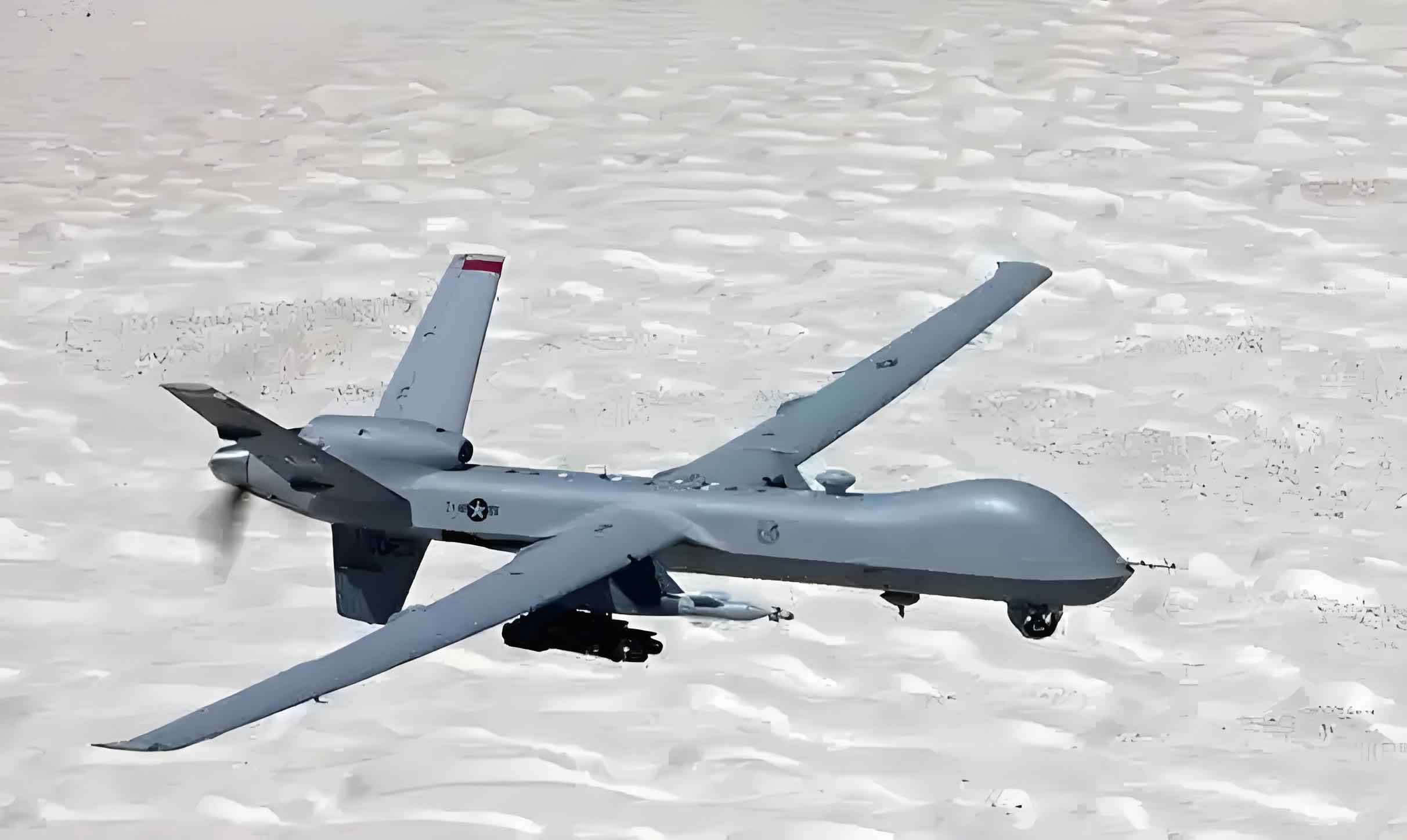
Historical Development: Three Defining Epochs
The genesis of unmanned flight is often traced to early 20th-century concepts. The term “military drone” itself was conceptually born from a desire to mitigate human risk while achieving tactical objectives.
The Formative Years: Early 20th Century to the 1950s
The conceptual foundation was laid in 1914 by British military thinkers. However, it was not until 1927 that Professor A.M. Low achieved a landmark success, piloting a radio-controlled aircraft from the British warship HMS *Fortress*. This aircraft, named “Larynx,” is widely recognized as the progenitor of the guided military drone, marking the dawn of a new era in aerial warfare. Britain consequently prioritized drone development. A significant milestone followed in 1931 with the “Queen Bee,” a target drone that proved remarkably resilient in naval exercises, validating the practical military utility of unmanned systems for training.
| Era | Designation/Name | Primary Role | Key Characteristics | Significance |
|---|---|---|---|---|
| 1927 | Larynx | Experimental Guided Munition | Radio-controlled, launched from warship. | World’s first purpose-built guided unmanned aircraft. |
| 1931-1939 | Queen Bee / DH.82B | Aerial Target Drone | Modified de Havilland Tiger Moth, reusable. | Proved operational viability; used extensively for anti-aircraft training. |
The Age of Reconnaissance: Mid-20th Century to the 1990s
Advancements in autopilots, navigation, and sensor miniaturization propelled the military drone beyond its role as a mere target. This period saw its emergence as a vital intelligence, surveillance, and reconnaissance (ISR) asset. The United States fielded early systems like the AN/USD-1 in the late 1950s. However, the Vietnam War served as the first major proving ground. Unmanned systems like the AQM-34 Ryan Firebee and Model 147 variants conducted over 3,400 surveillance missions, penetrating denied airspace with relative impunity and providing crucial imagery.
The tactical potential of the military drone was stunningly demonstrated in 1982 during the Bekaa Valley conflict. I would analyze that Israeli forces employed Mastiff and Scout drones as decoys and surveillance platforms, successfully triggering and mapping Syrian Soviet-made air defense networks. This orchestrated operation led to the near-total destruction of the missile batteries within minutes, showcasing the disruptive power of unmanned systems in combined arms operations.
| System | Country | Conflict | Key Capability | Performance Metric (Typical) |
|---|---|---|---|---|
| Ryan Model 147 (Firebee variants) | USA | Vietnam War | Strategic/Tactical Reconnaissance | Altitude: 50,000+ ft, Endurance: ~1-2 hours (early models). |
| Mastiff / Scout | Israel | 1982 Lebanon War | Tactical Reconnaissance & Deception | Real-time video downlink, used for artillery spotting and SAM site baiting. |
The Rise of the Hunter-Killer: Late 1990s to Present
The defining evolution of the modern military drone has been its transition from a passive sensor to an active shooter—the “MALE” (Medium Altitude Long Endurance) hunter-killer. While the 1991 Gulf War saw drones like the Pioneer used for reconnaissance and battle damage assessment, the post-9/11 conflicts fundamentally changed their role. The integration of the AGM-114 Hellfire missile onto the MQ-1 Predator created the first dedicated armed military drone. This “persistent stare and strike” capability, first used effectively in Afghanistan, allowed for near-continuous surveillance followed by immediate kinetic engagement, compressing the sensor-to-shooter timeline dramatically and revolutionizing counter-insurgency and counter-terrorism operations.
The evolution can be modeled as an expansion of the operational function $O(t)$ of a military drone platform over time $t$:
$$ O(t) = R(t) + \delta(t-t_0) \cdot S(t) + C(t) $$
Where:
$R(t)$ is the Reconnaissance function (dominant for $t < t_0$),
$S(t)$ is the Strike function,
$C(t)$ is the Command, Control, and Communication function,
$\delta(t-t_0)$ is a step function activated around the time $t_0$ (~2001), marking the integration of lethal payloads.
This equation signifies the additive and now integral nature of the strike capability to the core ISR mission.
Contemporary Landscape: Leading National Programs
United States: Diverse and Dominant
The U.S. maintains the most extensive and technologically advanced fleet of military drones, spanning the full spectrum of roles and sizes. Its inventory can be categorized as follows:
| Role | Exemplary Systems | Key Characteristics | Service Primary User | Approx. Inventory* |
|---|---|---|---|---|
| Strategic/Tactical ISR | RQ-4 Global Hawk, RQ-7 Shadow, RQ-21 Blackjack | High-altitude, long-endurance (HALE) to small tactical. Provides wide-area and focused surveillance. | Air Force, Navy, Army, Marines | 350+ |
| Armed ISR (Hunter-Killer) | MQ-9 Reaper, MQ-1C Gray Eagle | MALE platforms with multi-sensor suites and precision-guided munitions (e.g., Hellfire, GBU-12/38). | Air Force, Army | 380+ |
| Electronic Warfare/Decoy | ADM-160 MALD (Miniature Air-Launched Decoy) | Mimics aircraft signatures to confuse and saturate enemy air defenses. | Air Force | 1000+ |
| Cargo/Logistics | K-MAX (cargo), others in development | Unmanned vertical lift for sustained logistics support. | Marines (experimental) | Limited |
*Note: Inventory numbers are approximate and based on open-source estimates.
From my analysis, the U.S. focus remains heavily skewed towards persistent ISR and precision strike, with the MQ-9 Reaper serving as the workhorse. Future programs like the MQ-25 Stingray (aerial refueling) and various Group 5 UCAV concepts indicate a shift towards more sophisticated, networked, and survivable systems operating in contested environments.
Israel: Innovation and Integration
Despite early technological origins linked to the U.S., Israel has become a world leader in the practical combat integration and innovation of military drone technology. Israeli systems are renowned for their robustness, modularity, and proven battle effectiveness. They field a comprehensive range, from mini-UAVs to one of the world’s largest operational drones.
| System | Category | Notable Capabilities | Technical Parameters (Representative) |
|---|---|---|---|
| Hermes 450 / 900 | MALE ISTAR | Workhorse platform for surveillance, artillery correction, and light strike. Widely exported. | Endurance: 17+ hrs (450), Speed: 110 kts, Payload: ~180 kg. |
| Eitan (Heron TP) | HALE ISTAR | Heavy-fuel engine for long endurance. Used for strategic missions, signal intelligence (SIGINT). | Endurance: 30+ hrs, Max Altitude: 45,000 ft, Wingspan: 26 m. |
| Harop | Loitering Munition | “Kamikaze” drone with electro-optical seeker. Can loiter for hours before engaging time-sensitive targets. | Loiter Time: 6 hrs, Warhead: 15 kg, Operation: Autonomous target acquisition. |
Israel’s doctrine emphasizes tight integration of drones with ground forces and air defense suppression units, a lesson hard-learned from its early conflicts. The Harop represents a significant trend towards autonomous lethal decision-making within a human-supervised loop.
United Kingdom: Strategic Investment and NATO Interoperability
The UK, while possessing a smaller fleet than the U.S. or Israel, maintains advanced capabilities focused on interoperability with allies, particularly NATO. Its primary armed platform has been the General Atomics MQ-9 Reaper (called Protector in UK service), which it has employed extensively. The UK is transitioning to the more capable MQ-9B SkyGuardian/Protector, featuring enhanced autonomy and maritime search capabilities.
A significant national program is the Watchkeeper program, a tactical UAS derived from the Israeli Hermes 450. The UK’s development philosophy, as I interpret it, increasingly views unmanned systems not as standalone platforms but as integral nodes within a larger networked “system of systems.” This is evident in programs like the Joint UAS Experimentation Programme, which explores human-machine teaming and swarming concepts for future NATO operations.
Future Operational Paradigms and Applications
Based on current trajectories, the future operational application of military drones will be characterized by greater autonomy, network-centricity, and collaborative behavior. I foresee several dominant paradigms:
1. Intelligent, Multi-Domain ISR and Persistent Sensing
Future military drones will form adaptive, layered sensing grids. Low-cost, disposable sensor nodes launched in large numbers will provide resilient surveillance coverage, even in GPS-denied and communications-jammed environments. Advanced onboard processing using AI will enable real-time change detection, object classification, and automatic cueing of higher-tier assets, moving from “data collection” to “information generation” at the edge. The effectiveness $E_{ISR}$ of such a network could be modeled as a function of node count $n$, autonomy level $\alpha$, and sensor fusion capability $\phi$:
$$ E_{ISR}(n, \alpha, \phi) = \rho \cdot n^{\gamma} \cdot \log(1 + \alpha \cdot \phi) $$
where $\rho$ is a baseline efficiency constant and $\gamma < 1$ represents the diminishing returns of sheer numbers without coordination, which is mitigated by $\alpha$ and $\phi$.
2. Collaborative Swarm Operations
The concept of drone swarms—large numbers of simple, cheap drones operating with collective intelligence—represents a potentially revolutionary shift. Swarms could execute complex missions such as overwhelming air defenses, conducting distributed electronic warfare, or performing cooperative target engagement. Control shifts from individual piloting to managing the swarm’s emergent behavior through high-level commands. The survivability $S_{swarm}$ of a swarm against area defenses can be expressed relative to a single platform:
$$ S_{swarm} \approx 1 – (1 – S_{single})^N $$
Where $S_{single}$ is the probability of a single drone surviving an engagement, and $N$ is the swarm size. For small $S_{single}$, even a moderately sized $N$ yields a high probability that a significant portion of the swarm survives to complete its mission. Key enabling technologies include robust intra-swarm communication (e.g., mesh networks), decentralized coordination algorithms, and collective decision-making AI.
3. Manned-Unmanned Teaming (MUM-T)
In the near to mid-term, the most impactful paradigm will be the tight integration of military drones with manned platforms. A fighter aircraft (e.g., a “loyal wingman”) or a command post could control multiple drones, using them as sensor extensions, weapon magazines, or defensive screens. This multiplies the effectiveness and reach of the manned node while keeping it at a safer distance. The combat potential $P_{team}$ of such a pair can be conceptualized as:
$$ P_{team} = P_{manned} + \sum_{i=1}^{k} \eta_i \cdot P_{drone,i} $$
where $k$ is the number of drones controlled, $P_{manned}$ and $P_{drone}$ are their individual potentials, and $\eta_i$ (with $0 < \eta \le 1$) is a synergy coefficient representing the efficiency of the human-machine interface and the level of trust and tactical integration.
Critical Technological Challenges and Hurdles
Realizing these future visions is contingent on overcoming significant technical obstacles. From my assessment, the primary challenges are:
1. Autonomy and Artificial Intelligence
True operational autonomy beyond pre-programmed waypoints is the holy grail. This requires AI that can:
– **Perceive and Understand:** Fuse sensor data to build a dynamic, actionable understanding of a complex environment.
– **Decide and Act:** Make tactical decisions (e.g., route planning, target prioritization) within the bounds of Rules of Engagement (RoE) and commander’s intent.
– **Learn and Adapt:** Improve performance based on new data and mission outcomes.
The core challenge is developing AI that is robust, explainable, and trustworthy enough for lethal decision-making. The risk of algorithmic bias, spoofing, and unpredictable behavior in novel situations is immense.
2. Communications and Cybersecurity
Most current military drones rely on constant, high-bandwidth satellite links, creating a vulnerability. Future systems require:
– **Resilient Networks:** Advanced waveform hopping, mesh networking, and low-probability-of-intercept/low-probability-of-detection (LPI/LPD) communications.
– **Operational Degradation:** The ability to execute a mission with degraded or lost comms, leveraging higher levels of onboard autonomy.
– **Cyber Hardening:** Protection against spoofing, hijacking, and data corruption. The command and control link is a prime attack surface. The vulnerability $V$ can be seen as inversely proportional to the encryption strength $E$, authentication robustness $A$, and link diversity $D$:
$$ V \propto \frac{1}{E \cdot A \cdot D} $$
3. Airspace Integration and Collision Avoidance
Operating large numbers of drones, especially in swarms or in shared civilian/military airspace, requires a revolutionary approach to air traffic management. This necessitates:
– **Reliable Sense-and-Avoid (SAA):** Technology that allows drones to autonomously detect and avoid other aircraft, terrain, and obstacles without human intervention.
– **Automated Traffic Management (UTM):** Scalable, dynamic systems for de-conflicting the flight paths of hundreds or thousands of unmanned vehicles.
– **Standardized Protocols:** Global agreement on communication protocols, behavioral norms, and electronic identification for drones.
In conclusion, the military drone has evolved from a simple target to a central pillar of modern warfare. Its journey reflects a continuous dialogue between technological possibility and strategic necessity. As we look to the future, the trajectory points towards increasingly intelligent, collaborative, and autonomous systems that will redefine the battlespace. However, this future is not guaranteed; it is predicated on our ability to navigate profound technical, ethical, and operational challenges. The race for supremacy in unmanned systems is not merely about building better drones, but about developing the concepts, trust, and infrastructure to wield them effectively and responsibly in the complex, high-stakes environment of future conflict.