
The domain of drone technology has witnessed a paradigm shift over the past three decades, transitioning from experimental surveillance platforms to pivotal instruments of modern warfare. The strategic importance of Long-Endurance Reconnaissance-Strike (LERS) drone technology cannot be overstated. These systems integrate the persistence of a satellite with the responsiveness of a manned attack aircraft, fundamentally altering the calculus of military engagement. Since the first armed flight of an MQ-1 Predator in 2001, which launched an AGM-114 Hellfire missile in Afghanistan, the global military landscape has been reshaped by the proliferation and sophistication of these platforms.
This analysis delves into the current state, operational applications, and future trends of LERS drone technology abroad. We examine the hardware, the tactical evolution, the enabling technologies, and the strategic trajectory of unmanned systems in an era defined by great-power competition and high-intensity conflict.
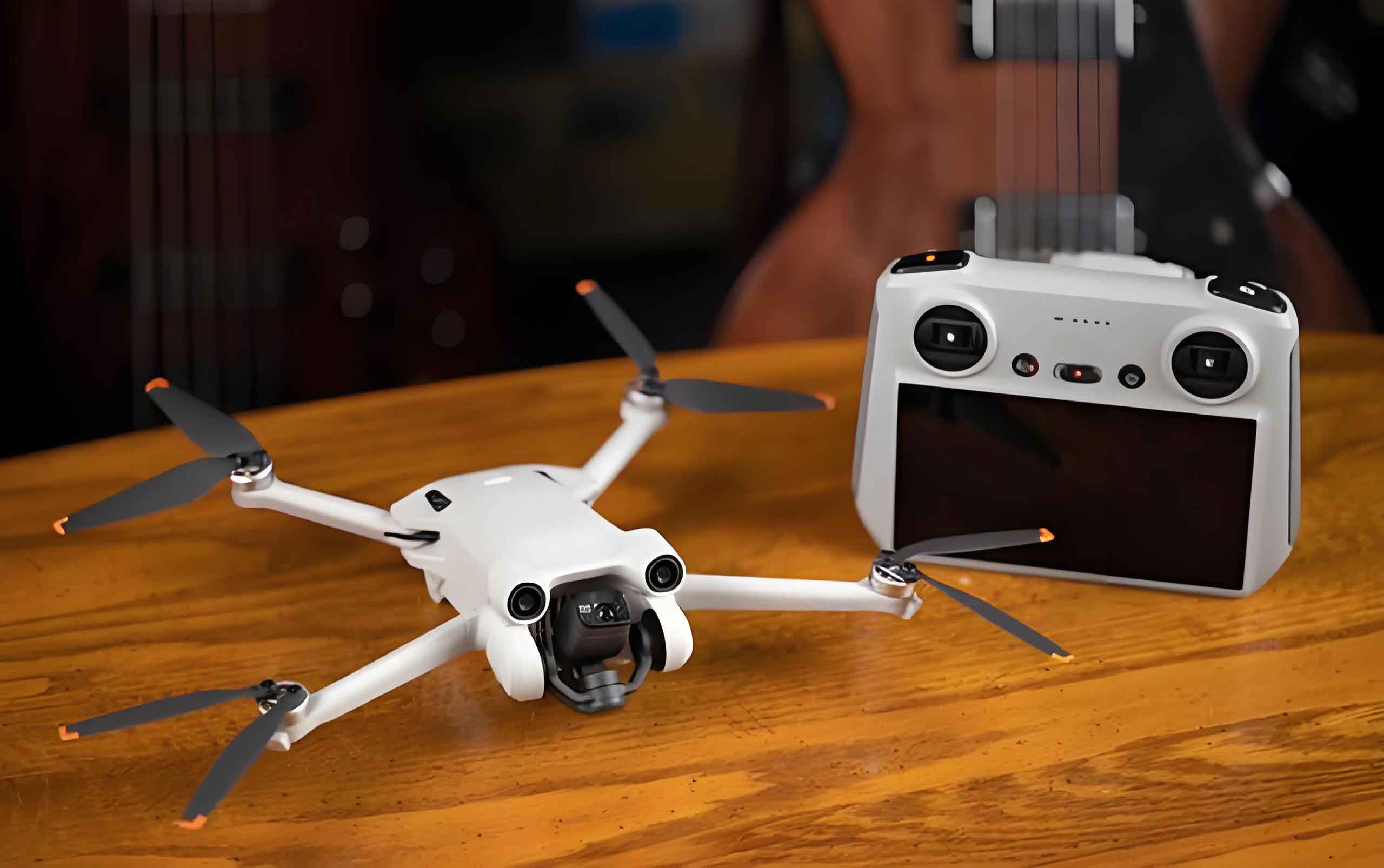
Global Development Landscape of LERS Drone Technology
The development of LERS drone technology is no longer the exclusive domain of a single superpower. The United States, Israel, Turkey, and Russia have emerged as primary developers, each refining their designs based on distinct doctrinal requirements and combat experiences.
| Parameter | MQ-9A Reaper (USA) | IAI Heron TP (Israel) | Bayraktar TB2 (Turkey) | Kronshtadt Orion (Russia) |
|---|---|---|---|---|
| Maximum Take-off Weight (kg) | 4,763 | 5,670 | 700 | 1,150 |
| Maximum Payload (kg) | 1,701 | 2,700 | 150 | 250 |
| Service Ceiling (m) | 15,240 | 13,716 | 7,620 | 7,500 |
| Maximum Endurance (h) | 27 | 30 | 27 | 30 |
| Engine Type | Turboprop | Turboprop | Piston | Piston |
| Primary Weapons | AGM-114, GBU-12 | Spike missiles | MAM-L, MAM-C | KAB-20, KAB-50 |
The United States, through General Atomics (GA-ASI), pioneered the modern LERS category with the Predator and Reaper series. The evolution from the MQ-1 to the MQ-9B SkyGuardian and the jet-powered MQ-20 Avenger demonstrates a clear trend towards higher speed, greater payload capacity, and enhanced survivability. The GA-ASI aircraft growth and evolution roadmap highlights a continuous push to optimize airframe, propulsion, and avionics to expand the multi-mission envelope.
Israel’s drone technology, developed by IAI and Elbit Systems, emphasizes endurance and a broad suite of intelligence-gathering payloads. The Heron series and the Hermes 900 serve as high-altitude communication relays and persistent surveillance platforms, later adapted for precision strike. Turkey’s rapid ascent in drone technology, led by Baykar and TAI, is a direct result of combat feedback from Syria, Libya, and Nagorno-Karabakh. The Bayraktar TB2, a cost-effective and combat-proven platform, revolutionized the market by demonstrating that accessible drone technology could decisively impact conventional combined-arms warfare.
Russia’s approach, with platforms like the Orion and Altius, has been slower but aims to replicate the high-end capabilities of the Reaper. These platforms are heavily dependent on improving navigation and communication suites to operate effectively in contested environments.
Combat Applications: From Counter-Terrorism to Conventional Warfare
The operational history of LERS drone technology has been defined by three distinct phases: counter-terrorism, counter-insurgency, and peer-to-peer conventional conflict. The initial use of MQ-1 Predators for targeted killings in Afghanistan and Yemen showcased the precision and persistence of the platform. However, the conflicts in Syria, Libya, Nagorno-Karabakh, and especially Ukraine, have tested LERS drone technology against modern Integrated Air Defense Systems (IADS).
| Conflict | Primary UAV Type | Core Mission & Outcome |
|---|---|---|
| Iraq / Afghanistan (2001-2021) | MQ-1, MQ-9 | Counter-terrorism, CAS, ISR. Low threat environment. |
| Syria / Libya (2019-2020) | TB2, Anka-S | SEAD (Suppression of Enemy Air Defenses), precision strikes on armor. |
| Nagorno-Karabakh (2020) | TB2 | Destruction of Armenian armor, artillery, and AD systems. |
| Ukraine (2022-Present) | TB2, Orion, Lancet | Deep strike, artillery spotting, naval interdiction. High attrition due to EW. |
A critical lesson from Ukraine is the vulnerability of medium-altitude LERS drones to robust, multi-layered electronic warfare (EW). While the TB2 was devastating in the opening phase, the Russian military’s ability to jam GPS, satcom, and data links rendered many platforms ineffective. This has driven a new imperative in drone technology: the need for resilience in the electromagnetic spectrum. The survival of LERS drones in a high-intensity conflict environment now depends on a strategic shift. We see a clear evolution in exercises and testing:
- Multi-Domain Operations (MDO): The US Army’s Gray Eagle 25M is designed for MDO, using open architectures to integrate sensors, effects, and communications across land, air, sea, space, and cyber domains. It acts as a C4ISR node.
- Agile Combat Employment (ACE): The US Air Force has successfully tested MQ-9A operations from highways and dirt strips. This reduces reliance on vulnerable main operating bases, enhancing survivability and sortie generation.
- Anti-UAS Integration: Platforms like the Gray Eagle 25M are now equipped with “Hawk Eye” radars to detect and track small UAS (sUAS), serving as a command node for counter-drone operations.
- Manned-Unmanned Teaming (MUM-T): Exercises like Northern Strike and IBP-23 have demonstrated MQ-9Bs working in tandem with MH-60 helicopters and E-2D Hawkeyes for anti-submarine warfare and maritime strike, showcasing the flexibility of modern drone technology.
Enabling Technologies for Future Reconnaissance-Strike Capabilities
The future of LERS drone technology hinges on the maturity and integration of several key enabling technologies. These are the pillars that will support survival, lethality, and autonomy in denied environments.
1. Assured Navigation and Positioning (PNT)
For a LERS drone, losing GPS is a critical failure. Future drone technology relies on Anti-Jam (AJ) GPS and, more importantly, on alternative PNT architectures. The development of spatial, temporal, and orientation information for contested environments (STOIC) and atomic-photonic integration (A-PhI) seeks to create robust, chip-scale inertial navigation systems that can operate for extended periods without external signals. The integrity of the navigation solution is fundamental to the effectiveness of the entire system.
$$ P_{pos}(t) = f(IMU_{drift}, GPS_{jammed}, ALT_{terrain}) $$
Where the probability of an accurate position $P_{pos}$ at time $t$ depends on the drift of the inertial measurement unit, the status of the GPS, and the availability of terrain-aided navigation.
2. Laser Communication Systems
To counter RF detection and jamming, LERS platforms are integrating laser communication terminals, such as the LAC-12 pod developed by GA-ASI. This drone technology provides a low-probability-of-intercept, low-probability-of-detection (LPI/LPD) link with data rates exceeding 1 Gbps, sufficient for streaming full-motion video through contested environments without compromising the platform’s position.
$$ C_{Laser} = B \log_2(1 + \frac{P_t G_t G_r}{N_0 B}) $$
Here, the channel capacity $C_{Laser}$ is a function of bandwidth (B), transmit power ($P_t$), and antenna gains ($G_t, G_r$), providing a secure, high-throughput link.
3. Air-Launched Effects (ALE)
The concept of ALE represents a fundamental shift in how LERS drones project force. Instead of risking the high-value mothership, platforms like the MQ-9 can launch smaller “effectors” deep into contested airspace. GA-ASI’s Sparrowhawk and DARPA’s LongShot are prime examples. The Sparrowhawk acts as a forward sensor, extending the ISR reach of the MQ-9, while LongShot can carry air-to-air missiles deep into enemy territory. This “distributed sensing and distributed lethality” model is the cutting edge of modern drone technology.
4. Manned-Unmanned Teaming (MUM-T)
MUM-T is the doctrinal core for the future of air combat. Programs like the US Air Force’s Skyborg and DARPA’s Air Combat Evolution (ACE) aim to create “loyal wingman” drones that can fly alongside 4th and 5th generation fighters. The key is trust and autonomy. The drone technology must be able to understand the intent of the pilot and act autonomously to achieve mission objectives without requiring constant command and control.
$$ Level_{Autonomy} = \frac{AI_{Competence}}{Human_{Intervention_{Frequency}}} $$
The goal is to move to a state where the human acts as a mission commander rather than a remote pilot.
5. Integrated Command, Control, and Intelligence (C2-ISR)
The ground segment is often the bottleneck. New C2 systems like GA-ASI’s Integrated Intelligence Center (IIC) utilize open architectures to manage multiple aircraft and a vast array of sensors. The Multi-Mission Controller (MMC) allows a single operator to manage multiple platforms. The Metis system automates the collection management process, while STARE provides real-time intelligence processing. This efficiency is vital for handling the data volume generated by modern drone technology.
Strategic Directions and Future Trends
As we look towards the next decade, the development of LERS drone technology is characterized by four strategic vectors: Survivability, Depth of Mission, Autonomy, and Standardization.
1. Enhancing Survivability
This is the single greatest challenge. The days of permissive airspace for MALE drones are ending. Future drone technology must incorporate:
- Stealth: Low-observable airframes like the MQ-20 Avenger.
- Electronic Warfare: Self-protection pods (e.g., An/ALQ-167 “Angry Kitten”) for threat detection and jamming.
- Stand-off Range: Longer-range munitions and sensors allow the drone to operate outside the enemy’s kill chain.
- Resilience: The ability to operate with damaged data links or degraded GPS.
2. Expanding Mission Depth
The mission set of the LERS drone is no longer just “Find, Fix, Finish.” It is now a multi-domain node.
- Reconnaissance (察): Multi-intelligence fusion (EO/IR, SAR, SIGINT, COMINT) for high-fidelity targeting.
- Strike (打): Precision engagement with a variety of munitions, including small diameter bombs and cruise missiles.
- Connectivity (联): Serving as a communication relay and data fusion node for joint forces, enabling “sensor-to-shooter” timelines that are measured in seconds.
3. Autonomy and Command & Control
The ultimate trajectory of drone technology is towards a “Managed by Exception” model. Artificial intelligence will handle routine flight, sensor management, and data processing. The human operator will only intervene for high-level decisions such as weapons release or major route changes. This is essential for operating swarms of ALEs and managing the cognitive load of a single operator controlling a team of loyal wingmen.
$$ Data_{Throughput} = f(AI_{Filter}, Human_{Bandwidth}) $$
The system’s effective throughput is a function of how well AI filters raw data to fit within the available human cognitive bandwidth.
4. Open Architectures and Standardization
Platforms and ground systems are moving towards modular, open architectures (e.g., NATO’s STANAG 4586, GA-ASI’s open payload interface). This allows for rapid, cost-effective integration of new sensors and weapons from multiple vendors, preventing technological obsolescence and fostering competition.
Conclusion
The field of Long-Endurance Reconnaissance-Strike drone technology is at a critical inflection point. The era of permissive operations is ending. The future belongs to systems that are stealthier, more autonomous, better networked, and more resilient to electronic attack. The lessons from Ukraine, Nagorno-Karabakh, and modern exercises are clear: drone technology must evolve from a capability enhancer to a core component of combined arms warfare. The integration of Artificial Intelligence, advanced PNT, laser communications, and air-launched effects will define the next generation of these remarkable machines.
We will likely see a bifurcation of the market: low-cost, attritable systems designed for mass and high-end, exquisite systems like the MQ-9B and MQ-20 designed for strategic effect in high-threat environments. The nations and militaries that successfully navigate this technological and doctrinal transition will possess a decisive advantage in the conflicts of the 21st century. The continuous evolution of drone technology is not merely a matter of upgrading hardware; it is a fundamental rethinking of air power itself.