
The battlefield of the future is increasingly defined by autonomy and unmanned systems. Among these, the military drone stands as a pivotal asset, transitioning from a reconnaissance tool to a core component of networked, collaborative warfare. The command and control (C2) system is the brain of this operation, the critical nexus where human intent is translated into unmanned action. The efficacy of this translation—the speed, accuracy, and intuitiveness of the interaction—directly dictates mission success. Therefore, the trajectory of Human-Machine Interaction (HMI) within military drone C2 systems is not merely a matter of interface design; it is a fundamental determinant of combat power.
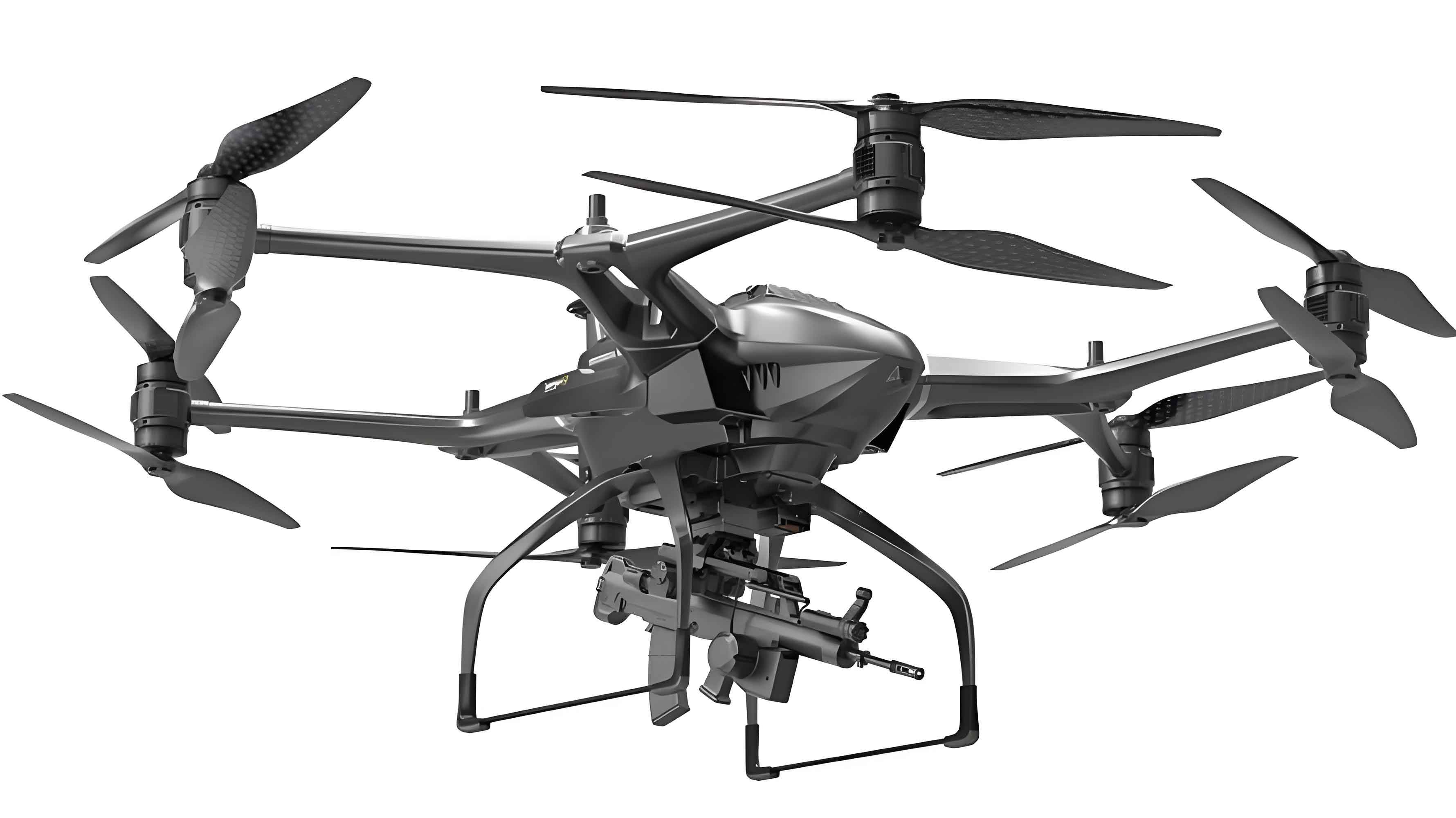
The evolution of HMI for C2 systems can be broadly categorized into three distinct phases, each marked by a leap in how operators perceive information and issue commands.
The Three Eras of C2 Interaction
The journey of human-computer interaction has moved from primitive command lines to rich graphical environments. For military drone C2, this progression is mirrored in three key stages:
| Stage | Primary Name & Core Paradigm | Input Modalities | Output Modalities | Key Characteristics |
|---|---|---|---|---|
| Stage 1 | Graphical User Interface (GUI) – Click & Command | Mouse, Keyboard (Primary); Buttons, Knobs, Control Sticks (Secondary) | Multiple Large-Screen Displays | Abundant display real estate, but input is primarily single-channel (mouse/keyboard). Represents the most widely deployed systems in current service. |
| Stage 2 | Multi-Modal Fusion – Converged Channels | GUI inputs + Voice Commands, Gesture Recognition, Haptic Feedback | Enhanced GUI, Immersive Displays (VR/AR), Audio Cues | Enriched input and output channels. Fusion of modalities improves recognition accuracy and interaction efficiency, overcoming limitations of single-channel systems. Hallmark of next-generation military drone C2. |
| Stage 3 | Intelligent & Proactive Interaction – Context-Aware Partnership | Advanced modalities + Brain-Computer Interface (BCI), Affective Computing, Advanced Gaze Tracking | Holography, Advanced AR/MR, Biocybernetic Adaptation, Proactive Information Push | Shift from passive to proactive interaction. System uses AI to perceive context, predict intent, and act as a collaborative partner. Represents the future paradigm. |
While Stage 2 systems are now entering service, the frontier of research and development is firmly focused on realizing the potential of Stage 3. The defining characteristic of this future is the transition from systems that wait for commands to systems that anticipate needs—a shift from passive to proactive interaction. This evolution will be powered by breakthroughs in four key technological vectors.
Future Directions: The Pillars of Intelligent C2 Interaction
1. Intelligent Perception and Cognition: Enabling Proactive Partnership
Traditional HMI operates on an explicit input-feedback loop: the human forms an intent, expresses it via an interface, the machine computes, and returns a result. The human is always the initiator. This process, while functional, is inherently inefficient and can compromise situational awareness as the operator’s attention is diverted to managing the interface.
The breakthrough of proactive interaction lies in inverting this model. By endowing the military drone C2 system with “senses” and “cognition,” it can initiate the interaction loop. This is achieved through:
- Sensory Hardware: An array of sensors (cameras, microphones, biometric monitors) acts as the system’s eyes and ears within the command station.
- AI-Powered Cognition: Computer vision, acoustic analysis, and operator state monitoring (e.g., gaze direction, posture, physiological signals) allow the system to perceive the context, the operator’s focus, and potential stress levels.
The system’s core intelligence continuously analyzes this multi-modal sensor stream against the mission data, battlefield situation, and historical patterns. Its goal is to infer operator intent or identify critical information gaps before an explicit command is given.
The mathematical foundation for this can be seen as a probabilistic inference problem. Let $S_t$ represent the state of the system (drone status, enemy tracks, mission phase) and $O_t$ represent the observed operator state (gaze, voice stress, biometrics) at time $t$. The system aims to estimate the probability of the operator’s latent intent $I_{t+1}$ or the need for information $N_{t+1}$:
$$P(I_{t+1} | S_{0:t}, O_{0:t}) = \frac{P(O_t | I_{t+1}, S_t) \cdot P(I_{t+1} | S_{0:t}, O_{0:t-1})}{P(O_t | S_{0:t}, O_{0:t-1})}$$
Similarly, for proactive information push:
$$P(N_{t+1} | S_{0:t}, O_{0:t}) = f(S_t, O_t, \Delta S_t)$$
where $\Delta S_t$ represents critical changes in the tactical situation. When these probabilities exceed a calibrated threshold, the system proactively presents relevant options, alerts, or synthesized data. For example, if sensors indicate the operator is repeatedly looking between a suspect ground track and a weapon status panel while biometrics show elevated stress, the system could proactively generate and highlight an engagement protocol. This reduces cognitive load, minimizes off-axis visual searches, and dramatically accelerates the OODA (Observe, Orient, Decide, Act) loop.
2. Merged Physical and Digital Realities: The Tangible Interface
While digital interfaces offer flexibility, physical interfaces provide unmatched tactile feedback and spatial awareness—qualities crucial for muscle memory and trust in high-stress environments. The future of spatial interaction for military drone C2 lies in seamlessly merging these worlds.
Research, such as that from Fujitsu Laboratories, points to a future where ordinary physical objects—maps, control panels, even the operator’s own hands—become enhanced touchscreens. Using robust computer vision that can track fingertips at high speeds (e.g., up to 300 mm/s) and function in varied lighting, these systems can detect touch and gesture on any surface.
In a military drone C2 station, this enables intuitive, context-sensitive interaction:
- An operator points to a sector on a physical terrain map; the system immediately overlays relevant drone patrol tracks or threat icons in augmented reality (AR) above the map.
- Touching a physical switch for payload release causes a digital overlay to appear, confirming the weapon’s status and target parameters.
- Dragging a finger across a paper checklist automatically logs the completed item and pulls up the next relevant digital procedure on a nearby display.
The ultimate expression of this is Calm Technology or Ubiquitous Computing, where the interface recedes into the environment. The operator interacts with the mission, not with a computer screen. The complexity of controlling a swarm of military drones is managed through natural actions in a blended physical-digital space, reducing training time and cognitive friction.
3. Brain-Computer Interaction (BCI): The Ultimate Direct Pathway
The most revolutionary future input modality is one that bypasses physical movement entirely: direct brain-computer interaction. BCI aims to establish a direct communication channel between the brain’s neural activity and an external device, such as a military drone C2 system.
Recent advancements have been staggering. Projects like DARPA’s Next-Generation Nonsurgical Neurotechnology (N3) program seek to develop high-bandwidth interfaces that require no implantation—think of a sophisticated helmet that can read neural intent with high fidelity. The implications are profound: an operator could mentally select a military drone from a roster, mentally issue a navigation waypoint, or mentally trigger a sensor suite, all without moving a muscle or uttering a word.
The core signal processing challenge involves decoding neural signals $N(t)$ related to specific intents $I$. This often involves detecting event-related potentials (ERPs) or changes in spectral power in specific frequency bands (e.g., sensorimotor rhythms). A simplified decoding model can be represented as:
$$\hat{I} = \underset{I}{\mathrm{argmax}} \, P(I | \mathbf{W}^T \mathbf{f}(N(t)))$$
where $\mathbf{f}(N(t))$ is a feature vector extracted from the neural signal (e.g., bandpower values, time-domain amplitudes) and $\mathbf{W}$ is a learned weight matrix that maps these features to intended commands.
While current BCI systems have limited bandwidth compared to traditional interfaces, their potential for certain command functions is immense. For discrete, high-priority commands (e.g., “ABORT,” “SWITCH TO EMERGENCY COMMS,” “TARGET LOCK”), a BCI could provide the fastest possible reaction time. It also offers a vital failsafe for operators under physical duress or in compromised environments. The long-term vision is a hybrid interface where routine tasks use multi-modal controls, but critical, time-sensitive commands are executed at the speed of thought.
4. Natural Language Understanding (NLU): Conversational Command
Speech has long been a goal for HMI, but true natural language understanding—where the machine comprehends intent, context, and nuance like a human—has remained elusive. This is changing rapidly. The evolution from rule-based grammars (CFG) to statistical models (SVM) and now to deep learning architectures (Transformer-based models like BERT and GPT) has yielded dramatic improvements.
For a military drone C2 operator, effective NLU means moving from rigid, predefined voice commands to fluid, conversational dialogue.
| Command Type | Traditional Voice Command | NLU-Enabled Conversational Command |
|---|---|---|
| Example 1 | “UAV-1, sensor, zoom, level two.” | “Zoom in on that vehicle group near the bridge.” (System identifies “that” via gaze tracking and “bridge” from map context). |
| Example 2 | “Show sector Bravo threat overlay.” | “What’s the air threat picture to the north?” (System understands directional intent and the specific layer of information required). |
| Example 3 | Not possible. | “Compare the electronic signatures from the last two passes and highlight any new emitters.” (System executes a multi-step analytical query based on natural language). |
The Transformer architecture, which relies entirely on self-attention mechanisms, is key. It models the relationship between all words in a sentence simultaneously, capturing long-range dependencies and contextual meaning far better than preceding recurrent or convolutional models. The attention mechanism for a word can be conceptualized as:
$$\text{Attention}(Q, K, V) = \text{softmax}\left(\frac{QK^T}{\sqrt{d_k}}\right)V$$
where $Q$ (Query), $K$ (Key), and $V$ (Value) are matrices derived from the input embeddings. This allows the model to dynamically focus on the most relevant parts of the command and the operational context database. When combined with the proactive perception system, NLU enables the C2 system to engage in a true dialogue: the operator can ask follow-up questions, and the system can seek clarification or volunteer pertinent information it believes the operator has missed.
The Synthesis: Active Multi-Modal Interaction
The future of HMI for military drone C2 is not a single technology, but a sophisticated synthesis. Active Multi-Modal Interaction will be the dominant paradigm. In this model:
- Speech serves as the primary channel for high-level intent and complex queries.
- Gaze and Gesture provide rapid, deictic reference (“this one,” “over there”).
- Tangible and Haptic Interfaces offer precise, trust-building control for critical functions.
- Proactive AI fuses all sensory input to predict needs, manage information overload, and present optimized decision options.
- BCI stands ready as an ultra-fast channel for critical override commands.
The system will continuously assess the context—mission phase, operator workload, communication status—to dynamically prioritize and blend these modalities. The core equation for this adaptive interaction manager could be modeled as a utility optimization:
$$\text{Modality}_{selected} = \underset{m \in M}{\mathrm{argmax}} \, \left[ \alpha \cdot \text{Speed}(m, C) + \beta \cdot \text{Accuracy}(m, C) + \gamma \cdot \text{CognitiveLoad}(m, C) \right]$$
where $M$ is the set of available modalities, $C$ is the current context, and $\alpha, \beta, \gamma$ are weights adjusted based on mission criticality and operator state.
This evolution represents more than just better buttons or clearer displays. It signifies a fundamental redefinition of the relationship between the warfighter and the machine. The C2 system transitions from a tool to an intelligent, proactive teammate—a “cognitive partner” that perceives the battlefield and the operator’s needs, harnessing the power of the military drone fleet with unprecedented speed and precision. The nation that masters this synthesis will hold a decisive advantage in the future of unmanned warfare.