
From my perspective as a researcher and practitioner in agricultural technology, the role of plant protection in ensuring food security, ecological safety, and agricultural productivity cannot be overstated. In my experience, countries like China have managed to feed over 22% of the global population with less than 10% of the world’s arable land, largely due to advancements in agricultural inputs and techniques. Pesticides, as critical agricultural生产资料, remain the most widely used, efficient, and rapidly deployable control method, especially for managing hazardous and explosive pest outbreaks. In this context, mechanized防治 technologies have become indispensable, and among them, agricultural UAV (Unmanned Aerial Vehicle) spraying technology stands out as a game-changer. Over recent years, agricultural UAV施药 technology has evolved into a modern agricultural system supported by aviation, information technology, biology, and agricultural equipment. It offers high operational efficiency, strong突击 capability, excellent mobility, and adaptability, meeting the urgent demand for precise and efficient施药 technologies in professional防治. This aligns with the “unified prevention and control” philosophy, accelerating the replacement of manual and small机动药械, promoting research and formulation of policies, regulations, and standards, and significantly enhancing the technical水平 of机动施药 equipment. Agricultural UAV喷药 operations save labor, improve efficiency, and enhance effectiveness, demonstrating clear advantages over manual作业. It represents a major technological choice for achieving food security, food safety, and environmental safety in my view, and marks a crucial step in transitioning from traditional to modern agriculture.
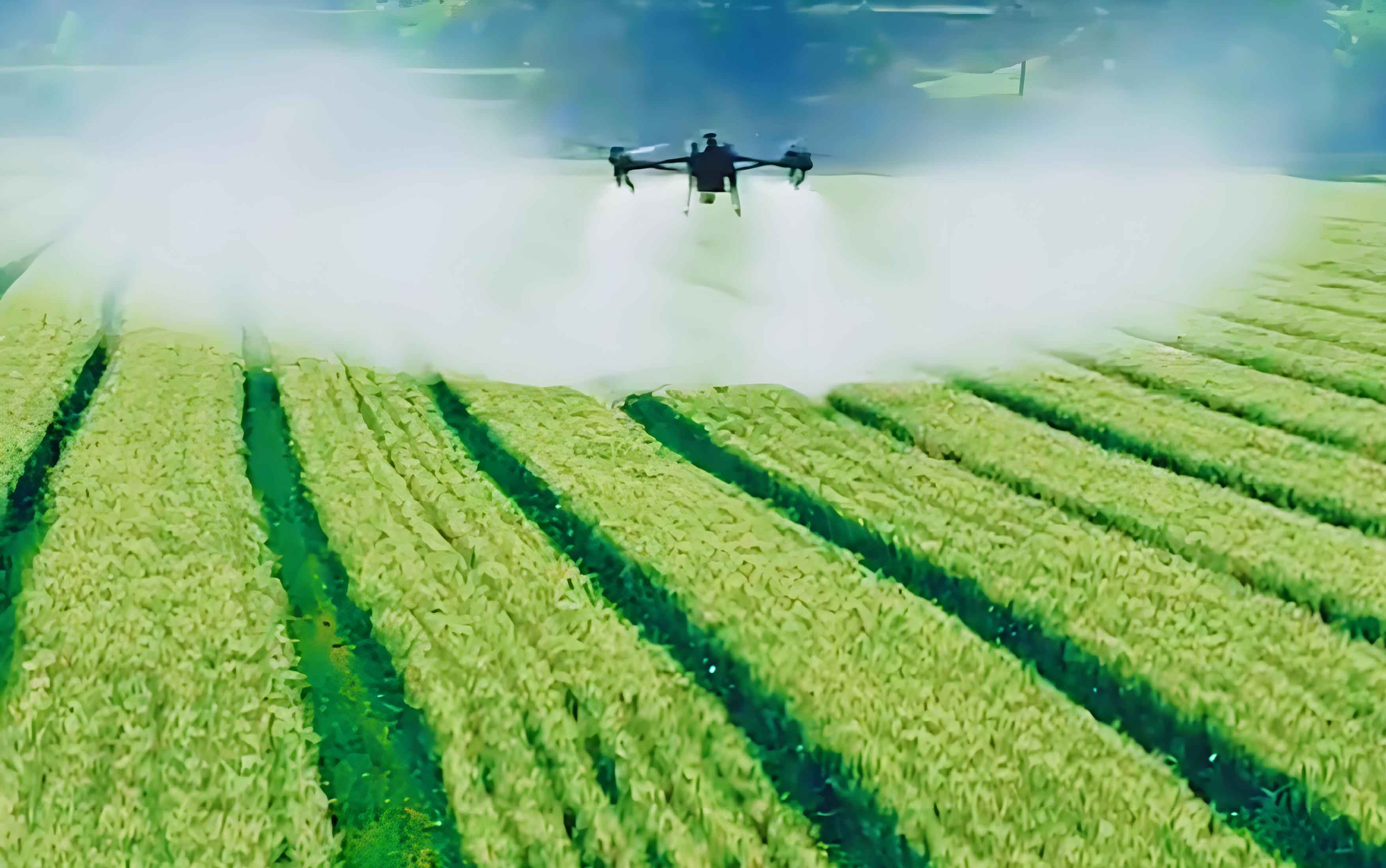
Reflecting on development strategies, agricultural UAV施药 technology and service systems are integral to the “National Medium- and Long-Term Science and Technology Development Plan (2006–2020)” in the agricultural sector. They fit into优先 themes such as intelligent machinery for positioned variable作业 in multifunctional agricultural equipment, efficient and safe integrated pest management techniques in eco-friendly fertilizers and pesticides, and precision作业 and management technology systems in agricultural精准作业 and informatization. In my work, I emphasize implementing the spirit of Central Document No. 1 regarding agricultural mechanization and modernization, prioritizing national food security, and aiming to improve land output率, resource utilization率, and labor productivity. Integrating agricultural machinery with agronomic practices is essential, and I advocate for enhancing mechanized防治 levels in field crops to build a precise, high-quality, efficient, ecological, and safe agricultural UAV施药 technology service system. Guided by new development concepts for high-quality growth, I坚持 ecological green development as a priority, increasing pesticide utilization率 and reducing agricultural pollution. Promoting合作社 services alongside社会化组织服务 is also key in my approach.
In terms of防治措施, I recall a case study involving水稻穗期病虫防治 during a critical period in late summer. For instance, in a region where水稻 was about to破口抽穗, pests like稻纵卷叶螟 and稻飞虱 threatened crops alongside diseases such as纹枯病 and稻曲病. Based on pest prediction, two major campaigns were launched. The first involved applying a mixture of pesticides, including 10% tetrachlorantraniliprole and 5% emamectin benzoate, via small machines or mist sprayers. The second campaign followed later with a different配方, such as 16% emamectin-indoxacarb and 50% nitenpyram, to address residual threats. Throughout these efforts, agricultural UAV spraying proved vital due to its ability to cover large areas quickly and uniformly, especially in dense crop canopies. The use of agricultural UAV ensured timely intervention, minimizing yield losses and aligning with integrated pest management principles.
My工作准则 revolve around green防控 and专业化统防统治. I adhere to the宗旨 of serving farmers and agricultural production, guided by concepts like “public植保, green植保, scientific植保” and the植保方针 of “prevention为主, comprehensive防治.” Principles such as “government support, market operation, farmer voluntariness, and gradual progression” underpin my efforts. I rely on专业化防治 service organizations and new agricultural经营主体 to establish demonstration bases for integrating专业化统防统治 with green防控. The focus is on creating safe, effective, ecological, and practical green防控技术模式, based on pest prediction, agricultural防治, ecological and physical methods, and科学规范 pesticide use. My目标 is to “improve防效, reduce costs, decrease pesticide use, and safeguard production,” by expanding专业化统防统治服务组织 across regions, enhancing unified防控 capabilities for major pests, and achieving integrated pest management with农药减量控害.
Enhancing farmer participation is another core principle in my work. I always keep farmers at the heart of initiatives, intensifying宣传 to maintain their active involvement. In areas where farmers show high意愿 and积极性, I organize观摩 activities to boost engagement. By reducing input costs and labor, I make统防统治 a tangible benefit, further motivating farmers to join专业化 services. I view专业化植保 as a breakthrough in专业化 and社会化服务, leveraging one service to drive overall专业化服务水平提升.
My主要措施 include strengthening policy support to sustain momentum. For example, local governments have issued implementation plans for basic agricultural mechanization, opinions on设施农用地 management, and policies for秸秆综合利用, along with preferential measures for land, taxation, and loans. In recent years, substantial财政资金 has been allocated for农机作业奖补,合作社培育,机库建设,农机维修点建设, and农机实用人才培养, significantly boosting农机装备水平. This support has been instrumental in推广 agricultural UAV technology.
Deepening机艺融合 is crucial for improving quality. I focus on integrating农机农艺 to guide全程机械化示范创建, establishing mechanisms like expert groups, consultation systems, and督查考核. Technical routes for全程机械化 are developed, optimizing农机农艺配套技术 to普及 new机具新技术. For instance, technical specifications such as “稻麦周年生产全程机械化技术模式图” consolidate技术路线 and作业要点 into integrated technologies. Through projects like粮食绿色高产高效创建,万亩示范区 are built to showcase主推技术, refining the全程机械化技术体系. In this context, agricultural UAV spraying is a key component, offering precision and efficiency that complement agronomic practices.
Strengthening talent cultivation lays the foundation for progress. I prioritize training农机人才 to build a skilled workforce in operation, management, and经营, supporting全程机械化 and农民持续增收. Currently,农机化实训基地 and technical experts are in place, with numerous training sessions held annually. Experts contribute to制定地方标准, patent applications, and awards, fostering innovation in agricultural UAV applications.
Empowering service organizations shapes the主体 of initiatives. I encourage the establishment and expansion of农机合作社 to fill regional gaps,整合 weaker groups, and推广主推机具技术, creating a “部队” for全程机械化示范创建. As of now,农机合作社 cover most行政村, serving vast areas of粮食生产. By improving硬件设施 and机务管理,农机社会化服务组织规范化管理程度 increases, with many achieving national and省级示范社 status. These合作社 expand through农地股份合作 and订单作业, scaling operations, extending产业链, and promoting产业融合, often developing优质米 brands. Agricultural UAV services are central to this, enabling efficient and large-scale operations.
The成效 of these efforts are evident in省工降本 and提高工效. Traditional施药技术 often leads to low pesticide utilization率, reduced农产品品质, and severe pesticide pollution. Since 2017, I have promoted “大田智能高效植保机械技术,” leveraging agricultural UAV and自走式喷杆喷雾机 for precise, water-saving,高效环保施药作业 in水稻,小麦, and油菜. Compared to manual背负式喷雾器, this technology reduces作物损失 per unit area, as shown in Table 1.
| Parameter | Traditional Manual Spraying | Agricultural UAV Spraying | Improvement |
|---|---|---|---|
| Efficiency (ha/hour) | 0.1 | 2.0 | 1900% |
| Pesticide Usage Reduction (%) | 0 | 30 | 30% |
| Labor Cost Reduction (%) | 0 | 50 | 50% |
| Crop Loss Reduction (kg/667 m²) | 0 | 22 | 22 kg |
Based on my calculations, the economic benefits are significant. For each 667 m², crop loss reduction translates to monetary savings, while农药费用 and劳动力费用 decrease, offset by slight increases in机具使用成本. The net gain per 667 m² can be expressed as:
$$ \text{Net Gain} = (\text{Crop Loss Savings}) + (\text{Pesticide Cost Savings}) + (\text{Labor Cost Savings}) – (\text{Machine Operating Cost}) $$
Substituting typical values: if crop loss savings are 57.34 yuan, pesticide savings 7.21 yuan, labor savings 26.68 yuan, and machine cost 3.33 yuan, then:
$$ \text{Net Gain} = 57.34 + 7.21 + 26.68 – 3.33 = 87.90 \text{ yuan} $$
Over three years, with cumulative推广面积 of 3.722万 hm², the total economic效益 is approximately 3,081.55万元. This demonstrates how agricultural UAV technology enhances profitability while reducing environmental impact.
Furthermore,农药利用率 can be modeled mathematically. Let \( D_t \) be the effective pesticide deposition on the target, and \( D_a \) the total pesticide applied. The utilization rate \( U \) is:
$$ U = \frac{D_t}{D_a} \times 100\% $$
For agricultural UAV spraying, \( U \) typically increases by 20-30% compared to manual methods, due to better droplet distribution and reduced drift. This contributes to农药减量 and environmental safety.
Another formula relates to operational efficiency. If \( A \) is the area covered and \( T \) is the time taken, the spraying efficiency \( E \) is:
$$ E = \frac{A}{T} $$
With agricultural UAV, \( E \) can reach 2-5 ha/hour, far exceeding manual rates of 0.1-0.2 ha/hour. This efficiency is crucial during critical pest outbreak windows, where timely application saves crops.
In terms of environmental benefits, the reduction in pesticide runoff can be estimated. Let \( R_m \) be the runoff from manual spraying and \( R_u \) from agricultural UAV. The reduction \( \Delta R \) is:
$$ \Delta R = R_m – R_u $$
Studies show \( \Delta R \) can be up to 50%, mitigating water pollution and生态 damage.
Additionally, personnel safety is greatly improved with agricultural UAV. Remote operation ensures人药分离, minimizing exposure risks. The reduction in田间折损 from human trampling also preserves crop health. In my observations, this has led to fewer health incidents among farmers and better overall field conditions.
Looking ahead, technological innovation continues to transform农业机械化. While机耕,机播,机收 have seen质提升,秸秆机械化利用,高效植保, and粮食烘干 represent new breakthroughs. Agricultural UAV施药 technology is at the forefront of this change. I believe that by贯彻落实 national policies like the “State Council’s Guidance on Accelerating Agricultural Mechanization and农机装备产业转型升级,” we can seize opportunities in新旧动能转换 and乡村振兴战略. Through科技创新,机制创新, and政策创新, we can explore运作模式 such as “农业 +合作社 +社会化服务组织,” fostering collaboration among stakeholders to推广 agricultural UAV applications. This will not only provide new models for future technology adoption but also contribute significantly to乡村振兴.
To summarize, the integration of agricultural UAV in field crop production offers multifaceted advantages. From my第一人称视角, I have witnessed how it enhances precision, reduces costs, and promotes sustainability. As we move forward, continued emphasis on research, training, and policy support will be essential to maximize its potential. The journey from traditional methods to advanced aerial spraying underscores a broader shift toward smart agriculture, where agricultural UAV plays a pivotal role in feeding the world sustainably.