
In the contemporary landscape of global security, the paradigm of warfare has undergone a radical transformation. The demands of high-tech, high-intensity, and information-centric operations have catalyzed the rise of a new class of aerial platforms: military drones. From intelligence, surveillance, and reconnaissance (ISR) to kinetic strike missions, unmanned aerial systems have become indispensable assets. The proliferation of military drone technology is evident, with over thirty nations engaged in active development programs and more than fifty countries having integrated various unmanned systems into their defense arsenals. As the technological vanguard, nations like the United States have pioneered next-generation demonstrators for both air force and naval applications. This rapid evolution has led prominent analysts to speculate that advanced military drones may eventually supersede even the most sophisticated 4th and 5th-generation manned fighters, becoming the dominant force in future aerial battlespaces. At the heart of this revolutionary leap lies a critical enabler: advanced composite materials. My analysis delves into the pivotal role these materials play in shaping the design, performance, and future of military drones.
The shift towards composites represents a fundamental redesign philosophy in aerospace manufacturing. Following the pioneering large-scale use of composites in aircraft like the Boeing 787 Dreamliner, these materials have catalyzed a cross-industry revolution. Advanced composites are distinguished by a suite of exceptional properties that make them uniquely suited for modern aerospace applications, particularly for military drone platforms where performance-to-weight ratio is paramount. Their defining characteristics can be summarized by key metrics and advantages:
- High Specific Strength and Stiffness: This is perhaps the most critical advantage. Specific strength (strength-to-density ratio) and specific stiffness (stiffness-to-density ratio) determine how much load a structure can bear or how much it will deflect under load for a given weight. The benefit is quantified as:
$$R_s = \frac{\sigma}{\rho}, \quad R_f = \frac{E}{\rho}$$
where $R_s$ is specific strength, $\sigma$ is ultimate tensile strength, $\rho$ is density, $R_f$ is specific stiffness, and $E$ is the elastic modulus. Composites like carbon fiber reinforced polymers (CFRPs) exhibit values significantly higher than traditional aluminum alloys. - Tailorable Design and Anisotropy: Unlike isotropic metals, composites are anisotropic. Their mechanical properties can be engineered by orienting the fiber reinforcement in specific directions to optimally handle the expected load paths in a structure, leading to highly efficient and lightweight designs.
- Superior Fatigue and Corrosion Resistance: Composites generally demonstrate excellent resistance to cyclic loading (fatigue) and do not corrode like metals, which drastically reduces life-cycle maintenance costs and increases operational availability—a crucial factor for military drones intended for long loiter times or harsh environments.
- Radar Cross-Section (RCS) Reduction: The non-conductive nature of most polymer matrices and the ability to incorporate radar-absorbent materials (RAM) or structures directly into the layup make composites essential for achieving low-observable (stealth) characteristics in modern military drones. The RCS ($\sigma$) reduction is a complex function of shape, material properties, and incident radar wavelength, but composites provide a foundational capability.
- Integrated Functionality and Large-Scale Integration: Composites facilitate the consolidation of multiple parts into a single, co-cured or co-bonded structure. This reduces assembly time, fasteners, and potential failure points. Furthermore, functionalities like de-icing elements, antennae, and structural health monitoring sensors can be embedded within the laminate during manufacturing.
The taxonomy of advanced composites is broad, each category offering distinct advantages for specific military drone applications:
| Composite Type | Matrix Material | Key Reinforcements | Primary Advantages | Typical Drone Applications |
|---|---|---|---|---|
| Advanced Polymer Matrix Composites (PMCs) | Epoxy, Bismaleimide (BMI), Polyimide, PEEK | Carbon Fiber, Glass Fiber, Aramid Fiber | High specific strength/stiffness, good fatigue, design flexibility, corrosion resistance. | Primary and secondary structures (wings, fuselage, empennage), panels, access doors. |
| Metal Matrix Composites (MMCs) | Aluminum, Titanium, Magnesium | Silicon Carbide, Boron, Alumina Particles/Whiskers | High temperature capability, high stiffness, wear resistance, lower CTE. | Engine components (pistons, connecting rods), housings, high-stress fittings. |
| Ceramic Matrix Composites (CMCs) | Silicon Carbide, Oxides | Carbon or SiC Fibers | Exceptional high-temperature stability, oxidation resistance, low density. | Exhaust components, leading edges for high-speed drones, thermal protection systems. |
| Carbon-Carbon Composites (C/C) | Carbon | Carbon Fiber | Extreme temperature resistance, maintains strength at very high temps, low ablation. | Nozzles, brake systems for carrier-based drones, leading edges for hypersonic vehicles. |
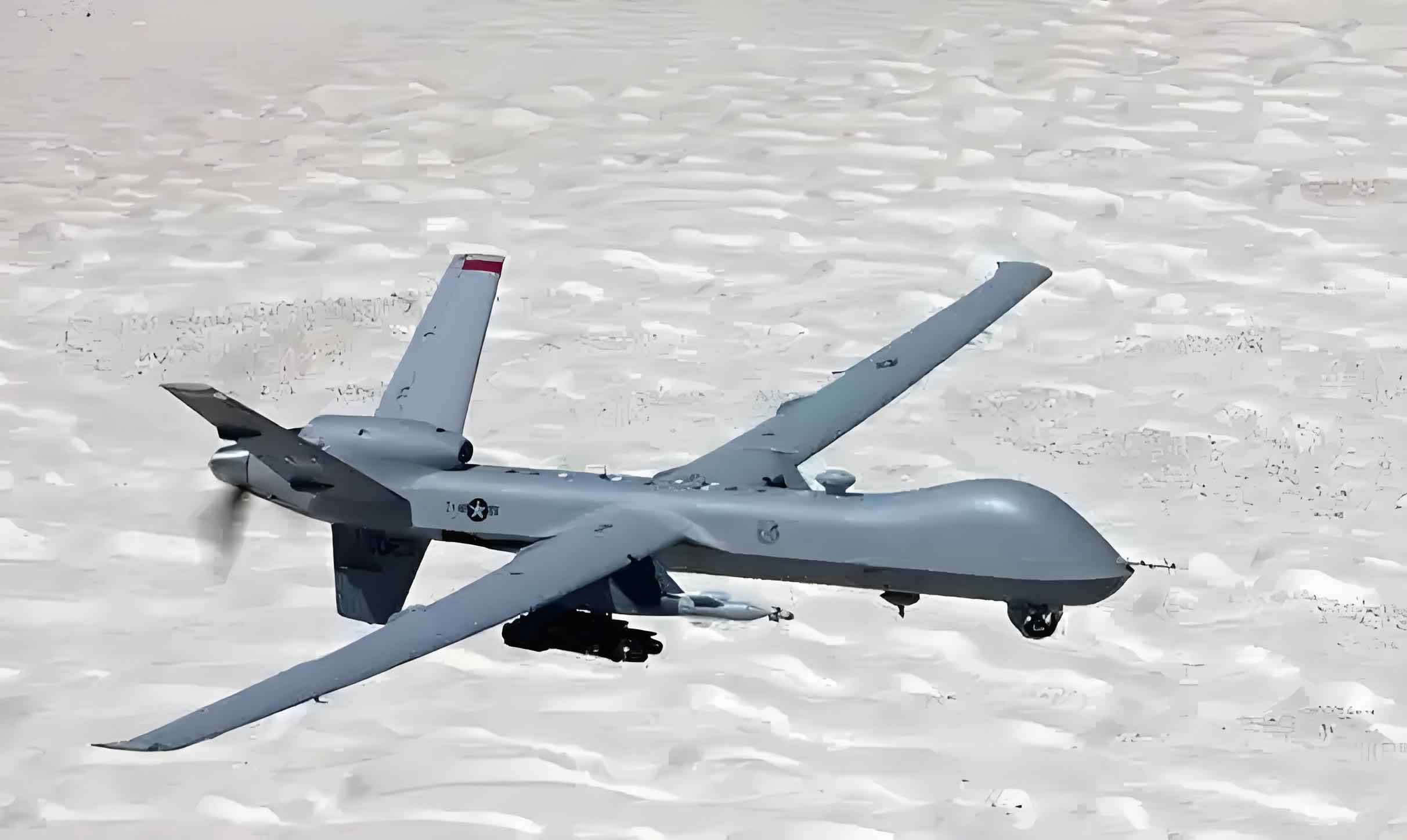
The global trajectory of composite usage in military aviation provides clear context for its adoption in military drones. The progression has been steady and decisive. The U.S. F-22 Raptor, a 5th-generation manned fighter, utilized approximately 25% composites by weight. Platforms like the RAH-66 Comanche helicopter and Russia’s S-37 Berkut pushed this envelope further, with composite content reaching over 50%. This trend has directly informed and accelerated the design philosophy for unmanned systems. In the West, the drive for lightweighting has led to significant industrial investments, such as the Carbon Composite Technology Center established by ThyssenKrupp in Dresden, Germany, focused on the design and automated production of CFRP components. For military drones, which often prioritize endurance, payload capacity, and stealth over extreme maneuverability, the weight savings from composites translate directly into longer flight times, increased sensor/weapon payloads, or reduced fuel consumption. Consequently, it is now common for advanced military drone airframes to be composed of 60-90% composites, with some being virtually all-composite structures.
The application of advanced composites in a military drone is systematic and integral to its core performance parameters. The following table breaks down typical applications across major structural and functional subsystems:
| Drone Subsystem / Component | Material of Choice | Rationale & Benefits |
|---|---|---|
| Wing & Control Surfaces (Spars, Skins, Ribs, Ailerons, Flaps) | Carbon/Epoxy or Carbon/BMI Sandwich Structures (Nomex/PVC foam core) | High stiffness for aerodynamic efficiency and flutter prevention; tailored flexure; weight reduction for fuel/ payload allowance; integral fuel tank possibilities. |
| Fuselage & Payload Bays | Carbon/Epoxy Monocoque or Semi-Monocoque Structures | Provides the primary load-bearing structure; enables complex, low-RCS shapes unachievable with metals; allows for large, integrated sensor apertures. |
| Empennage (Vertical & Horizontal Stabilizers) | Carbon/Epoxy or Hybrid (Carbon/Glass) Composites | Similar benefits to wings; often designed as sacrificial or damage-tolerant structures. |
| Engine Nacelles & Inlets | Carbon/BMI or Ceramic Matrix Composites (for hot sections) | Weight savings; ability to shape inlets for reduced radar signature and improved airflow; heat resistance for exhaust areas. |
| Landing Gear Doors & Panels | Carbon/Epoxy or Glass/Epoxy Laminates | Lightweight access panels; contributes to overall aerodynamic smoothness and stealth contour. |
| Radomes & Antenna Fairings | Specialized Glass Fiber or Quartz/Epoxy Composites | Provides electromagnetic transparency for radar and communications systems while offering structural protection and aerodynamic shaping. |
The design and manufacturing processes for composite military drone structures are as advanced as the materials themselves. The journey from design to a certified part involves several critical, interconnected stages. The process begins with a highly integrated design phase where structural loads, aerodynamic performance, and stealth requirements are analyzed concurrently using finite element analysis (FEA) software. The laminate is then defined, specifying each ply’s material, orientation, and sequence—a process known as stacking sequence definition. This is governed by classical laminate plate theory (CLPT), where the stress-strain relationship for a laminate is given by:
$$
\begin{Bmatrix} N \\ M \end{Bmatrix} = \begin{bmatrix} A & B \\ B & D \end{bmatrix} \begin{Bmatrix} \epsilon^0 \\ \kappa \end{Bmatrix}
$$
Here, $N$ and $M$ are the in-plane force and moment resultants, $A$, $B$, and $D$ are the extensional, coupling, and bending stiffness matrices, and $\epsilon^0$ and $\kappa$ are the mid-plane strains and curvatures. The $B$ matrix highlights the coupling effects unique to composites, which designers use to create aeroelastic or shape-adaptive structures.
Manufacturing technology has evolved to meet the demands of producing these complex, high-performance structures efficiently. A comparison of prevalent techniques reveals a trade-off between cost, quality, and production rate:
| Manufacturing Process | Description | Advantages for Military Drone Production | Limitations |
|---|---|---|---|
| Automatic Fiber Placement (AFP) / Automated Tape Laying (ATL) | Robotic deposition of pre-impregnated (prepreg) carbon fiber tapes or tows onto a mold. | High precision, repeatability, reduced labor, minimal material waste, enables large and complex contoured structures (e.g., wing skins). | High capital investment for machinery and software; requires specialized infrastructure. |
| Resin Transfer Molding (RTM) & Vacuum-Assisted RTM (VARTM) | Dry fiber preforms are placed in a closed mold, and resin is injected under pressure/vacuum and cured. | Excellent surface finish on both sides; good for complex 3D parts; lower cost tooling compared to autoclave processes; potential for high-volume production. | Longer cycle times; critical to control resin flow to avoid dry spots; fiber volume fraction can be lower than prepreg. |
| Out-of-Autoclave (OOA) Processing | Uses prepregs designed to cure under vacuum bag pressure only, in an oven, eliminating the need for a high-pressure autoclave. | Dramatically reduces capital and operational costs; enables manufacture of very large structures (e.g., full wing boxes) without size constraints of an autoclave. | Material costs are higher; requires meticulous process control to achieve void content and properties comparable to autoclave-cured parts. |
| Additive Manufacturing (3D Printing) | Building structures layer-by-layer using composite-filled filaments or direct deposition of fiber and matrix. | Unprecedented design freedom for complex internal structures (topology-optimized brackets, integrated cooling channels); rapid prototyping; minimal waste. | Currently limited in terms of part size and mechanical properties compared to traditional laminates; slower for large parts. |
Looking forward, the application of advanced composites in military drones is poised for further revolutionary developments. Several key vectors define this future trajectory. The trend towards Full Airframe Composite Integration will continue, moving beyond primary structures to include even more subsystems. We will see the emergence of integrated “smart structures” where composites have sensors, actuators, and micro-processors embedded within them, enabling real-time health monitoring, adaptive morphing wings, or self-healing capabilities for minor impact damage. This is described by concepts of multifunctionality, where a single composite laminate serves structural, sensory, and power-distribution roles simultaneously.
Another frontier is the development and integration of Nanotechnology-Enhanced Composites. The incorporation of carbon nanotubes (CNTs) or graphene nanoparticles into the polymer matrix can yield extraordinary improvements. These nano-reinforcements can enhance interlaminar shear strength, fracture toughness, and electrical/thermal conductivity. For instance, adding CNTs can improve damage tolerance by providing bridging mechanisms between plies, governed by relations like:
$$G_{Ic}^{total} = G_{Ic}^{matrix} + G_{Ic}^{fiber} + G_{Ic}^{nano}$$
where $G_{Ic}$ represents the mode I fracture toughness contributions from the matrix, the primary fibers, and the nano-reinforcements, respectively. This directly addresses a traditional weakness of laminated composites.
Finally, the drive for Sustainable and Low-Observable Composites will intensify. Research into bio-based resin systems and recyclable thermoplastic composites (like Carbon/PEEK) aims to address environmental concerns over the lifecycle of composite materials. Concurrently, the next generation of structural, wideband radar-absorbent materials (RAM) will be fully integrated into the composite layup, moving beyond surface coatings. These materials work by creating graded impedance layers or frequency-selective surfaces that dissipate incident radar energy as heat, a function dependent on complex permittivity ($\epsilon_r = \epsilon’ – j\epsilon”$) and permeability ($\mu_r = \mu’ – j\mu”$).
The ascent of the military drone as a cornerstone of modern defense strategy is inextricably linked to the maturation of advanced composite materials technology. From enabling the radical airframe shapes required for stealth to providing the weight savings necessary for unprecedented endurance, composites are the foundational technology that makes advanced unmanned systems feasible. The progression from secondary to primary structural elements, and now towards multifunctional, integrated systems, charts a clear course for the future. While challenges remain in areas of cost-effective high-rate manufacturing, repair methodologies, and full lifecycle management, ongoing research in automation, nano-enhancements, and novel material systems promises to overcome these hurdles. As the operational requirements for military drones continue to evolve—demanding greater range, survivability, and autonomy—the innovation in composite materials science and engineering will undoubtedly remain at the forefront, shaping the capabilities and defining the contours of the unmanned systems that will patrol the skies of tomorrow.