
The convergence of Unmanned Aerial Vehicle (UAV) technology with modern information systems represents one of the most dynamic frontiers in the global technology landscape. As a versatile tool, the civilian UAV has transcended its military origins to become a catalyst for innovation across numerous professional sectors, offering significant technological and economic promise. This evolution is not merely a market trend but a strategic shift, positioning civilian UAV applications as a central pillar for fostering new industries, enhancing operational efficiency, and solving complex logistical challenges. Among nations leading this charge, the United States stands out for its comprehensive approach, pioneering efforts in technological development, regulatory framework creation, and the promotion of industrial and commercial adoption. The U.S. trajectory offers critical insights into the multifaceted process of integrating a disruptive technology into the fabric of a modern economy and national airspace. This article examines the current state of the U.S. civilian UAV industry, analyzes key federal government measures that have propelled its growth, and explores the complex challenges that remain on the path to full integration.
Evolution and Market Landscape of Civilian UAVs
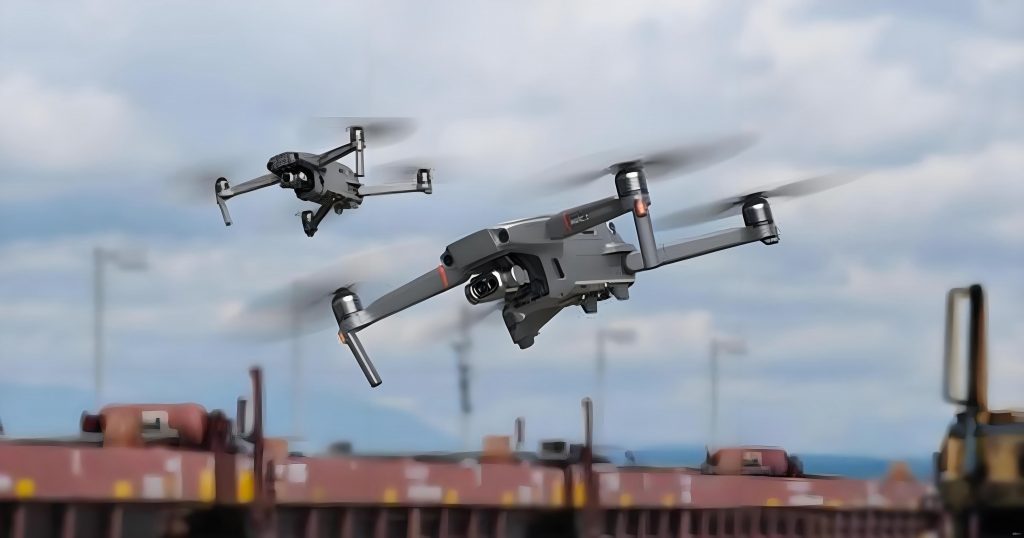
The term “drone” or UAV broadly encompasses a range of uncrewed aircraft, including fixed-wing, multi-rotor, helicopter, and lighter-than-air systems. While military development spans over a century, the modern proliferation of civilian UAV systems is a phenomenon of the last two decades, largely fueled by the consumer electronics revolution. The rapid maturation of miniaturized components—such as high-density batteries, compact global positioning system (GPS) and inertial measurement unit (IMU) sensors, and powerful low-cost processors—has dramatically reduced the barrier to entry for system design and manufacturing. Furthermore, the open-source movement in flight control software has democratized innovation, allowing startups and individual developers to build upon shared knowledge. This has led to an explosive growth in both consumer-grade models for recreation and advanced systems for professional applications.
The global market potential is substantial. Analysts project continuous expansion, with the commercial and consumer civilian UAV sector expected to represent a multi-billion-dollar industry within this decade. The economic impact extends beyond hardware sales to encompass service provision, data analytics, software development, and workforce training, creating a substantial new value chain. The potential economic contribution of integrated civilian UAV operations to a national economy can be modeled as a function of adoption rate and sectoral productivity gains:
$$ E_{impact} = \sum_{s=1}^{n} (A_s \cdot \Delta P_s \cdot V_s) $$
Where \( E_{impact} \) is the total economic impact, \( A_s \) is the adoption rate in sector \( s \), \( \Delta P_s \) is the productivity gain multiplier for that sector, and \( V_s \) is the baseline economic value of the sector. Early analyses in the U.S. context suggest a significant positive \( E_{impact} \) is achievable with widespread integration.
| Category | Primary Use Cases | Key Characteristics |
|---|---|---|
| Consumer/Recreational | Aerial photography, racing, hobby flying | Low cost (<$2,000), lightweight, visual line-of-sight operation, often subject to simplified rules. |
| Commercial & Professional | Precision agriculture, infrastructure inspection, surveying, filmmaking, real estate. | Higher payload capacity, advanced sensors (multispectral, LiDAR, thermal), potential for beyond visual line-of-sight (BVLOS) operations. |
| Public Safety & Government | Law enforcement, firefighting, disaster response, search and rescue, environmental monitoring. | Robust design, specialized sensors (e.g., thermal cameras), operations under specific Certificates of Waiver or Authorization (COA). |
| Delivery & Transportation | Package delivery, medical supply transport. | Advanced sense-and-avoid systems, high reliability, BVLOS capability, integration into low-altitude traffic management. |
The U.S. Civilian UAV Industrial and Manufacturing Base
The United States possesses a robust and diverse ecosystem for civilian UAV development. This foundation is bolstered by decades of substantial federal investment in aerospace and defense research, which has created a deep reservoir of technical expertise and advanced manufacturing capabilities. While major defense contractors like Lockheed Martin, Boeing, and Northrop Grumman contribute high-end, mission-specific systems, the vibrant core of the civilian UAV market is driven by specialized aerospace firms and agile technology startups. These entities focus on manufacturing small to medium-sized UAVs, with costs ranging from a few hundred to tens of thousands of dollars, tailored for the commercial and consumer markets.
Furthermore, large technology conglomerates such as Amazon, Google (Alphabet), and Intel have established significant internal divisions dedicated to civilian UAV technology. Their pursuits often target transformative applications like autonomous package delivery and advanced aerial data services, pushing the boundaries of platform endurance, autonomy, and airspace integration. The Federal Aviation Administration (FAA) has projected a fleet numbering in the hundreds of thousands for commercial civilian UAV operations in the near term, underscoring the anticipated scale of this industrial activity. The manufacturing output \( Q \) can be linked to regulatory clarity \( R \), market demand \( D \), and technological maturity \( T \) through a generalized growth model:
$$ Q(t) = Q_0 \cdot e^{k(R, D, T) \cdot t} $$
Here, \( Q_0 \) is the initial production level, \( k \) is a growth rate coefficient dependent on the factors of regulation, demand, and technology, and \( t \) is time. The U.S. regulatory shifts since 2016 have significantly increased \( k \), accelerating \( Q(t) \).
Federal Regulatory Framework and Promotion Initiatives
The integration of civilian UAV systems into the National Airspace System (NAS) is the single most critical enabler for the industry’s growth. The U.S. federal government, primarily through the FAA, has pursued a structured, albeit sometimes cautious, path to establish rules that ensure safety while enabling innovation. This journey has evolved from restrictive case-by-case authorizations to a more permissive, standardized framework.
The Part 107 Rule: A Foundational Milestone
Enacted in August 2016, the FAA’s Part 107 rule for small Unmanned Aircraft Systems (sUAS) marked the world’s first comprehensive national regulation for routine commercial civilian UAV operations. It established clear “rules of the road” that lowered the barrier to legal commercial use.
| Regulatory Aspect | Part 107 Standard Rule | Waiverable for Advanced Operations |
|---|---|---|
| Operator Certification | Remote Pilot Certificate with sUAS rating (pass knowledge test). | N/A |
| Visual Line of Sight (VLOS) | Required at all times. | Yes, for BVLOS operations. |
| Altitude Limit | 400 feet above ground level (AGL). | Yes. |
| Speed Limit | 100 mph (87 knots). | Yes. |
| Operations Over People | Generally prohibited. | Yes, under specific risk-based categories. |
| Night Operations | Originally prohibited, now allowed with proper lighting and pilot training. | N/A (now part of updated rule). |
| Vehicle Registration | Required for sUAS > 0.55 lbs. | N/A |
While Part 107 unlocked immense potential, it explicitly prohibited more complex operations essential for scalable business models, such as flights over people, beyond visual line-of-sight (BVLOS), and routine night operations, unless operators obtained a difficult-to-secure waiver.
Research, Development, and Test Infrastructure
Parallel to rulemaking, the federal government has invested in building a knowledge base and proving grounds for civilian UAV technology. Key initiatives include:
- UAS Test Sites: Established in 2013, six official test sites across the country (e.g., in Alaska, Nevada, New York) have served as collaborative hubs for the FAA, NASA, and industry to research critical integration challenges like sense-and-avoid technologies, command and control link reliability, and air traffic control procedures in diverse environments.
- The NASA UAS Traffic Management (UTM) Project: This research initiative focuses on developing a scalable, low-altitude traffic management ecosystem separate from the manned air traffic control system. It aims to enable high-density civilian UAV operations, particularly BVLOS flights, by providing services like airspace designation, congestion management, and contingency planning through a federated, mostly automated system.
The Integration Pilot Program (IPP) and Beyond
To accelerate progress beyond the limitations of Part 107, the U.S. Department of Transportation launched the UAS Integration Pilot Program in 2017. This program represented a significant strategic shift by:
- Devolving Authority: It invited state, local, and tribal governments to partner with private industry and propose tailored pilot projects for testing advanced civilian UAV operations in their jurisdictions.
- Testing Advanced Operations: The IPP explicitly encouraged testing the very operations that were previously constrained: BVLOS, flights over people, and night operations, applied to use cases like package delivery, infrastructure inspection, and emergency response.
The success of the IPP led directly to the development of more advanced, performance-based regulations, effectively using the data and lessons from these real-world tests to inform permanent rulemaking. This iterative, data-driven approach to regulation can be seen as a feedback loop:
$$ R_{n+1} = F(R_n, O_{test}, D_{safety}) $$
Where the next iteration of regulations \( R_{n+1} \) is a function \( F \) of the current rules \( R_n \), the operational data \( O_{test} \) gathered from pilot programs, and the overarching safety data \( D_{safety} \).
Commercial Application Sectors and Economic Potential
The operational flexibility granted by evolving regulations has unlocked value across a wide array of sectors. The commercial promise of the civilian UAV lies in its ability to collect high-resolution data, access hard-to-reach locations, and automate repetitive tasks—all at a lower cost and risk than traditional methods.
| Sector | Primary Applications | Value Proposition & Metrics |
|---|---|---|
| Agriculture | Precision farming, crop health monitoring (NDVI), spraying, livestock management. | Increased yield (\(Y\)), optimized input use (water, fertilizer, pesticides) reducing cost (\(C\)), early pest/disease detection. ROI can be modeled: \( ROI_{ag} = \frac{\Delta Y \cdot P_{crop} – C_{UAV} – C_{inputs}}{\text{Investment}} \). |
| Infrastructure & Construction | Inspections (power lines, pipelines, cell towers, bridges), surveying, site progress monitoring, volumetric analysis. | Reduced inspection time & cost, improved worker safety (reducing \( \text{Risk}_{injury} \)), enhanced data accuracy for planning. Creates detailed digital twins of assets. |
| Public Safety & Security | Search and rescue, firefighting (hotspot identification), disaster assessment, law enforcement (scene documentation, crowd monitoring). | Rapid situational awareness, enhanced operational effectiveness, reduced risk to first responders. Value is often measured in lives saved or critical time gained. |
| Media & Entertainment | Filmmaking, journalism, real estate marketing, sporting event coverage. | Unique aerial perspectives previously requiring helicopters, significantly lower cost per shot, greater creative flexibility. |
| Logistics & Delivery | Medical supply transport (e.g., defibrillators, blood), retail package delivery, industrial part delivery. | Speed, especially in congested or remote areas. Time-critical delivery benefit can be expressed as: \( Benefit = f(T_{saved}, \text{Criticality}_{payload}) \). |
The total addressable market for each sector contributes to the aggregate economic forecast for the civilian UAV industry. Estimates consistently project tens of billions of dollars in annual economic impact and the creation of hundreds of thousands of jobs in the U.S. alone, spanning manufacturing, software, services, and piloting.
Persistent Challenges and the Path Forward
Despite remarkable progress, the full integration of civilian UAV systems faces persistent technical, regulatory, and social hurdles that must be addressed to achieve scale.
1. Technological Hurdles: Sense-and-Avoid and BVLOS
The cornerstone of safe BVLOS and urban operations is a reliable “sense-and-avoid” (or “detect-and-avoid”) capability. A civilian UAV must be able to perceive other aircraft, obstacles, and people and execute appropriate avoidance maneuvers. This requires a fusion of technologies:
- Technical Risk Score: The failure risk of a BVLOS system can be conceptualized as a function of sensor fusion reliability and algorithmic decision-making: \( \text{Risk}_{BVLOS} = 1 – (P_{detect} \cdot P_{classify} \cdot P_{avoid}) \), where each \( P \) represents the probability of successful detection, classification, and avoidance maneuver.
While technologies like ADS-B (for cooperative aircraft), radar, and computer vision are advancing, creating a lightweight, affordable, and certifiably reliable system for small civilian UAV platforms remains an active area of research and development.
2. The Privacy Conundrum
Perhaps the most significant social and regulatory challenge outside of pure aviation safety is privacy. The ability of civilian UAV to capture images and data from the air raises profound questions about individual privacy rights, data ownership, and surveillance. The U.S. federal regulatory framework, focused on airspace safety, has largely deferred on privacy issues. This has created a patchwork of state and local laws that can be confusing for operators. A coherent national approach, balancing innovation with civil liberties, is yet to be fully established. The privacy challenge \( C_{priv} \) can be framed as a multi-variable problem:
$$ C_{priv} = f(R_{expectation}, L_{patchwork}, T_{surveillance}, D_{sensitivity}) $$
involving societal privacy expectations \( R_{expectation} \), the patchwork of laws \( L_{patchwork} \), advancing surveillance technology \( T_{surveillance} \), and the sensitivity of collected data \( D_{sensitivity} \).
3. Implementing UAS Traffic Management (UTM)
For the high-density operation of civilian UAV, especially in urban areas for delivery and air taxi services, a functioning UTM ecosystem is essential. This is not a single system but a set of services and protocols that allow civilian UAV operators to coordinate with each other and with authorities. Key requirements include real-time airspace status, dynamic geofencing, vehicle identification and tracking, and communication of flight intent. The full deployment and commercialization of UTM services, ensuring interoperability and cybersecurity, is a complex undertaking that requires continued public-private partnership.
4. Security and Cybersecurity Threats
The civilian UAV itself can be a target or a vector for malicious activity. Threats include the physical hijacking of platforms, jamming or spoofing of control/GPS signals, and the hacking of data links to steal sensitive collected information. Developing robust, cryptographically secure communication protocols and anti-tamper hardware is critical for sensitive commercial and government applications.
Conclusion: A Trajectory of Managed Integration
The development of the civilian UAV industry in the United States exemplifies a modern approach to technological governance. It began with cautious restriction, moved to a foundational permissive framework (Part 107), and has since adopted an iterative, data-driven strategy to incrementally expand operational freedoms (via the IPP and subsequent rulemakings). This phased model balances the imperative for safety and security with the desire to foster innovation and capture economic benefit.
The U.S. experience underscores several key principles for national strategies aiming to cultivate a civilian UAV ecosystem: the necessity of clear federal regulations that provide certainty to investors and operators; the importance of investing in shared R&D infrastructure and test beds; the value of leveraging local government and industry partnerships for real-world testing; and the critical need to proactively address non-safety concerns like privacy and cybersecurity in parallel with airspace integration efforts.
Looking forward, the trajectory points toward increasingly autonomous operations, seamless integration into a digital UTM landscape, and the emergence of novel applications not yet conceived. The continued maturation of the civilian UAV sector will depend on sustained collaboration between regulators, technologists, industry stakeholders, and the public to navigate the remaining technical and societal challenges. The United States, through its evolving blend of policy, research, and public-private partnership, has established a significant lead in this complex endeavor, offering a comprehensive, if still unfolding, case study in the integration of a transformative technology into everyday life.