
The geological structure of China is complex, with extensive distribution of mountains and hills. Triggered by factors such as heavy rainfall, earthquakes, and human engineering activities, frequent disasters like landslides, collapses, and debris flows occur. Therefore, developing rapid, precise, and efficient emergency monitoring technologies to timely obtain surface deformation information of hazard bodies is crucial for grasping disaster dynamics, assessing risk situations, and guiding scientific disaster prevention.
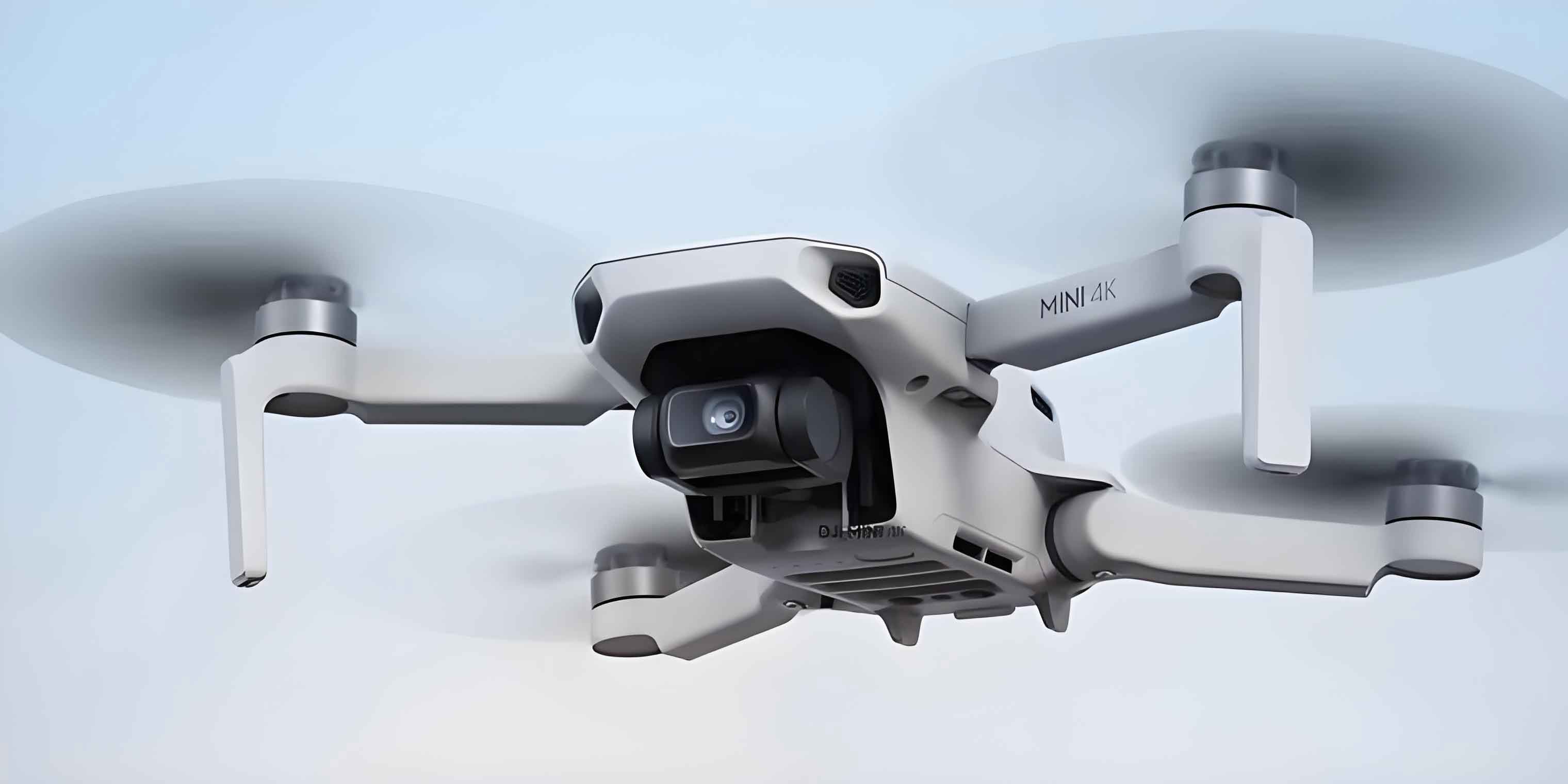
From my perspective as a practitioner in the field of geomatics, the advent of UAV drones has revolutionized our approach to geohazard monitoring. The ability to deploy these agile platforms rapidly over hazardous and often inaccessible terrain provides an unparalleled advantage in emergency response scenarios. This article systematically details the application of UAV drones for photogrammetric monitoring of landslides, based on my extensive work in this domain. I will cover the technical workflow from data acquisition to final analysis, present quantitative results, and validate the accuracy of the methodology.
1. Overview of the Study Area
The research was conducted in a county recognized as a high-susceptibility zone for geohazards. The area exhibits typical characteristics that make it an ideal case study for evaluating UAV-based monitoring techniques. Key environmental and geological parameters of the study area are summarized in the table below.
| Parameter | Description / Value |
|---|---|
| Climate Type | Subtropical Maritime Monsoon |
| Average Annual Rainfall | 1654 mm |
| Rainy Season | Concentrated, influenced by typhoons |
| Hydrological System | Primarily composed of two major river basins |
| Geohazard Background | High susceptibility area; numerous landslide hazards |
| Typical Landslide Character | Small scale, large quantity, often human-induced |
| Target Landslides | Two representative large-scale, deep-seated landslides |
| Landslide State | Continuous creep deformation stage |
| Lithology | Dominantly Jurassic volcanic rocks |
| Geological Structure | Well-developed folds and significant faults |
The two monitored landslides are rare large-scale examples within the region. Both pose significant threats to populations and infrastructure and exhibit clear signs of deformation, making them critical targets for continuous monitoring using UAV drones.
2. UAV Drones and Photogrammetric Technology
2.1 Data Sources and Acquisition
In my work, I utilized a multi-platform approach to leverage the strengths of different UAV drones and sensors. This strategy ensures robustness and flexibility under varying operational conditions. The specifications of the employed platforms and sensors are detailed below.
| UAV Platform | Sensor / Payload | Key Specifications | Positioning System |
|---|---|---|---|
| DJI Mavic 3E | 1-inch CMOS (FC6310 Camera) | 20 Megapixels | Integrated GNSS-RTK Module |
| South Surveying SmartWing SF4200 (Fixed-Wing VTOL) | Parrot Sequoia Multispectral Sensor | 16 Megapixels (per band) | Post-Processed Kinematic (PPK) via Ground Base Station |
| DJI Matrice 350 RTK | Sony ILCE-7RM2 Full-Frame Camera | 42.4 Megapixels | Integrated GNSS-RTK Module |
All platforms were integrated with a high-precision POS system combining Real-Time Kinematic (RTK) or Post-Processed Kinematic (PPK) Global Navigation Satellite System (GNSS) positioning with an Inertial Measurement Unit (IMU). This integration is paramount for direct georeferencing of captured imagery, minimizing the need for extensive ground control and accelerating the entire processing pipeline—a critical factor in emergency response. The use of these advanced UAV drones guarantees the acquisition of imagery with high-precision geographic reference.
2.2 Flight Planning and Altitude Determination
Careful flight planning is essential for successful photogrammetric data capture with UAV drones. The flight altitude (H) is primarily determined by the desired Ground Sampling Distance (GSD), which is the size of one pixel on the ground. A smaller GSD yields higher spatial resolution. The fundamental formula governing this relationship is:
$$ GSD = \frac{H \times s}{f} $$
Where:
- $GSD$ is the Ground Sampling Distance (in meters per pixel),
- $H$ is the flight altitude above ground level (in meters),
- $s$ is the camera sensor pixel size (in meters), and
- $f$ is the camera focal length (in meters).
Therefore, to achieve a specific GSD, the required flight altitude can be calculated by rearranging the formula:
$$ H = \frac{GSD \times f}{s} $$
In practice, I set the flight altitude strictly based on the camera sensor specifications, focal length, and the preset GSD requirement, typically aiming for 2-3 cm for detailed landslide analysis. Flight planning software such as eMotion 2 and DJI GS Pro was used to design the missions. Two primary flight patterns were employed: parallel line (nadir) and cross-hatch (nadir + oblique). Overlap rates were meticulously controlled to ensure high-quality 3D reconstruction:
- Along-track overlap: 75% to 80%
- Across-track overlap: 68% to 80%
These parameters, adapted for different periods and UAV platforms, ensure complete area coverage and meet the requirements for generating accurate orthomosaics and 3D models while balancing flight safety and data quality.
2.3 Data Processing Workflow
The processing of imagery collected by UAV drones follows a structured photogrammetric pipeline. My standard workflow, which transforms raw images into quantifiable geospatial products, is outlined below and can be represented by the following sequence:
1. Data Preprocessing: Involves radiometric correction (e.g., vignetting correction), geometric lens distortion correction, and color balancing. High-precision POS data (from RTK/IMU) and ground control points (if available) are imported to establish the initial exterior orientation parameters.
2. Aerial Triangulation (AT) & Sparse Reconstruction: Based on the Structure from Motion (SfM) algorithm. This step automatically detects and matches feature points across thousands of overlapping images, building a network of tie points. Bundle Adjustment (BA) optimizes the 3D coordinates of these points and the camera positions/orientations simultaneously, minimizing reprojection error.
3. Dense Point Cloud Generation: Using Multi-View Stereo (MVS) algorithms, a dense 3D point cloud is generated by performing pixel-level matching across all oriented images. The density of this point cloud is orders of magnitude greater than the sparse cloud from SfM.
4. Derivative Product Generation:
- Digital Surface Model (DSM): The classified dense point cloud (ground vs. non-ground points) is interpolated into a raster grid representing the topmost surface elevation.
- Digital Orthophoto Map (DOM): Original images are orthorectified (differential rectification) using the DSM to remove terrain displacement and camera tilt effects, then mosaicked into a seamless, georeferenced image map.
- 3D Textured Mesh Model: A triangulated irregular network (TIN) is created from the dense point cloud, and the original image textures are mapped onto it, producing a photorealistic 3D model.
3. Specific Application and Results
3.1 Data Processing Results
I conducted surveys in two epochs, 2020 and 2024. The processing of UAV drone imagery yielded high-precision foundational data for both landslides:
- Digital Orthophoto Maps (DOMs): Generated with a spatial resolution of 2-3 cm. These maps clearly depict surface features such as vegetation, buildings, roads, and, crucially, tension cracks and scarps related to landslide movement.
- Digital Surface Models (DSMs): Generated with a grid resolution better than 5 cm. These models accurately express micro-topographic relief, steep scarps, and deformation features.
- 3D Real-Scene Models: Photorealistic, geometrically accurate 3D mesh models were constructed. These models enable 3D visualization, support arbitrary angle viewing, distance measurement, profile analysis, and spatial querying, providing an intuitive and reliable 3D scene for emergency command and decision-making.
3.2 Emergency Monitoring Analysis
3.2.1 Displacement Monitoring and Risk Zoning
By comparing the two epochs of DOM data, I extracted the horizontal displacement ($\Delta d$) of identifiable feature points (e.g., corners of structures). The horizontal displacement magnitude is calculated from its easting ($\Delta x$) and northing ($\Delta y$) components using the Euclidean distance formula:
$$ \Delta d = \sqrt{(\Delta x)^2 + (\Delta y)^2} $$
A subset of the calculated displacement vectors is presented in the table below.
| Point ID | $\Delta x$ (m) | $\Delta y$ (m) | $\Delta d$ (m) |
|---|---|---|---|
| 1 | +0.219 | +0.061 | 0.23 |
| 2 | +0.091 | -0.095 | 0.13 |
| 3 | -0.134 | -0.102 | 0.17 |
| 4 | -0.347 | +0.045 | 0.35 |
| 5 | -0.292 | +0.024 | 0.29 |
| 25 | -0.490 | -0.008 | 0.49 |
The results showed that points with $\Delta d \geq 0.30$ m were concentrated in the mid-upper section of the landslide. Based on the displacement analysis and auxiliary data (crack density from image analysis, slope from LiDAR DEM), I established a three-tier risk zoning criterion for the landslide body.
| Risk Level | Horizontal Displacement $\Delta d$ (m) | Annual Rate (m/year) | Crack Development |
|---|---|---|---|
| High Risk | $\geq 0.30$ | $\geq 0.10$ | – |
| Medium Risk | $0.10 \sim 0.30$ | $< 0.10$ | Developed |
| Low Risk | $< 0.10$ | $< 0.10$ | No cracks |
Using spatial analysis tools like kernel density in GIS, I delineated the boundaries of the high-risk zone (main scarp and central sliding area). Medium-risk zones were identified in lateral shear zones based on crack density, and low-risk zones were defined in the gentle, accumulated toe area.
3.2.2 Spatio-Temporal Deformation Characteristics
The core of the quantitative deformation analysis lies in the Difference of DSMs (DoD) technique. After precise co-registration of the multi-temporal DSMs produced by the UAV drones, the elevation change ($\Delta h$) for each raster cell is computed by subtracting the earlier DSM from the later one:
$$ \Delta h = DSM_{t_2} – DSM_{t_1} $$
Where $\Delta h > 0$ indicates deposition (material accumulation) and $\Delta h < 0$ indicates erosion or subsidence (material loss/sliding).
The multi-epoch DSM differential analysis revealed that the mid-upper section of the landslide exhibited continuous creep deformation. The maximum cumulative displacement reached 1.2 m, with the displacement vector direction pointing toward the slope toe. The primary deformation area exhibited a characteristic “armchair” shape. Critically, the displacement rate showed a significant increase during the rainy season, further corroborating the role of rainfall as a primary triggering and accelerating factor for landslide movement.
3.3 Accuracy Verification
To validate the accuracy of the deformation measurements derived from UAV drone photogrammetry, I conducted an independent comparison with traditional surveying methods. A network of 15 GNSS monitoring points and 8 total station stations was established on the landslide surface. The results of the comparison are summarized below.
The average deviation between UAV-extracted horizontal displacements and GNSS measurements was $\pm 1.8$ cm. The average deviation for elevation changes compared to total station data was $\pm 2.3$ cm. Measurements of crack widths from the UAV-derived models had an error of less than 0.5 cm compared to field caliper measurements.
A more robust statistical measure is the Root Mean Square Error (RMSE), calculated as:
$$ RMSE = \sqrt{\frac{1}{n}\sum_{i=1}^{n}(Z_{UAV, i} – Z_{Ref, i})^2} $$
Where $Z_{UAV, i}$ and $Z_{Ref, i}$ are the i-th measurement from the UAV and the reference method (GNSS/Total Station), respectively, and $n$ is the number of sample points.
The RMSE for all comparative datasets was better than 2.5 cm, with correlation coefficients exceeding 0.98. This verification confirms that the monitoring results obtained from UAV drones possess accuracy and reliability comparable to traditional surveying methods at the millimeter-to-centimeter level, fully meeting the technical requirements for landslide emergency monitoring.
4. Conclusion
Through the systematic implementation of UAV drone-based emergency monitoring for landslides, this work has convincingly demonstrated the significant technical advantages and application potential of UAV photogrammetry in geohazard emergency response and continuous monitoring. UAV drones provide the capability to rapidly acquire high-resolution, high-precision 3D surface information. This technology enables the precise identification and quantitative analysis of landslide deformation and crack propagation. The derived products—including DOMs, DSMs, DoDs, and 3D models—offer reliable data support for disaster assessment, risk zoning, and the formulation of mitigation strategies. The efficiency, safety, and accuracy of UAV drones make them an indispensable tool in modern geohazard management, transforming our ability to understand and respond to dynamic geological threats.