
As a researcher observing the rapid evolution of aerial spectacles, I find the ascent of the drone light show from a nascent technological novelty to a mainstream cultural phenomenon both fascinating and fraught with tension. Originating from early 20th-century conceptualizations and maturing through prolonged technical gestation, drone swarm technology surged into public consciousness in the early 21st century. Today, it has firmly embedded itself within the realm of visual culture, establishing itself as a potent technical medium for performance and a novel artistic form. It has become a staple in large-scale events, festive celebrations, and commercial campaigns, captivating audiences worldwide. Fundamentally, a drone light show involves the computer-controlled, precise choreography of multiple unmanned aerial vehicles (UAVs). Through programmatic coding, wireless communication, and sophisticated swarm control algorithms, these drones form intricate, dynamic shapes and patterns in the night sky, delivering awe-inspiring audiovisual experiences.
However, with the widespread application and rapid popularization of this technology, a critical conflict has come into sharp focus: the inherent tension between technical rationality and humanistic value. As the pace of technological iteration accelerates, there is a palpable risk that cultural depth and meaning become diluted, relegated to the periphery of what is primarily a technical spectacle. This dissonance not only constrains the artistic potential of the drone light show but also threatens its sustainable development as a meaningful cultural practice. This analysis, from my perspective, delves into the manifestations and roots of this conflict, aiming to broaden the discourse on the interplay between technology and the humanities and to propose pathways for the harmonious evolution of this medium.
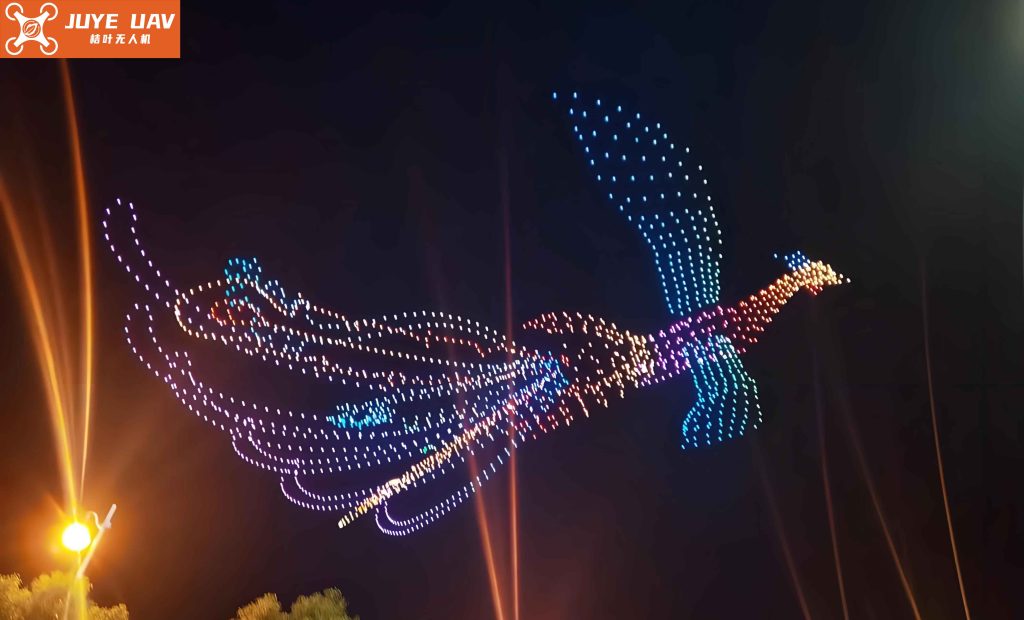
Deconstructing the Binary: Technical Rationality vs. Humanistic Value
In the context of a drone light show, technical rationality refers to the material foundation and methodological framework that enables its execution. It encompasses a suite of technologies including flight control systems, cluster coordination and formation algorithms, synchronized lighting control, and robust data transmission networks. The core of a drone light show lies in its code—the precise instructions that govern formation geometry, lighting hue and intensity, and flight trajectories. This technical substrate prioritizes optimization: maximizing efficiency, ensuring pinpoint accuracy, and enhancing visual impact to deliver a consistently stunning spectacle. The concept of “transcoding” is central here; the technology transforms physical airspace into a programmable, virtual canvas—a form of “sky coding”—where data and symbols are fluidly interchanged.
Conversely, humanistic value pertains to the cultural, aesthetic, and emotional substance conveyed through the performance. It is the layer of meaning that transcends the mere demonstration of technical capability. This value is embedded in the narratives, cultural symbols, artistic concepts, and emotional resonance that the aerial display seeks to evoke. It connects the spectacle to shared human experiences, historical heritage, or social themes, aiming to inspire reflection and emotional engagement rather than just passive observation.
The relationship between these two forces is dialectical and intertwined. Technical rationality provides the essential tools for actualizing creative visions and complex cultural expressions that would otherwise be impossible. Simultaneously, humanistic value offers a guiding purpose and a critical framework for technological application, steering innovation toward socially meaningful and culturally enriching ends. Their ideal synergy elevates the artistic quality of the drone light show while ensuring technological development remains aligned with humanistic concerns.
| Aspect | Technical Rationality | Humanistic Value |
|---|---|---|
| Primary Focus | Precision, Control, Efficiency, Reliability, Scalability | Meaning, Narrative, Emotion, Cultural Identity, Aesthetic Depth |
| Key Elements | Flight Control Algorithms, Swarm Communication Protocols, GPS/RTK Positioning, Battery Management, Safety Systems | Iconography, Symbolism, Storytelling, Artistic Composition, Ethical Considerations, Social Commentary |
| Success Metrics | Formation Accuracy ($\sigma_f$), Uptime Reliability ($R_t$), Latency ($L$), Number of Drones Synchronized ($N$) | Audience Emotional Response ($E_r$), Cultural Relevance ($C_r$), Narrative Coherence ($N_c$), Critical Acclaim |
| Output | Visual Spectacle, “Wow” Factor, Demonstrations of Technical Prowess | Cultural Dialogue, Memorable Experience, Intellectual and Emotional Stimulation |
Manifestations of Conflict in Contemporary Drone Light Shows
My observation of the field reveals several persistent patterns where technical rationality and humanistic value clash, leading to performances that are impressive yet often hollow.
1. The Misalignment of Technical Dominance and Humanistic Experience
Technical reliability is the non-negotiable foundation for any audience experience. Yet, failures—from signal interference to battery faults—remain a reality. High-profile malfunctions, such as formation “glitches” or mass groundings, starkly illustrate how technical failure instantly obliterates the humanistic experience, leaving audiences disappointed and the intended narrative in ruins. More subtly, even in “successful” shows, an over-emphasis on technical “virtuosity” can dominate. Performances often prioritize complex geometric transitions and dazzling light effects—the “how”—while under-developing the “why.” The result is a spectacle perceived as a cool technological demo rather than a载体 for deeper brand ethos, cultural story, or emotional journey. The humanistic intent fails to permeate the technical shell.
2. The Discord Between Technical Standardization and Cultural Diversity
The commercial scalability of drone light shows often drives toward technical and content standardization. As the market expands globally and into new regions, there is a risk of imposing a homogenized visual language. I have observed recurring, generic patterns (mythical creatures, global landmarks, corporate logos) being deployed in vastly different cultural contexts with little adaptation. This practice can overshadow and even erode local visual cultures and traditions. When a technologically imported spectacle becomes the focal point of a city’s skyline, it can reconfigure spatial narratives and dilute the unique cultural identity of a place, substituting local heritage with a placeless, standardized digital display.
3. The Imbalance Between Visual Impact and Cultural Depth
The relentless drive for technological novelty—more drones, more complex animations, brighter lights—fuels an arms race for visual shock. This often comes at the expense of substance. Cultural elements are sometimes reduced to superficial iconography, slapped onto a formation without contextual depth or thoughtful interpretation. For instance, using a recognizable cultural motif (like a classical dance pose or historical figure) as a static shape in a sequence does not equate to conveying its rich cultural significance. The performance may provide a moment of recognition but fails to initiate contemplation or emotional connection. The spectacle becomes a container for signifiers emptied of their signified meaning.
| Conflict Type | Technical Rationality Manifestation | Humanistic Value Deficit | Consequence |
|---|---|---|---|
| Misalignment | Prioritization of flawless execution & visual “wow” factor; Treatment of narrative as secondary data load. | Audience perceives only technical skill; Emotional & narrative arcs are weak or lost. | Performances are impressive but forgettable; they fail to build lasting cultural resonance. |
| Standardization Discord | Use of universal, repeatable templates & algorithms for global efficiency & cost-control. | Erasure of local cultural specificity & identity; Performances feel generic and disconnected from place. | Contributes to cultural homogenization; Misses opportunity for authentic local storytelling. |
| Impact/Depth Imbalance | Focus on scaling technical parameters: $I_v \propto N \cdot C_a \cdot B_l$ (where $I_v$=Visual Impact, $N$=Drone Count, $C_a$=Animation Complexity, $B_l$=Brightness Level). | Cultural depth $D_c$ is treated as a constant or low-priority variable, leading to $\frac{I_v}{D_c} \to \infty$. | Spectacle overwhelms substance; Audience is dazzled but not moved or intellectually engaged. |
Root Cause Analysis: Why Does This Conflict Arise?
Understanding these manifestations requires examining their underlying causes, which are systemic and interlinked.
1. Technology-Led Development Models: The genesis and evolution of drone swarm technology are inherently engineer-driven. The primary challenges were and often remain technical: stability, coordination, scalability. In this paradigm, humanists and artists are frequently invited too late in the process—to “wrap” a narrative around a pre-determined technical show. Their role becomes cosmetic rather than constitutive, ensuring humanistic considerations are secondary from the outset.
2. Imbalance Between Economic and Cultural Capital: The commercial engine of the drone light show industry powerfully shapes its output. Clients often seek maximum visibility and audience reach, metrics easily linked to technical scale and spectacle. The return on investment (ROI) is more readily calculated in impressions and social media shares than in cultural enrichment or emotional impact. This drives a cycle where cost-effective, reliably impressive technical packages are favored over riskier, nuanced cultural explorations that require deeper investment in research and creative development.
3. Divergence in Social Perception and Cultural Frames: Different stakeholders view the drone light show through disparate lenses. Engineers see a distributed systems challenge. Marketers see a high-impact advertising platform. Artists see a new kinetic medium. Local communities may see an alien imposition or a thrilling event. These divergent expectations and cultural frames of reference make it difficult to create a performance that satisfies the technical purist, the narrative seeker, and the cultural insider simultaneously. Without a deliberate integrative framework, the lowest common denominator—sheer visual spectacle—often wins.
Towards a Symbiosis: Proposed Adaptive Mechanisms
Resolving this conflict requires intentional, structured interventions across multiple layers of the drone light show ecosystem. I propose the following adaptive mechanisms.
1. Technical Layer: Deep Cultural Embedding
The core principle must be technology in service of culture. This requires moving beyond using culture as a superficial skin. Technologists and artists must collaborate from the earliest stages to embed cultural logic into the very algorithms. For example, the motion paths for a drone formation depicting a traditional dance should not be arbitrary flying lines. They can be derived from mathematical models of the dance’s kinematics or fluid dynamics, captured via motion-tracking systems. The flight algorithm could be designed to reflect the dance’s intrinsic energy and rhythm.
Let the position of a drone in a culturally-modeled formation be defined not just by a coordinate $(x,y,z,t)$, but by a state vector influenced by cultural parameters:
$$ \vec{S}_{drone} = f(\vec{P}_{tech}, \vec{P}_{culture}) $$
where $\vec{P}_{tech} = (precision, battery, collision\_avoidance, …)$ and $\vec{P}_{culture} = (narrative\_beat, emotional\_weight, symbolic\_trajectory, …)$.
Furthermore, interactive and immersive technologies like AR can bridge the gap between spectacle and understanding. Audiences could use devices to unlock contextual layers—historical notes, artistic interpretations, or alternative narrative viewpoints—superimposed on the live performance, transforming passive viewing into an engaged, educational, and personalized experience.
2>Creative Layer: Transdisciplinary Collaboration
A fundamental restructuring of the creative process is necessary. The standard client-vendor relationship should be replaced or supplemented by a transdisciplinary creative cell. This core team would consist of:
- Swarm Engineers & Programmers: To translate artistic and cultural concepts into feasible, safe, and innovative flight code.
- Cultural Scholars &> Historians: To ensure authentic, respectful, and deep representation of cultural content.
- Artistic Directors &> Designers: To weave cultural insights into compelling visual narratives and aesthetic compositions.
- Community Liaisons: To incorporate local perspectives and ensure relevance.
This cell would work iteratively from the concept phase, ensuring humanistic value is a primary design constraint, not an afterthought. To combat homogenization, open innovation platforms could solicit narrative ideas and visual concepts from the public, fostering diverse input and a sense of co-creation.
3. Institutional Layer: Value-Anchoring Frameworks
Sustainable change requires institutional support and policy guidance.
- Development of Dual-Aspect Standards: Beyond safety and frequency regulations, municipalities and cultural bodies could establish guidelines that encourage or require consideration of cultural impact assessments for large-scale public drone light shows. These would evaluate a proposal’s contribution to local cultural vibrancy versus potential for visual pollution or cultural displacement.
- Tripartite Review Mechanisms: For major public-funded or public-space shows, a review panel comprising representatives from government (regulatory/public interest), industry (technical/commercial feasibility), and the cultural sector (artistic/cultural integrity) should evaluate proposals. This ensures no single perspective dominates.
- Dual-Track Incentive Systems: The industry should recognize excellence in both dimensions independently. Awards for “Technical Innovation” would celebrate breakthroughs in swarm intelligence or energy efficiency. Parallel awards for “Cultural Narration” or “Heritage Activation” would honor shows that masterfully use the medium for storytelling and meaning-making. This signals that both axes of development are valued.
Conclusion
The drone light show stands at a fascinating crossroads. Its technical rationality provides the astonishing capability to paint the sky with light and motion, pushing the boundaries of collective spectacle. Its potential humanistic value offers a pathway to deepen our cultural dialogues, reconnect with heritage in novel ways, and create shared emotional experiences at a grand scale. The current conflicts between these poles—seen in misaligned experiences, cultural homogenization, and depthless spectacle—are not inevitable. They are symptoms of a developmental phase still heavily weighted toward its engineering origins.
My analysis suggests that the path forward lies in deliberate integration. By embedding cultural intelligence into technology itself, fostering genuine transdisciplinary creation from the outset, and building institutional frameworks that value cultural depth as highly as technical prowess, the drone light show can evolve. It can transition from being primarily a demonstration of technical rationality to becoming a truly resonant medium where technology and humanity co-create meaning under the night sky. The future of this art form depends on our willingness to choreograph not just drones, but a balanced relationship between the algorithm and the soul.