
As a researcher examining the evolution of military technology, I find that the development of unmanned aerial vehicles (UAVs) in the United States offers a compelling case study in how strategic priorities shape weapon systems. From my perspective, military UAVs are not merely technological innovations but integral policy tools that reflect and serve shifting national security doctrines. Over the past two decades, the trajectory of U.S. military UAV deployment and design has been directly influenced by strategic paradigms—from global counterterrorism to Asia-Pacific rebalancing and now great power competition. In this analysis, I will explore how the U.S. has leveraged military UAVs as strategic instruments, emphasizing their role in achieving tactical and strategic objectives across different eras. The integration of military UAVs into defense planning highlights a broader pattern where technological advancement is driven by perceived threats and conflict scenarios.
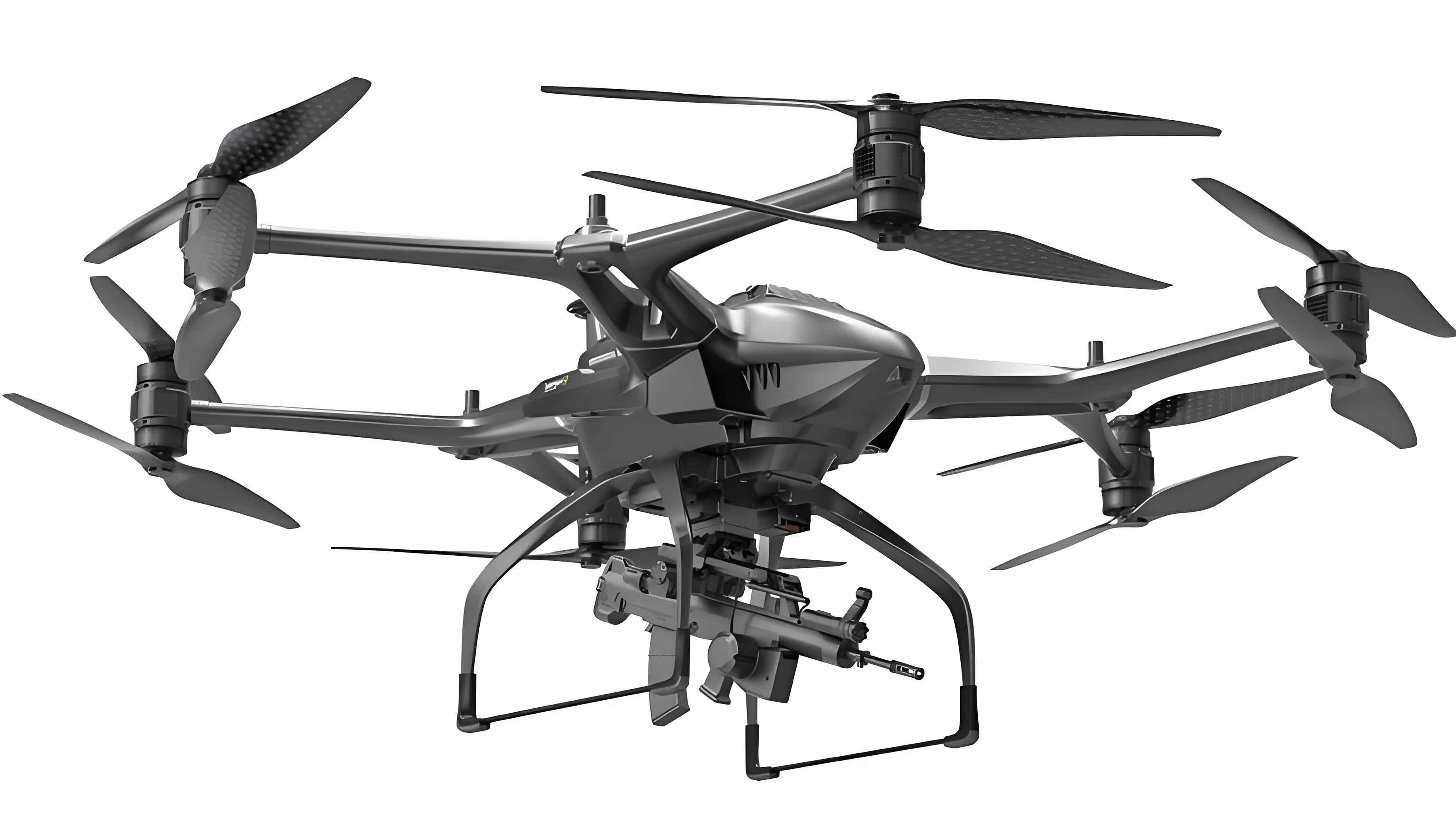
To contextualize this analysis, I first consider the dominant research perspectives on military UAVs. Scholars have often focused on three angles: technological, regulatory, and ethical. The technological perspective assesses the capabilities and tactical applications of military UAVs, such as their use in precision strikes and intelligence, surveillance, and reconnaissance (ISR). For instance, studies have evaluated the efficacy of military UAVs in counterterrorism operations, noting their cost-effectiveness and reduced risk to personnel. However, this view can overlook strategic implications. The regulatory perspective delves into international law challenges, like sovereignty violations and humanitarian concerns, particularly regarding U.S. drone strikes in regions like Pakistan. The ethical perspective examines moral dilemmas, including the dehumanization of warfare and the autonomy of weapon systems. While valuable, these approaches often miss the macro-strategic drivers. In contrast, I adopt a strategic tool视角, which posits that military UAVs are developed and deployed in alignment with U.S. national security strategies. This lens allows me to trace how changes in threat perception—from terrorism to state-level competitors—have dictated the evolution of military UAV capabilities and roles.
The strategic utility of military UAVs became evident during the global war on terrorism. Following the 9/11 attacks, the U.S. identified terrorism as its primary security threat, leading to prolonged conflicts in Afghanistan and Iraq. In this period, military UAVs were first deployed in combat roles, notably with the MQ-1 Predator carrying Hellfire missiles for targeted killings. The initial实战应用 of military UAVs was enabled by a permissive environment where adversaries lacked advanced air defenses, allowing UAVs to excel in ISR and strike missions. From a strategic standpoint, the U.S. defense transformation initiatives prioritized unmanned systems, as seen in the 2001 and 2006 Quadrennial Defense Reviews. Military UAVs offered a low-cost, high-precision tool for counterterrorism, aligning with the strategic goal of disrupting terrorist networks with minimal casualties. A key innovation was the “signature strike” capability, where military UAVs used pattern recognition to engage targets based on behavioral traits, though this raised ethical concerns. The effectiveness of military UAVs in this era can be summarized with a simple cost-benefit model: $$E = \frac{S}{C + R}$$ where \(E\) represents operational efficiency, \(S\) denotes successful strikes, \(C\) is financial cost, and \(R\) is risk to personnel. This formula underscores how military UAVs enhanced efficiency by reducing \(C\) and \(R\) in asymmetric conflicts.
| Period | Strategic Focus | Military UAV Applications | Key Technologies | Strategic Impact |
|---|---|---|---|---|
| Counterterrorism (2000s-2010s) | Disrupt terrorist networks, minimize U.S. casualties | Targeted killings, ISR, signature strikes | Precision guidance, real-time data links | Enhanced asymmetric warfare capabilities, reduced operational risks |
| Asia-Pacific Rebalancing (2010s) | Contain China’s influence, maintain regional stability | Maritime surveillance, ISR in contested areas | High-altitude long-endurance (HALE) UAVs, satellite communication | Improved situational awareness, strengthened alliances via exports |
| Great Power Competition (2020s-present) | Counter China and Russia, prepare for high-end war | Attacks in denied environments, swarm tactics, manned-unmanned teaming | AI integration, modular designs, counter-UAV systems | Shift toward multi-domain operations, enhanced deterrence |
During the Asia-Pacific rebalancing strategy under the Obama administration, the role of military UAVs expanded beyond counterterrorism. The strategic pivot to Asia aimed to counter China’s rising influence, with military UAVs serving as critical tools for maritime domain awareness. In this phase, the U.S. deployed ISR-focused military UAVs like the RQ-4 Global Hawk and MQ-4C Triton to forward bases in Guam and Japan. These systems provided persistent surveillance over vast ocean areas, supporting the strategic objective of monitoring Chinese activities in the South China Sea. From my analysis, the deployment of military UAVs in this region was carefully calibrated to avoid escalation, as their unmanned nature reduced the risk of direct confrontation. Additionally, the U.S. began exporting military UAVs to allies such as Japan and Australia, fostering interoperability and bolstering regional security networks. This aligns with a strategic calculus where military UAVs enhance collective defense while projecting U.S. commitment. The technological emphasis shifted toward endurance and sensor integration, with HALE UAVs offering capabilities summarized by the formula: $$P = A \times T \times R$$ where \(P\) is persistence, \(A\) is altitude, \(T\) is time on station, and \(R\) is sensor resolution. This underscores how military UAVs optimized for ISR supported rebalancing by maximizing \(P\) in complex environments.
In the current era of great power competition, as outlined in the 2018 National Defense Strategy, military UAVs have become central to U.S. preparations for high-end conventional conflicts. The strategic focus has shifted from terrorism to state adversaries like China and Russia, prompting a reevaluation of military UAV roles. I observe that the U.S. is now prioritizing military UAVs for contested environments where adversaries possess advanced air defenses and electronic warfare capabilities. This has led to developments in manned-unmanned teaming (MUM-T), where military UAVs like the MQ-25 Stingray and Loyal Wingman drones operate alongside crewed aircraft to extend reach and survivability. The strategic imperative here is to maintain overmatch against near-peer competitors, with military UAVs acting as force multipliers. For example, the U.S. has increased attacks-capable military UAV deployments in Asia, such as MQ-1C Gray Eagles in South Korea, signaling a shift toward combat readiness. Moreover, the U.S. has relaxed export controls on military UAVs to compete with China in global arms markets, reflecting a strategic move to undermine rivals’ influence. The integration of artificial intelligence (AI) into military UAVs is a key trend, enabling autonomous swarms that can overwhelm defenses. The effectiveness of swarm tactics can be modeled as: $$S_w = N \times C \times I$$ where \(S_w\) is swarm potency, \(N\) is the number of UAVs, \(C\) is individual capability, and \(I\) is inter-UAV coordination. This highlights how military UAVs are evolving toward distributed, intelligent systems to counter A2/AD (anti-access/area denial) challenges.
Looking ahead, the future development of U.S. military UAVs will likely be shaped by the demands of great power competition. Based on current trends, I anticipate several key directions. First, there will be a push toward greater autonomy and AI integration, allowing military UAVs to perform complex missions with minimal human intervention. Projects like Skyborg aim to develop AI pilots for military UAVs, enhancing decision-speed in dynamic battlespaces. Second, miniaturization and cost reduction will drive the proliferation of small military UAVs for swarm operations, as seen in programs like OFFSET (Offensive Swarm-Enabled Tactics). This aligns with strategic needs for scalable, resilient forces. Third, modular designs will enable rapid reconfiguration of military UAVs for different roles, from ISR to electronic warfare. Finally, counter-UAV systems will become increasingly important, as the U.S. seeks to defend against adversary drones. The strategic rationale is to maintain dominance in all facets of unmanned warfare. To quantify these trends, consider a cost-effectiveness index for future military UAVs: $$CEI = \frac{M + A + S}{L}$$ where \(CEI\) is the cost-effectiveness index, \(M\) is mission versatility, \(A\) is autonomy level, \(S\) is survivability, and \(L\) is lifecycle cost. A higher \(CEI\) indicates a more strategic valuable military UAV, underscoring the shift toward multi-role, affordable systems.
| Future Trend | Description | Strategic Rationale | Example Programs | Expected Impact on Military UAV Capabilities |
|---|---|---|---|---|
| AI and Autonomy | Integration of machine learning for autonomous operations | Enhance decision-making in contested environments | Project Maven, Skyborg | Reduced reliance on human operators, improved reaction times |
| Swarm Technology | Large numbers of small, coordinated UAVs | Overwhelm enemy defenses with saturations attacks | OFFSET, LOCUST | Increased resilience and mission flexibility |
| Manned-Unmanned Teaming | Close collaboration between crewed and uncrewed platforms | Extend reach and effectiveness of existing forces | Loyal Wingman, MQ-25 | Enhanced combined arms operations |
| Counter-UAV Systems | Defensive measures against adversary drones | Protect assets from asymmetric threats | Joint Counter-Small UAV Office | Comprehensive air defense integration |
In conclusion, from my strategic tool perspective, the evolution of U.S. military UAVs is a testament to how technology serves policy. Each phase—counterterrorism, Asia-Pacific rebalancing, and great power competition—has seen military UAVs adapted to meet distinct strategic needs. Initially, military UAVs were simple platforms for targeted strikes; they then evolved into sophisticated ISR assets for maritime surveillance, and now are becoming intelligent nodes in networked warfare. The repeated emphasis on military UAVs across U.S. defense documents underscores their centrality to modern military strategy. As I analyze this trajectory, it is clear that military UAVs are not standalone weapons but components of a broader strategic calculus aimed at maintaining U.S. superiority. The ongoing investments in AI, swarming, and counter-UAV technologies suggest that military UAVs will continue to be pivotal in shaping future conflicts. Ultimately, the story of U.S. military UAV development is one of strategic adaptation, where innovation is directed by the imperative to address evolving threats. This analysis reinforces the notion that in the realm of defense, tools like military UAVs are ultimately expressions of national strategy, constantly refined to secure an edge in an increasingly competitive world.