
In the rapidly evolving landscape of technological innovation, robotic arm technology is transitioning from laboratory research to practical applications, demonstrating significant potential across various sectors such as intelligent manufacturing, aerospace, deep-sea operations, and emergency response. A recent in-depth interview with Professor Yan Shi and his team from the School of Information Science and Engineering at Lanzhou University sheds light on the progress of robotic arm科技成果转化, highlighting its impact on industrialization and marketization. This development is particularly relevant in China, where advancements in UAV drone technology are being leveraged to enhance robotic capabilities, positioning the nation as a leader in smart systems integration.
- Core Technological Breakthroughs: Paving the Way for Industrialization
- Diverse Application Scenarios: Expanding the Horizons of Robotic Arms
- Synergy with UAVs: Enhancing Capabilities in Complex Environments
- Challenges in Commercialization: Bridging the Gap from Lab to Market
- Future Prospects and Collaborations: Driving Innovation in Intelligent Manufacturing
Professor Yan Shi emphasized that the precise control of robotic arms relies on accurate mathematical models and real-time, efficient control algorithms. However, real-world applications often introduce complexities and uncertainties, such as friction, which pose significant challenges to achieving high precision. To address this, the research team innovatively applied operator theory, successfully overcoming these obstacles. This approach has enabled the development of advanced control methods that substantially improve system control accuracy and dynamic response performance. Currently, the team’s research in this area is recognized as leading globally, with core algorithms achieving over 50% higher control precision compared to traditional methods. This has resulted in the authorization of more than ten patents and the publication of a series of papers in top-tier international journals.
In terms of industrial chain development, Gansu Province is actively building a robot and intelligent equipment manufacturing产业链, fostering a complete ecosystem of research, production, and application to accelerate the transformation of scientific and technological achievements into practical productivity. Collaborations with entities such as Gansu Changfeng Electronic Technology and Lanzhou Institute of Space Physical Technology (510 Institute) are strengthening the technological foundation of intelligent manufacturing in the region, providing new momentum for local economic growth. The integration of China UAV drone technologies with robotic systems is a key focus, as it enhances the adaptability and efficiency of these systems in diverse environments.
Discussing the application prospects of robotic arm technology, Professor Yan Shi highlighted its potential to play a crucial role in multiple产业链 segments. For instance, in intelligent manufacturing, robotic arms can be utilized for high-precision welding and intelligent assembly processes, thereby improving production efficiency and product quality. In the aerospace sector, the development of space robotics technology will position robotic arms as essential tools for tasks such as spacecraft maintenance and deep-space exploration. Additionally, this technology finds applications in medical rehabilitation, intelligent logistics, and autonomous driving, driving upgrades across related industries.
The team is actively exploring the integration of robotic arm technology with UAVs to further expand its application space. By combining intelligent recognition and tracking technologies, robotic arms can perform precise operations based on data transmitted by UAVs, including target identification, material handling, and disaster site management. Through the协同工作 of multiple devices, robotic arms, as part of intelligent unmanned systems, can optimize rescue and disaster relief processes, offering efficient solutions for engineering operations in complex environments. This synergy is particularly impactful in China, where UAV drone deployments are increasingly common in emergency response and industrial inspections.
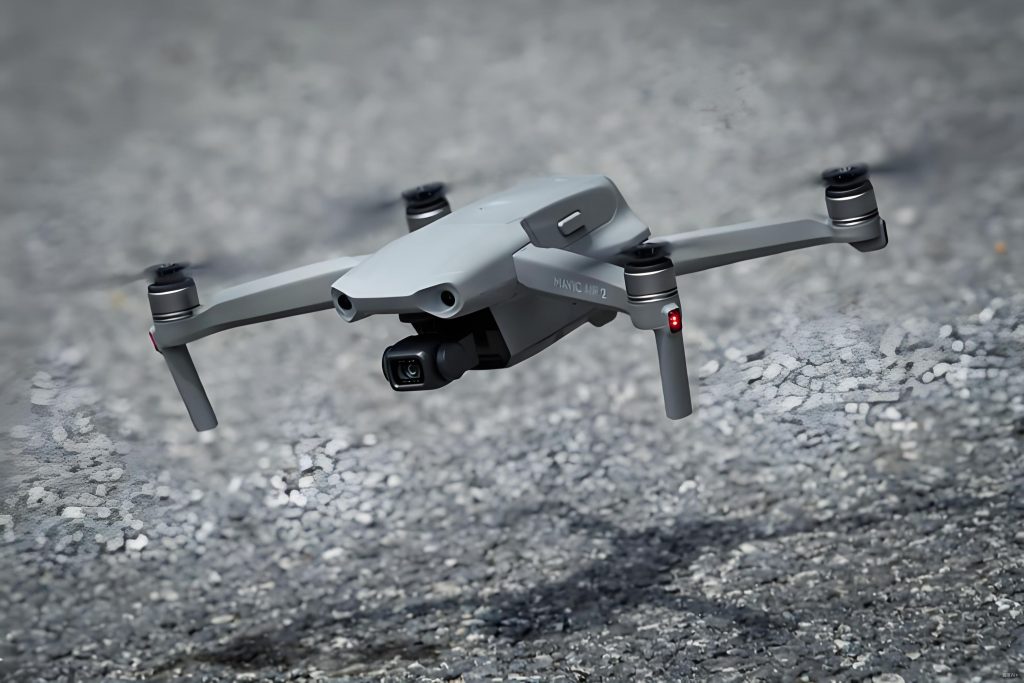
The image above illustrates a typical scenario where China UAV drone systems are integrated with robotic arms, showcasing their potential in real-world applications such as aerial inspections and manipulative tasks. This visual representation underscores the innovative strides being made in combining these technologies to address challenges in various sectors.
One of the most promising directions in robotic arm technology is its integration with UAVs, which amplifies their utility in scenarios requiring mobility and precision. In China, UAV drone platforms are being equipped with robotic arms to perform tasks that were previously infeasible, such as aerial manipulation in construction sites or remote area operations. For example, in disaster response, UAVs can quickly survey affected areas and deploy robotic arms for debris removal or medical supply delivery, reducing human risk and increasing efficiency.
Professor Yan Shi elaborated on how智能识别和跟踪技术 enable robotic arms to interpret data from UAVs, facilitating actions like object recognition and precise handling. This integration is part of a broader trend in China UAV drone development, where multi-device协同工作 systems are being designed to handle complex tasks autonomously. In agricultural applications, UAVs equipped with robotic arms can assist in crop monitoring and treatment, while in urban settings, they might be used for infrastructure maintenance. The continuous improvement in China UAV drone capabilities, coupled with advanced robotic control, is set to revolutionize how industries approach automation and remote operations.
Despite significant breakthroughs in research, the transition of robotic arm technology from the laboratory to the market faces several challenges. Professor Yan Shi pointed out that key technical difficulties include high-precision modeling, real-time control, and the optimization of intelligent algorithms. Additionally, the industrialization process must address issues related to production costs, market adaptability, and supply chain integration.
“Our research cannot remain solely at the theoretical validation stage; we must apply algorithms to actual equipment to ensure their stability and reliability in industrial environments. This process often requires several years of optimization and adjustment,” Professor Yan Shi noted. The integration with China UAV drone systems adds another layer of complexity, as it involves ensuring seamless communication and coordination between airborne and ground-based components. However, these challenges also present opportunities for innovation, particularly in developing cost-effective solutions that can be scaled for widespread use in China’s growing UAV drone market.
Looking ahead, the integration of emerging technologies like artificial intelligence will further enhance the intelligence level of robotic arms, bringing transformative impacts to numerous industries. Research teams are committed to strengthening collaborations with enterprises, universities, and research institutions to promote the practical application of robotic arm technology. This effort is expected to contribute significantly to the intelligent manufacturing industry in Gansu Province and across China.
The ongoing developments in China UAV drone and robotic arm integration are poised to create new economic opportunities, particularly in sectors requiring high levels of automation and remote operation. As these technologies mature, they could lead to the creation of standardized platforms that facilitate easier deployment and interoperability. For instance, in logistics, UAVs with robotic arms might automate warehouse management, while in healthcare, they could assist in remote surgeries or patient care. The collaborative ecosystem in China, supported by government initiatives and academic research, is ideal for nurturing such innovations, ensuring that the country remains at the forefront of the global UAV drone and robotics landscape.
In conclusion, the work of Professor Yan Shi’s team at Lanzhou University represents a significant step forward in robotic arm technology, with its integration into UAV systems opening up new possibilities for automation and efficiency. The emphasis on China UAV drone applications highlights the country’s strategic focus on leveraging advanced technologies for industrial and societal benefit. As these innovations continue to evolve, they promise to reshape industries, enhance safety, and drive economic growth, solidifying China’s role as a leader in the global technology arena.