
In recent years, I have observed a rapid evolution in civilian unmanned aerial vehicle (UAV) technology, with sales experiencing exponential growth globally. These devices are now widely utilized across various sectors such as filmmaking, surveying, environmental monitoring, disaster relief, agricultural protection, and logistics delivery. However, from my perspective, regulatory frameworks have lagged behind this technological advancement, leading to an increase in incidents caused by quality issues,违规飞行, and operational errors. The civilian UAV can easily be weaponized for criminal activities, posing significant public safety risks. Therefore, I believe there is an urgent need to accelerate the improvement of relevant laws, regulations, and industry standards, while strengthening supervision across production, sales, and usage to enhance risk management capabilities.
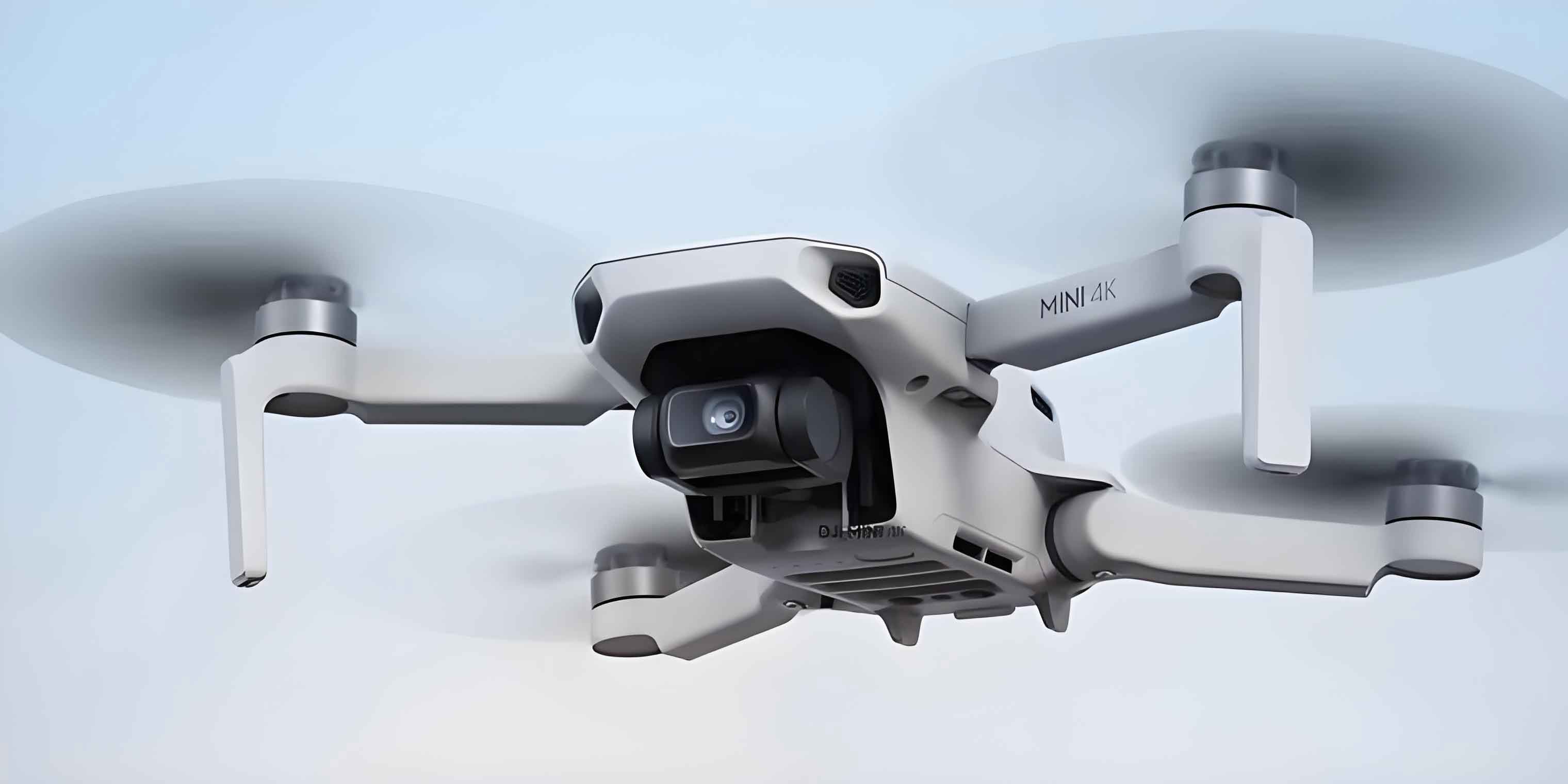
From my analysis, data indicates that in 2015, global sales of civilian UAVs reached 570,000 units, with China’s保有量 exceeding hundreds of thousands, showing a doubling trend annually. This surge in civilian UAV adoption brings both便利 and challenges, as the risks associated with civilian UAV operations become more pronounced. In this article, I will explore the major risks posed by civilian UAVs, the current state of risk control, and propose对策 from a societal governance viewpoint, emphasizing the importance of proactive measures.
Primary Risks Associated with Civilian UAVs
Civilian UAVs refer to non-military professional and consumer-grade drones, including multi-rotor, fixed-wing, and unmanned helicopters, as well as other aircraft like伞翼无人机. Based on my research, I categorize the risks into four main areas, which I summarize in the table below.
| Risk Category | Description | Impact |
|---|---|---|
| National Security Risks | Civilian UAVs often have advanced拍摄 and communication functions, enabling隐蔽拍摄 of军事设施, sensitive areas, and critical infrastructure. Some models with real-time图传 systems can transmit data over 1000 meters, potentially compromising information security through remote attacks. | Threatens军事 secrecy and data integrity; can be used for espionage or cyber-attacks. |
| Counter-Terrorism and Anti-Violence Risks | With speeds up to 50 km/h and ranges of 20 km, civilian UAVs can be改装 as guided bombs by attaching explosive devices. High-speed models, like竞速 drones reaching 120 km/h, pose direct physical threats if misused for attacks. | Enables远程袭击 and terrorism; increases difficulty in intercepting threats. |
| Social Order and Public Safety Risks | Civilian UAVs offer悬停,投递,拍摄, and tracking capabilities, facilitating crimes such as drug trafficking, smuggling, privacy invasion, and aiding in绑架 or theft by providing surveillance. They can also transport违禁物品 to restricted areas like prisons. | Complicates law enforcement; raises concerns over privacy and public security incidents. |
| Aviation and Infrastructure Risks | Civilian UAVs can ascend at 6 m/s or faster, reaching altitudes of kilometers, potentially colliding with manned aircraft or causing accidents due to failures. Incidents like the成都双流机场 closure highlight disruptions to air traffic. | Endangers aviation safety; leads to economic losses and potential casualties. |
To quantify these risks, I propose a simple risk assessment formula that can be applied to civilian UAV operations:
$$ Risk = P \times I $$
where \( P \) represents the probability of an incident involving a civilian UAV, and \( I \) denotes the impact severity. For instance, in the context of aviation risks, if the probability of a civilian UAV incursion near an airport is high and the impact involves flight delays or crashes, the overall risk escalates. This model underscores the need for targeted interventions for civilian UAV management.
Current State of Civilian UAV Risk Control
From my observation, the civilian UAV industry is in a phase of rapid expansion and培育期, with risk control mechanisms still under development. I identify several key issues that hinder effective management of civilian UAV risks, as outlined below.
| Aspect | Challenges | Consequences |
|---|---|---|
| Legal and Regulatory Gaps | Lack of comprehensive通用技术标准 and强制性 regulations; existing guidelines by民航主管部门 or行业协会 are non-binding, leading to fragmented oversight. | Results in “无法可依” situations; increases incidents due to quality flaws and违规操作. |
| Unclear Responsibility Allocation | Roles divided among民航局,工业和信息化部,军队, and公安部门, but基层 implementation is weak due to absent机构 and力量, creating “无人管” vacuums. | Impedes coordinated response; delays in monitoring and enforcement against “黑飞”. |
| Inadequate Control Measures | Shortage of拦截,驱逐,控制装备; low adoption of无人机云 for real-time monitoring;缺乏强制措施 for non-compliance, such as unregistered flights. | Limits proactive risk mitigation; allows违规飞行 to proliferate without consequences. |
I further analyze the compliance rate for civilian UAV云接入 using a statistical model. Let \( N \) be the total number of civilian UAVs, and \( C \) be the number connected to云 systems. The compliance rate \( R \) is given by:
$$ R = \frac{C}{N} \times 100\% $$
Currently, \( R \) is low for类 and类 civilian UAVs, exacerbating monitoring challenges. This highlights the urgency for systemic improvements in civilian UAV governance.
Proposed Strategies for Civilian UAV Risk Prevention and Control
Based on my analysis, I recommend a multi-faceted approach to mitigate risks associated with civilian UAVs, focusing on legal, technical, and operational dimensions. The core principle is to balance innovation with safety, ensuring that civilian UAV development does not compromise public security. Below, I detail the对策 in a structured manner.
1. Accelerate Legal and Regulatory Frameworks
I advocate for the establishment of robust laws akin to road traffic management. Specifically, enact a “Civilian UAV Safety Law” to define监管责任主体, registration requirements,驾驶资质,空域管理, and法律责任. This will provide a legal basis for civilian UAV oversight. Additionally, develop强制性国家标准 for civilian UAV production to address quality disparities, and encourage local governments to出台条例 for tailored solutions. For example, setting technical standards for civilian UAV components can be modeled as:
$$ S_{UAV} = f(P, Q, F) $$
where \( S_{UAV} \) represents the safety standard, dependent on production parameters \( P \), quality controls \( Q \), and functional limits \( F \). This ensures uniformity across the civilian UAV industry.
2. Strengthen Foundational Control Measures
I propose implementing源头管控 by mandating SIM card installation in every civilian UAV to log飞行时间 and轨迹 data. This can be represented in a tracking equation:
$$ T_{UAV} = \int_{t_0}^{t_f} v(t) \, dt $$
where \( T_{UAV} \) is the trajectory, \( v(t) \) is velocity over time. Coupled with实名登记 at sales points, this enhances traceability. Furthermore, require驾驶资质 from主管部口, separating training from certification to reduce costs. For空域管理, define禁飞区 using geofencing technology, with监测 systems to prevent civilian UAV intrusions. I summarize key measures in the table below.
| Measure | Implementation | Expected Outcome |
|---|---|---|
| SIM Card Integration | Embed in all civilian UAVs during production; transmit data to centralized platforms. | Real-time monitoring; reduced匿名 usage for illicit activities. |
| 实名制 Registration | Enforce at point of sale; link civilian UAV to owner identity; update on transfer or报废. | Improved accountability; easier “落地查人” for违规 incidents. |
| 驾驶资质 Management | Issue licenses via authorities; standardize training; penalize无证飞行. | Enhanced operator competence; decreased accidents from操作失误. |
| 云系统接入 | Mandate for all civilian UAVs in敏感 areas; share data with民航,公安等部门. | Better situational awareness; faster response to threats. |
3. Enhance Detection and Response Capabilities
From my perspective, investing in advanced装备 is crucial for civilian UAV risk mitigation. Develop干扰 and拦截 technologies, such as网枪 or dedicated drones, to neutralize rogue civilian UAVs. The effectiveness of such systems can be expressed as:
$$ E = \alpha \cdot D + \beta \cdot R $$
where \( E \) is efficacy, \( D \) is detection accuracy, \( R \) is response speed, and \( \alpha, \beta \) are权重 factors. Conduct实战训练 for personnel to handle civilian UAV threats, focusing on scenarios like airport incursions or terrorist use. Additionally, establish监测 networks at重点部位 using雷达 and sensors, with预警 mechanisms to alert authorities. This proactive stance is vital for safeguarding against civilian UAV-related公共安全事故.
4. Promote Public Awareness and Collaboration
I emphasize the role of宣传舆论 in shaping responsible civilian UAV culture. Utilize media to educate on regulations and risks, encouraging合规飞行 among enthusiasts and businesses. Foster community reporting mechanisms for suspicious civilian UAV activities, leveraging collective vigilance. This can be modeled as a social engagement function:
$$ A = k \cdot M \cdot P $$
where \( A \) is awareness level, \( M \) is media outreach, \( P \) is public participation, and \( k \) is a constant. By involving社会组织, we can create a supportive environment for civilian UAV risk防控.
Conclusion
In summary, the rise of civilian UAVs presents both opportunities and significant challenges that require immediate attention. Through my analysis, I have outlined the multifaceted risks—from national security to public safety—and highlighted the current gaps in legal,责任, and technical controls. By implementing comprehensive strategies, including法律完善,基础管控,能力提升, and公众教育, we can effectively mitigate these risks. The civilian UAV industry must evolve responsibly, and I am confident that with coordinated efforts, we can harness the benefits of civilian UAV technology while minimizing its threats. Ultimately, a proactive and adaptive approach is essential for sustainable civilian UAV integration into society.
To further illustrate the risk dynamics, consider a cumulative risk model for civilian UAV operations over time. Let \( R_{total}(t) \) represent the total risk at time \( t \), which can be expressed as:
$$ R_{total}(t) = \sum_{i=1}^{n} w_i \cdot R_i(t) $$
where \( R_i(t) \) are individual risk factors (e.g., security, safety), and \( w_i \) are权重 reflecting their importance. By monitoring and reducing these components through the对策 discussed, we can achieve a safer ecosystem for civilian UAV usage. As the technology advances, continuous evaluation and adaptation will be key to staying ahead of emerging threats associated with civilian UAVs.