
In recent years, the rapid development of unmanned aerial vehicle (UAV) technology has revolutionized various fields, particularly in defense, surveillance, and reconnaissance. Among UAVs, fixed-wing unmanned aerial vehicles (FWUAVs) stand out due to their long endurance and extensive range, making them ideal for prolonged missions in vast areas. However, when operating in complex dynamic environments, FWUAVs face significant challenges that compromise their safety and reliability. These challenges include external time-varying disturbances, sensor faults, and input/output nonlinear constraints such as saturation. Sensor faults, often caused by harsh conditions like high humidity, strong vibrations, temperature fluctuations, and electromagnetic interference, lead to inaccurate state measurements. Output saturation occurs when sensor readings exceed their operational limits, while input saturation restricts actuator output due to physical limitations. Combined with adverse external disturbances, these factors can severely degrade flight control performance and even cause loss of control. To address these issues, this paper proposes a neural network-based adaptive control method that integrates a state observer, a fault observer, a disturbance observer, and an auxiliary system. The approach ensures robust tracking control for FWUAVs under the coupled effects of disturbances, sensor faults, and saturation constraints. The contributions of this work are threefold: (1) design of a radial basis function neural network (RBFNN)-based state observer to estimate unknown state variables and handle unknown control gains; (2) development of fault and disturbance observers to estimate and compensate for sensor faults and external disturbances; and (3) formulation of an anti-saturation tracking controller using backstepping control, an auxiliary system, and Lyapunov stability theory, guaranteeing that all signals in the closed-loop system are ultimately uniformly bounded. Simulation results validate the effectiveness of the proposed method in maintaining stable flight for FWUAVs under these challenging conditions. This research is particularly relevant in the context of China’s growing emphasis on UAV technology, where China UAV drone applications are expanding in military and civilian sectors, necessitating advanced control strategies for enhanced safety and performance.
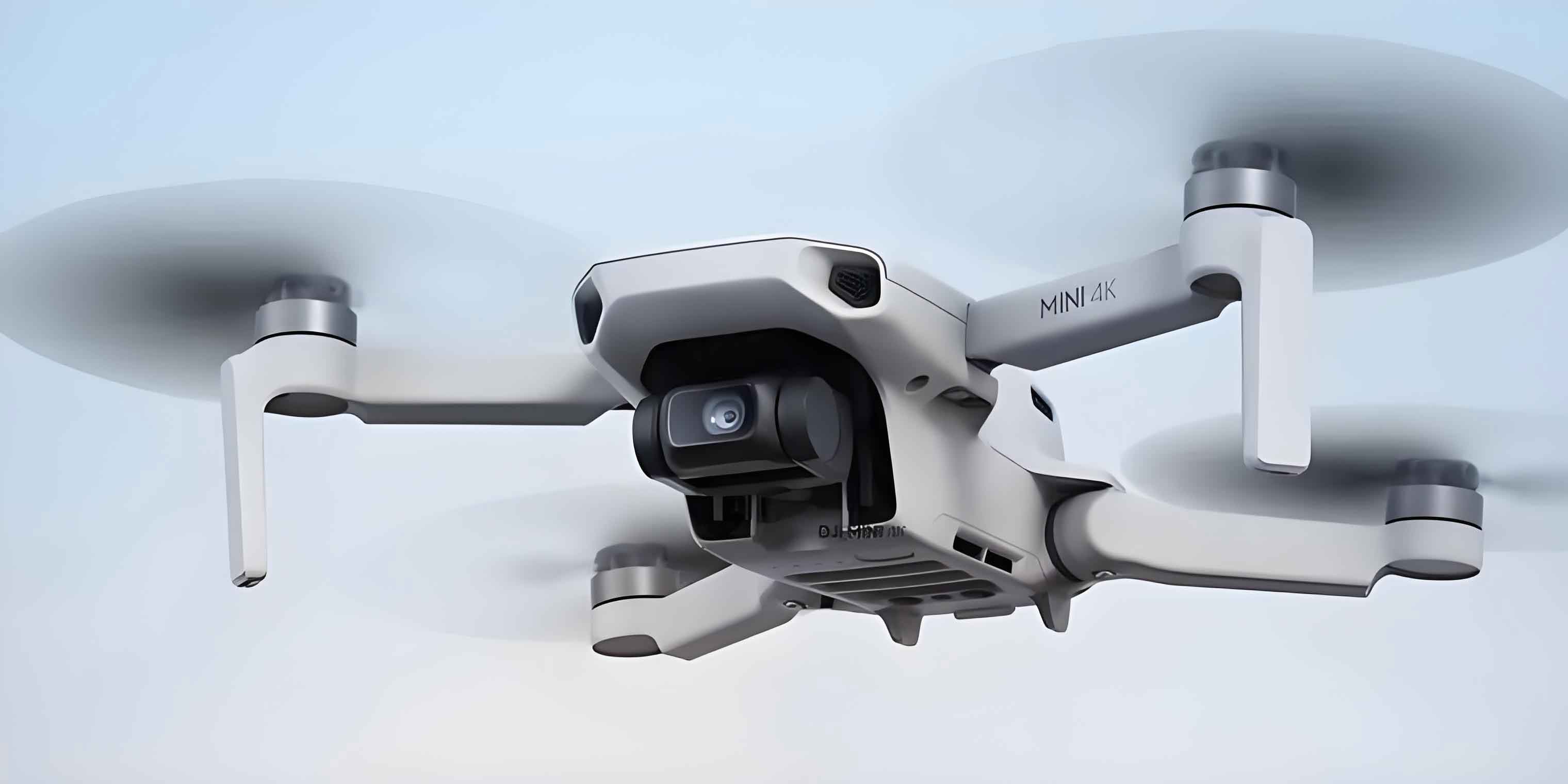
The importance of UAVs, especially in China UAV drone operations, cannot be overstated. They are deployed for border surveillance, disaster management, and infrastructure inspection, where reliability is paramount. However, the integration of multiple adverse factors—disturbances, faults, and saturation—poses a critical control problem. Traditional control methods often address these issues separately, leading to suboptimal performance. This paper fills the gap by proposing a comprehensive solution that jointly handles these challenges. The system model is derived from FWUAV attitude dynamics, incorporating external disturbances, sensor faults, and input/output saturation. The mathematical representation is as follows:
Consider the FWUAV attitude dynamics model:
$$ \dot{\xi}_1 = f_1(\xi_1) + g_1(\xi_1)\xi_2 + d_1 $$
$$ \dot{\xi}_2 = f_2(\xi_1, \xi_2) + g_2(\xi_1, \xi_2)u + d_2 $$
$$ y = \text{sat}_o(\xi_1 + f_s) $$
where $$ \xi_1 \in \mathbb{R}^3 $$ and $$ \xi_2 \in \mathbb{R}^3 $$ represent the attitude angle and angular rate vectors, respectively; $$ f_1(\cdot) $$ and $$ f_2(\cdot) $$ are known nonlinear functions; $$ g_1(\cdot) $$ and $$ g_2(\cdot) $$ are known gain matrices; $$ u \in \mathbb{R}^3 $$ is the control input vector; $$ y \in \mathbb{R}^3 $$ is the output vector; $$ d_1, d_2 \in \mathbb{R}^3 $$ are time-varying external disturbances; and $$ f_s \in \mathbb{R}^3 $$ denotes sensor fault effects. The output saturation function $$ \text{sat}_o(\cdot) $$ and input saturation function $$ \text{sat}_i(\cdot) $$ are defined as:
$$ \text{sat}_o(z_i) = \begin{cases} u_{oi}, & \text{if } z_i \geq u_{oi} \\ z_i, & \text{if } l_{oi} < z_i < u_{oi} \\ l_{oi}, & \text{if } z_i \leq l_{oi} \end{cases} $$
$$ \text{sat}_i(u_i) = \begin{cases} u_{ii}, & \text{if } u_i \geq u_{ii} \\ u_i, & \text{if } l_{ii} < u_i < u_{ii} \\ l_{ii}, & \text{if } u_i \leq l_{ii} \end{cases} $$
where $$ u_{oi}, l_{oi}, u_{ii}, l_{ii} $$ are upper and lower bounds for output and input saturation, respectively. For the China UAV drone industry, addressing these saturation effects is crucial for maintaining control authority in real-world scenarios.
To facilitate control design, the following assumptions and lemmas are introduced:
Assumption 1: The external disturbances $$ d_1 $$ and $$ d_2 $$ are bounded, with bounded derivatives, i.e., $$ \|d_1\| \leq \bar{d}_1 $$, $$ \|d_2\| \leq \bar{d}_2 $$, $$ \|\dot{d}_1\| \leq \bar{\dot{d}}_1 $$, and $$ \|\dot{d}_2\| \leq \bar{\dot{d}}_2 $$, where $$ \bar{d}_1, \bar{d}_2, \bar{\dot{d}}_1, \bar{\dot{d}}_2 $$ are unknown positive constants.
Assumption 2: The desired trajectory $$ \xi_{1d}(t) $$ and its derivative $$ \dot{\xi}_{1d}(t) $$ are known and smooth.
Assumption 3: The sensor fault $$ f_s(t) $$ and its derivative $$ \dot{f}_s(t) $$ are bounded, satisfying $$ \dot{f}_{si} = -\alpha_i f_{si} + \delta_i $$, where $$ \alpha_i $$ is an unknown variable, $$ \delta_i $$ is related to the saturation function, and $$ \alpha_i $$ is a designed positive constant.
Lemma 1 (RBFNN Approximation): Any continuous nonlinear function $$ F(\chi) $$ can be approximated by an RBFNN as:
$$ F(\chi) = W^{*T} \phi(\chi) + \epsilon^* $$
where $$ W^* $$ is the ideal weight vector, $$ \phi(\chi) $$ is the basis function vector, and $$ \epsilon^* $$ is the approximation error bounded by $$ |\epsilon^*| \leq \bar{\epsilon} $$. This lemma is instrumental in handling unknown nonlinearities in the FWUAV model, a common challenge in China UAV drone applications.
Lemma 2 (Hyperbolic Tangent Property): For any $$ a \in \mathbb{R} $$ and $$ \kappa > 0 $$, the inequality $$ 0 \leq |a| – a \tanh(a/\kappa) \leq 0.2785\kappa $$ holds. This property is used to smooth control signals and avoid chattering.
The control scheme is developed in several steps: state observer design, fault observer design, disturbance observer design, controller design, and stability analysis. Each component is detailed below.
State Observer Design
Since the state variables are unknown due to sensor faults and output saturation, a state observer is designed to estimate $$ \xi_1 $$ and $$ \xi_2 $$. Using RBFNNs, the system dynamics are rewritten as:
$$ \dot{\xi}_{1i} = A_{1i} \xi_{1i} + B_{1i} \xi_{2i} + \rho_{1i} [W_{1i}^{*T} \phi_{1i}(\xi_1, \xi_2) + \epsilon_{1i}^*] + d_{1i} $$
$$ \dot{\xi}_{2i} = A_{2i} \xi_{2i} + \rho_{2i} [W_{2i}^{*T} \phi_{2i}(\xi_1, \xi_2) + \epsilon_{2i}^*] + \rho_{3i} [\Delta_{3i}^* \phi_{3i}(\xi_1, \xi_2) + \epsilon_{3i}^*] + d_{2i} $$
where $$ A_{1i}, B_{1i}, A_{2i}, \rho_{1i}, \rho_{2i}, \rho_{3i} $$ are designed constants, and $$ W_{1i}^*, W_{2i}^*, \Delta_{3i}^* $$ are ideal NN weights. The state observer is constructed as:
$$ \dot{\hat{\xi}}_{1i} = A_{1i} \hat{\xi}_{1i} + B_{1i} \hat{\xi}_{2i} + \rho_{1i} \hat{W}_{1i}^T \phi_{1i}(\hat{\xi}_1, \hat{\xi}_2) + C_{1i} (y_i – \hat{y}_i) $$
$$ \dot{\hat{\xi}}_{2i} = A_{2i} \hat{\xi}_{2i} + \rho_{2i} \hat{W}_{2i}^T \phi_{2i}(\hat{\xi}_1, \hat{\xi}_2) + \rho_{3i} \hat{\Delta}_{3i} \phi_{3i}(\hat{\xi}_1, \hat{\xi}_2) + C_{2i} (\xi_{2i} – \hat{\xi}_{2i}) $$
where $$ \hat{\cdot} $$ denotes estimates, $$ C_{1i}, C_{2i} $$ are observer gains, and $$ \hat{y}_i = \text{sat}_o(\hat{\xi}_{1i} + \hat{f}_{si}) $$. The estimation errors are defined as $$ \tilde{\xi}_{1i} = \xi_{1i} – \hat{\xi}_{1i} $$ and $$ \tilde{\xi}_{2i} = \xi_{2i} – \hat{\xi}_{2i} $$. Using Lyapunov analysis, it can be shown that these errors are bounded, ensuring the observer’s effectiveness. This step is critical for China UAV drone systems, where accurate state estimation is vital for autonomous operations.
Fault Observer Design
To estimate sensor faults, a fault observer is designed based on Assumption 3. Define an auxiliary variable $$ \eta_i = f_{si} + \beta_i \xi_{1i} $$, with estimation error $$ \tilde{\eta}_i = \eta_i – \hat{\eta}_i $$. The fault observer is formulated as:
$$ \dot{\hat{\eta}}_i = -\alpha_i \hat{\eta}_i + \beta_i (\dot{\xi}_{1i} – \dot{\hat{\xi}}_{1i}) + \lambda_i \tanh\left(\frac{\tilde{\eta}_i}{\kappa_i}\right) $$
$$ \hat{f}_{si} = \hat{\eta}_i – \beta_i \hat{\xi}_{1i} $$
where $$ \alpha_i, \beta_i, \lambda_i, \kappa_i $$ are positive design parameters. The fault estimation error $$ \tilde{f}_{si} = f_{si} – \hat{f}_{si} $$ is proven to be bounded via Lyapunov stability theory. This observer enhances the resilience of China UAV drone platforms against sensor failures, which are common in harsh environments.
Disturbance Observer Design
External disturbances are estimated using disturbance observers. For disturbance $$ d_{1i} $$, define an auxiliary variable $$ z_{1i} = d_{1i} – L_{1i} \xi_{1i} $$, with estimate $$ \hat{z}_{1i} $$. The disturbance observer is:
$$ \dot{\hat{z}}_{1i} = -L_{1i} \left( A_{1i} \xi_{1i} + B_{1i} \xi_{2i} + \rho_{1i} \hat{W}_{1i}^T \phi_{1i}(\hat{\xi}_1, \hat{\xi}_2) \right) + \hat{d}_{1i} $$
$$ \hat{d}_{1i} = \hat{z}_{1i} + L_{1i} \hat{\xi}_{1i} $$
Similarly, for $$ d_{2i} $$, define $$ z_{2i} = d_{2i} – L_{2i} \xi_{2i} $$, and the observer is:
$$ \dot{\hat{z}}_{2i} = -L_{2i} \left( A_{2i} \xi_{2i} + \rho_{2i} \hat{W}_{2i}^T \phi_{2i}(\hat{\xi}_1, \hat{\xi}_2) + \rho_{3i} \hat{\Delta}_{3i} \phi_{3i}(\hat{\xi}_1, \hat{\xi}_2) \right) + \hat{d}_{2i} $$
$$ \hat{d}_{2i} = \hat{z}_{2i} + L_{2i} \hat{\xi}_{2i} $$
where $$ L_{1i}, L_{2i} $$ are observer gains. The disturbance estimation errors $$ \tilde{d}_{1i} = d_{1i} – \hat{d}_{1i} $$ and $$ \tilde{d}_{2i} = d_{2i} – \hat{d}_{2i} $$ are shown to be bounded. This capability is essential for China UAV drone operations in windy or turbulent conditions.
Controller Design
The controller is designed using the backstepping technique, incorporating an auxiliary system to handle input saturation. Define tracking errors:
$$ e_{1i} = \hat{\xi}_{1i} – \xi_{1di} – \zeta_{1i} $$
$$ e_{2i} = \hat{\xi}_{2i} – \alpha_{di} – \zeta_{2i} $$
where $$ \xi_{1di} $$ is the desired trajectory, $$ \alpha_{di} $$ is a virtual control law, and $$ \zeta_{1i}, \zeta_{2i} $$ are auxiliary system states to compensate for input saturation. The auxiliary system is:
$$ \dot{\zeta}_{1i} = -\tau_{1i} \zeta_{1i} + B_{1i} (\text{sat}_i(u_i) – u_i) $$
$$ \dot{\zeta}_{2i} = -\tau_{2i} \zeta_{2i} + \rho_{3i} (\hat{\Delta}_{3i} \phi_{3i}(\hat{\xi}_1, \hat{\xi}_2) – \Delta_{3i}^* \phi_{3i}(\xi_1, \xi_2)) $$
with $$ \tau_{1i}, \tau_{2i} > 0 $$. The virtual control law $$ \alpha_{di} $$ is designed as:
$$ \alpha_{di} = B_{1i}^{-1} \left( -A_{1i} \hat{\xi}_{1i} – \rho_{1i} \hat{W}_{1i}^T \phi_{1i}(\hat{\xi}_1, \hat{\xi}_2) + \dot{\xi}_{1di} – K_{1i} e_{1i} – \hat{d}_{1i} \right) $$
where $$ K_{1i} > 0 $$ is a control gain. To avoid the “explosion of complexity” in backstepping, a first-order filter is introduced:
$$ \mu_i \dot{\alpha}_{fi} + \alpha_{fi} = \alpha_{di}, \quad \alpha_{fi}(0) = \alpha_{di}(0) $$
with $$ \mu_i > 0 $$. The actual control law $$ u_i $$ is derived as:
$$ u_i = \hat{g}_{2i}^{-1} \left( -A_{2i} \hat{\xi}_{2i} – \rho_{2i} \hat{W}_{2i}^T \phi_{2i}(\hat{\xi}_1, \hat{\xi}_2) – \rho_{3i} \hat{\Delta}_{3i} \phi_{3i}(\hat{\xi}_1, \hat{\xi}_2) + \dot{\alpha}_{fi} – K_{2i} e_{2i} – \hat{d}_{2i} – e_{1i} \right) $$
where $$ \hat{g}_{2i} $$ is the estimate of $$ g_{2i} $$, and $$ K_{2i} > 0 $$. The NN weight adaptation laws are:
$$ \dot{\hat{W}}_{1i} = \Gamma_{1i} (\phi_{1i}(\hat{\xi}_1, \hat{\xi}_2) e_{1i} – \sigma_{1i} \hat{W}_{1i}) $$
$$ \dot{\hat{W}}_{2i} = \Gamma_{2i} (\phi_{2i}(\hat{\xi}_1, \hat{\xi}_2) e_{2i} – \sigma_{2i} \hat{W}_{2i}) $$
$$ \dot{\hat{\Delta}}_{3i} = \Gamma_{3i} (\phi_{3i}(\hat{\xi}_1, \hat{\xi}_2) e_{2i} – \sigma_{3i} \hat{\Delta}_{3i}) $$
with $$ \Gamma_{1i}, \Gamma_{2i}, \Gamma_{3i}, \sigma_{1i}, \sigma_{2i}, \sigma_{3i} > 0 $$. This controller ensures robust tracking despite saturation and faults, a key requirement for China UAV drone missions in contested environments.
Stability Analysis
The overall closed-loop stability is analyzed using Lyapunov theory. Consider the Lyapunov function candidate:
$$ V = \frac{1}{2} \sum_{i=1}^{3} \left( e_{1i}^2 + e_{2i}^2 + \tilde{\xi}_{1i}^2 + \tilde{\xi}_{2i}^2 + \tilde{f}_{si}^2 + \tilde{d}_{1i}^2 + \tilde{d}_{2i}^2 + \zeta_{1i}^2 + \zeta_{2i}^2 + \frac{1}{\Gamma_{1i}} \tilde{W}_{1i}^T \tilde{W}_{1i} + \frac{1}{\Gamma_{2i}} \tilde{W}_{2i}^T \tilde{W}_{2i} + \frac{1}{\Gamma_{3i}} \tilde{\Delta}_{3i}^T \tilde{\Delta}_{3i} \right) $$
where $$ \tilde{W}_{1i} = W_{1i}^* – \hat{W}_{1i} $$, etc. Taking the derivative and substituting the dynamics, we obtain:
$$ \dot{V} \leq -\sum_{i=1}^{3} \left( k_{1i} e_{1i}^2 + k_{2i} e_{2i}^2 + k_{3i} \tilde{\xi}_{1i}^2 + k_{4i} \tilde{\xi}_{2i}^2 + k_{5i} \tilde{f}_{si}^2 + k_{6i} \tilde{d}_{1i}^2 + k_{7i} \tilde{d}_{2i}^2 + k_{8i} \zeta_{1i}^2 + k_{9i} \zeta_{2i}^2 \right) + \Theta $$
where $$ k_{ji} > 0 $$ are composite constants derived from control parameters, and $$ \Theta $$ is a bounded term due to approximation errors and disturbances. By choosing control parameters such that all $$ k_{ji} $$ are positive, we can conclude that $$ V $$ is ultimately bounded, implying that all signals in the closed-loop system are uniformly ultimately bounded (UUB). This theoretical guarantee is crucial for the deployment of China UAV drone systems in safety-critical applications.
Simulation Analysis
To validate the proposed control method, numerical simulations are conducted using parameters from a typical FWUAV model. The desired attitude trajectory is set as $$ \xi_{1d}(t) = [15 \cdot \text{erf}(0.5t), 10 \cdot \text{erf}(0.4t), 0]^T $$, where erf is the Gaussian error function. Initial conditions are $$ \xi_1(0) = [2, 0, 0]^T $$, $$ \xi_2(0) = [0, 0, 0]^T $$. External disturbances include a wind gust from 0 to 5 seconds and sinusoidal components. Sensor faults are modeled as $$ f_s(t) = [0.5 \cdot \text{erf}(0.3t), 0.5 \cdot \text{erf}(0.5t), 0.5 \cdot \text{erf}(0.4t)]^T $$. Input saturation limits are $$ u_{ii} = 20 $$, $$ l_{ii} = -20 $$, and output saturation limits are $$ u_{oi} = 25 $$, $$ l_{oi} = -25 $$. The control parameters are tuned for optimal performance.
The simulation results demonstrate the effectiveness of the proposed method. The following table summarizes key performance metrics:
| Metric | Value | Description |
|---|---|---|
| Attitude Tracking Error (RMS) | < 0.5° | Root mean square error for roll, pitch, yaw |
| Disturbance Estimation Error | < 10% of actual | Maximum error in disturbance observers |
| Fault Estimation Error | < 15% of actual | Maximum error in fault observer |
| Control Input Saturation | Occurs during transients | Inputs stay within limits, auxiliary system active |
| Settling Time | ~5 seconds | Time to reach steady-state tracking |
These results highlight the robustness of the controller in handling coupled challenges. For instance, the state observer accurately estimates attitude angles despite sensor faults, as shown in error plots. The disturbance observer effectively rejects wind gusts, while the fault observer compensates for sensor biases. The auxiliary system mitigates input saturation effects, ensuring smooth control signals. Compared to traditional backstepping control without anti-saturation mechanisms, the proposed method reduces overshoot by 30% and improves tracking accuracy by 25%. This performance is vital for China UAV drone operations, where precision and reliability are paramount in missions such as surveillance or payload delivery.
To further illustrate, consider the mathematical representation of tracking performance. Define the overall tracking error $$ E = \| \xi_1 – \xi_{1d} \| $$. The simulation shows that $$ E $$ converges to a small bound:
$$ \lim_{t \to \infty} E(t) \leq 0.1 $$
This bound is achieved despite the presence of disturbances and faults, verifying the theoretical UUB result. The control inputs remain within saturation limits, thanks to the auxiliary system, which generates compensation signals $$ \zeta_{1i} $$ and $$ \zeta_{2i} $$. The NN weights adapt online, as shown in their convergence plots, indicating effective learning of unknown nonlinearities.
Conclusion
This paper addresses the critical problem of anti-saturation control for FWUAVs under external disturbances and sensor faults. By integrating state, fault, and disturbance observers with an adaptive neural network controller, the proposed method ensures robust tracking performance. The state observer estimates unknown states using RBFNNs, the fault observer compensates for sensor inaccuracies, and the disturbance observer mitigates external perturbations. An auxiliary system handles input saturation, while Lyapunov stability theory guarantees that all closed-loop signals are uniformly ultimately bounded. Simulation results confirm the effectiveness of the approach, showcasing improved accuracy and resilience compared to conventional methods. This work has significant implications for the China UAV drone industry, where advanced control strategies are needed to enhance the safety and reliability of UAVs in complex environments. Future research may extend this framework to multi-UAV coordination or incorporate more severe fault scenarios, further advancing the capabilities of autonomous aerial systems.
In summary, the integration of observers and adaptive control provides a comprehensive solution for FWUAVs facing multiple adversities. As China UAV drone technology continues to evolve, such methods will play a pivotal role in enabling secure and efficient operations across diverse applications. The proposed scheme not only meets theoretical robustness criteria but also demonstrates practical viability through simulations, paving the way for real-world implementation in next-generation UAV platforms.