
As one of the primary staple crops, maize faces persistent threats from a diverse array of pests and diseases, which significantly compromise yield stability and grain quality. Conventional control methods, primarily reliant on manual knapsack spraying and ground-based machinery, are often plagued by inefficiency and uneven chemical deposition. This not only hinders timely intervention but also frequently leads to excessive pesticide use, escalating production costs and environmental burden. The advent of smart agriculture has introduced a transformative tool: the agricultural UAV (Unmanned Aerial Vehicle). This technology is rapidly evolving from a novel application to a cornerstone of integrated pest management (IPM) strategies in maize cultivation.
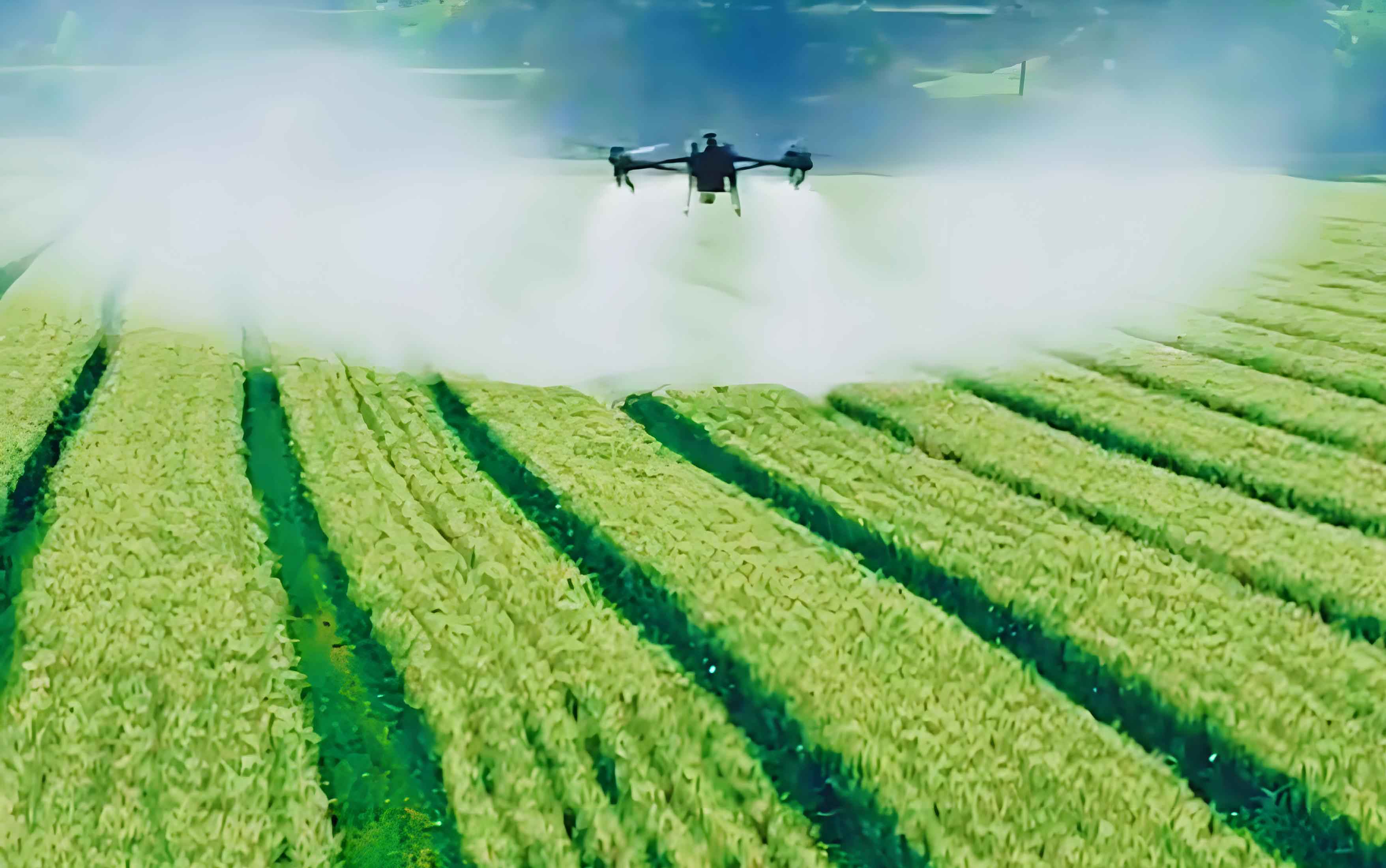
The core advantage of the agricultural UAV lies in its ability to perform low-altitude operations, swiftly covering large and topographically challenging fields. The downwash airflow generated by its rotors enhances droplet penetration and deposition within the dense maize canopy, improving coverage on both the upper and lower leaf surfaces—a critical factor often missed by traditional methods. Furthermore, the integration of precision application technologies enables variable-rate spraying based on real-time pest and disease scouting, opening new avenues for enhancing control efficacy while concurrently reducing chemical inputs. This synergy of efficiency, precision, and adaptability positions the agricultural UAV as a pivotal technology for sustainable maize production.
1. The Technological Foundation of Agricultural UAV for Plant Protection
1.1 System Architecture and Operational Mechanics
A modern agricultural UAV plant protection system is an integrated platform comprising several key subsystems, as summarized in Table 1.
| Subsystem | Key Components | Primary Function |
|---|---|---|
| Flight Control System | GNSS (GPS/BeiDou), IMU, Autopilot Software | Stabilized flight, automated route planning, and precise navigation. |
| Spraying System | Liquid tank, pump, pressure regulator, nozzles | Atomization and distribution of the spray solution. |
| Power System | Lithium-ion batteries / Internal Combustion Engine | Provides energy for propulsion and subsystem operation. |
| Sensing & Monitoring | Ultrasonic/LiDAR altimeter, flow sensors, wind speed sensor | Real-time feedback on operational parameters (height, speed, volume). |
The operational efficacy hinges on the interaction between the atomized droplets and the rotor-induced airflow. The flight control system executes pre-programmed or real-time adjusted flight paths with high positional accuracy, often enhanced by Real-Time Kinematic (RTK) positioning, ensuring uniform coverage and minimal overlap. The spraying system, typically employing centrifugal or hydraulic nozzles, produces a fine spray with a Volumetric Median Diameter (VMD) usually between 100 and 150 micrometers. The downwash airflow ($v_{downwash}$) is critical for canopy penetration. Its force helps to deflect leaves and carry droplets deeper into the crop structure. The droplet deposition efficiency ($\eta_d$) in the middle and lower canopy can be conceptually related to factors like downwash velocity, droplet size, and plant architecture:
$$ \eta_d \propto \frac{v_{downwash} \cdot \rho_{droplet}}{D_{vmd} \cdot LAI} $$
where $D_{vmd}$ is the volumetric median diameter and $LAI$ is the Leaf Area Index. Field trials consistently show that an optimally configured agricultural UAV can improve chemical deposition efficiency by 20-30% compared to manual spraying, with a typical effective swath width of 5-7 meters for multi-rotor systems.
1.2 Inherent Advantages Over Conventional Methods
The comparative benefits of agricultural UAV technology are multifaceted, impacting operational, economic, and environmental metrics. A quantitative comparison is presented in Table 2.
| Performance Metric | Manual Spraying | Ground Machinery | Agricultural UAV |
|---|---|---|---|
| Operational Efficiency (acres/hour) | 2.5 – 4 | 10 – 20 | 15 – 35 |
| Canopy Penetration & Lower Leaf Coverage | Poor (< 40%) | Moderate (50-70%) | Good to Excellent (70-90%) |
| Terrain Adaptability | High (but labor-intensive) | Very Low (requires flat, accessible fields) | Very High (operates over slopes, wet fields) |
| Chemical Utilization Rate | Low (~40-50%) | Medium (~50-60%) | High (65-75%) |
| Drift Potential | High | Medium-High | Medium-Low (controllable with settings) |
| Water Usage per Acre | High (5-15 gallons) | Medium (2-5 gallons) | Low (0.5-2 gallons) |
The high efficiency stems from continuous, automated flight, enabling one agricultural UAV to cover 60-100 acres per hour. The precision in application, guided by GNSS, minimizes overspray and missed areas. Crucially, the agricultural UAV facilitates significant pesticide reduction. By enabling variable-rate technology (VRT), the application rate ($AR$) can be dynamically adjusted based on a prescription map ($PM$) derived from scouting or remote sensing:
$$ AR(x,y) = AR_{base} \times f(PM(x,y)) $$
where $AR(x,y)$ is the application rate at coordinates $(x,y)$, $AR_{base}$ is the standard rate, and $f$ is a function mapping pest/disease severity from the prescription map to a spray rate multiplier. Field data indicates this approach can reduce total chemical volume by 20-30% while maintaining or improving pest control thresholds.
2. Application and Efficacy in Maize Pest and Disease Management
2.1 Combating Major Insect Pests: Corn Borer and Armyworm
Lepidopteran pests like the Asian Corn Borer (Ostrinia furnacalis) and Fall Armyworm (Spodoptera frugiperda) cause devastating yield loss through stem tunneling and direct grain feeding. Their behavior—larval hiding within whorls, stalks, and ears—makes them difficult targets for conventional sprayers. The agricultural UAV, with its downwash, can deliver insecticide into these microhabitats more effectively.
Controlled field experiments demonstrate marked superiority. In trials targeting corn borer, plots treated via agricultural UAV showed a larval density reduction exceeding 70% post-application, compared to approximately 50% for manual spraying. Furthermore, the integration of biological agents showcases the technology’s role in green IPM. Tank-mixing Bacillus thuringiensis (Bt) with reduced-rate synthetic insecticides applied by agricultural UAV achieved control efficacy parity with full-rate chemical-only programs but with significantly lower environmental impact. The residual activity and pest population rebound were also better managed. Results from a representative season are summarized in Table 3.
| Treatment Method | Active Ingredient(s) | App. Rate (ha) | Larval Reduction (%) (7 DAA) | Pest Rebound Index* (14 DAA) | Estimated Yield Preservation (%) |
|---|---|---|---|---|---|
| Manual Spraying | Chlorantraniliprole | Standard | 52.4 | 0.65 | 88 |
| Agricultural UAV | Chlorantraniliprole | Standard | 73.8 | 0.42 | 95 |
| Agricultural UAV | Bt + 50% Chlorantraniliprole | Reduced | 70.1 | 0.38 | 94 |
*Rebound Index: Ratio of pest count at 14 days to count at 7 days (lower is better). DAA: Days After Application.
2.2 Managing Fungal Diseases: Northern Leaf Blight and Rust
Foliar diseases such as Northern Corn Leaf Blight (NCLB, caused by Exserohilum turcicum) and Common Rust (Puccinia sorghi) thrive under humid conditions, rapidly spreading across fields. Effective fungicide application requires thorough coverage on both leaf surfaces to inhibit spore germination and lesion expansion. The agricultural UAV excels in this regard.
The downwash airflow is instrumental in achieving dual-side coverage. When paired with adjuvants that improve deposition and rainfastness, agricultural UAV applications significantly enhance disease suppression. The Disease Severity Index (DSI) reduction can be modeled as a function of coverage uniformity ($CU$) and effective deposition ($ED$):
$$ \Delta DSI \propto \ln(CU \cdot ED + 1) $$
Field data consistently shows that agricultural UAV spraying results in a DSI reduction 15-25 percentage points higher than manual methods. This superior control directly translates to physiological and yield benefits. By preserving photosynthetic leaf area, the treatments maintain the crop’s source strength during grain filling. The relationship between post-treatment green leaf area index (GLAI) and yield ($Y$) can be approximated linearly in the context of disease pressure:
$$ Y = \alpha \cdot \text{GLAI}_{post-treatment} + \beta $$
where $\alpha$ and $\beta$ are crop-specific coefficients. Trials have documented yield increases of 5-8% in agricultural UAV-treated plots compared to manually sprayed controls under moderate to high disease pressure.
2.3 Stage-Specific Application Strategies
Maize susceptibility to pests and diseases varies throughout its growth stages, necessitating tailored application strategies, which the agricultural UAV can precisely deliver by adjusting flight and spray parameters.
| Growth Stage | Primary Target | Recommended Droplet VMD (µm) | Flight Height (m) | Key Application Objective |
|---|---|---|---|---|
| V6-V8 (Early Vegetative) | Early whorl-feeding pests | 100-120 | 1.5-2.0 | Direct spray into small whorl; prevent establishment. |
| VT-Tasseling | Corn borer (egg laying/early larvae), Foliar diseases | 120-150 | 2.0-2.5 | Cover tassel and upper canopy; protect pollination. |
| R1-R3 (Silking to Milk) | Ear-feeding pests, Fungal diseases (blight, rust) | 130-180 | 2.5-3.0* | Maximize penetration to ear zone and lower canopy. |
| R4-R5 (Dough to Dent) | Late-season diseases, Secondary pests | 150-200 | 3.0-3.5* | Maintain canopy health for grain fill; use larger droplets for drift control. |
*Height may be increased for very tall hybrids to maintain safe operation while leveraging downwash for penetration.
A season-long, stage-optimized agricultural UAV program consistently outperforms blanket applications. The cumulative effect is a more stable crop stand with delayed pest/disease progression, often reducing the need for a final late-season spray.
2.4 Adaptability to Complex Topography and Large-Scale Operations
One of the most compelling practical advantages of the agricultural UAV is its independence from ground conditions. In fragmented, sloped, or waterlogged fields inaccessible to tractors, the agricultural UAV operates unimpeded. Its coverage uniformity ($CU_{slope}$) in such terrain is far superior to ground-based methods, which suffer drastic decline with slope angle ($\theta$). This relationship for ground sprayers can be simplified as:
$$ CU_{ground} \approx CU_{flat} \cdot \cos(\theta) $$
For an agricultural UAV, the effect is negligible as long as terrain-following radar or LiDAR is used to maintain constant altitude above the crop canopy. In large, contiguous fields, the scalability of agricultural UAV technology shines through fleet operations. Coordinated swarming or sequential “relay” operations with multiple units, supported by centralized charging and refilling stations, can multiply the daily treated area. The total area covered ($A_{total}$) by a fleet of $n$ agricultural UAV units with individual effective capacity $C$ (acres/hour) and optimized logistics can approach:
$$ A_{total} \approx n \cdot C \cdot T_{operational} \cdot \eta_{fleet} $$
where $T_{operational}$ is the available daily operation time and $\eta_{fleet}$ is the fleet efficiency factor (0.8-0.95 with good coordination). This makes the agricultural UAV indispensable for timely, large-scale pest outbreak management.
2.5 Integration of Intelligent Monitoring and Precision Decision-Making
The modern agricultural UAV is evolving into a mobile sensing and execution platform. By equipping it with multispectral, hyperspectral, or thermal imaging sensors, it can conduct rapid, high-resolution field scouting. This data is processed to generate prescription maps identifying stress zones, pest hotspots, or disease foci. The subsequent spraying mission is then guided by this map, transforming the agricultural UAV from a uniform applicator into a targeted intervention tool.
The decision logic for variable-rate application can be encapsulated in an algorithm that processes the vegetation index (e.g., NDVI) or disease index ($DI$) value for each pixel in the map:
$$ \text{Spray\_Flag}(x,y) =
\begin{cases}
1 & \text{if } DI(x,y) > T_{high} \quad \text{(Full Rate)} \\
0.5 & \text{if } T_{medium} < DI(x,y) \leq T_{high} \quad \text{(Reduced Rate)} \\
0 & \text{if } DI(x,y) \leq T_{medium} \quad \text{(No Spray)}
\end{cases} $$
This “sense-and-act” closed-loop system dramatically increases input efficiency. Documented cases show a 20-30% reduction in fungicide use when applying only to areas where disease severity exceeds an economic threshold, with no compromise on overall field-level disease control. This fusion of monitoring and application epitomizes the precision agriculture potential of the agricultural UAV.
3. Optimization Pathways and Future Development Trajectories
Despite its proven benefits, the widespread adoption of agricultural UAV technology faces challenges related to deposition consistency, operational sophistication, and integration into holistic IPM. Addressing these areas is key to unlocking its full potential.
3.1 Optimization of the Spraying System
Future advancements will focus on “smart” spraying systems. This includes dynamic nozzle systems that can alter droplet spectra in real-time based on the target growth stage (see Table 4) and ambient weather conditions to optimize drift management and deposition. Integration of Pulse-Width Modulation (PWM) valves with real-time flow feedback will achieve spray rate accuracy within ±2%. Research into actively controlled airflow systems, where rotor speed or auxiliary fans can modulate downwash intensity ($v_{downwash}$) relative to canopy density ($LAI$), is promising:
$$ v_{downwash\_target} = k \cdot \sqrt{LAI} $$
where $k$ is an empirically derived constant. This would ensure optimal canopy penetration across varying crop conditions, from early vegetative stages to dense, pre-harvest stands.
3.2 Enhancement of Intelligent Monitoring and Decision Systems
The next generation will leverage artificial intelligence (AI) for real-time, onboard analysis. Machine learning models trained on vast image libraries will enable an agricultural UAV to not just map stress but to identify specific pests (e.g., distinguishing armyworm damage from borer damage) or diseases during a scouting flight. This information would feed instantly into a decision engine that recommends or even autonomously initiates a targeted spray mission with the appropriate chemical mix. The decision framework will evolve from simple threshold-based models to predictive ones, incorporating weather forecasts, pathogen/pest life cycle models, and plant growth data to recommend prophylactic or curative actions with optimal timing.
3.3 Advancement of Green Control and Formulation Synergy
The true sustainability goal is to use the agricultural UAV as an enabler for biological and biorational pest control. This requires co-development of application technologies and novel formulations. Optimizing droplet characteristics and adjuvants for microbial pesticides (e.g., Bt, Beauveria bassiana), pheromones, or RNAi-based solutions is crucial. The future lies in integrated recipe maps that prescribe not just “how much” but “what” to spray where—directing a biological insecticide to a pest hotspot identified via remote sensing, while simultaneously releasing beneficial insect habitats in another part of the field. The agricultural UAV‘s precision makes such complex, spatially varied IPM strategies practically feasible for the first time.
3.4 Evolution of Operational Models and Systemic Integration
For scalability, operational models must mature. This includes the development of robust service networks, standardized training and certification for pilots/agronomists, and seamless data interoperability between agricultural UAV platforms, farm management software (FMS), and other agricultural machinery (like autonomous ground sprayers). The concept of heterogeneous “swarms” combining large-capacity agricultural UAV for open areas with smaller, more agile UAVs for field edges or obstacle-rich zones will improve overall efficiency. Furthermore, the integration of agricultural UAV data into digital twins of farms will allow for scenario planning and simulation of management actions, closing the loop on fully data-driven, sustainable crop production.
In conclusion, the agricultural UAV is far more than a novel sprayer. It represents a paradigm shift in crop protection—a versatile, intelligent node in a connected agricultural ecosystem. Its continued optimization and integration promise not only enhanced control of maize pests and diseases but also a fundamental step towards more resource-efficient, ecologically balanced, and productive farming systems. The journey from broad-acre chemical distribution to centimeter-scale ecological management is being paved by the intelligent application of agricultural UAV technology.