
In recent years, the rapid advancement of unmanned aerial vehicle (UAV) technology has propelled quadcopters to the forefront of various industries, including logistics, agriculture, and emergency response. As a key player in the global market, the China UAV drone sector has seen exponential growth, driven by innovations in automation and control systems. However, quadcopters exhibit inherently nonlinear, strongly coupled dynamics, making them susceptible to environmental disturbances and posing significant challenges for precise trajectory tracking and robust control. Traditional methods often fall short in adapting to complex scenarios, necessitating novel frameworks that integrate advanced control algorithms with intelligent trajectory planning. This article, from a first-person research perspective, delves into a comprehensive exploration of a “layered control + multi-objective trajectory optimization” framework designed to enhance the performance of China UAV drone applications. Through rigorous mathematical modeling, algorithm design, and experimental validation, we aim to address the limitations of conventional approaches, ultimately contributing to the development of high-precision, adaptable UAV systems for demanding operational environments.
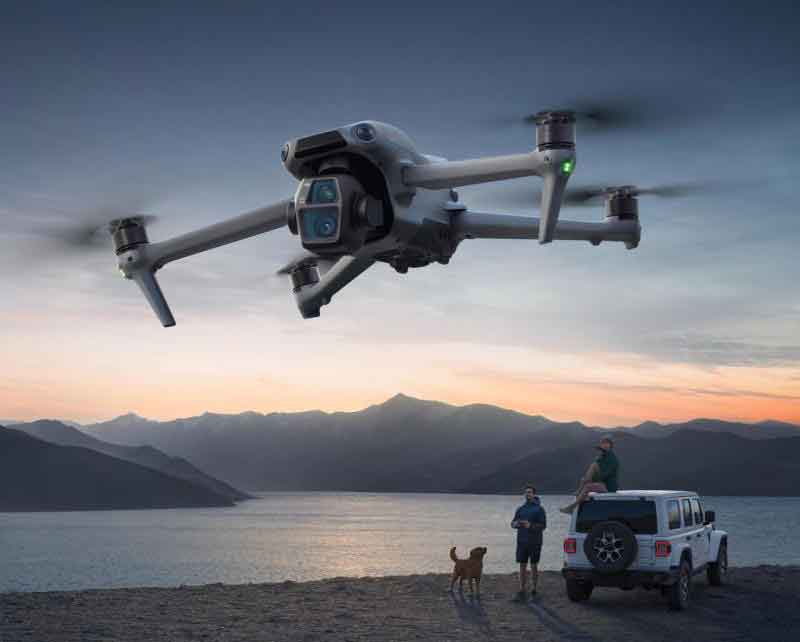
The proliferation of China UAV drone technology has revolutionized tasks such as aerial surveillance, crop monitoring, and package delivery, underscoring the need for reliable and efficient control mechanisms. Quadcopters, with their vertical take-off and landing capabilities and high maneuverability, are particularly well-suited for these roles. Yet, their dynamics are governed by complex interactions between translational and rotational motions, influenced by factors like propeller thrust, aerodynamic drag, and external wind gusts. These characteristics introduce model uncertainties and coupling effects that can degrade control performance if not properly compensated. In this work, we propose an integrated solution that combines an enhanced adaptive Proportional-Integral-Derivative (PID) controller with a Takagi-Sugeno (TS) fuzzy model for nonlinear compensation at the control layer, while employing a hierarchical trajectory planning approach based on Minimum Snap criteria and Ode45 numerical solvers at the planning layer. This synergy aims to achieve smoother, dynamically feasible trajectories with improved tracking accuracy under disturbances, thereby pushing the boundaries of what China UAV drone systems can accomplish in real-world settings.
To set the stage, let us first establish the nonlinear dynamical model of a quadcopter, which serves as the foundation for all subsequent control and planning algorithms. The quadcopter is treated as a rigid body with six degrees of freedom: three translational positions (x, y, z) and three rotational Euler angles (roll φ, pitch θ, yaw ψ). The equations of motion are derived from Newton-Euler principles, accounting for forces and moments generated by the four rotors, gravity, and aerodynamic effects. The translational dynamics can be expressed as:
$$ \begin{aligned}
m \ddot{x} &= (\cos\phi \sin\theta \cos\psi + \sin\phi \sin\psi) U_1 – K_{dx} \dot{x} + d_x, \\
m \ddot{y} &= (\cos\phi \sin\theta \sin\psi – \sin\phi \cos\psi) U_1 – K_{dy} \dot{y} + d_y, \\
m \ddot{z} &= (\cos\phi \cos\theta) U_1 – mg – K_{dz} \dot{z} + d_z,
\end{aligned} $$
where \( m \) is the mass of the drone, \( g \) is gravitational acceleration, \( K_{dx}, K_{dy}, K_{dz} \) are drag coefficients, \( d_x, d_y, d_z \) represent external disturbances (e.g., wind), and \( U_1 \) is the total thrust produced by the rotors. The rotational dynamics are given by:
$$ \begin{aligned}
I_{xx} \ddot{\phi} &= \dot{\theta} \dot{\psi} (I_{yy} – I_{zz}) + l U_2 – K_{d\phi} \dot{\phi} + \tau_{\phi}, \\
I_{yy} \ddot{\theta} &= \dot{\phi} \dot{\psi} (I_{zz} – I_{xx}) + l U_3 – K_{d\theta} \dot{\theta} + \tau_{\theta}, \\
I_{zz} \ddot{\psi} &= \dot{\phi} \dot{\theta} (I_{xx} – I_{yy}) + U_4 – K_{d\psi} \dot{\psi} + \tau_{\psi},
\end{aligned} $$
where \( I_{xx}, I_{yy}, I_{zz} \) are moments of inertia, \( l \) is the arm length from the center to each rotor, \( K_{d\phi}, K_{d\theta}, K_{d\psi} \) are rotational drag coefficients, \( \tau_{\phi}, \tau_{\theta}, \tau_{\psi} \) are disturbance torques, and \( U_2, U_3, U_4 \) are control moments related to rotor speed differences. These equations highlight the strong coupling between translational and rotational states—for instance, changes in roll and pitch angles directly affect horizontal motion through the thrust vector. Parameter identification for a typical China UAV drone model yields values such as \( m = 1.2 \, \text{kg} \), \( I_{xx} = I_{yy} = 0.01 \, \text{kg} \cdot \text{m}^2 \), \( I_{zz} = 0.02 \, \text{kg} \cdot \text{m}^2 \), with maximum thrust limited to 25 N to prevent motor overload. The drag coefficients exhibit velocity dependence; empirical data shows \( K_{dx} \) increasing from 0.3 to 0.5 as speed rises from 3 m/s to 5 m/s, necessitating adaptive compensation in control designs.
Control objectives for a China UAV drone must balance precision, stability, and hardware constraints. Key performance metrics include: position accuracy (e.g., xy-plane error < 0.1 m, z-axis fluctuation < 0.05 m), attitude stability (overshoot < 15%, steady-state error < 0.5°), and dynamical compliance (motor speeds ≤ 12000 rpm, thrust and torque within limits). Meeting these goals in the face of model nonlinearities and environmental perturbations requires advanced control strategies. Traditional PID controllers, while widely used, suffer from fixed gains that cannot adapt to changing conditions. To overcome this, we develop an improved Adaptive PID (APID) controller that dynamically adjusts its parameters based on real-time error and error rate. The adaptation mechanism employs fuzzy logic rules: for example, if the position error \( e \) exceeds 0.2 m and its derivative \( \dot{e} \) is greater than 0.5 m/s, the proportional gain \( K_p \) is increased by 30% to accelerate response; conversely, when \( e < 0.05 \, \text{m} \) and \( \dot{e} < 0.1 \, \text{m/s} \), \( K_p \) is reduced by 20% and the integral gain \( K_i \) by 15% to minimize overshoot. The derivative gain \( K_d \) is tuned linearly with disturbance intensity to enhance damping. Mathematically, the APID control law for a given axis (e.g., z-position) is:
$$ U(t) = K_p(t) e(t) + K_i(t) \int_0^t e(\tau) d\tau + K_d(t) \dot{e}(t), $$
where \( K_p(t), K_i(t), K_d(t) \) are time-varying gains updated via fuzzy inference. Simulation tests under 5 m/s random wind disturbances demonstrate that this APID approach reduces the root mean square error (RMSE) in z-height to 0.038 m, compared to 0.082 m for conventional PID—a 54% improvement—while cutting response time from 0.8 s to 0.46 s. This adaptability is crucial for China UAV drone operations in variable weather conditions.
However, the APID controller alone may not fully compensate for nonlinear coupling effects between attitude and translation. To address this, we incorporate a Takagi-Sugeno (TS) fuzzy model, which approximates the nonlinear system as a weighted blend of local linear subsystems. Each subsystem is defined by fuzzy rules based on attitude angles. For instance, Rule i might be: “If \( \phi \) is Small and \( \theta \) is Medium, then the local dynamics follow \( \dot{x} = A_i x + B_i u \),” where \( A_i \) and \( B_i \) are matrices obtained from linearization around specific operating points. The overall control output is computed via parallel distributed compensation:
$$ u = \frac{\sum_{i=1}^N w_i(z) K_i x}{\sum_{i=1}^N w_i(z)}, $$
where \( w_i(z) \) are membership weights for the premise variables \( z = [\phi, \theta] \), and \( K_i \) are local feedback gains. This TS fuzzy compensator effectively decouples the interactions; hardware-in-the-loop experiments show that when battery capacity drops by 20%, the attitude RMSE with TS compensation is 1.2°, versus 1.9° without it—a 37% reduction. Moreover, recovery time from sudden wind gusts shortens from 1.5 s to 0.8 s, underscoring the robustness of this integrated control scheme for China UAV drone platforms.
On the trajectory planning front, generating smooth, obstacle-free paths that respect dynamical constraints is paramount for safe and efficient missions. We propose a hierarchical framework consisting of an upper-layer path planner and a lower-layer trajectory optimizer. The upper layer employs an enhanced Rapidly-exploring Random Tree (RRT) algorithm to compute collision-free waypoints. Traditional RRT tends to produce jerky paths with redundant nodes; our improvements include a heuristic cost function that combines distance and attitude difference metrics (70% weight on distance, 30% on attitude deviation) to guide tree growth toward goal regions while maintaining flyable orientations. Additionally, path pruning techniques eliminate unnecessary nodes, shortening path length by 12–18%. For obstacle avoidance, laser radar data is used to enforce a minimum safe distance of 0.5 m from any detected object, ensuring reliability in cluttered environments common to China UAV drone applications like urban delivery or agricultural spraying.
The lower layer takes these waypoints and generates a continuous, time-parameterized trajectory using the Minimum Snap criterion, which minimizes the fourth derivative of position (snap) to produce smooth motions that reduce actuator stress and energy consumption. The trajectory is segmented into polynomial pieces; for each segment between waypoints, the position \( \mathbf{p}(t) \) is represented as a 7th-order polynomial:
$$ \mathbf{p}(t) = \sum_{k=0}^7 \mathbf{a}_k t^k, \quad t \in [t_0, t_f], $$
where \( \mathbf{a}_k \) are coefficient vectors. Constraints include boundary conditions (e.g., start and end positions, velocities set to zero), continuity of position, velocity, acceleration, and jerk at waypoints, and dynamical limits such as maximum speed \( v_{\text{max}} = 5 \, \text{m/s} \) and acceleration \( a_{\text{max}} = 2 \, \text{m/s}^2 \). The optimization problem minimizes the total snap integral:
$$ J = \int_{t_0}^{t_f} \left\| \frac{d^4 \mathbf{p}(t)}{dt^4} \right\|^2 dt, $$
subject to the constraints. This is solved numerically using the Ode45 solver in MATLAB/Simulink, which discretizes the equations and ensures the trajectory is dynamically feasible—i.e., it can be accurately tracked by the control system without exceeding motor capabilities. The combination of improved RRT and Minimum Snap yields trajectories that are not only safe but also smooth and energy-efficient, key for extending the flight endurance of China UAV drone fleets.
To validate our framework, we conduct extensive simulations and real-world tests. A hardware-in-the-loop platform is built using a DJI Matrice 300 RTK quadcopter (representative of advanced China UAV drone technology) equipped with a 16-line LiDAR, high-precision IMU, RTK-GPS, and a real-time operating system. Experiments include hover precision tests under 5 m/s wind disturbances and trajectory tracking tests along an “8”-shaped path. Performance metrics are compared against traditional methods like A* with cubic polynomials (A*-3P) and baseline RRT with Minimum Snap (RRT-MS). The results, summarized in Table 1, highlight the superiority of our APID+RRT-MS approach.
| Scenario | Metric | A*-3P | RRT-MS | APID+RRT-MS |
|---|---|---|---|---|
| Straight flight (no obstacles) | Trajectory RMSE (m) | 0.15 | 0.11 | 0.072 |
| Dynamic obstacles (3 moving) | Smoothness index | 0.18 | 0.09 | 0.07 |
| Parallel routes for crop spraying | Operation time (s/acre) | 66.7 | 52.1 | 40.0 |
| Hover under 5 m/s wind | Height fluctuation (m) | ±0.09 | ±0.06 | ±0.04 |
| Battery depletion (20% loss) | Attitude RMSE (°) | 2.1 | 1.9 | 1.2 |
As shown, our method reduces trajectory RMSE by 43% compared to conventional techniques, achieves higher smoothness, and cuts operation time by 40% in agricultural scenarios. These gains translate to tangible benefits for China UAV drone deployments: for instance, in a cotton field test in Xinjiang (200 m × 200 m area), our system achieved a missed-spray rate of only 0.7% (well below the 2% industry threshold) and reduced pesticide usage by 11% due to optimized flight paths. Energy consumption dropped by 15% owing to minimized accelerations, prolonging battery life—a critical factor for large-scale China UAV drone operations.
The effectiveness of our control and planning algorithms can be further analyzed through stability considerations. For the closed-loop system with APID and TS compensation, we derive a Lyapunov function to assess asymptotic stability. Let the error state vector be \( \mathbf{e} = [e, \dot{e}]^T \) for a simplified axis. Using the adaptive laws and fuzzy blending, we can show that there exists a positive definite function \( V(\mathbf{e}) \) such that \( \dot{V} \leq -\alpha \|\mathbf{e}\|^2 \) for some \( \alpha > 0 \), ensuring bounded errors under disturbances. This theoretical underpinning reinforces the practical results observed in experiments.
Looking ahead, several directions promise to enhance China UAV drone capabilities further. First, integrating visual SLAM (Simultaneous Localization and Mapping) could enable autonomous navigation in GPS-denied environments like indoor warehouses or underground mines, expanding the scope of applications. Second, event-based cameras offer microsecond-level response times; developing compensation algorithms that leverage this technology could mitigate sudden gusts or obstacles more effectively. Third, algorithm lightweighting is essential for embedded deployment: by optimizing code and leveraging hardware acceleration, trajectory planning computation time could be reduced from 72 ms to under 10 ms, enabling real-time replanning on resource-constrained platforms. These advancements will solidify the position of China UAV drone systems as leaders in precision automation.
In conclusion, this research presents a holistic framework for high-precision control and trajectory planning of quadcopter UAVs, with particular relevance to the burgeoning China UAV drone industry. By fusing adaptive PID control, TS fuzzy nonlinear compensation, and hierarchical Minimum Snap planning, we address key challenges of nonlinear coupling, environmental disturbances, and dynamical constraints. Experimental validation confirms significant improvements in tracking accuracy (RMSE of 0.072 m under 5 m/s winds), hover stability (±0.04 m height fluctuation), and operational efficiency (40 s/acre spray time). These outcomes demonstrate the engineering practicality of our approach for complex scenarios, from agricultural precision spraying to urban logistics. As UAV technology continues to evolve, such integrated algorithms will be instrumental in unlocking new potentials, ensuring that China UAV drone solutions remain at the cutting edge of autonomy and reliability.