
Real-time, accurate, and efficient trajectory prediction is a fundamental prerequisite for the effective management and control of autonomous aerial systems, particularly for quadrotor drones. The operational flexibility, hovering capability, and complex maneuvering patterns of quadrotor drones pose significant challenges for traditional prediction models. To address this, this paper presents a novel trajectory prediction methodology for quadrotor drones based on Long Short-Term Memory (LSTM) neural networks, a specialized form of recurrent neural network adept at learning long-term dependencies in sequential data. The proposed model leverages historical flight parameters to autonomously learn the dynamic patterns of a quadrotor drone‘s movement, enabling robust multi-step ahead predictions.
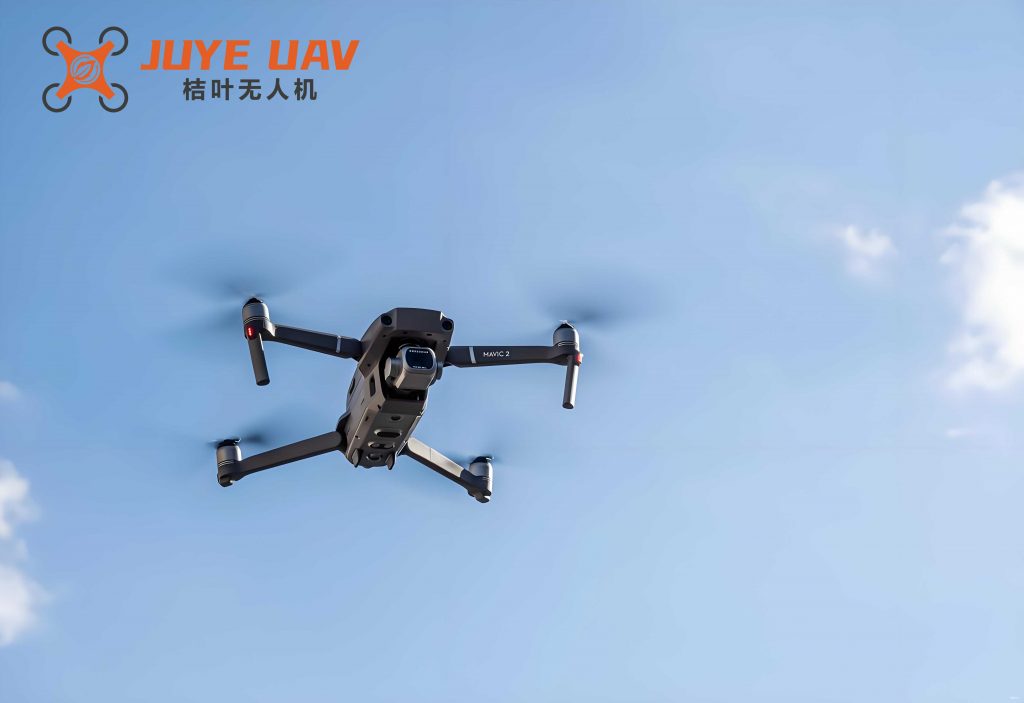
The proliferation of quadrotor drones across sectors such as logistics, surveillance, agriculture, and infrastructure inspection has created a pressing need for advanced air traffic management solutions in lower airspace. Unlike fixed-wing aircraft, the flight trajectory of a quadrotor drone is characterized by multi-modal states including vertical take-off/landing, hovering, and agile lateral movements. Predicting such trajectories is inherently complex due to the high dimensionality of the state space and the influence of operational intent and environmental factors. Effective prediction is crucial not only for conflict detection and resolution but also for anomaly detection, mission planning, and ensuring overall safety in increasingly crowded skies. This work focuses on a data-driven approach, circumventing the need for explicit, often incomplete, aerodynamic or kinematic modeling of each specific quadrotor drone type.
Related Work in Trajectory Prediction
Trajectory prediction research for aerial vehicles can be broadly categorized into two paradigms: model-based methods and data-driven methods. Model-based approaches for quadrotor drones typically rely on deriving equations of motion from Newtonian mechanics. These methods define states such as position, velocity, and attitude, and control inputs like rotor speeds. While providing a physically interpretable framework, they require precise knowledge of the quadrotor drone‘s parameters (e.g., mass, inertia, thrust coefficients) and are sensitive to unmodeled dynamics, wind disturbances, and changes in payload. Extensions often integrate intent information or environmental data, but the core reliance on a predefined model limits generalizability across diverse quadrotor drone platforms.
Data-driven methods, conversely, treat trajectory prediction as a time-series forecasting problem. These approaches learn patterns directly from historical data without explicit physical modeling. Techniques range from clustering with Gaussian Mixture Models to simpler neural networks like Elman networks. However, many struggle with capturing long-range temporal dependencies present in quadrotor drone flight data. More recent advances have employed sequence models like Hidden Markov Models (HMMs), but these can face efficiency challenges with high-dimensional state spaces. The emergence of deep learning, specifically Recurrent Neural Networks (RNNs) and their variants, offers a powerful framework for learning complex temporal dynamics. The LSTM network, with its gated architecture, effectively mitigates the vanishing gradient problem of standard RNNs, making it exceptionally suitable for learning the long-term state dependencies inherent in quadrotor drone trajectory sequences, where past maneuvers (like a climb) significantly influence future positions.
Methodology: LSTM-Based Prediction for Quadrotor Drones
Data Collection and Preprocessing
The foundation of any data-driven model is a robust and representative dataset. For this study, historical flight trajectory data was collected from various quadrotor drone operations. Data points were logged periodically, capturing essential state information. The raw dataset included multiple fields, but for trajectory prediction, the core kinematic variables were extracted.
| Field | Description | Unit (Original/Processed) |
|---|---|---|
| Timestamp | Time of the record | Epoch time |
| Drone ID | Unique identifier for the quadrotor drone | – |
| Latitude | Geodetic latitude | Degrees → Meters (Cartesian) |
| Longitude | Geodetic longitude | Degrees → Meters (Cartesian) |
| Altitude | Height above reference | Meters (m) |
| Horizontal Speed | Ground speed | Meters per second (m/s) |
| Vertical Speed* | Rate of climb/descent | Derived (m/s) |
*Vertical speed was derived from the rate of change of altitude between consecutive timestamps. To create a uniform feature space suitable for neural network training, several preprocessing steps were applied. First, latitude and longitude coordinates were transformed into local Cartesian coordinates (East, North) in meters to allow for Euclidean distance calculations. Secondly, data cleaning was performed to remove records with missing values, constant position records indicating prolonged hovering (which could bias the model towards static predictions), and erroneous spikes. Finally, to ensure stable and efficient training, all numerical features were normalized to a [0, 1] range using min-max scaling. For a feature \( x \), the normalized value \( x’ \) is computed as:
$$ x’ = \frac{x – \min(x)}{\max(x) – \min(x)} $$
The processed dataset for each quadrotor drone trajectory thus consisted of a multivariate time series with features: North position (\(y\)), East position (\(x\)), altitude (\(z\)), horizontal speed (\(v_h\)), and vertical speed (\(v_v\)). The dataset was subsequently partitioned into training (75%) and testing (25%) sets to evaluate model generalization.
The LSTM Network Architecture
The Long Short-Term Memory (LSTM) network is designed to overcome the limitation of learning long-range dependencies. The core innovation is the memory cell state (\(c_t\)), which runs through the entire sequence chain, regulated by three specialized gates. The structure of a single LSTM unit at time step \(t\) is defined by the following equations, which form the basis of our quadrotor drone state predictor.
Forget Gate (\(f_t\)): This gate decides what information from the previous cell state (\(c_{t-1}\)) should be discarded. It looks at the previous hidden state (\(h_{t-1}\)) and the current input (\(x_t\)) and outputs a number between 0 (completely forget) and 1 (completely retain) for each component of \(c_{t-1}\).
$$ f_t = \sigma(W_f \cdot [h_{t-1}, x_t] + b_f) $$
Input Gate (\(i_t\)) and Candidate Cell State (\(\tilde{c}_t\)): The input gate decides which new values from the current input will be updated to the cell state. Simultaneously, a tanh layer creates a vector of new candidate values, \(\tilde{c}_t\), that could be added.
$$ i_t = \sigma(W_i \cdot [h_{t-1}, x_t] + b_i) $$
$$ \tilde{c}_t = \tanh(W_c \cdot [h_{t-1}, x_t] + b_c) $$
Cell State Update: The old cell state \(c_{t-1}\) is updated to the new cell state \(c_t\). This is done by first multiplying \(c_{t-1}\) by the forget gate \(f_t\) (to drop old information) and then adding the product of the input gate \(i_t\) and the candidate vector \(\tilde{c}_t\) (to add new, relevant information).
$$ c_t = f_t \odot c_{t-1} + i_t \odot \tilde{c}_t $$
Output Gate (\(o_t\)) and Hidden State (\(h_t\)): Finally, the output gate decides what part of the cell state will be output. The cell state is passed through tanh (to push values between -1 and 1) and multiplied by the output gate’s filter to produce the new hidden state \(h_t\), which serves as the prediction and is passed to the next time step.
$$ o_t = \sigma(W_o \cdot [h_{t-1}, x_t] + b_o) $$
$$ h_t = o_t \odot \tanh(c_t) $$
In these equations, \(\sigma\) denotes the sigmoid activation function, \(\tanh\) is the hyperbolic tangent function, \(\odot\) represents the Hadamard (element-wise) product, \(W\) terms are weight matrices, and \(b\) terms are bias vectors. For the quadrotor drone prediction task, the input \(x_t\) at each time step is the vector of normalized kinematic features \([y’, x’, z’, v_h’, v_v’]_t\).
Model Design and Training for Quadrotor Drone Trajectories
The specific LSTM model architecture for predicting quadrotor drone trajectory was implemented with two stacked LSTM layers, each containing 50 memory units. Stacking layers allows the network to learn higher-level temporal representations from the sequential data. The output of the final LSTM layer at time \(t\) is fed into a fully connected (Dense) layer to produce the predicted state for the next time step(s). The model was designed to perform multi-step prediction, where it uses a sequence of historical states (a look-back window) to predict one or more future states.
A critical aspect of training deep networks is the choice of optimizer and learning rate. We employed the Adam optimizer with an automatically decaying learning rate schedule. This approach starts with a higher learning rate for rapid initial progress and gradually reduces it to allow fine-tuning convergence, avoiding oscillations around the minimum loss. The model was trained to minimize the Mean Absolute Error (MAE) between the predicted and actual trajectory points, which for \(N\) samples is defined as:
$$ \text{MAE} = \frac{1}{N} \sum_{i=1}^{N} | y_i – \hat{y}_i | $$
where \(y_i\) is the true value and \(\hat{y}_i\) is the predicted value for a given coordinate (e.g., North, East, Altitude). Training proceeded with mini-batches of sequences, where each batch had the shape \(B \times L \times F\), with \(B\) as the batch size, \(L\) as the look-back time step length, and \(F=5\) as the number of input features. To prevent overfitting, early stopping was implemented based on the validation loss.
Experiments, Results, and Analysis
The performance of the proposed LSTM model for quadrotor drone trajectory prediction was evaluated through systematic experiments. The primary metrics were the MAE values for the North, East, and Altitude coordinates. The experiments aimed to answer two key questions: (1) What is the optimal length of the historical sequence (look-back window) for accurate prediction? (2) How does prediction accuracy degrade as we predict further into the future (multi-step prediction)?
Influence of Historical Sequence Length
The length of the historical sequence (\(L\)) presented to the LSTM network is a crucial hyperparameter. A sequence that is too short may not provide enough context for the model to understand the quadrotor drone‘s dynamic state (e.g., whether it is initiating a turn or maintaining straight flight). A sequence that is excessively long may incorporate irrelevant past information and increase computational complexity. We trained and tested the model with varying look-back window lengths from 5 to 50 time steps. The MAE for one-step-ahead prediction is summarized below.
| Step Length (L) | Altitude Error (m) | North (Lat.) Error (m) | East (Long.) Error (m) |
|---|---|---|---|
| 5 | 2.72 | 8.73 | 7.99 |
| 10 | 2.90 | 9.04 | 8.52 |
| 15 | 2.79 | 7.98 | 9.59 |
| 20 | 2.67 | 7.28 | 7.37 |
| 25 | 2.99 | 6.60 | 6.91 |
| 30 | 2.88 | 6.83 | 7.01 |
| 35 | 2.49 | 8.62 | 6.82 |
| 40 | 2.33 | 6.45 | 7.00 |
| 45 | 2.66 | 8.42 | 6.04 |
| 50 | 2.50 | 7.58 | 6.61 |
The results indicate that the optimal historical step length for predicting a quadrotor drone‘s trajectory lies in the range of 40 to 45 time steps for this dataset. At \(L=40\), the model achieves the lowest error for altitude (2.33 m) and North position (6.45 m). For the East position, the lowest error (6.04 m) occurs at \(L=45\). This demonstrates that a sufficiently long context window is necessary for the LSTM to capture the motion patterns effectively. The performance degradation at shorter lengths (e.g., L=5, 10) confirms the insufficiency of context, while the slight increase in error for some coordinates at L=50 suggests the potential introduction of noise or redundant information from the distant past.
Performance on Multi-Step Prediction
Practical applications often require predicting the quadrotor drone‘s position several time steps into the future to allow adequate time for decision-making. We evaluated the model’s capability for multi-step prediction by recursively feeding its own predictions back as input (in an autoregressive manner) to forecast trajectories two and three steps ahead. The prediction errors for these scenarios, using the optimal look-back window, are presented below.
| Prediction Horizon | Altitude Error (m) | North (Lat.) Error (m) | East (Long.) Error (m) |
|---|---|---|---|
| 1 Step Ahead | 2.99 | 6.60 | 6.91 |
| 2 Steps Ahead | 4.40 | 20.20 | 11.10 |
| 3 Steps Ahead | 31.77 | 50.82 | 59.49 |
The analysis reveals a clear and expected trend: prediction accuracy decreases as the forecast horizon extends. The one-step-ahead prediction maintains high accuracy, with errors on the order of a few meters. The two-step-ahead prediction shows a moderate increase in error, particularly for the North coordinate, but remains within a potentially useful range for short-term planning. However, the three-step-ahead prediction exhibits a significant degradation in performance, with errors increasing by an order of magnitude. This is characteristic of autoregressive models, where prediction errors compound with each successive step. For a quadrotor drone performing agile maneuvers, the inherent uncertainty and non-linearity of its future path grow rapidly, limiting the reliable prediction horizon of a purely kinematic, data-driven model.
Conclusion
This paper has presented and validated a deep learning framework for the trajectory prediction of quadrotor drones using Long Short-Term Memory networks. By processing sequences of kinematic states—position and velocity—the LSTM model effectively learns the complex temporal dynamics inherent in quadrotor drone flight without requiring an explicit physical model. The experimental results demonstrate that the model achieves high accuracy for one-step-ahead prediction, with optimal performance when utilizing a historical context window of 40-45 time steps. This underscores the importance of providing the network with sufficient sequential context to infer the drone’s motion pattern. Furthermore, while the model provides reasonable accuracy for two-step-ahead predictions, the error compounds significantly for three-step predictions, highlighting a fundamental challenge in forecasting the path of a highly agile quadrotor drone far into the future.
The proposed LSTM-based approach offers a scalable and generalizable solution for quadrotor drone trajectory prediction, adaptable to various drone platforms through data. Future work will focus on integrating additional contextual data streams, such as intended waypoints or simple intent classifications, to constrain the prediction space and improve multi-step accuracy. Furthermore, exploring hybrid models that combine the pattern-learning strength of LSTMs with simplified kinematic constraints could yield more robust and reliable long-horizon predictions for safe and efficient quadrotor drone traffic management.