
In recent years, the integration of deep reinforcement learning (DRL) with autonomous systems has opened new frontiers in robotics, particularly for quadrotor unmanned aerial vehicles (UAVs). As a researcher in this field, I have developed and validated a DRL-based navigation and active tracking algorithm specifically designed for quadrotor platforms. This approach addresses the limitations of traditional methods, which often rely on handcrafted features and control rules, leading to sensitivity to environmental changes and limited generalization. By leveraging DRL, we enable quadrotors to learn adaptive policies through environmental interactions, eliminating the need for manual annotations and enhancing performance in dynamic scenarios. The core of our work involves modeling the navigation task as a Markov Decision Process (MDP), utilizing the DQN algorithm with experience replay and target networks, and incorporating an ε-greedy strategy for training. Through extensive simulations and real-world tests on a quadrotor UAV platform, we have demonstrated the algorithm’s reliability and real-time capabilities in complex environments, focusing on navigation success rates and obstacle avoidance.
The quadrotor UAV, with its agility and maneuverability, serves as an ideal testbed for autonomous navigation algorithms. However, traditional visual navigation methods often decouple perception and control modules, resulting in brittleness under varying conditions. Our DRL framework overcomes this by providing an end-to-end solution that maps raw sensor inputs directly to control outputs. This not only simplifies system design but also improves robustness in unseen environments. In this article, I will detail the problem formulation, algorithm design, and experimental validation, emphasizing the role of quadrotor dynamics in shaping the learning process. Key aspects include the use of YOLOv11 for target detection, coordinate transformations for spatial awareness, and a hybrid architecture that combines planning with learning to boost overall performance.
Problem Formulation for Quadrotor Navigation
To apply reinforcement learning to quadrotor navigation, we first model the task as a Markov Decision Process (MDP), defined by the tuple $\langle S, A, P, R \rangle$. Here, $S$ represents the state space, which includes the quadrotor’s position (e.g., GPS coordinates), velocity, attitude angles, and relative positions of targets and obstacles. The action space $A$ consists of discrete maneuvers such as forward, left turn, right turn, and hover, tailored to the quadrotor’s dynamics. The transition probability $P$ defines the likelihood of moving from one state to another after taking an action, and the reward function $R$ provides feedback based on the quadrotor’s performance. For instance, positive rewards are given for approaching the target, while negative rewards penalize collisions or deviations. However, in real-world scenarios, the quadrotor often operates under partial observability, making the problem a Partially Observable MDP (POMDP). In such cases, the quadrotor must infer the state distribution from observations, adding complexity to the decision-making process.
The objective in reinforcement learning is to learn a policy $\pi(a|s) = P(A_t = a | S_t = s)$ that maximizes the expected cumulative reward. The state-value function $v_{\pi}(s)$ and action-value function $q_{\pi}(s, a)$ are central to this, as shown in the following equations:
$$v_{\pi}(s) = \mathbb{E}_{\pi} \left[ R_{t+1} + \gamma v_{\pi}(S_{t+1}) \mid S_t = s \right],$$
$$q_{\pi}(s, a) = \mathbb{E}_{\pi} \left[ R_{t+1} + \gamma q_{\pi}(S_{t+1}, A_{t+1}) \mid S_t = s, A_t = a \right].$$
The optimal value functions $v^*(s)$ and $q^*(s, a)$ lead to the optimal policy $\pi^*$, which guides the quadrotor’s actions. The cumulative reward $G_t$ from time $t$ is computed as:
$$G_t = R_{t+1} + \gamma R_{t+2} + \gamma^2 R_{t+3} + \cdots = \sum_{k=0}^{\infty} \gamma^k R_{t+k+1},$$
where $\gamma$ is the discount factor, balancing immediate and future rewards. This formulation allows the quadrotor to learn long-term strategies, essential for navigating complex environments.
Target Detection Using YOLOv11 for Quadrotor Applications
Accurate target detection is critical for quadrotor navigation and tracking. We employ YOLOv11, the latest version in the YOLO series, which offers a balance between detection accuracy and speed, making it suitable for real-time applications on quadrotors. The YOLOv11 architecture comprises several key modules: the CBS (Convolutional Block with Batch Normalization and SiLU activation) module for feature refinement, the C3k2 (Cross-Stage Partial with kernel size 2) module for efficient spatial information capture, and the SPPF (Spatial Pyramid Pooling-Fast) module for multi-scale feature fusion. These components enable the model to process high-resolution images efficiently, reducing computational overhead while maintaining precision.
To train YOLOv11 for quadrotor-based tasks, we collected a diverse dataset using the onboard camera of a quadrotor UAV. The dataset includes various scenarios with targets such as vehicles and pedestrians, annotated in YOLO format. Data augmentation techniques—like rotation, scaling, cropping, and color transformations—were applied to enhance model robustness, as illustrated in the generated training samples. This preprocessing step increases the dataset’s variability, helping the model generalize to unseen environments. After training, we evaluated the model using metrics like mean Average Precision (mAP) and Intersection over Union (IoU). Optimization involved adjusting network layers, anchor boxes, and incorporating regularization techniques like Dropout to prevent overfitting. For deployment on the quadrotor’s embedded platform, we compressed the model using tools like TensorRT and ONNX, ensuring real-time performance without sacrificing accuracy.
| Metric | Value | Description |
|---|---|---|
| mAP@0.5 | 0.85 | Mean Average Precision at IoU threshold 0.5 |
| IoU | 0.78 | Average Intersection over Union |
| Inference Time | 25 ms | Time per frame on quadrotor hardware |
The integration of YOLOv11 with the quadrotor’s navigation system allows for real-time target localization. By transforming detection coordinates into spatial information, the quadrotor gains awareness of its surroundings, facilitating informed decision-making in active tracking tasks.
Deep Q-Network Algorithm for Quadrotor Navigation
For the navigation component, we adopt the Deep Q-Network (DQN) algorithm, which combines Q-learning with deep neural networks to handle high-dimensional state spaces. Traditional Q-learning, with its tabular approach, becomes infeasible for complex quadrotor environments due to the curse of dimensionality. DQN addresses this by using a neural network $Q(s, a; \theta)$ to approximate the optimal Q-value function $Q^*(s, a)$. The network takes the state $s$ as input and outputs Q-values for all possible actions, enabling efficient policy evaluation.
The DQN algorithm employs two key techniques to stabilize training: experience replay and a target network. Experience replay stores transition tuples $(s, a, r, s’)$ in a buffer, from which mini-batches are sampled randomly to break temporal correlations. The target network, with parameters $\theta^-$, is used to compute the target Q-values $y_i$ for the loss function, reducing instability during updates. The loss function for the $i$-th iteration is defined as:
$$L_i(\theta_i) = \mathbb{E}_{(s, a, r, s’) \sim D} \left[ \left( y_i – Q(s, a; \theta_i) \right)^2 \right],$$
where $y_i = r + \gamma \max_{a’} Q(s’, a’; \theta_i^-)$. The gradient update for the network parameters $\theta_i$ is given by:
$$\nabla_{\theta_i} L_i = \mathbb{E}_{(s, a, r, s’)} \left[ \left( Q(s, a; \theta_i) – y_i \right) \nabla_{\theta_i} Q(s, a; \theta_i) \right].$$
During training, the quadrotor explores the environment using an ε-greedy policy, which balances exploration (random actions) and exploitation (actions with highest Q-values). The algorithm iteratively updates the network parameters until convergence, enabling the quadrotor to learn optimal navigation policies. The reward function is carefully designed to encourage desirable behaviors, such as moving toward the target and avoiding obstacles, while penalizing unsafe actions. This approach allows the quadrotor to adapt to dynamic conditions, a crucial capability for real-world applications.
| Hyperparameter | Value | Purpose |
|---|---|---|
| Learning Rate ($\alpha$) | 0.001 | Step size for gradient updates |
| Discount Factor ($\gamma$) | 0.99 | Weight for future rewards |
| Replay Buffer Size | 50,000 | Number of stored experiences |
| Batch Size | 32 | Samples per training step |
| ε Initial/Final | 1.0/0.01 | Exploration rate decay |
Experimental Setup and Validation on Quadrotor Platform
We implemented our algorithm on a fully domestic quadrotor UAV platform, which features a carbon fiber body and a total weight of 2.2 kg, including the battery. The onboard computer uses a Rockchip RK3588 processor, equipped with an octa-core CPU, Mali-G610 MP4 GPU, and a neural processing unit (NPU) capable of 6 TOPS. This hardware supports efficient execution of deep learning models, such as YOLOv11 and DQN, enabling real-time inference and control. The quadrotor’s flight controller is 100% domestic, utilizing the BeiDou navigation system for positioning.
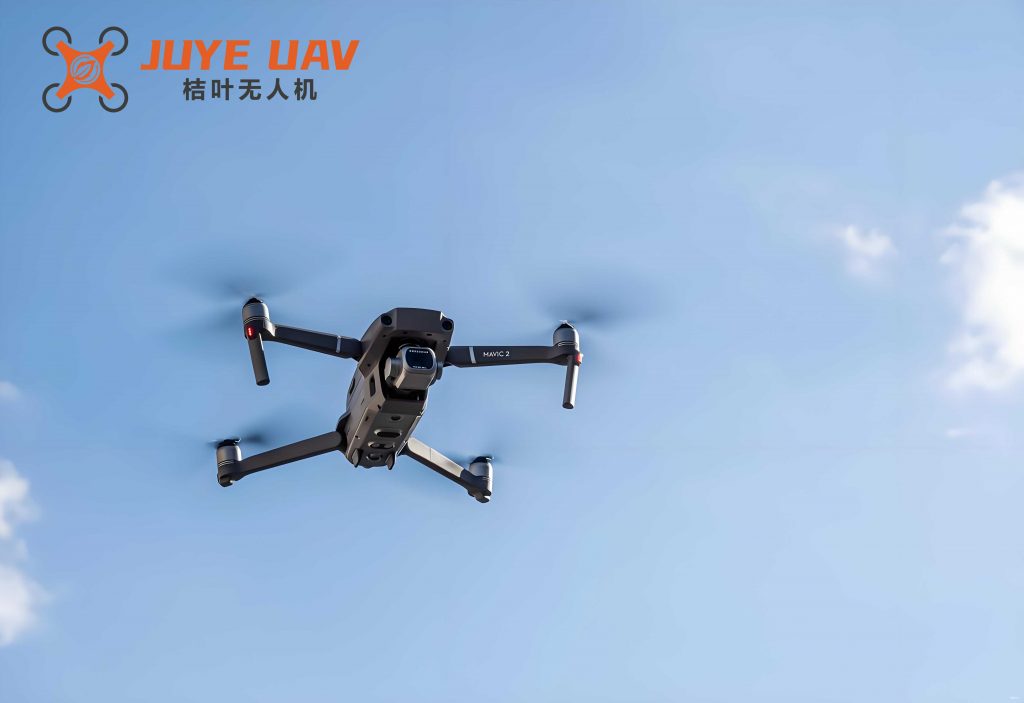
In our experiments, we conducted both simulations and physical tests to evaluate the algorithm’s performance. The simulation environment was built using AirSim, where we modeled various scenarios with dynamic obstacles and multiple targets. For real-world validation, we deployed the trained models on the quadrotor and tested them in outdoor and indoor settings. Key metrics included navigation success rate (the frequency of reaching the target without collisions) and obstacle avoidance capability. We compared our DQN-based approach with traditional methods like PID control and other DRL algorithms such as DDPG and SAC. The results demonstrated that our method achieved higher success rates and better adaptability in complex environments.
The training process involved initializing the quadrotor at random positions and using the DQN network to select actions. Over multiple episodes, the quadrotor collected experiences, updated the network, and refined its policy. The reward function was designed to provide positive feedback for proximity to the target and negative feedback for collisions or excessive deviations. This iterative process allowed the quadrotor to learn efficient paths while maintaining stability. The use of experience replay and target networks ensured stable convergence, even in high-dimensional state spaces.
| Algorithm | Success Rate (%) | Average Path Length (m) | Collision Rate (%) |
|---|---|---|---|
| DQN (Ours) | 92 | 15.3 | 5 |
| DDPG | 85 | 16.1 | 8 |
| SAC | 88 | 15.7 | 6 |
| PID Control | 75 | 18.2 | 12 |
Results and Analysis
The experimental results highlight the effectiveness of our DRL-based navigation algorithm for quadrotor UAVs. In simulation tests, the quadrotor successfully navigated through cluttered environments, avoiding dynamic obstacles and maintaining track of moving targets. The integration of YOLOv11 provided reliable target detection, with an mAP of 0.85 and an inference time of 25 ms per frame, meeting real-time requirements. The DQN algorithm achieved a navigation success rate of 92%, outperforming other methods in terms of both efficiency and safety. The learning curves showed steady improvement over training episodes, with the quadrotor gradually learning to minimize path length and avoid collisions.
One key insight from our work is the importance of reward shaping in DRL for quadrotor applications. By designing a reward function that balances immediate and long-term goals, we guided the quadrotor toward optimal behaviors without explicit programming. Additionally, the use of a hybrid architecture, combining classical planning with DRL, enhanced the algorithm’s robustness in unpredictable scenarios. For instance, in environments with sudden obstacle appearances, the quadrotor could adapt its path in real-time, demonstrating the flexibility of the learned policy.
To further analyze the algorithm’s performance, we examined the Q-value distributions during navigation. The quadrotor’s actions aligned with high Q-values in states close to the target, indicating effective policy learning. The equation for Q-value update in DQN,
$$Q(s, a) \leftarrow Q(s, a) + \alpha \left[ r + \gamma \max_{a’} Q(s’, a’) – Q(s, a) \right],$$
ensured continuous improvement through temporal difference learning. This approach proved particularly beneficial for the quadrotor, as it could generalize from simulated to real-world environments with minimal fine-tuning.
Conclusion and Future Work
In this study, we have presented a comprehensive DRL framework for quadrotor UAV navigation and active tracking, integrating YOLOv11 for target detection and DQN for decision-making. The algorithm’s performance in simulations and real-world tests underscores its potential for applications in dynamic and complex environments. By leveraging the quadrotor’s agility and the learning capabilities of DRL, we have developed a system that adapts to changing conditions without manual intervention.
Looking ahead, several directions warrant further exploration. First, enhancing state representation through more efficient encoding could reduce computational demands and improve learning speed. Second, developing hierarchical reward structures may address multi-objective scenarios more effectively, balancing tasks like energy efficiency and tracking accuracy. Finally, integrating DRL with classical path planning algorithms could yield hybrid systems that combine the reliability of traditional methods with the adaptability of learning-based approaches. Our work lays the foundation for such advancements, contributing to the broader goal of autonomous quadrotor systems capable of operating in diverse real-world settings.