
The rapid proliferation of unmanned aerial vehicles (UAVs) for civilian and commercial purposes represents one of the most dynamic technological shifts in modern aviation. From aerial photography and precision agriculture to infrastructure inspection and parcel delivery, the applications for civilian UAV systems are vast and expanding. This growth, however, presents profound regulatory challenges for national aviation authorities worldwide, balancing the immense economic potential against imperatives of safety, security, and privacy. The journey towards a coherent regulatory framework is a complex mosaic of international guidelines, evolving national laws, and technological adaptation.
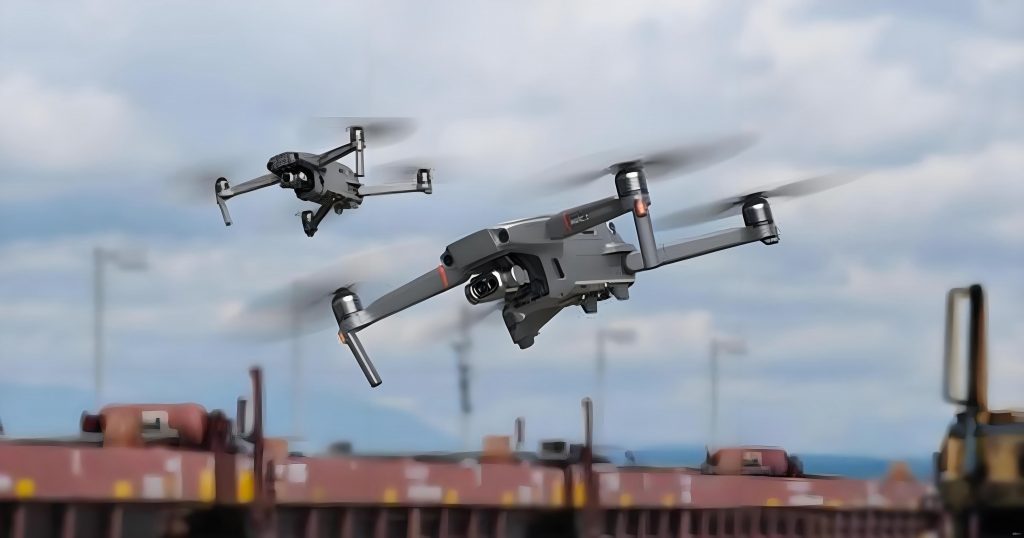
My analysis begins with a fundamental question: what exactly is a civilian UAV? Internationally, the International Civil Aviation Organization (ICAO) provides the primary reference. According to the Chicago Convention and its Annexes, any machine that can derive support in the atmosphere from the reactions of the air is an ‘aircraft’. This broad definition encompasses a wide array of devices that can be unmanned. ICAO has moved to standardize terminology, favoring ‘unmanned aircraft’ (UA) over other terms like ‘drone’ or ‘UAV’. Crucially, the operational entity is the ‘unmanned aircraft system’ (UAS), which includes the aircraft itself, the control station, and the command-and-control (C2) data link. National definitions, however, often diverge, particularly in how they categorize smaller devices used for recreation.
A critical first step in regulation is categorization. Most jurisdictions differentiate based on mass and intended use. A common threshold separates ‘model aircraft’ used purely for sport or recreation from ‘remotely piloted aircraft’ (RPA) used for any commercial or non-recreational purpose. The regulatory burden increases significantly for the latter. The following table summarizes common categorization criteria:
| Category | Primary Purpose | Typical Mass Limit | Regulatory Oversight |
|---|---|---|---|
| Model Aircraft | Recreation/Sport | e.g., < 25 kg (varies) | Often self-regulated via community associations; minimal or no direct aviation authority permit required. |
| Small Civilian UAV / RPA | Commercial, Professional, Non-recreational | e.g., < 25 kg | Subject to specific operational permits, pilot licensing, and equipment standards from aviation authority. |
| Large Civilian UAV / RPA | Commercial (e.g., cargo, surveying) | > 25 kg | Subject to rigorous certification processes akin to manned aircraft (airworthiness, operator certification, detailed operations manual). |
The core of domestic legislation for commercial civilian UAV operations revolves around a system of permissions and certifications. The primary regulatory instrument is the Operation Permit. Aviation authorities typically issue a light-weight ‘operational exemption’ or a more rigorous ‘special flight operations certificate’ based on risk assessment. Operating without such a permit (‘rogue flying’) attracts severe penalties, including heavy fines and potential criminal charges for endangering public safety.
Key conditions attached to an civilian UAV operation permit universally include:
- Prohibition on carrying hazardous materials.
- Mandatory right-of-way yielding to manned aircraft.
- Requirement for permission to fly over private property.
- Pre-flight checks of the UAS and the operating environment.
- Maintaining a direct communication link with air traffic control where required.
- Adherence to published no-fly zones (e.g., near airports, sensitive government installations).
- Maintenance of flight logs and manuals.
- Implementation of safety and emergency response plans.
- Compliance with national privacy and data protection laws.
Perhaps the most significant operational constraint for small civilian UAV systems is the Visual Line-of-Sight (VLOS) rule. This principle requires the remote pilot or a dedicated visual observer to maintain unaided (except for corrective lenses) sight of the aircraft at all times. The rule is a direct risk-mitigation strategy for the current lack of a robust, universally certified ‘Detect and Avoid’ (DAA) system for small UAVs. The VLOS condition inherently limits range and application, sparking debates as industries like logistics push for Beyond VLOS (BVLOS) regulations. The effective control volume under VLOS can be modeled as a sector of a sphere, constrained by human visual acuity and the aircraft’s size. A simple representation of the maximum theoretical distance ($d_{max}$) at which a civilian UAV of a given size can be reliably discerned is related to the visual angle threshold ($\theta_{min}$):
$$ d_{max} \approx \frac{s}{\tan(\theta_{min})} $$
where $s$ is the characteristic size (e.g., wingspan) of the UAV. For a typical small civilian UAV with $s = 0.5m$ and a conservative $\theta_{min}$ of 0.01 radians, $d_{max}$ is approximately 500 meters, though practical operational limits are often set lower by regulation, commonly at 400-500 feet (≈120-150 meters) above ground level for vertical separation from manned aviation.
| Airspace Zone | Typical Regulation for Small Civilian UAV | Rationale |
|---|---|---|
| General Airspace (Non-restricted) | Max Altitude: 400 ft AGL (common). Must yield to all manned aircraft. | Creates a buffer below typical manned aviation routes (starting at 500 ft AGL). |
| Airport Vicinity (e.g., 5 nautical mile radius) | Operations heavily restricted or prohibited without explicit ATC coordination. | Protects critical approach, departure, and circuit patterns for manned aircraft. |
| Controlled Airspace (Class B, C, D, E) | Entry requires prior ATC authorization and often transponder equipment. | Ensures integration into air traffic management and prevents conflicts. |
| Restricted/Prohibited Areas | Operations forbidden (e.g., near military bases, national parks, crowded stadiums). | Addresses national security, safety, and privacy concerns. |
Moving beyond operational rules, the airworthiness of the civilian UAV itself is paramount. A robust regulatory framework includes certification processes. For larger systems, this mirrors manned aviation: a ‘type certificate’ for the design and a ‘certificate of airworthiness’ for individual aircraft. The airworthiness of a UAS is tripartite, encompassing the aircraft airframe, its propulsion system (engine/propeller), and the control station hardware/software. The integrity of the C2 link is a critical component of this certification, as its failure constitutes a direct threat to safety. A simplified risk assessment formula governing airworthiness might consider the probability of total system failure ($P_{failure}$):
$$ P_{failure} = 1 – [(1-P_{airframe}) \times (1-P_{propulsion}) \times (1-P_{control}) \times (1-P_{C2link})] $$
where $P_{component}$ represents the probability of failure for each subsystem. Certification standards aim to drive each term, and thus the product, to an acceptably low level.
| Airworthiness Component | Certification Focus | Key Challenge for Civilian UAV |
|---|---|---|
| Aircraft Airframe | Structural integrity, flight performance, handling qualities. | Certifying novel materials and aerodynamic designs (e.g., multi-rotors) under diverse load conditions. |
| Propulsion System | Reliability, power output, failure modes. | Certifying electric motor/battery systems versus traditional combustion engines. |
| Control Station & C2 Link | Software reliability, hardware redundancy, link security and resilience. | Preventing cyber-interference, ensuring signal robustness, and managing spectrum congestion. |
The human element is equally critical. The remote pilot is the counterpart to a manned aircraft’s captain. Consequently, licensing civilian UAV pilots is a cornerstone of safety. While standards are still coalescing, common requirements include a minimum age (often 18), medical fitness (akin to a driver’s license standard), theoretical knowledge (air law, navigation, meteorology), practical skills assessment, and passing exams. Anti-drug and alcohol rules apply strictly. For complex operations, additional crew roles like visual observers or payload operators may be defined and require specific training. The licensing framework ensures a baseline competency, moving operations away from the realm of casual hobbyist control.
An often-overlooked but vital technical aspect is radio spectrum management. The C2 link requires dedicated, protected frequency bands to prevent interference that could lead to a loss of control. The International Telecommunication Union (ITU) has allocated spectrum, such as portions of the C-band (5030-5091 MHz), for aeronautical mobile service supporting UAS operations. This introduces the concept of Radio Line-of-Sight (RLOS), which can be more restrictive than VLOS, as terrain and buildings can block signals even when visual contact remains. The effective RLOS range ($r_{RLOS}$) for a ground-based control station is given by an adaptation of the radio horizon formula, accounting for antenna heights:
$$ r_{RLOS} \approx \sqrt{2kR} \left( \sqrt{h_t} + \sqrt{h_r} \right) $$
where $h_t$ and $h_r$ are the heights of the transmitter and receiver antennas, $R$ is the Earth’s radius, and $k$ is an adjustment factor for atmospheric refraction. For a typical civilian UAV flying at 400 ft (122 m) with a ground station antenna at 2m, the RLOS is roughly 45 km, far exceeding practical VLOS. However, non-certified use of random frequencies by hobbyists creates a significant risk of harmful interference, jeopardizing both the interfering and interfered-with civilian UAV systems.
The economic impetus for clear regulation is enormous. The commercial civilian UAV market drives innovation in sectors like logistics, agriculture, and media. Regulatory uncertainty stifles investment and operational scaling. Conversely, a predictable, risk-proportionate framework unlocks value. The regulatory challenge is not static; it evolves with technology. Key frontiers include:
- BVLOS Operations: Developing technical standards for DAA systems, robust C2 links, and procedural rules to safely enable long-range flights.
- Automation & AI: Regulating increasingly autonomous civilian UAV systems where the ‘pilot’ may be an automation manager rather than a direct controller.
- Urban Air Mobility (UAM): Creating the regulatory architecture for passenger-carrying drones and high-density urban cargo operations.
- Privacy & Liability: Clarifying data protection rules for aerial imaging and defining liability frameworks for damage or injury caused by civilian UAV systems.
A holistic regulatory model must therefore be adaptive. It can be conceptualized as a multi-variable function where the permissible operational freedom ($O_{free}$) is a function of several weighted risk-mitigating factors:
$$ O_{free} = f \left( w_1 C_{airworthiness} + w_2 C_{pilot} + w_3 C_{ops} + w_4 T_{tech} \right) $$
where $C_{airworthiness}$, $C_{pilot}$, and $C_{ops}$ represent the certification rigor of the aircraft, pilot, and operational plan, respectively; $T_{tech}$ represents the maturity and certification of enabling technology (like DAA); and $w_n$ are the regulatory weights assigned to each factor. As technological assurance ($T_{tech}$) increases, the model allows for a relaxation of operational constraints (e.g., transitioning from VLOS to BVLOS) even for a given level of other certifications.
In conclusion, the task of regulating the commercial use of civilian UAV systems is a continuous balancing act. It requires harmonizing international standards with domestic legal traditions, incentivizing technological innovation while enforcing safety primacy, and promoting economic growth without sacrificing public privacy and security. The legislative trend globally is moving from reactive restriction towards proactive, risk-based integration. The future of the civilian UAV industry hinges on the development of smart, scalable, and internationally coherent regulations that provide the clarity and confidence needed for this transformative technology to reach its full, safe potential. The equation for success integrates technology, law, and economics into a stable flight path forward.