
In the era of intelligent transportation systems, the integration of police UAVs into smart traffic management has become a critical frontier for public safety. As we delve into this transformative landscape, I recognize that traditional training methods for police UAV operators are increasingly inadequate to meet the demands of modern, data-driven traffic governance. The disconnect between classroom instruction and real-world scenarios poses significant risks to operational effectiveness. Therefore, in this study, we propose and validate an innovative Red-Blue对抗 training model embedded within a “teaching-research-training-combat” integrated framework, specifically tailored for police UAV applications in smart traffic management. This approach aims to bridge the gap between theoretical knowledge and practical skills, ensuring that police UAV operators can seamlessly contribute to the “perception-analysis-decision-execution”闭环 of intelligent traffic management systems (ITMS).
The evolution of ITMS has shifted from simple signal control to a closed-loop intelligent management system. According to national development plans, by 2025, smart traffic platforms are expected to cover over 80% of cities, achieving real-time data collection rates above 95%, automatic event recognition rates exceeding 90%, and intelligent decision support for 85% of scenarios. Within this context, police UAVs have transitioned from being mere auxiliary tools to becoming key nodes in the system. They serve as mobile sensing terminals, equipped with multispectral sensors to collect real-time data on road congestion, accident scenes, and pedestrian flow, thereby弥补 fixed surveillance盲区. At the analysis layer, AI algorithms process this data to identify traffic violations and predict congestion trends. The decision layer联动 with the ITMS platform to generate traffic疏导 schemes and optimize signal timing. Finally, at the execution layer, police UAVs intervene directly in traffic flow through voice broadcasts and light guidance. This technological leap necessitates a corresponding advancement in training methodologies for police UAV operators.
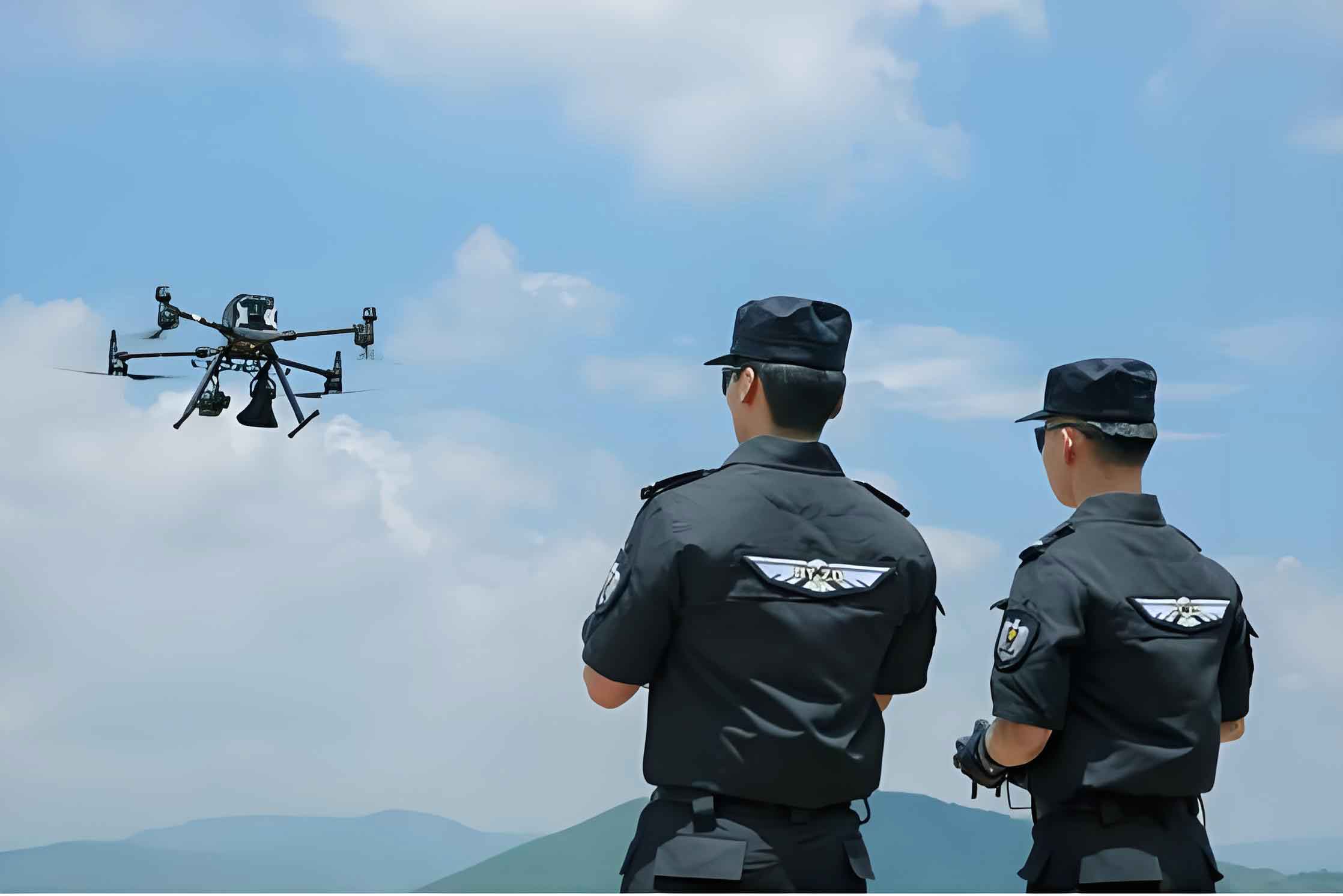
However, traditional training models for police UAVs suffer from notable limitations that create a mismatch with smart traffic management needs. The curriculum often emphasizes basic flight principles and操控 skills, lacking integration with ITMS interfaces and data standards. Flight training typically occurs in封闭场地 without simulating real-world complexities such as electromagnetic interference or adverse weather conditions. Assessment systems focus primarily on operational proficiency, overlooking critical metrics like data回传 quality and system协同 efficiency. Smart traffic environments introduce unique challenges: high demands for data融合, stringent real-time requirements, complex system协同, and elevated safety risks in urban areas. For instance, police UAVs must rapidly respond to traffic incidents within short windows,融合 multi-source data from sources like卡口 and floating vehicles, and联动 with devices such as traffic lights and electronic police. Traditional training fails to equip operators with these competencies, highlighting the urgent need for a实战-oriented教学体系.
To address these gaps, we have designed a layered competency培养 framework driven by smart traffic scenarios. The theoretical foundation is expanded to include core ITMS knowledge modules. Beyond standard police UAV operation theory, we emphasize协同 logic with ITMS devices, such as communication protocols between police UAVs and roadside units (RSUs), and data interface standards. Legal and data规范 modules focus on regulations like the Smart Traffic Data Security Management Act, clarifying privacy boundaries in traffic monitoring—for example, face blurring and data脱敏 processes. Tactical principles for smart traffic management teach scenario-specific strategies: in rapid accident response, police UAVs must arrive within 5 minutes, use AI to identify collision types, and auto-plan optimal拍摄 angles; in dynamic congestion疏导, based on real-time traffic flow data, police UAV clusters协同 guide vehicle分流 while联动 signal lights for adaptive timing; in emergency lane保障, police UAVs conduct real-time patrols along ambulance routes to clear obstructing vehicles. This phase establishes a dual-dimensional “technology-business” theoretical basis, preventing disconnects with ITMS.
The演练 phase employs Red-Blue对抗 exercises centered on typical ITMS tasks, structured hierarchically. At the individual skill level, exercises focus on operational precision and adaptability to traffic scenarios. For example, in a simulated rainy or foggy智慧路口, operators must execute precise police UAV takeoffs and landings to test wind resistance, or track高速 moving suspect vehicles while simultaneously pushing license plate information to the ITMS platform for database comparison. At the team协作 level, the对抗 escalates to multi-police UAV协同 for traffic management. The Red team simulates system attacks, such as伪造 GPS signals to干扰 police UAV navigation or generating虚假拥堵 data. The Blue team must coordinate 3 to 5 police UAVs to execute real tasks, like traffic security for major events,通过空中巡查 real-time回传车流 video and异常 events (e.g., illegal parking, accidents), automatically annotating them on the ITMS platform’s electronic map to guide ground police in precise处置. This forms a closed-loop协作 of “police UAV discovery—platform dispatching—police response.” Through such scenario-based对抗演练, operators advance from individual skills to systemic operational capabilities within the ITMS.
Finally, the实战 phase involves deploying trainees to frontline ITMS positions for轮训. Tasks include参与 real traffic incident处置, such as peak-hour congestion疏导 and accident scene勘查. Trainees assume roles as police UAV operators,协同 with signal controllers and traffic police. Key metrics like response time, data回传 quality, and岗位协同 efficiency are recorded and fed back into the teaching system, providing real data for course optimization. This phase validates teaching outcomes and injects实战 data into iterative improvements, creating a良性循环 of “teaching—实战—optimization.”
We further innovate through a虚实融合 training system that combines virtual simulation with physical实训. The virtual layer uses 3D modeling, traffic big data, and AI to构建 high-fidelity training environments, dynamically接入 real-time data streams from city traffic management platforms, such as signal light status and traffic flow. This allows for accurate generation of实战 scenarios like morning peak congestion or恶劣 weather accidents. Red team trainees can employ攻击手段 like “virtual signal干扰” or “伪造交通 events.” AI-driven智能评估 analyzes Blue team decision paths—for instance, whether police UAV巡查 routes cover关键节点—and outputs量化评分 tied to ITMS KPIs, such as response时效 and data回传完整度. This layer突破场地限制, supports千人级并发训练, and automatically回流 training data to the ITMS platform to optimize traffic prediction models.
The physical layer deploys ITMS实训 bases in real traffic environments, integrating actual交管设备 like smart signal lights, electronic police, and V2X communication terminals, along with Red-Blue对抗装置 such as干扰 guns to simulate electromagnetic attacks and movable obstacles to mimic交通 events. A typical training flow involves: trainees操控 police UAVs to execute “rapid accident处置” tasks → police UAVs实时推送现场 video to the ITMS platform → the platform auto-generates疏导 schemes → trainees adjust police UAV actions based on the scheme. This layer validates virtual training outcomes and reinforces肌肉记忆 for ITMS operations. The混合训练体系 offers significant value: the virtual layer addresses “high-frequency, low-cost” basic training needs, while the physical layer tackles “real traffic environment adaptability” challenges. Both are seamlessly connected via a data中台, forming a专属闭环 of “training—feedback—optimization” for smart traffic management.
Leveraging 5G and元宇宙 technologies, we构建 high-immersion对抗场景. With 5G’s high bandwidth and low latency (end-to-end delay <20ms), combined with edge computing, we achieve real-time transmission and rapid response for police UAV操作指令. Based on City Information Modeling (CIM) platforms, we create high-precision urban traffic digital孪生, accurately replicating road networks, signal light layouts, and building distributions. The MR training environment includes VR沉浸式训练, where trainees wear VR devices to操控 police UAVs in virtual city environments, experiencing complex traffic scenarios; AR辅助实操, where AR glasses overlay digital information like virtual traffic flow and signal light status onto real training grounds, enhancing realism and interactivity; and MR协同演练, where虚拟 Red teams and真实 Blue teams对抗 in mixed environments, with Red teams flexibly adjusting traffic flow or randomly generating突发事件 to force Blue teams to improve emergency response and协同作战能力.
A typical application scenario involves模拟 city core area traffic疏导 tasks. Trainees wearing VR helmets immerse themselves in the pressure of morning peak dense traffic. During training, the Red team突然 “creates” a multi-vehicle rear-end collision, causing主干道 traffic paralysis. Blue team trainees must swiftly操控 police UAVs to the scene, adjust flight height and拍摄角度 via手势交互, and push key information like accident location and severity to the virtual ITMS platform. After the platform实时 generates a疏导 scheme, Blue team trainees调度 police UAVs协同 to guide surrounding vehicle分流. Throughout, the system实时评估 response speed, decision quality, and data回传 accuracy, providing comprehensive feedback. This technology offers multiple values: enhancing训练真实感, allowing trainees to experience real traffic pressure safely, thus reducing operational errors in actual duties; lowering训练成本 by avoiding frequent演练 in real urban environments that干扰交通秩序; enabling数据驱动优化 through automatic analysis of training data to inform teaching content and method improvements; and facilitating跨区域协同训练, where trainees from不同 regions can access the same virtual scene for联合演练. This advances police UAV实战教学 to higher levels, cultivating new police人才 with digital literacy and实战能力 for the ITMS.
To empirically validate the Red-Blue对抗教学模式, we conducted a comparative experiment involving police UAV trainees from公安院校. The control group (traditional training) of 30 trainees focused on theoretical explanations and basic flight operations without ITMS scenario simulation. The experimental group (Red-Blue对抗) of 30 trainees employed the integrated “teaching-research-training-combat” model based on Red-Blue对抗, covering ITMS theory, simulated对抗, and实战 application. Both groups had no significant differences in age, basic flight skills, or traffic management knowledge (p>0.05), with 120 teaching hours each. We designed a multidimensional evaluation指标体系, as summarized in Table 1.
| Evaluation Dimension | Specific Indicators | Measurement Method |
|---|---|---|
| Task Completion Efficiency | Task completion rate, average time consumption | Statistics on proportion and time taken to complete specific tasks (e.g., target search, area monitoring) within规定时间 |
| Tactical Decision Accuracy | Tactical choice correctness rate, emergency response speed | Based on对抗 results and expert评审打分, assessing decision quality in complex traffic scenarios |
| Data回传 Quality | Data completeness, real-time性, accuracy | Evaluating match between police UAV采集 data and ITMS platform, including video clarity, position precision |
| System协同 Capability | Multi-device联动 efficiency, information sharing quality | Observing协同 effects between police UAV operations and devices like signal lights, electronic police |
| Team协作 Level | Communication efficiency, division of labor合理性,协同配合度 | Comprehensive assessment through behavioral observation and task completion in team tasks |
In a典型案例模拟 city早高峰 traffic疏导, the Red team designed干扰 such as “主干道突发 three-vehicle rear-end accident” causing traffic paralysis, “signal light故障” leading to路口 disorder, “signal干扰器” simulating electromagnetic干扰 affecting police UAV communication, and “movable obstacles” mimicking illegal parking obstructing emergency lanes. The Blue team操控 3 to 5 police UAVs in协同编队 to quickly reach the accident scene,实时回传高清视频 to the ITMS platform for auto-identifying accident type and severity,联动 signal light control systems to open “green通道” for ambulances, and guide ground police for precise处置 while using voice broadcasts to疏导滞留 vehicles. The training流程 included预警阶段 (police UAVs detect异常拥堵, auto-triggering ITMS预警),响应阶段 (Blue team activates应急预案, dispatches police UAVs),处置阶段 (police UAVs conduct全方位监控, push real-time video and traffic data to ITMS for疏导 scheme generation), and恢复阶段 (Blue team guides vehicle flow based on scheme to restore traffic秩序).
The performance comparison between the experimental and control groups is shown in Table 2, with data analyzed using t-tests and effect sizes (Cohen’s d).
| Metric | Experimental Group (Red-Blue对抗) | Control Group (Traditional Training) | t-value | p-value | Effect Size (d) |
|---|---|---|---|---|---|
| Task Completion Efficiency | M=91.5, SD=4.8 | M=73.2, SD=7.9 | 5.17 | <0.001 | 1.35 |
| Traffic Data回传 Completeness | M=88.7% | M=65.3% | 4.92 | <0.001 | 1.28 |
| System协同 Capability Score | M=89.3, SD=3.1 | M=70.5, SD=6.8 | 6.24 | <0.001 | 1.62 |
| Team协作 Score | M=92.1, SD=3.6 | M=76.4, SD=6.2 | 6.03 | <0.001 | 1.52 |
The results demonstrate that the Red-Blue对抗教学模式 significantly enhances core ITMS competencies, particularly in data-driven decision-making and system协同 efficiency. For instance, the traffic data回传完整度 indicator improved by 35.8% compared to traditional training, providing high-quality data input for the ITMS platform. We can quantify this improvement using a formula for data completeness gain:
$$ \text{Data Completeness Gain} = \frac{\text{Experimental Group Completeness} – \text{Control Group Completeness}}{\text{Control Group Completeness}} \times 100\% = \frac{88.7\% – 65.3\%}{65.3\%} \times 100\% \approx 35.8\% $$
Moreover, the对抗训练 exposed technical shortcomings that inform ITMS improvements. For example, police UAVs experienced 5G signal切换 delays in dense building areas (average delay 2.3s), causing traffic video回传卡顿; multi-source data融合 capabilities were weak, unable to auto-correlate police UAV video data with ITMS卡口 data; and edge computing support was insufficient, with real-time traffic event recognition accuracy (e.g., for illegal parking) at only 76.5%. To address these, we propose three改进方向: on the enterprise side, develop lightweight edge AI modules for local traffic event recognition with target accuracy ≥90%; on the teaching side, add courses on “ITMS Data Interface Development” to strengthen trainees’ ability to call and operate ITMS platform APIs; on the机制 side, promote共建 data沙箱 environments between public security and交通 departments to resolve合规 use of training data. This forms a正向循环 of “training exposes problems—technology iterates—teaching upgrades.”
The implementation of this model faces challenges, including high技术成本 and development difficulty for仿真 platforms, as well as师资队伍缺乏对抗性教学经验. To optimize, we advocate for校企合作 to develop low-cost模拟 systems. Police academies can collaborate with police UAV enterprises and tech companies to focus on ITMS典型场景, such as urban traffic flow仿真, accident scene重建, and signal light联动 control. Together, they can build lightweight混合仿真 systems for police UAV Red-Blue对抗教学. Enterprises contribute technologies like 5G low-latency transmission and edge computing, while academies provide real traffic management datasets (e.g., city卡口 video, floating vehicle GPS trajectories) and teaching feedback. For instance, in the virtual layer, dynamic对抗 environments based on traffic big data simulate police UAV集群协同监控 in早高峰拥堵路段, with Red teams setting实战 variables like “signal干扰” or “vehicle遮挡.” In the physical layer, ITMS terminals deployed in实训场 validate police UAV communication stability and decision有效性 in real traffic flow. This collaborative model reduces研发成本 and technical risks, enhancing the模拟 system’s迁移 ability for ITMS scenarios.
Additionally, we propose establishing a复合教官团队 of “dual-teacher + ITMS experts.” This includes技术 experts from police UAV firms to strengthen ITMS技术栈 capabilities like traffic flow AI prediction models and multi-sensor融合 algorithms;实战 police officers from frontline traffic police to impart tactical decision logic and emergency response skills in traffic scenarios; and ITMS experts from交通规划院 or资深交通管理 professionals to guide traffic management business logic and data闭环 design, such as how police UAV data回流 to the ITMS platform to optimize signal timing. A三维协同教学机制 ensures integration: in a “city core area traffic疏导”对抗 lesson,技术 experts解析 police UAV集群路径规划 algorithms;实战 officers扮演 Red team, simulating干扰场景 like “sudden accidents causing主干道 paralysis”; and ITMS experts guide Blue team trainees to formulate police UAV巡查 and协同处置 strategies based on real-time traffic flow data, with training data反哺 the ITMS platform for model optimization. This achieves a三位一体教学 of “technology—tactics—business,” solving师资 experience gaps and teaching-实战 disconnects.
Looking ahead, we envision an生态化跃迁 from对抗训练 to警务实战能力. The Red-Blue对抗 model should become core to police UAV实战教学,深度融入 ITMS业务流 through分组对抗 and角色扮演. Red teams simulate ITMS攻击行为 like篡改 traffic flow data or阻断 police UAV-platform通信, forcing trainees to understand system vulnerabilities. Blue teams operate based on real ITMS platforms,同步推送 police UAV-collected real-time data to command center screens, and dynamically adjust tactics per platform feedback. Post-training, systems auto-generate评估报告 linked to ITMS KPIs (e.g., “accident response时效提升 22%”) and push training data to the ITMS platform for algorithm optimization. This not only boosts trainees’竞争意识 but also transforms teaching outcomes into ITMS optimization inputs, realizing dual闭环融合 of “teaching-research-training-combat” and “perception-analysis-decision-execution,” providing a标准化范式 for police UAV integration into ITMS.
Future directions should include policy support and跨区域 Red-Blue对抗联赛机制. We recommend seeking support from public security authorities to establish专项经费 for police UAV教学 institutions to develop对抗教学设施 and师资培训. A national跨区域联赛 can organize trainees from different公安院校 and police teams to compete,以赛促训. This exchanges实战经验, motivates trainees, and elevates teaching水平, promoting widespread adoption of the Red-Blue对抗 model. Furthermore, the model can expand to多警种协同作战训练, such as joint operations involving特警,交警, and刑警 using police UAVs. Simulations of跨警种指挥调度, information sharing, and协同作战 scenarios can cultivate multi-police协同意识 and comprehensive作战能力, adapting to modern警务联合作战 needs. In ITMS scenarios, this could involve交警-特警协同 where police UAVs guide特警 to accident scenes for control and秩序维护;交警-刑警联动 with police UAVs tracking suspect vehicles to form包围 with ground police; and多部门联合演练 with fire and medical departments for comprehensive emergency response, enhancing overall city应急响应能力.
In conclusion, our study构建 the Red-Blue对抗-based “teaching-research-training-combat” integrated police UAV实战教学体系, validated through公安院校教学实践. This model effectively弥补 traditional teaching shortcomings in实战化 and对抗性, enabling trainees to accumulate experience in highly realistic对抗 environments and significantly improve实战问题解决能力. It serves as an effective path to破解 police UAV教学 “战训脱节” issues. Simultaneously, the model uses对抗性训练 as a纽带 to紧密衔接 teaching, research, training, and实战, achieving闭环升级 of integrated人才培养 and providing a成功范例 for公安教育改革 in the new era. The模式创新价值 lies in its ability to enhance core metrics like task completion efficiency, data回传 quality, and system协同 capability, with traffic data回传完整度 improving by 35.8%. The技术融合创新路径, through 5G,元宇宙, and edge computing,构建虚实结合 high-immersion对抗训练 environments that ensure realism while reducing costs. The生态化发展范式 fosters a “teaching—实战—optimization”跃迁, forming a正向循环 that promotes continuous ITMS optimization. Future research can explore police UAV集群智能算法 in complex traffic scenarios, deep integration paths between police UAVs and vehicle-road协同 systems, and构建 of large-model-based ITMS decision辅助 systems. This study offers a replicable and推广实践范式 for police UAV人才培养 under ITMS, with significant reference value for modernizing public security交通教育培训, promoting integrated人才培养, aiding efficient operation of “professional +机制 + big data”新型警务模式, and enhancing road traffic safety governance capabilities.