
In recent years, UAV drones have found extensive applications in both civilian and military fields. With the continuous advancement of drone technology, their application scenarios are extending from single-medium environments to cross-domain operations, driving the rise of cross-medium vehicle research. Among these, water-air cross-medium vehicles have become a research hotspot due to their significant potential in diverse missions such as reconnaissance, communication relay, and rapid deployment. Based on the method of medium transition and operational capability, existing water-air cross-medium vehicles can be primarily categorized into two types. The first type is amphibious UAV drones capable of operating in both underwater and aerial environments, freely switching between the two media to execute tasks. However, constrained by factors such as water corrosion and energy limitations, these UAV drones struggle with long-term underwater residency, and their watertight structural design faces significant technical challenges. Consequently, the second type—dry-launched cross-medium UAV drones—has emerged as a crucial research topic, leveraging its unique advantages to avoid direct environmental erosion and significantly enhance system reliability and mission adaptability.
Multi-rotor UAV drones offer greater flexibility and operational ease compared to fixed-wing counterparts, garnering considerable attention in both industry and research. Their simple structure makes them more suitable for launch from complex environments like water surfaces. In the field of dry-launched multi-rotor research, numerous explorations have been conducted. However, most existing studies on tube-launched UAV drones focus on either the launch phase or the flight phase in isolation, making it difficult to achieve fully autonomous operation throughout the entire “pre-deployment, activation, flight” pipeline in complex maritime launch scenarios.
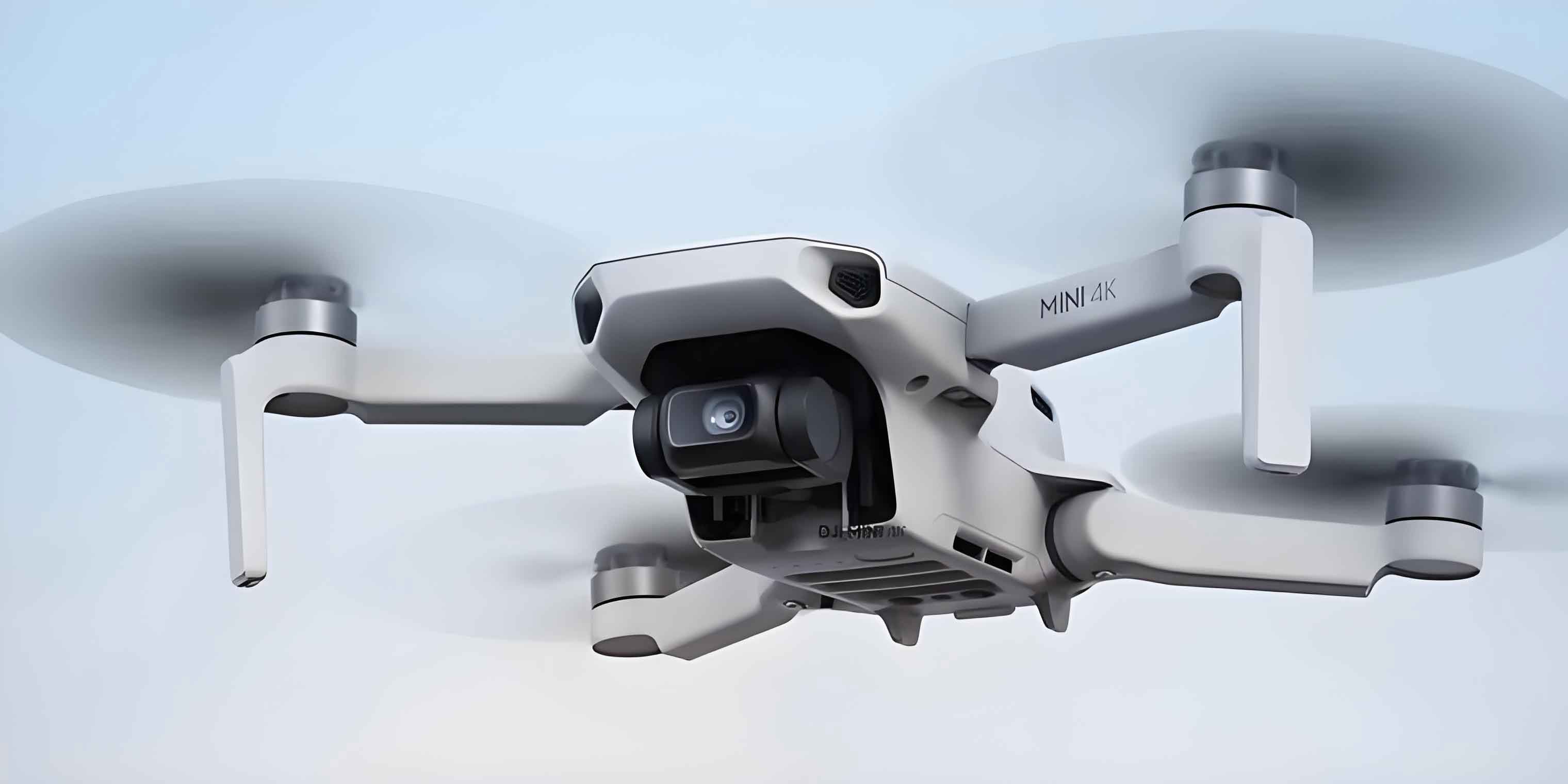
Considering the practical needs of dry-launched UAV drones in real ocean environments and building upon prior research into underwater pre-deployed launch platforms, this paper presents an innovative design for a dry tube-launched quadrotor UAV drone named “Feiying.” This UAV drone is intended for pre-deployment within such a platform, requiring only platform activation for rapid system wake-up and launch, significantly reducing reaction time. It specifically addresses the challenge of autonomous motor arming upon tube exit, aiming to overcome the system response delays caused by traditional complex arming algorithms to meet the timeliness requirements of complex scenarios. The proposed design incorporates a carbon-fiber/aluminum-alloy composite load-bearing structure and a torsion-spring-driven folding mechanism to withstand high launch overloads. By constructing a hierarchical power supply system and a state-machine-based control model, it realizes a complete control chain from dormant standby and command activation to autonomous flight.
Overall Design
The operational workflow for the Feiying UAV drone is as follows. Initially, the drone is pre-deployed inside the launch platform in a low-power standby state. Subsequently, upon receiving an activation signal, the platform triggers its launcher, ejecting the UAV drone into the air. Finally, the drone achieves autonomous arming and transitions into flight mode to execute pre-planned missions. Based on this workflow, Feiying must meet the following design requirements:
- It must feature foldability and a compact design to fit the storage constraints of the launch tube.
- It must support long-duration standby during pre-deployment and rapidly complete system activation and launch upon receiving a trigger command.
- It must achieve autonomous arming post-launch without manual intervention and stably execute pre-defined flight tasks.
General Layout
The general layout divides the structure into three main sections: the energy compartment, the flight propulsion system, and the control compartment. To ensure the UAV drone can withstand high overload forces during launch, primary load-bearing components are constructed from carbon fiber and machined aluminum alloy. The energy compartment houses power storage devices, including the flight control system’s battery and the pre-launch control system battery. The flight propulsion system adopts an “X”-configuration quadrotor layout, primarily consisting of arm folding mechanisms and motors. These folding mechanisms allow the arms to retract fully, giving the drone an overall cylindrical shape for compact storage. Positioning the flight system at the mid-section balances the weight of the energy and control compartments, ensuring more uniform vertical force distribution. This minimizes pitching moments during launch for a stable tube-exit attitude, laying a good foundation for subsequent flight. The control compartment at the bottom is responsible for precise control throughout the UAV drone’s entire operational workflow.
Arm Folding Mechanism Design
The Feiying UAV drone utilizes a quadrotor configuration, chosen for its compact structure, rapid response, and mature control strategies, making it suitable for complex operational conditions like tube launching. For pre-deployment into the launch tube, the arms are designed to be foldable, and the motors with propellers are mounted inverted, allowing the entire vehicle to assume a near-cylindrical form factor to match the tube’s internal space efficiently and avoid collisions.
The folding mechanism comprises a shaft clamp plate, torsion spring, spring limit post, rotating shaft, and arm connector. The shaft clamp plate serves a critical connecting function, securing the entire mechanism to the UAV drone’s mid-section and housing the other components. The torsion spring is mounted on the rotating shaft, moving coaxially with the arm connector. One end of the spring rests against the limit post, while the other end is embedded within the carbon fiber tube of the arm. When stowed in the launch tube, the folded arm compresses the torsion spring, storing elastic potential energy. Upon tube exit, this energy is released, providing the motive force for arm deployment. To limit the arm’s rotation, the shaft clamp plate side contacts one side of the arm connector, defining the rotation travel limit while the torsion spring applies the rotational force.
Electronic Systems
The electronic system of the Feiying UAV drone is divided into the Pre-launch Control System (PCS) and the Flight Control System (FCS). They utilize independent power supplies and achieve information exchange and coordinated control through standardized interfaces.
The core of the PCS is the pre-launch controller, equipped with a wireless receiver module to receive activation commands from the launch platform. It uses PWM (Pulse Width Modulation) to drive a relay for precise control over the FCS power supply, enabling full-system energy management. The pre-launch controller establishes bidirectional communication with the flight control unit via a USART serial bus, synchronizing launch status parameters and sending control commands. The PCS is independently powered by a 2S 400 mAh Li-ion battery pack and operates in a low-power mode during the pre-deployment phase to extend standby time.
The FCS uses a single 4S 2000mAh 120C LiPo battery as its independent power source. Power flow is first controlled by a relay, then monitored in real-time by a current sensor, and finally converted by a voltage regulator module on the sensor to generate 16.8 V for the propulsion motors and 5 V for the flight controller. The FCS integrates a GNSS/IMU module with barometric altitude compensation, outputting key parameters like 3D coordinates and altitude. It also includes a receiver for manual control commands and for telemetry data downlink.
The key design parameters of the Feiying UAV drone are summarized in the table below.
| Parameter | Symbol | Value |
|---|---|---|
| Total Mass | $m$ | 1.32 kg |
| Wheelbase | $l$ | 350 mm |
| Pre-deployment Duration | $t_{pre}$ | 30 days |
| Propeller Size | $D_p$ | 7 inch |
| Motor KV Value | $K_V$ | 1700 rpm/V |
| Aerial Endurance | $T_f$ | 8 min |
System Design and Implementation
This section details the subsystem designs for the pre-embedded tube-launched quadrotor UAV drone, expanding upon the hardware foundation established earlier. The designs for the Communication, Control, and Launch systems all consider stability and adaptability in complex environments to ensure the UAV drone can perform tasks efficiently.
Communication System Design
The communication system ensures stable data transfer between the UAV drone and the ground platform or launch system. A bidirectional scheme combining wireless RF and satellite communication is employed to guarantee data transmission across different environments. For enhanced reliability, the system incorporates communication redundancy, allowing a backup link to take over if the primary fails. Techniques like frequency hopping and spread spectrum are used to improve anti-jamming capability, adapting to signal variations in complex settings common to operational UAV drones.
Control System Design
The control architecture is structured into three layers: Flight Control, Mission Control, and Energy Management, ensuring stable operation of the UAV drone. The flight control layer employs PID algorithms and state-machine-based adaptive control to maintain flight stability. The mission control layer handles flight path planning, while the energy management layer monitors battery state, ensuring the completion of long-duration tasks. The system includes anomaly detection and fallback mechanisms to safely return to standby mode under abnormal conditions.
Launch System and Autonomous Arming Design
The critical transition phase from tube ejection to powered flight presents significant challenges. The UAV drone experiences high-speed ejection and instantaneous weightlessness, making traditional arming methods reliant on remote commands or timers inadequate, often leading to delayed motor start, attitude instability, or mission failure. Therefore, developing a reliable, high-response tube-launch autonomous arming technology with environmental awareness and independent decision-making is crucial for ensuring launch success and flight safety for this class of UAV drones.
The Feiying UAV drone leverages the real-time acceleration and velocity sensing capabilities of its flight controller to establish a reliable, high-response arming and takeoff decision mechanism. This ensures the system can accurately determine the launch state and take over propulsion control under high-speed ejection without external communication.
The flight control strategy follows the pre-launch state. In this state, the FCS is initialized, and the velocity sensor enters real-time sampling mode. When the detected launch velocity reaches a set threshold, the system transitions to a launch-critical monitoring state, continuously sampling the z-axis velocity signal.
During the ejection phase, the z-axis velocity is the key physical quantity for determining successful tube exit and complete arm deployment. Based on empirical data from preliminary land launch tests, a velocity threshold $v_{threshold} = 8.0 \, \text{m/s}$ is set as the arming trigger condition. This threshold must be significantly higher than vibrations or noise during the boost phase to prevent false triggers, yet lower than the stable exit velocity achieved by the launch mechanism to ensure timely activation post-deployment. The arming decision model is:
$$ \text{If } v_z > v_{threshold} \text{, then trigger arming.} $$
To further prevent false triggering, a time delay protection is added:
$$ \text{Arm} = \begin{cases} 1, & \text{if } v_z > v_{threshold} \text{ and } t > t_0 \\ 0, & \text{otherwise} \end{cases} $$
Control Strategy Design
In addition to standard flight dynamics modeling and control strategies, the control design for the pre-embedded tube-launched UAV drone must address its unique requirements in complex environments. A tailored approach to flight dynamics modeling and control strategy is presented here.
Flight Dynamics Modeling
To achieve precise control of the tube-launched UAV drone’s flight state, its coordinate system is first defined. The six-degree-of-freedom rigid body dynamics model is then established as follows:
$$ \begin{aligned}
\ddot{x} &= -\frac{T}{m}(\cos\psi\sin\theta\cos\phi + \sin\psi\sin\phi), \\
\ddot{y} &= -\frac{T}{m}(\sin\psi\sin\theta\cos\phi – \cos\psi\sin\phi), \\
\ddot{z} &= g – \frac{T}{m}(\cos\phi\cos\theta), \\
\ddot{\phi} &= \dot{\theta}\dot{\psi}\frac{I_y – I_z}{I_x} + \frac{\tau_x}{I_x}, \\
\ddot{\theta} &= \dot{\phi}\dot{\psi}\frac{I_z – I_x}{I_y} + \frac{\tau_y}{I_y}, \\
\ddot{\psi} &= \dot{\phi}\dot{\theta}\frac{I_x – I_y}{I_z} + \frac{\tau_z}{I_z},
\end{aligned} $$
where $T$ is the total thrust, $m$ is the mass of the quadrotor UAV drone, $x, y, z$ are the positions, $\phi, \theta, \psi$ are the roll, pitch, and yaw angles, $\tau_x, \tau_y, \tau_z$ are the moments, and $I_x, I_y, I_z$ are the moments of inertia. The control inputs are the moments, which are generated by varying the speeds of the four rotors. The control strategy relating rotor speeds to moments and thrust is defined by the mixer matrix. For an X-configuration, it is:
$$ \begin{bmatrix} f \\ \tau_x \\ \tau_y \\ \tau_z \end{bmatrix} = \begin{bmatrix} c_T & c_T & c_T & c_T \\ -\frac{\sqrt{2}}{2}d c_T & \frac{\sqrt{2}}{2}d c_T & \frac{\sqrt{2}}{2}d c_T & -\frac{\sqrt{2}}{2}d c_T \\ \frac{\sqrt{2}}{2}d c_T & \frac{\sqrt{2}}{2}d c_T & -\frac{\sqrt{2}}{2}d c_T & -\frac{\sqrt{2}}{2}d c_T \\ c_M & -c_M & c_M & -c_M \end{bmatrix} \begin{bmatrix} \omega_1^2 \\ \omega_2^2 \\ \omega_3^2 \\ \omega_4^2 \end{bmatrix}, $$
where $c_T$ is the thrust coefficient, $c_M$ is the torque coefficient, $d$ is the arm length, and $\omega_i$ are the rotor angular velocities.
Pre-launch Control Strategy Design
Addressing the energy management requirements for long-term pre-deployment and rapid response, a pre-launch control strategy based on a state machine model is designed. The core state transitions include “Standby -> Activating -> Pre-launch Ready -> Awaiting Launch Signal -> Launch Success,” with integrated fault-handling branches like “Fault Return -> Anomaly State” for robust management of the pre-launch process and hierarchical energy management.
In the Standby state, the FCS is powered off, and only the wireless receiver module in the PCS operates in low-power mode, meeting the low-power demands of long-term pre-deployment for the UAV drone. Upon receiving an activation command from the launch platform, the PCS closes the relay via PWM control, powering up the FCS. After successful FCS boot, the pre-launch controller sends a pre-launch command to the flight controller, transitioning the UAV drone into the Pre-launch Ready state to await final launch execution. This state migration mechanism effectively balances low-power operation during pre-deployment with rapid response post-activation, ensuring high timeliness and reliability for the launch process in complex environments.
Flight Control Strategy Design
Post-launch, the UAV drone must rapidly transition from a high-speed ballistic state to stable flight. The core of the flight control strategy is to construct a “state perception -> power activation -> attitude stabilization” closed loop that seamlessly connects to the launch arming signal. Starting from the Pre-launch state with sensors calibrated, the system continuously monitors velocity. Upon receiving the “velocity-cross-threshold” arming signal, it checks z-axis velocity and attitude. If conditions are met (e.g., $|v_z| > 0$ and attitude perturbation within safe bounds), it immediately activates the propulsion system and executes attitude stabilization to counteract deviations before entering autonomous flight mode.
An error-handling state is designed to cover anomalies across the entire chain—pre-launch, launch-critical monitoring, and flight phases—including arming failure, velocity signal anomalies, and propulsion system faults. All anomaly states revert safely to the Standby state via the state machine logic, preventing system malfunctions or lockups. This mechanism creates a complete control loop encompassing “normal process control -> critical condition judgment -> anomaly state handling,” significantly enhancing the operational reliability of the UAV drone in complex launch environments like sea surfaces.
Prototype and Experimental Validation
To comprehensively validate the performance and workflow reliability of the Feiying pre-embedded launch quadrotor UAV drone, tests covering its entire launch pipeline were conducted.
Pre-deployment and Activation Test
Laboratory tests confirmed the reliability of the Feiying UAV drone during the pre-deployment to activation phase. The system successfully executed the three core stages: Standby, FCS Startup, and Pre-launch Ready. In the initial Standby stage, the FCS remained off. Upon sending an activation command, the PCS initiated the FCS startup, indicated by a red LED. After a 1-second delay, the PCS sent the pre-launch command, transitioning the FCS into the Pre-launch Ready state, indicated by a blue LED. The test demonstrated that the pre-launch control system accurately responded to activation signals and reliably executed the startup sequence, confirming stable inter-system coordination.
Land Launch Test
A land launch test was performed to evaluate launch-phase reliability, with synchronized data logging from the FCS and video recording of the process.
- Arming Status and Kinematics: After receiving the pre-arm command, the UAV drone entered the pre-armed state. Upon platform activation and ejection, it instantly reached an upward velocity of 8.5 m/s, exceeding the 8.0 m/s threshold. This triggered the motor arming command (lockdown value changing from 1 to 0), successfully activating the propulsion system and transitioning the UAV drone into flight mode.
- Flight Attitude and Stability: During the launch transient, attitude variation was less than 15°, and the UAV drone achieved fully stable flight within 3 seconds of propulsion activation.
- Launch Transient Timing: The time from launcher trigger to tube exit was 0.016 s. Complete arm deployment occurred within 0.1 s, at which point the propulsion system activated, enabling a rapid transition to stable flight.
- Step Response Simulation: A simulation of the flight control system’s response was conducted. Applying a step input to the roll channel showed a rapid response with negligible overshoot, while pitch and yaw remained stable. This indicates the UAV drone’s control system can respond quickly and enter a flight state effectively upon actual launch.
Benchmark Comparison and Validation
To objectively evaluate the proposed control strategy’s performance, a high-fidelity simulation environment was constructed with a strict benchmark comparison framework. Three baseline methods were defined for comparison: (B1) Timer-Only unlock, (B2) Single-threshold Acceleration trigger, and (B3) Acceleration + Time-window trigger. The simulation parameters, including the control efficiency matrix, motor dynamics model, and cascaded attitude/position controllers, were meticulously defined to ensure reproducibility and a fair comparison. The proposed method’s trigger criteria (velocity threshold + delay protection) were kept consistent with the hardware implementation described earlier.
Simulation and Comparative Analysis Results:
- The proposed velocity-threshold-based method demonstrated optimal timing alignment with the physical launch process (tube exit, arm deployment). It triggered arming precisely when velocity crossed the 8.0 m/s threshold, closely matching the observed 0.1 s activation window from physical tests.
- Method B1 (Timer-Only) struggled to align with the variable timing of physical launch events, often leading to premature or delayed arming, which could increase attitude transients.
- Method B2 (Accel-Only) was prone to false triggers from acceleration noise peaks during launch, potentially activating motors before arm deployment was complete.
- Method B3 (Accel+Hold) reduced false triggers but introduced additional lag, potentially delaying power intervention and leading to larger attitude deviations than the proposed method.
- The proposed method, with its integrated anomaly fallback to standby, showed robust performance. The simulated control loops exhibited fast response with minimal overshoot, supporting the observed quick stabilization post-activation seen in physical tests where attitude stabilized within 3 seconds.
The table below summarizes key consistency checks between the simulation model and expected/interfaced behaviors.
| Check Item | Model/Parameter Source | Quantitative Consistency Judgment |
|---|---|---|
| Mixer Matrix Sign | control_efficiency function | Sign match 100%, no reversal. |
| Power Unit Dynamics | 1st-order state-space | Overshoot <5%, settling time <0.2s. |
| PWM Dimension Normalization | ×1/1000 + optional offset | Normalization error <0.1%, 4 PWM response difference <1%. |
| Cascade Angle→Rate Control | Outer P + Inner PID, deg2rad | Step response steady-state error <2%, correct direction 100%. |
| Yaw Decoupling | Velocity→Attitude function block | Decoupling error <3°, heading tracking consistent. |
| Altitude Feed-forward | Constant 0.60899 (hover base) | Altitude tracking error <±0.1m, feed-forward contribution >60%. |
| Z-axis Positive Direction | z-channel invert (×(-1)) | Polarity consistent, altitude display correct. |
This systematic comparative analysis validates the effectiveness of the proposed method and highlights its mechanistic superiority over traditional approaches. Its success stems from triggering based on the core physical event of “velocity crossing threshold,” which signifies successful ejection and arm deployment, rather than relying on rigid timing or noise-prone instantaneous signals.
Conclusion
Addressing the complex requirements of surface launch scenarios, including environmental constraints like corrosion, wave motion, and wind, as well as the limitations of traditional tube-launched multi-rotor UAV drones in achieving fully autonomous “pre-deployment, activation, flight” operation, this paper presented the design of the pre-embedded tube-launched quadrotor UAV drone “Feiying.” Through the synergistic design of a carbon-fiber/aluminum-alloy composite load-bearing structure and a torsion-spring-driven folding mechanism, high load capacity and compact storage were achieved. Relying on a state-machine-based full-process control strategy, a complete control chain from standby and activation to autonomous flight was constructed, effectively reducing system energy consumption during pre-deployment and enhancing overall response speed. Experimental validation proved that Feiying possesses a 30-day low-power standby capability and can complete launch and propulsion activation within 0.1 seconds of receiving a command, successfully achieving the transition from tube ejection to stable flight with good mission execution stability and reliability. These results validate the engineering feasibility of the pre-embedded solution in complex water-air cross-medium environments and provide technical support for subsequent applications of unmanned systems in maritime search and rescue, ocean monitoring, and swarming operations.