
As a researcher focused on modern policing technologies, I have observed that the rapid development of science and technology has profoundly transformed socio-economic life while providing robust technological support for social governance. The construction of smart policing stands as a prime example. In this context, police unmanned aerial vehicles (UAVs), as typical representatives of new technologies, play an irreplaceable role in various scenarios such as criminal investigation, large-scale event security, and traffic management. Although police UAVs offer technological assistance and support for law enforcement activities, practical applications have exposed numerous issues, including imperfect mechanisms and systems, inconsistent执法规范, uneven development across regions, and relatively low levels of informatization and intelligence. To address these problems, it is essential to proceed from the broader perspective of smart policing construction, emphasize top-level design, strengthen the规范化,专业化, and法制化 of police UAVs, and promote their deep integration with公安执法工作.
From the viewpoint of smart policing, the关键词 are the Internet of Things, big data, cloud computing, and artificial intelligence. Through pervasive sensing and万物互联, vast amounts of data are aggregated, and cloud computing technology enables deep integration, high sharing, and profound application of data. Police UAVs are a crucial component of the mobile policing application system, injecting new内涵 and developmental momentum into the construction of a three-dimensional, big-data-empowered smart policing system. Police UAVs, through three-dimensional real-time data collection and intelligent情报分析预警, integrate with police force decision-making and command to form a unified, integrated command system, maximizing the efficacy of existing big data platforms. From the perspective of smart policing, the development of police UAVs requires enhancing their performance, unifying technical standards and usage norms, improving operational adaptability and设备兼容性, elevating intelligent application levels to achieve智能识别,智能跟踪, and自动起降, and deepening integration with公安信息化系统 to consolidate information resources and jointly build a multi-dimensional intelligence information汇聚的情指行一体化防控平台. Overall, the development of police UAVs is transitioning from “个别化” to “规模化,” from “无序型” to “有序型,” from “单一型” to “复合型,” and from “表层化” to “深层化” application. We must seize the strategic opportunity of smart policing construction to transform police UAVs into intelligent, interconnected aerial assets, providing wings for the advancement of smart policing.
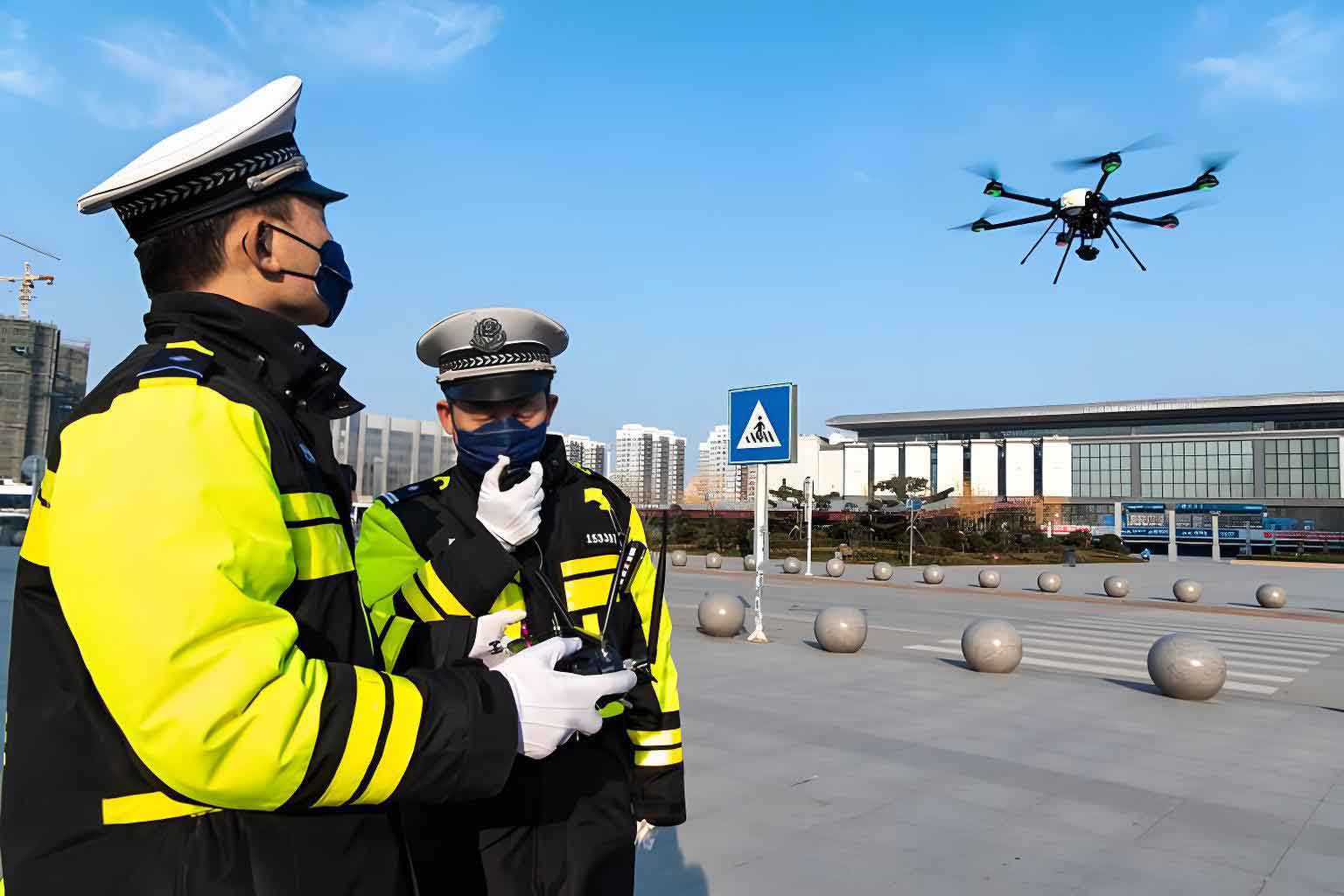
In the process of smart policing construction, police UAVs are regarded as essential机动装备, underpinning a警务发展战略 that emphasizes “科技兴警,科技赋能,靠科技破解难题.” By combining police UAVs with big data, artificial intelligence, and other technologies, and integrating them with various functional modules of the公安系统 on the basis of smart policing platforms,警务工作效能 has been enhanced. The experiences and achievements summarized in practice are worth referencing.
First, regarding equipment配给, after over three years of development, the police aviation UAV unit now possesses 37 various police UAVs, primarily models from the DJI series, Hawa series multi-payload UAVs, and vertical take-off and landing fixed-wing UAVs, covering functions such as daily training,侦查巡查, and emergency rescue. The platform has established a police UAV system composed of platform control software, multi-rotor UAVs, ground aviation stations, integrated control flight cabins, multi-task吊舱 payloads, and data links, equipped with the national latest version of integrated control flight cabins and new-generation ground intelligent aviation stations, building a hardware system with reasonable selection, complementary focuses, appropriate搭配, and complete functionality.
Second, in terms of management架构, based on the functional positioning of the Ministry of Public Security regarding police aviation management of UAVs and considering local公安实际, it is明确 that police aviation is responsible for the management guidance and training of全局警用无人机. Specifically, it oversees the guidance and inspection of全局警用无人机工作, the management and maintenance of equipment, and regularly conducts业务培训工作; liaises with military and civil aviation control相关部门 to apply for飞行空域 and航线; executes常态化空中警务巡逻; and配合市局主战警种 in tasks such as空中侦查,维稳处突,大型活动安保, and交通管理.
Third, regarding自主研发能力, collaborations with universities and research institutions have been established to innovate技战法. For instance, joint laboratories with high-tech companies have been set up to develop两大平台 (police aviation information management platform and UAV operator platform),三大系统 (UAV战略系统,战术系统, and反制系统), and四个模块 (维稳处突,巡逻防控,打击犯罪, and治安管理), ensuring规范运行 of police UAVs in integrated sectors.
Fourth, in operational management, various plans and protocols have been formulated based on different警情, such as “大型安保任务预案,” “群体性事件处置预案,” and “防汛应急预案,” significantly enhancing勤务的灵活机动性 and meeting多元化警务实战需求. Additionally,工作手册 have been researched and制定, establishing systems for personnel management,飞行工作程序, and UAV storage, maintenance, and upkeep, ensuring that police UAV operations remain within规范运行的轨道.
Fifth, explorations in智能应用 have been conducted. For example, innovative models like “UAV + accident fast处理” have been首创, utilizing仓储式智能无人机巡检系统 and relying on交通事故快速处理响应平台 to achieve remote rapid accident handling. By setting automatic巡航路线 and times via ground intelligent aviation stations, UAVs can initiate空中静默巡逻 in cruise mode. Furthermore, three-dimensional modeling of巡航区域 maps and geographic information has been performed to establish a三维防控体系, providing robust data support for smart policing construction.
Despite the advantages of police UAVs—being efficient, flexible, and easy to operate—and their significant role in conserving police resources and improving执法效能, they are increasingly favored by实战部门. However, from actual application situations, issues persist in management不规范, policy配套不完善, and legislative滞后.
Regarding队伍 construction, there are problems of imbalance and不规范. Professional police UAV teams have significant advantages in equipment配给, device maintenance,飞手 training, and技战法研究. Only by establishing a专业飞行队伍 with clear分工,默契配合, and精湛技术 can complex application scenarios be适应 and high-quality flight tasks completed. From investigations, while some cities have established specialized units, overall专业队伍建设 is uneven. Many cities face challenges such as insufficient funding, difficulty in resolving编制, and shortages of飞手, leading to a lack of awareness and积极性 in forming professional teams. In practice, it is common for various警种 to purchase UAVs based on operational needs, treating them as常规配备 for执法活动. While “单兵”执法 greatly enhances警务效能, due to limited scale and稀缺专业飞手, operations often remain in the初级阶段 dominated by aerial photography, lacking技战法研发能力. Various基层部门 operate independently, without管理和统筹 in UAV配给 and usage, failing to form战斗合力.
Moreover, there is no完善的专业人才培养机制. The入门条件 for becoming a专业飞手 is obtaining a警用无人驾驶航空器驾驶执照 issued by the Ministry of Public Security. Although实战部门’s demand for police UAVs is不断增长,合格驾驶执照 holders among officers are极其缺乏. Some officers only undergo short-term training from suppliers before executing flight tasks, posing significant safety hazards. Additionally, according to the “警用无人驾驶航空器管理暂行规定,”驾驶执照 are categorized into A, B, and C classes. In surveys, it was found that UAV飞手 in some areas hold only B-class licenses, with limited opportunities for A-class license training and assessment. However, B-class licenses only permit驾驶起飞重量七千克 (含)以下的无人机, while A-class license holders can驾驶大于七千克的警用无人机 and serve as飞行教员. Since unmanned helicopters and most fixed-wing UAVs have maximum take-off weights exceeding seven kilograms, and professional-grade multi-rotor UAVs often exceed this weight when equipped with devices or carrying items, license restrictions hinder many flight projects and limit the application of large UAVs. Beyond驾驶员资格培训, there is a lack of实战化应用的专业培训, resulting in a严重脱节 between飞手’s飞控技术,技能操作水平, and实战需求. From调研情况, due to the absence of常态化的培训机制, some基层部门 can only rely on existing持证飞手 to conduct training via老带新 methods, based on the Ministry of Public Security’s and provincial department’s “警用无人驾驶航空器基础训练与考试大纲” and related training materials. The training level remains at the “入门”级别, so实战部门 urgently need规范化技能培训 to strengthen专业队伍建设.
In terms of警用无人机装备建设,经费保障不足 is a key issue. Currently, funds for警用装备 primarily rely on local government财政支持. Configuring a professional UAV setup, including UAVs,系留装置, ground aviation stations, and full sets of挂载设备, can cost millions,加上后续保养,更新,培训等费用, which is a significant expense. The costs for应用模块, UAV操控平台 software development are even more daunting for many localities. The root cause is inadequate recognition of police UAVs’ roles, with many areas exhibiting等靠要思想 and lacking reform动力和决心.
Furthermore, there is a lack of统一标准 for装备配置. Due to insufficient顶层设计和统筹安排, there are no硬性要求 or选型指导 for whether基层公安机关 purchase UAVs or what models and standards to choose. Purchases by各市各警种 lack统一规划. To save costs,基层公安 often opt for consumer-grade civilian UAVs, which have单一功能, poor video quality, and cannot meet警务实战需求 in technical indicators such as续航时间,载荷重量, and安全系数, directly impacting the深度应用 and安全管理 of UAVs in警务工作. Police UAV transmission content requires confidentiality, necessitating encrypted wireless transmission using专用频率. However, surveys reveal that most police UAVs still use民用机频率,处于 “裸奔”状态, posing serious safety risks.
Additionally, there are规范化问题 with UAV挂载设备. Current common applications include mounting cameras, infrared thermal imagers, facial recognition devices, etc. Police UAVs’全景无死角,隐蔽式的持续监控 increase the risk of侵犯个人隐私权. There are no legal明确规定 on whether UAVs can be used for交通执法拍摄违章 as处罚依据; how UAV video侦查取证 can avoid取证瑕疵 to ensure程序合法合规; or whether UAVs can be equipped with非致命性警械装备 like tear gas, net guns, smoke bombs for非接触式执法.
Regarding警用无人机管理体制,管理体制不健全 is evident. According to the 2016 “警用无人驾驶航空器管理暂行规定,” a five-level management system from the Ministry of Public Security to provinces, cities, counties, and使用单位 is established. However, in practice, a统一管理,统一指挥的工作架构 has not yet been formed. The规定 requires provincial公安机关 to制定警用无人驾驶航空器管理工作细则, but as of 2021, only a few provinces like Sichuan and Zhejiang have enacted local norms. The规定 also mandates省市两级公安机关 to build警用无人机飞行动态监控系统 for飞行动态监控和应急处置, yet only a few发达城市 such as Shenzhen have developed platforms like “深穹”无人机管控平台, and provincial UAV flight control system construction is still pending. Only by establishing UAV flight control systems can police UAV operations develop more规范,安全,有序; and only by deeply integrating UAV flight control systems with公安信息化系统 can the information gathering advantages of police UAVs be transformed into rapid处置和打击优势.
Moreover,警用无人机的应用研发机制不健全. Research and development in police UAV performance can be divided into通用性 and专业性 directions.通用性研发 focuses on general technical indicators like续航时间, stability,避障能力, and图传保密性 to meet basic实战需求.专业性研发 refers to technical development for specific警种, application scenarios, and技战法 requirements. For example, in禁毒工作, using UAVs for罂粟探查 is常规操作, but the market price for such technology, like某研发公司’s “无人机载多光谱罂粟巡查”系统, can be as high as millions, leading to expensive costs due to technological monopoly from缺乏竞争. In surveys, it was learned that in recent years, some禁毒部门 have adopted购买服务的方式, renting equipment for罂粟探查, while most regions cannot afford high rental fees, missing out on this高效精准探查方式. Technologies like facial recognition,自动起降, and自动跟踪 can enhance police UAVs’实战能力, but currently, there is普遍存在自主研发力量不足,创新意识不强,激励机制不够 in警用科技, with over-reliance on警用装备生产企业 for研发,设计. For needs like UAV罂粟探查 applicable nationwide,各级警用无人机管理部门, especially the Ministry of Public Security and provincial警航部门, should summarize实战部门反馈, coordinate公安院校,科研院所, and生产企业 to promptly overcome technical hurdles, reduce application costs, and promote the adoption of先进技术 across provinces and nationwide.
To better leverage police UAVs,首先,各级政府,各级公安机关 must转变传统观念,拓展改革思路, not merely treating police UAVs as警用工具, but recognizing them as新型警用装备, a vital initiative for deepening科技强警战略, a new突破口 for推动警务流程再造, and an integral part of智慧警务建设. The统筹引领作用 of各级政府 should be发挥, emphasizing总体规划设计, increasing资金支持, and integrating police UAV construction into智慧城市建设, considering the perspective of全市乃至全省一体, based on现状, to ensure方案上可施行,技术上可实现,投入上有保障,实施后有收益. As the implementing department for智慧警务建设,公安机关 should follow统一平台,统一网络,统一标准的思路 to promote数据资源融合共享, providing a良好的平台基础 for the信息化,规范化应用 of police UAVs.立足实际,牢牢抓住 “人,机,实战”三个核心要素, efforts should be made to address痛点和难点问题 in police UAV development. According to the规定要求, “部,厅,局” should establish专门机构,垂直隶属,分层管理,各司其职, to manage the use and management of police UAVs.人才培养,团队建设 should be enhanced, police UAV性能 improved,技术研发 conducted, and deep integration with公安信息化系统 promoted.警用无人机行业标准 should be制定,相关法律规定完善, collectively guiding police UAVs into规范化,标准化,智能化的发展轨道.
First,专业警察 UAV teams should be组建.市级公安机关 should form specialized police UAV teams as the主力军 for urban police UAV applications, following the思路 of “业务领先,设施一流,服务全局.” These teams should not only undertake more challenging and professional flight tasks citywide but also assume management responsibilities for全市警用无人机,制定安全工作规章,规范飞行活动. They should guide the work of UAV飞手 across各警种,各基层部门, uniformly handle设备管理,维护,维修,人员培训, and supervise the implementation of safety management规范 for全市警用无人机飞行. The UAV飞行指挥中心 should be设在市警用无人机飞行支队, responsible for全市无人机飞行动态监控和应急处置.飞行任务申请,审批,装备领取,任务执行,数据采集,现场管理,任务监管,应急预案制定 should be细化和明确. Guidance should be provided for全市警用无人机选型工作 to avoid盲目建设, establishing a UAV system with合理选型,恰当搭配 based on实际需求和任务分工 to meet实战应用需求. Currently, funds for police UAV construction mainly come from市(区,县)地方政府, so police UAV建设费用 should be列入地方年度财政预算, establishing长期稳定的资金保障来源. Police UAVs are not just UAV hardware but an整体系统, a crucial component of the entire公安业务系统. Police UAV飞行指挥系统 is a subsystem of智慧公安建设 and must be纳入智慧公安管理系统总体规划.
Second, a police UAV性能研发合作机制 should be建立.省级公安机关 should play a引领作用 in police UAV技术研发. Since police UAV development levels vary across provinces,省警航办, responsible for全省警用无人机使用与管理, should promote均衡发展. When police UAVs are applied in specific执法场景 like刑案侦查,日常巡逻,交通管理,禁毒扫毒, different性能要求 are needed. For instance, in治安巡逻, UAVs require自动起降 and自动巡航功能; in扫毒案件,罂粟花识别功能; in野外抓捕, infrared thermal imaging, facial recognition, and远距离视频回传功能.基层公安机关 often purchase “裸机” UAVs, and these functions need “定制.” Due to缺乏沟通 between研发企业 and基层部门, real需求 may not be第一时间了解, or定制机 purchases are limited, leading to昂贵产品价格 that基层部门 cannot afford. How to effectively对接 UAVs with警务实战 has been a major难题困扰警用无人机深度应用. Due to研发能力不足, police UAVs often face “不好用” or “不能用” situations in practice.省警航办 should collect实际需求 from各实战警种,规划研发方向, actively deepen communication and cooperation with生产企业, problem-oriented, develop配套设备和应用系统符合不同执法需求, and reduce product prices through批量购买. Cooperation and academic exchanges with高校,研发单位 should be strengthened to develop先进技术和产品 with自主知识产权. Currently, the construction of信息化和智能化应用体系 for UAVs based on smart policing platforms is the future发展方向 and should become the focus of police UAV研发.
Third, a police UAV培训体系 should be构建.省警航部门 should communicate and cooperate with省厅教育训练部门, taking charge of本省警用无人机培训工作 per Ministry of Public Security requirements. Based on本省需求, annual police UAV培训计划 should be制定.资质管理 for police UAV培训基地 should be implemented,专业教官团队 and课程体系 established, and多层次培训活动 conducted. Liaison with the Ministry of Public Security警航办 should be maintained to regularly conduct无人机驾驶员资格培训 within the province.实战部门交流研讨,比武竞技 should be organized to improve overall police UAV操作水平.警察 UAV技战法研究 should be organized to better对接技战法和实战需求. The警用无人驾驶航空器培训体系 is a系统工程 requiring完善建设 from应用需求,实战可行性,应用反馈,管理管控,标准规范,体制机制 aspects; it is also a重大工程 needing自上而下,上下联动共同推进.
Fourth, police UAV管理规范和执法规范 should be完善. The Ministry of Public Security高度重视警用无人机管理规范制定工作; as of May 2020, the Ministry’s警航办 and装财局 have promulgated 14 various规范 involving警用无人驾驶航空器管理, covering登记管理,人员管理,使用和维修管理,飞行监控和安全管理等. This series of规范 follows航空工作特点规律, based on全寿命周期备案管理, with “人” “机”准入管理 as the premise, “运行监控”管理 as the核心, implementing相对集中统一管理 to ensure发挥职能作用,保证飞行安全. Overall, the police UAV管理规范体系 is初步构建 but needs targeted补充和完善.
Police UAV通用技术标准 should be完善. According to规定要求, the Ministry of Public Security is responsible for制定警用无人机标准和选型目录, so the Ministry’s警标委 should lead联合相关技术部门和专业的研发机构 to共同制定 “警用无人机通用技术标准,”规范警用无人机的生产和销售.安全性能 should be enhanced, including续航能力,抗风性能,低温电池,避障功能等.统一标准 for规范警用无人机数据传输端口,链路 should be制定 to accelerate the integration of police UAV systems with公安信息化系统.
程序规定 for police UAV飞行活动 should be完善.规定第二十九条 states that police UAVs with maximum take-off weights greater than 7 kilograms or beyond visual line-of-sight flights should apply to local飞行管制部门 for飞行申请, approved before implementation. In practice, this faces沟通不畅,沟通不及时,沟通程序繁琐等问题. As国家航空器, police UAVs engaged in执法活动 should differ from ordinary civilian UAVs. The Ministry of Public Security should communicate and coordinate with军队空管部门,民航部门,明确规定可以使用警用无人机执法的情形,批准程序,执法期限,飞行高度,飞行区域限制,简化批准流程, and例外情形 for emergency flights without approval. When conditions permit, “警用无人机空中交通管理办法” should be制定 to enhance规范化执法水平 of police UAVs.
Police UAV执法行为规范 should be完善. Addressing程序正义,侵犯隐私,伦理风险等问题 for UAV执法, currently promulgated police UAV管理规范 only focus on基础特性, lacking配套规则 for执法活动, thus unable to provide legal support. Police UAV执法属于通过技术手段延伸执法覆盖范围, must comply with正当性和程序性要求, with effective防范 on公平,安全,隐私等问题, establishing统一的执法体系和规范化的执法标准 to gain public trust and support, better balancing公共利益与个人权益.结合警用无人机具体执法活动,执法条件,执法程序,数据管理等 should be细化.告知义务 for police UAV执法 should be履行 to保障公众的知情权和参与权, and具体规定 for搭载模块开展执法活动, such as whether搭载警械和武器 or人工智能设备 like facial recognition, require法律明确授权.
In conclusion, social development and technological进步 bring changes in执法工具和执法方式. With improvements in UAV性能,人才培养,管理制度, and法律完善, it is foreseeable that police UAVs will become an indispensable part of智慧警务建设, playing an increasingly important role in警务实战.省级公安机关, as领导机关, should加强顶层设计, further完善相关管理制度 from性能标准,人才培养,经费保障等方面 to enhance the规范执法水平 of police UAVs.
To quantify some aspects, let’s consider formulas related to police UAV performance and执法效能. For example, the endurance time of a police UAV can be modeled as: $$T = \frac{E}{P}$$ where \(T\) is the flight time, \(E\) is the energy capacity of the battery, and \(P\) is the power consumption. This is crucial for missions requiring prolonged surveillance.
Another formula for coverage area during巡逻: $$A = \pi r^2$$ where \(A\) is the area covered and \(r\) is the effective radius of the UAV’s sensors. This helps in planning巡逻 routes for maximum efficiency.
For执法效能, we can define: $$E_f = \frac{N_s}{T_m}$$ where \(E_f\) is the enforcement efficiency, \(N_s\) is the number of successful执法 actions, and \(T_m\) is the total mission time. This metric can be used to evaluate the effectiveness of police UAV deployments.
Additionally, the cost-effectiveness of police UAV systems can be expressed as: $$CE = \frac{B}{C}$$ where \(CE\) is the cost-effectiveness ratio, \(B\) is the benefits (e.g., crimes prevented, time saved), and \(C\) is the total cost of ownership, including acquisition, maintenance, and training. This highlights the importance of economical装备配置.
Below is a table summarizing key challenges and strategies for police UAV applications:
| Challenge Category | Specific Issues | Proposed Strategies |
|---|---|---|
| Team Construction | Imbalance in professional teams, lack of training mechanisms, shortage of licensed飞手 | Establish市级专业 teams, develop standardized培训体系, increase A-class license opportunities |
| Equipment Development | Insufficient funding, lack of统一标准, security risks in transmission,规范化 issues with挂载设备 | Secure stable budgets,制定通用技术标准, encrypt transmissions, clarify legal frameworks for payloads |
| Management System | 不健全管理体制, slow development of飞行动态监控系统, inadequate应用研发机制 | Implement垂直隶属管理, accelerate UAV flight control system construction, foster研发合作机制 |
| 执法规范 | Unclear程序规定 for飞行活动, lack of执法行为规范, privacy and ethical concerns | Simplify approval processes, enact空中交通管理办法,细化执法条件 and程序 |
Another table comparing different types of police UAVs based on performance metrics:
| UAV Type | Max Take-off Weight (kg) | Endurance (minutes) | Typical Payloads | Suitable Missions |
|---|---|---|---|---|
| Multi-rotor (Consumer) | < 7 | 20-30 | Camera, basic sensors | Short-range patrols, aerial photography |
| Multi-rotor (Professional) | > 7 | 30-60 | Thermal imager, facial recognition, loudspeaker | Surveillance, crowd monitoring, emergency response |
| Fixed-wing | > 7 | 60-120+ | High-resolution cameras, mapping systems | Large-area巡查, mapping, search and rescue |
| Hybrid VTOL | > 7 | 40-90 | Versatile payloads, communication relays | Long-endurance missions, rugged terrain |
The integration of police UAVs with smart policing platforms can be modeled using system equations. For instance, the data flow from a police UAV to a command center can be represented as: $$D_{out} = f(S, C, B)$$ where \(D_{out}\) is the output data, \(S\) is the sensor input, \(C\) is the processing capability, and \(B\) is the bandwidth. This emphasizes the need for high-speed, secure data links.
In terms of training, the competency of a police UAV operator can be assessed through: $$C_o = \alpha T_h + \beta E_x + \gamma K_n$$ where \(C_o\) is the operator competency score, \(T_h\) is flight hours, \(E_x\) is experience in实战 scenarios, \(K_n\) is knowledge of regulations, and \(\alpha, \beta, \gamma\) are weighting factors. This can guide培训体系 development.
To address privacy concerns, a formula for ethical deployment might include: $$P_i = \frac{A_m}{A_t} \times R_s$$ where \(P_i\) is a privacy impact index, \(A_m\) is the monitored area, \(A_t\) is the total area, and \(R_s\) is the sensitivity of data collected. Lower \(P_i\) values indicate better privacy protection, guiding执法行为规范.
Overall, the future of police UAVs relies on continuous innovation and adaptation. By addressing these challenges through coordinated strategies, police UAVs can significantly enhance law enforcement capabilities in the era of smart policing. The repeated emphasis on “police UAV” throughout this discussion underscores its centrality in modern警务改革. As we move forward, it is imperative to keep refining technologies, policies, and training to ensure that police UAVs serve as effective, ethical, and efficient tools for public safety.