
In recent years, I have observed a rapid integration of unmanned aerial vehicles, commonly known as police drones, into law enforcement activities worldwide. As a researcher focused on technological advancements in public safety, I believe that police drones offer transformative potential for enhancing policing efficiency, but they also raise significant legal and ethical concerns that must be addressed through robust regulation. This article explores the applications of police drones in various law enforcement domains, analyzes their advantages and limitations, examines the inherent risks, and proposes a framework for legal governance based on principles of justice and transparency. Throughout this discussion, I will emphasize the need to balance public security with individual rights, ensuring that police drone operations adhere to due process and normative standards.
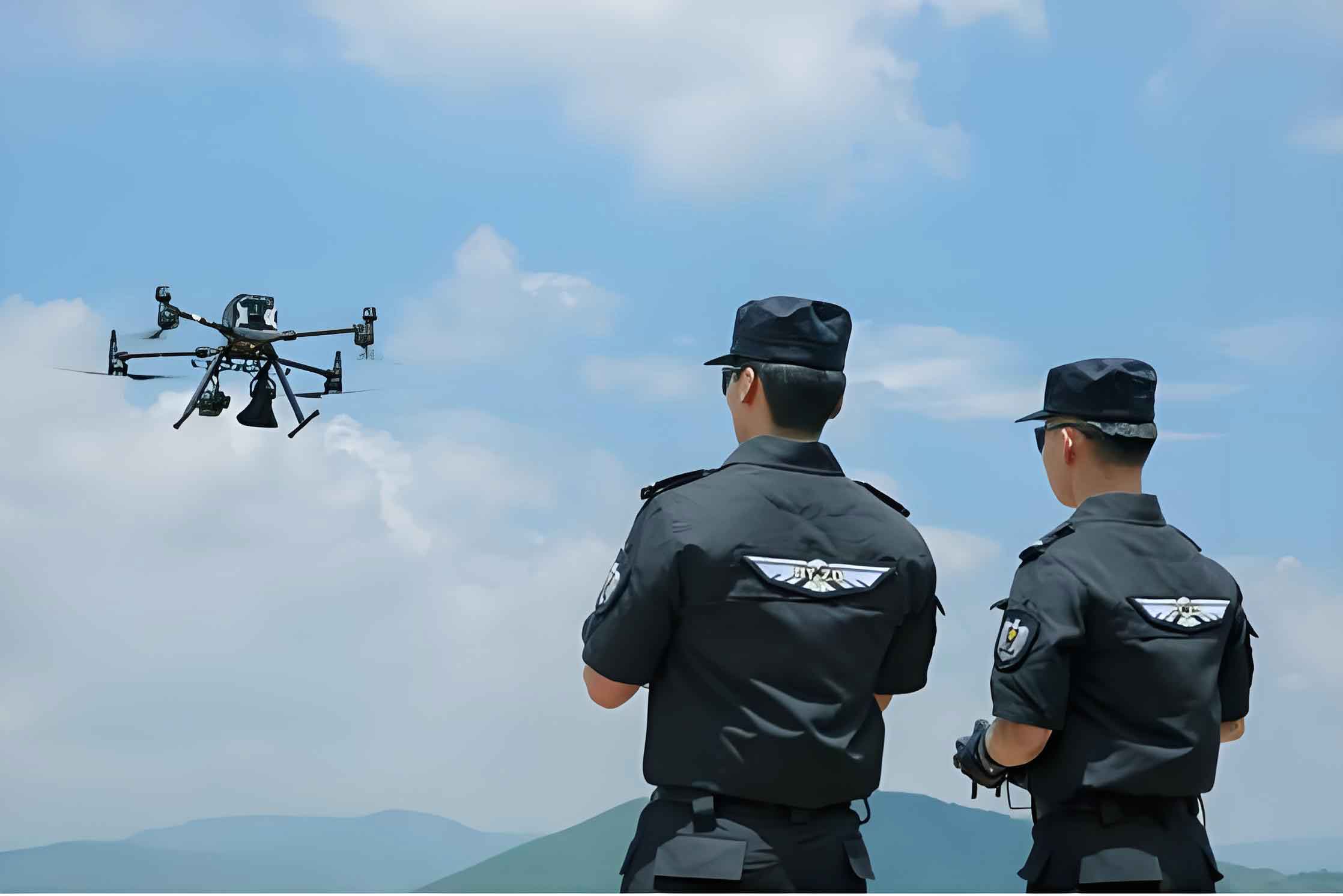
From my perspective, the adoption of police drones represents a paradigm shift in law enforcement methodologies. These devices, equipped with high-resolution cameras, thermal sensors, and communication modules, enable authorities to conduct surveillance, gather evidence, and respond to incidents with unprecedented speed and precision. However, as I delve into this topic, I recognize that the proliferation of police drones necessitates a critical examination of their impact on civil liberties, particularly privacy and fairness. In this article, I will present a comprehensive analysis, incorporating tables and formulas to summarize key points, and argue for a harmonized approach that leverages the benefits of police drones while mitigating their risks.
Applications of Police Drones in Law Enforcement
In my research, I have identified several core areas where police drones are increasingly deployed. These applications highlight the versatility of police drones, but they also underscore the need for context-specific regulations. Below, I summarize the primary domains in a table to provide a clear overview.
| Application Domain | Key Functions | Examples of Use |
|---|---|---|
| Traffic Law Enforcement | Surveillance, evidence collection, traffic management | Monitoring speeding violations, accident scene documentation, congestion control |
| Crowd Management and Public Events | Monitoring, crowd dispersion, threat identification | Managing protests, large gatherings, and festive events |
| Patrol and Surveillance | Routine patrols, crime prevention, area monitoring | Urban巡逻, border surveillance, critical infrastructure protection |
| Search and Rescue Operations | Location tracking, thermal imaging, delivery of supplies | Finding missing persons in remote areas, disaster response |
| Criminal Investigations | Evidence gathering, scene reconstruction, suspect tracking | Collecting aerial footage of crime scenes, monitoring suspects |
In traffic law enforcement, I have seen police drones used to augment traditional methods. For instance, police drones can hover over highways to detect reckless driving, capture license plate information, and relay real-time data to command centers. This not only improves response times but also serves as a deterrent. However, I caution that such applications must be transparent to avoid perceptions of covert surveillance. Similarly, in crowd management, police drones provide aerial perspectives that help assess situations and deploy resources efficiently. Yet, as I analyze these uses, I worry about the potential for excessive monitoring that could infringe on peaceful assembly rights.
Moreover, patrol and surveillance activities benefit from the endurance and range of police drones. A single police drone can cover vast areas, reducing the need for physical patrols and lowering operational costs. In my view, this efficiency gain is substantial, but it must be weighed against privacy concerns. For example, persistent surveillance by police drones might create a “panopticon effect,” where individuals feel constantly watched, chilling legitimate activities. I propose that the deployment of police drones in such contexts should be guided by necessity and proportionality, principles I will elaborate on later.
Advantages of Police Drone Law Enforcement
Based on my observations, the advantages of police drones are multifaceted. They enhance operational capabilities, reduce risks to officers, and enable data-driven policing. To quantify these benefits, I have developed a simple efficiency model that relates task completion time and cost savings. Let $$ E = \frac{T_o}{T_d} \times C_s $$ where \( E \) represents the efficiency gain from using police drones, \( T_o \) is the time required for traditional methods, \( T_d \) is the time with police drones, and \( C_s \) is the cost savings factor. This formula illustrates how police drones can improve law enforcement outcomes.
Specifically, I have noted the following key advantages:
- Innovation in Law Enforcement Methods: Police drones allow for non-contact执法, such as automated traffic penalties or remote evidence collection, which minimizes physical confrontations.
- Enhanced Efficiency: Police drones can operate continuously, providing 24/7 coverage and rapid response. For instance, in traffic management, a police drone can clear congestion faster than ground units.
- Optimized Workflows: By integrating with AI systems, police drones facilitate real-time data analysis, improving decision-making in “command and control” scenarios.
In my experience, the use of police drones also promotes officer safety. For example, in hazardous environments like chemical spills or active shooter situations, police drones can assess risks without exposing personnel to danger. This aligns with my belief that technology should serve to protect both the public and law enforcement agents. However, I emphasize that these advantages must not come at the expense of ethical standards, as I will discuss in the risks section.
Limitations and Challenges of Police Drone Operations
Despite their benefits, police drones face several limitations that I have documented in my studies. These include technical shortcomings and institutional gaps. Below, I present a table summarizing these challenges.
| Category | Specific Limitations | Impact on Law Enforcement |
|---|---|---|
| Technical Issues | Limited battery life, vulnerability to weather, sensor accuracy | Reduced operational reliability and coverage |
| Operational Constraints | Regulatory hurdles, airspace restrictions, pilot training requirements | Delays in deployment and increased costs |
| Data Management | Data security risks, privacy invasions, information overload | Potential for misuse and public distrust |
| Legal and Ethical Gaps | Unclear accountability, lack of standardized protocols | Inconsistent applications and legal challenges |
From a technical standpoint, I have found that police drones often struggle with endurance. Most models have flight times under an hour, which limits their utility in prolonged operations. Additionally, adverse weather conditions can ground police drones, rendering them ineffective when needed most. In my analysis, these issues underscore the need for ongoing investment in research and development to enhance police drone capabilities.
Institutionally, I have observed a lack of cohesive frameworks for police drone usage. Different jurisdictions adopt varying rules, leading to fragmentation. For instance, airspace authorization for police drones can be cumbersome, requiring approvals from multiple agencies. This hampers rapid response, especially in emergencies. I argue that streamlining these processes is crucial for maximizing the potential of police drones. Furthermore, data collected by police drones—such as video footage and location logs—poses significant privacy risks. In my view, without robust safeguards, this data could be exploited, eroding public trust. I propose that data minimization and encryption protocols be mandated for all police drone operations.
Institutional Risks and Value Conflicts
As I delve deeper into the implications of police drone执法, I identify several institutional risks that arise from value conflicts. These include tensions between efficiency and fairness, privacy and state power, and technological advancement versus ethical norms. To model these risks, I introduce a risk assessment formula: $$ R = P \times S \times V $$ where \( R \) is the overall risk level, \( P \) is the probability of harm (e.g., privacy breach), \( S \) is the severity of impact, and \( V \) is the vulnerability of affected rights. This formula helps quantify the trade-offs involved in deploying police drones.
First, the efficiency-fairness dilemma is prominent. Police drones enable widespread monitoring, increasing the detection rate of offenses. However, as I have noted, this can lead to disproportionate enforcement if penalty structures remain unchanged. For example, if traffic fines are issued more frequently due to police drone surveillance without adjusting severity, it may unfairly burden certain communities. I believe that fairness must be maintained through transparent algorithms and regular audits of police drone activities.
Second, privacy concerns are paramount. Police drones, with their aerial vantage points, can intrude into private spaces without physical trespass. In my research, I have applied the “mosaic theory,” which suggests that aggregated data from police drones can reveal intimate details about individuals, even from public areas. This exacerbates the power imbalance between state and citizen. I advocate for strict limits on police drone surveillance, such as prohibiting flights over residential areas without warrants, except in exigent circumstances.
Third, the ethical dimension of automation cannot be ignored. Police drones, especially when armed or equipped with AI, may dehumanize law enforcement. I worry that non-contact interactions via police drones could reduce accountability and empathy, fostering a sense of alienation among the public. In my opinion, human oversight must remain central to police drone operations, ensuring that decisions involving force or judgment are made by trained officers, not machines.
Fundamental Principles for Police Drone Law Enforcement
Based on my analysis, I propose four core principles that should guide the use of police drones in law enforcement. These principles are derived from administrative law and aim to balance innovation with rights protection. I present them in a table for clarity, followed by detailed explanations.
| Principle | Description | Application to Police Drones |
|---|---|---|
| Fairness | Ensuring equitable treatment and avoiding bias | Implementing bias checks in AI algorithms, providing avenues for appeal |
| Transparency | Operating openly with public disclosure | Publishing flight logs, using visible markings on police drones |
| Necessity | Using police drones only when less intrusive means are ineffective | Conducting impact assessments before deployment |
| Normativity | Adhering to legal standards and procedural rules | Establishing clear protocols for data handling and use of force |
From my perspective, fairness is critical. Police drone systems must be designed to avoid discriminatory outcomes, such as targeting specific neighborhoods based on biased data. I suggest regular reviews of police drone deployment patterns to ensure they serve all communities equally. Transparency, meanwhile, builds public trust. I recommend that law enforcement agencies disclose the capabilities and purposes of their police drones, perhaps through community forums or online portals. This aligns with my belief that informed consent is key to legitimate policing.
Necessity requires that police drones be used as a last resort. In my view, before launching a police drone, officers should consider whether ground-based methods would suffice. This minimizes unnecessary intrusions. Finally, normativity entails compliance with existing laws and the development of new regulations tailored to police drones. I have seen gaps in current frameworks, such as conflicting rules between aviation and law enforcement agencies. Harmonizing these through national standards is essential, as I will discuss in the recommendations section.
Recommendations for a Comprehensive Police Drone执法 System
To address the challenges and risks I have outlined, I propose a two-tiered approach to building a robust police drone执法 system. This includes general procedural rules and specific activity guidelines. My recommendations are based on extensive study and aim to foster responsible innovation.
General Procedural Rules for Police Drone Operations
First, I advocate for standardized flight protocols. Before each mission, police drone operators should conduct a risk assessment, documented in a flight plan approved by supervisors. This plan should include the objective, duration, and area of operation, ensuring alignment with legal authorities. I also emphasize coordination with air traffic control to prevent conflicts, perhaps through dedicated corridors for police drones. Data management is another priority. I propose that all data collected by police drones be encrypted, stored securely, and deleted after a fixed period unless needed for investigations. This mitigates privacy risks and complies with data protection laws.
Moreover, safety measures must be paramount. Police drones should undergo regular maintenance, and operators must receive certified training. I support the creation of a national registry for police drone incidents to track failures and improve safety standards. In emergencies, such as natural disasters, I believe streamlined authorization processes can enable rapid deployment of police drones, but with post-event reviews to ensure compliance.
Specific Regulations for Key执法 Activities
For traffic enforcement, I recommend that police drones be equipped with audible or visual alerts to notify drivers of monitoring, avoiding “stealth” tactics. Penalties issued via police drones should be subject to human verification, and drivers should have easy access to contest citations. This upholds due process. Regarding crowd control, police drones should be used primarily for situational awareness rather than dispersal, unless there is an imminent threat. I suggest bans on weaponized police drones in such contexts, except under strict judicial oversight.
When it comes to armed police drones, I take a cautious stance. In my opinion, weaponization should be limited to extreme scenarios, such as counter-terrorism operations, and governed by explicit legislative authorization. A use-of-force continuum for police drones could be modeled mathematically: $$ F = f(T, I, A) $$ where \( F \) is the level of force authorized, \( T \) is the threat level, \( I \) is the immediacy, and \( A \) is the availability of alternatives. This ensures proportional responses. Additionally, I argue that autonomous decision-making by police drones regarding force should be prohibited; human operators must retain ultimate control.
To illustrate the integration of these recommendations, I have developed a compliance checklist for police drone deployments, summarized in the table below.
| Step | Requirement | Verification Method |
|---|---|---|
| Pre-deployment Assessment | Determine necessity and proportionality | Documented approval from commanding officer |
| Flight Authorization | Secure airspace clearance and notify public if possible | Coordination with aviation authorities, public notices |
| In-flight Monitoring | Adhere to planned route, avoid privacy-sensitive zones | Real-time tracking and recording |
| Post-mission Review | Audit data collection, address any complaints | Internal review boards, public feedback mechanisms |
Conclusion
In conclusion, my exploration of police drone law enforcement reveals both immense potential and serious challenges. As I have argued, police drones can revolutionize policing by enhancing efficiency and safety, but their use must be constrained by legal and ethical boundaries. The principles of fairness, transparency, necessity, and normativity provide a foundation for regulation, while my recommendations offer practical steps toward a balanced framework. I urge policymakers and law enforcement agencies to collaborate in developing unified standards that prioritize human rights alongside public security. Through thoughtful governance, police drones can become invaluable tools for justice, rather than instruments of overreach. As technology evolves, I remain committed to monitoring these developments and advocating for reforms that ensure police drones serve the common good.
Throughout this article, I have emphasized the keyword “police drone” to underscore its centrality in modern law enforcement discourse. By integrating tables and formulas, I aimed to present a structured analysis that aids understanding and decision-making. The future of police drone执法 depends on our ability to navigate the complex interplay between innovation and regulation, and I hope this contribution sparks further dialogue and action.