
The proliferation of Unmanned Aerial Vehicles (UAVs), or drones, across military and civilian domains represents a paradigm shift in aerial operations. Their advantages—low cost, small size, ease of operation, and high flexibility—have been widely leveraged for applications ranging from logistics and surveillance to disaster response. However, this very accessibility has precipitated significant security challenges. Malicious use, unauthorized incursions into restricted airspace, and privacy violations have turned drones into potent threats for critical infrastructure, public safety, and national security. Consequently, the development and deployment of robust Counter-Unmanned Aircraft Systems (C-UAS), or anti-drone technologies, have become a global imperative for defense and homeland security agencies.
This article synthesizes contemporary research and development in anti-drone capabilities, constructing a comprehensive knowledge framework. It analyzes prevalent technological regimes, identifies critical technical challenges posed by modern UAVs, and discusses the core technologies underpinning effective countermeasures. The insights are drawn from an empirical analysis of scholarly literature from 2010-2020, highlighting trends and focal points in global anti-drone research.
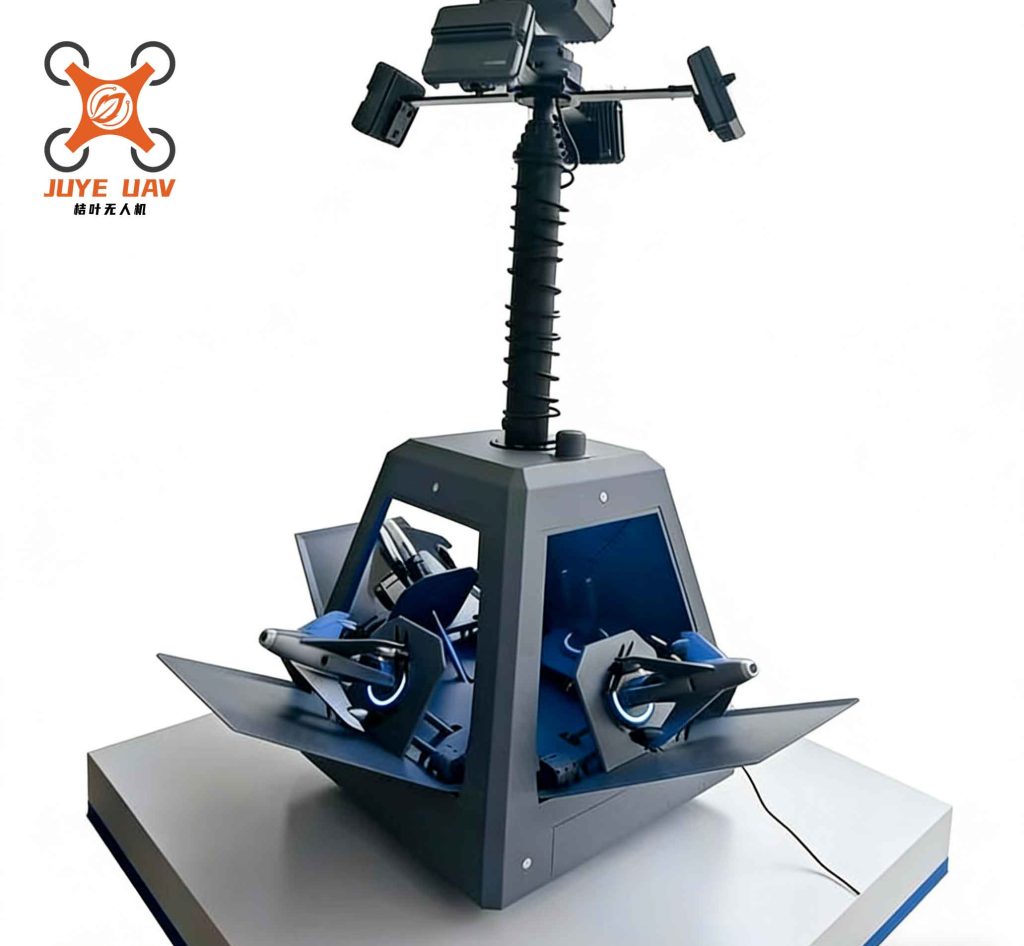
1. The Multi-Layered Anti-Drone Framework
A holistic anti-drone solution is not a single device but a system-of-systems, typically architected in a layered defense model. This model progresses from prevention to physical negation, ensuring a graduated response to aerial threats.
- Layer 1: Prevention & Regulation: The foundational layer involves establishing legal frameworks, geofencing protocols, and public awareness to deter the unauthorized use of drones in sensitive areas.
- Layer 2: Detection & Identification: This critical layer focuses on sensing the presence of a drone, precisely locating it, and classifying its type and potential intent using various sensor modalities.
- Layer 3: Decision & Assessment: Upon detection, this layer involves the analysis of threat level, selection of the appropriate response (mitigation), and the command to engage, which can be manual or automated.
- Layer 4: Mitigation & Neutralization: The final layer executes the chosen response, employing either “soft-kill” (non-kinetic) methods to disrupt the drone’s operation or “hard-kill” (kinetic) methods to physically destroy or capture it.
2. Technological Regimes for Detection and Identification
The effectiveness of an anti-drone system hinges on its ability to reliably detect and identify low, slow, and small (LSS) UAVs amidst clutter and other flying objects. No single sensor is perfect for all scenarios; hence, a combination of technologies is often deployed.
2.1 Radio Frequency (RF) Sensing
This regime exploits the electromagnetic emissions of drones, primarily their command-and-control (C2) and telemetry links.
- Passive RF Detection & Fingerprinting: Systems listen for unique RF signatures from common drone controllers (e.g., in 2.4 GHz, 5.8 GHz bands) or Wi-Fi protocols. Machine learning algorithms can classify drones based on these signal patterns. The probability of detecting a signal in noise can be modeled as:
$$P_d = Q\left(\frac{\sqrt{E_s/N_0} – \lambda}{\sqrt{2}}\right)$$
where $P_d$ is the detection probability, $Q$ is the Q-function, $E_s/N_0$ is the signal-to-noise ratio, and $\lambda$ is the detection threshold. - Passive RF Localization: Techniques like Time Difference of Arrival (TDOA), Angle of Arrival (AOA), and Frequency Difference of Arrival (FDOA) are used to geolocate the drone or its pilot. TDOA, for instance, calculates position based on the time delays of a signal arriving at multiple synchronized receivers. The hyperbolas defining potential locations are given by:
$$c \cdot \Delta t_{ij} = \sqrt{(x – x_i)^2 + (y – y_i)^2} – \sqrt{(x – x_j)^2 + (y – y_j)^2}$$
where $c$ is the speed of light, $\Delta t_{ij}$ is the measured time difference between receivers $i$ and $j$, and $(x, y)$ are the coordinates of the emitter.
2.2 Radar
Radar remains a cornerstone of anti-drone surveillance due to its all-weather, day-night capability and ability to provide precise range and velocity data.
| Radar Type | Advantages | Challenges for Anti-Drone |
|---|---|---|
| Ground-Based | Mature technology, high power, long range. | Low-altitude blind zones, terrain masking, strong ground clutter. |
| Airborne/Aerostat-Based | Extended horizon, reduced ground clutter, better coverage. | High cost, platform stability, deployment logistics. |
| Monostatic | Simplicity in deployment and signal processing. | Limited perspective, susceptibility to multipath and stealth techniques. |
| Multistatic/Networked | Improved detection probability, resilience to stealth, 3D tracking. | Complex synchronization, data fusion, and high communication bandwidth requirements. |
Key radar challenges include distinguishing micro-drones from birds and suppressing intense clutter. This requires advanced waveforms and signal processing. The Radar Cross Section (RCS) of a small drone, $\sigma_{drone}$, is much smaller than traditional aircraft, drastically reducing the signal-to-clutter ratio. The radar range equation for a drone highlights the challenge:
$$R_{max} = \left[ \frac{P_t G_t G_r \lambda^2 \sigma_{drone}}{(4\pi)^3 k T_s B (S/N)_{min}} \right]^{1/4}$$
where $P_t$ is transmit power, $G$ are antenna gains, $\lambda$ is wavelength, $k$ is Boltzmann’s constant, $T_s$ is system noise temperature, $B$ is bandwidth, and $(S/N)_{min}$ is the minimum detectable signal-to-noise ratio.
2.3 Electro-Optical/Infrared (EO/IR)
EO/IR sensors provide visual confirmation and high-resolution imagery for target identification.
| Sensor Type | Spectrum | Role in Anti-Drone |
|---|---|---|
| Visible Light (CCD/CMOS) | 400-700 nm | High-resolution daytime imaging, target classification via shape. |
| Short-Wave Infrared (SWIR) | ~1-3 µm | Better penetration through haze, some night capability. |
| Mid-Wave/Long-Wave IR (MWIR/LWIR) | 3-5 µm / 8-14 µm | Passive heat detection (engine, motors), excellent night operation. |
| Laser Radar (LiDAR) | Active Laser | High-precision 3D point cloud mapping, accurate velocity and range. |
EO/IR systems are often used as a secondary confirmatory sensor following a radar cue. Their performance is highly dependent on atmospheric conditions (fog, rain) and requires sophisticated image processing algorithms for automatic target detection and tracking.
2.4 Acoustic Sensing
Every drone produces a distinct acoustic signature, or “audio fingerprint,” primarily from its motors and propellers. Acoustic sensors (microphone arrays) can passively detect and classify drones based on this signature, even when visual or RF emissions are minimal. The sound pressure level at a distance $r$ from a source is given by:
$$L_p = L_{w} – 20 \log_{10}(r) – 11$$
where $L_p$ is the sound pressure level and $L_w$ is the sound power level of the source. Beamforming techniques are used with microphone arrays to localize the sound source. However, acoustic systems have limited range and are vulnerable to ambient noise pollution.
2.5 Sensor Fusion
Given the limitations of individual sensors, data fusion is the key to creating a reliable anti-drone picture. Fusion occurs at different levels:
- Data-Level Fusion: Raw data from homogeneous sensors (e.g., multiple radars) is combined.
- Feature-Level Fusion: Extracted features (e.g., radar cross-section, acoustic frequency, IR shape) are combined for classification.
- Decision-Level Fusion: Each sensor subsystem makes a local decision (e.g., “drone detected”), and these decisions are fused for a final verdict.
A common Bayesian fusion approach for two sensors can be represented as:
$$P(H|E_1, E_2) = \frac{P(E_1|H) P(E_2|H) P(H)}{P(E_1, E_2)}$$
where $P(H|E_1, E_2)$ is the posterior probability of hypothesis $H$ (e.g., “target is a hostile drone”) given evidence from sensors 1 and 2.
3. Neutralization: Soft-Kill and Hard-Kill Mitigation
Once a drone is deemed a threat, the anti-drone system must neutralize it. Mitigation strategies fall into two broad categories.
3.1 Soft-Kill (Non-Kinetic)
These methods disable the drone without causing physical destruction, minimizing collateral damage.
| Method | Target | Effect |
|---|---|---|
| Radio Frequency Jamming | C2 & Navigation Links | Disrupts communication, causing link loss, forced landing, or return-to-home. |
| Global Navigation Satellite System (GNSS) Spoofing | GPS/GNSS Receiver | Injects false position/timing signals, leading to navigation hijack and controlled capture. |
| Protocol Exploitation | Drone’s Software | Takes over drone by exploiting vulnerabilities in its communication protocol. |
The effective jamming power at the target drone’s receiver, following the Friis transmission equation, is:
$$P_{j,eff} = P_j G_j G_{drone} \left( \frac{\lambda}{4 \pi R} \right)^2$$
where $P_j$ and $G_j$ are the jammer’s power and antenna gain, $G_{drone}$ is the drone receiver’s antenna gain, $\lambda$ is the wavelength, and $R$ is the range. Successful jamming requires $P_{j,eff}$ to exceed the legitimate signal power by the receiver’s jamming-to-signal ratio threshold.
3.2 Hard-Kill (Kinetic)
These methods physically destroy, disable, or capture the drone.
| Method | Description | Considerations |
|---|---|---|
| High-Power Microwave (HPM) | Emits short, intense bursts of microwave energy to fry electronic circuits. | Area effect, potential for collateral damage to friendly electronics. |
| High-Energy Laser (HEL) | Focuses a high-power laser beam to burn through the drone’s structure. | Line-of-sight, requires precise tracking and high energy, affected by weather. |
| Interceptor Drones / Nets | Deploys a net or uses a drone to collide with or capture the threat drone. | Low collateral risk, enables forensic analysis, but requires close proximity. |
| Conventional Ordnance | Uses missiles or projectiles with proximity fuzes. | High cost per engagement, significant risk of collateral damage from falling debris. |
The energy delivered by a laser weapon is a function of power and dwell time. The temperature rise $\Delta T$ on a target surface can be approximated by:
$$\Delta T = \frac{\alpha P t_{dwell}}{\rho C_p V}$$
where $\alpha$ is absorptivity, $P$ is laser power, $t_{dwell}$ is dwell time, $\rho$ is density, $C_p$ is specific heat capacity, and $V$ is the affected volume.
4. Critical Technologies and Challenges in Modern Anti-Drone Systems
Developing effective anti-drone systems involves overcoming unique technical hurdles posed by LSS targets. Here are key focus areas:
4.1 Detection and Classification of Low-SNR Targets
Small drones have weak radar returns and faint thermal signatures. Advanced signal processing techniques are crucial:
- Track-Before-Detect (TBD): Accumulates energy from a potential target over multiple frames before making a detection decision, enhancing sensitivity for dim targets.
- Machine Learning/Deep Learning Classification: Trains convolutional neural networks (CNNs) on radar micro-Doppler signatures, acoustic spectra, and EO/IR images to distinguish drones from birds, insects, or clutter. A classifier’s performance can be evaluated using the F1-score:
$$F_1 = 2 \cdot \frac{\text{Precision} \cdot \text{Recall}}{\text{Precision} + \text{Recall}}$$
4.2 Clutter Rejection in Radar Systems
Ground and weather clutter can mask drone signals. Key technologies include:
- Advanced Pulse-Doppler Processing & STAP: Space-Time Adaptive Processing (STAP) in array radars optimally suppresses clutter in both spatial and frequency domains.
- Constant False Alarm Rate (CFAR) Detectors: Automatically adjust detection thresholds to maintain a constant false alarm probability in varying noise and clutter environments.
4.3 Multi-Target Tracking for Swarms
Drone swarms present a significant challenge, requiring tracking of numerous closely spaced targets. Algorithms like the Joint Probabilistic Data Association (JPDA) or Multiple Hypothesis Tracking (MHT) are employed to maintain track continuity and avoid confusion between targets.
4.4 Agile and Cognitive Jamming
As drones employ frequency hopping, spread spectrum, and encrypted links, jamming must become more sophisticated. Cognitive jammers sense the RF environment in real-time, identify the specific communication protocol, and adapt their jamming waveform to maximize disruption efficiency.
4.5 System Integration and Command & Control (C2)
A functional anti-drone system integrates sensors, effectors, and decision-making into a single C2 architecture. This involves real-time data fusion, automated threat evaluation, and rules of engagement management to enable rapid, appropriate responses.
5. Conclusion
The evolution of drone technology necessitates a continuous and adaptive evolution in anti-drone capabilities. No single silver bullet exists; a layered, multi-technology approach is essential for effective defense. Current research is heavily focused on sensor fusion, artificial intelligence for classification and decision-making, and the development of cost-effective, scalable neutralization methods like directed energy. As drone threats become more autonomous and operate in coordinated swarms, future anti-drone systems will increasingly rely on networked, intelligent, and automated solutions to protect the skies. The race between drone innovation and counter-drone technology is a defining aspect of modern security, underscoring the critical importance of sustained research and development in this field.