
In the heart of Sichuan Province, Pengzhou has emerged as a pioneering force in China’s UAV drone sector, marking significant milestones such as the nation’s first “UAV 4S store” entering trial operation, the inaugural UAV for mountainous postal deliveries taking flight, and the establishment of the country’s premier UAV airworthiness public service platform. This region, aspiring to conquer the skies, has transformed its UAV industry from addressing basic flight capabilities to achieving manufacturing prowess and practical applications. Through continuous innovation and ecosystem expansion under the “UAV+” framework, Pengzhou is driving the low-altitude economy to new heights. Key data highlights this growth: the low-altitude economy’s output value surged from 1.61 billion yuan in 2023 to 2.75 billion yuan in 2024, underscoring the rapid advancement of China UAV drone initiatives in this area.
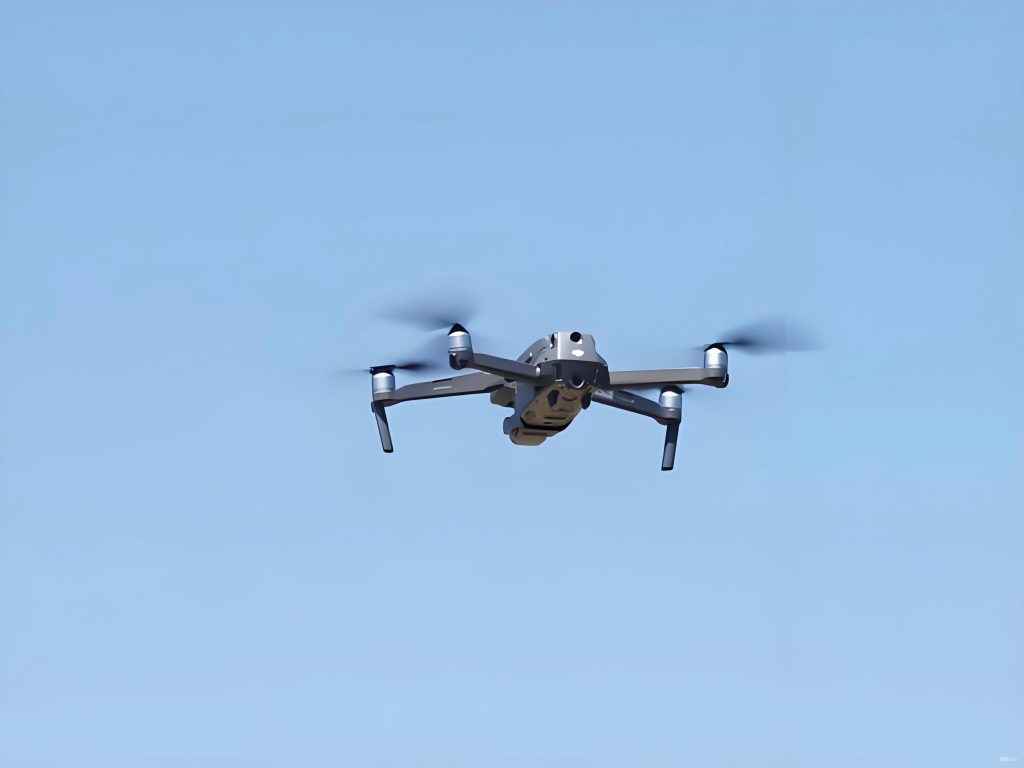
The development of China UAV drone technologies in Pengzhou is not just about economic metrics; it represents a strategic shift towards sustainable urban and rural integration. With its unique geographical features—ranging from plains at 489 meters to mountains soaring to 4,814 meters—Pengzhou offers an ideal testing ground for low-altitude applications. The “Sky Eye” national civil unmanned aerial vehicle test base, located in Guihua Town, exemplifies this, where UAVs of various models and sizes frequently conduct test flights, hovering, translating, and performing maneuvers in a controlled environment. This base has become a cornerstone for China UAV drone experimentation, attracting 145 enterprises and research institutions with its 10 functional zones and 19 testing scenarios, making it the largest among China’s 20 national test bases in terms of site and scenario availability.
- Taking Flight: Transition from Approval to Filing System
The evolution of China UAV drone operations in Pengzhou began with streamlining airspace management. Previously, entrepreneurs like Zhou Xiaoming, founder of the “Sky Eye” base, faced challenges in securing test airspace, but in 2023, Pengzhou acquired the “Chuanxie 6” dedicated UAV airspace, revolutionizing the process. This shift from a rigid approval system—requiring up to seven working days—to a flexible filing system allows UAV flights to be scheduled with just 30 minutes’ advance notice, drastically reducing project timelines. As a result, the “Sky Eye” base now handles over 200 flight sorties daily, boosting airspace utilization efficiency by more than five times. This reform has made Pengzhou a magnet for young innovators aiming to realize their UAV dreams, with the low-altitude airspace management platform achieving a target identification rate exceeding 95%, ensuring safe and efficient operations for China UAV drone activities.
Within the “Chuanxie 6” airspace—a 5-kilometer radius zone at 1,200 meters altitude—enterprises can simulate complex environments like plateaus, canyons, and urban landscapes, testing UAVs from small kilogram-class to large ton-level units. This capability is crucial for advancing China UAV drone technologies, as it enables comprehensive validation under realistic conditions. The collaborative efforts in Pengzhou focus on enhancing low-altitude security through integrated systems for detection, identification, and countermeasures, solidifying the region’s role as a testing hub for China UAV drone development.
- Manufacturing and Innovation: From Production Bases to Creative Centers
Pengzhou’s China UAV drone ecosystem extends beyond testing to robust manufacturing and innovation. At the “Sky Eye” base, companies like Shenzhen Naijie Photoelectric have thrived; their director, Chen Wei, was drawn by the diverse terrain and efficient airspace, enabling rapid setup and testing within a week. From humble beginnings in tents to dedicated testing areas, the team persevered through adverse conditions to develop multi-spectral photoelectric tracking products. These innovations integrate multi-spectral imaging and intelligent recognition, capable of monitoring “low, slow, and small” targets within a 3- to 5-kilometer radius, and have been deployed in high-profile events like the Beijing Winter Olympics, showcasing the prowess of China UAV drone applications in security and beyond.
Through a synergistic model combining urban and suburban areas, mountains and plains, and bases with industrial parks, Pengzhou has integrated “production manufacturing bases with research and development testing bases,” shifting from mere service provision to full产业链延伸. Leveraging core enterprises, the region has built an industrial system centered on “aviation power, additive manufacturing, and high-end remanufacturing,” including projects like the 160kg thrust small turbofan engine for UAV power systems, achieving localization and reducing dependence on imports. This technological leap is reshaping the China UAV drone landscape, fostering an innovation-driven environment.
Capital infusion plays a vital role in this transformation. Pengzhou, in partnership with Chengdu Science and Technology Investment Group, launched a low-altitude economy development fund totaling 30 billion yuan, one of the first in western China. This fund aims to attract high-quality projects, such as “Zhihui Chenai” in millimeter-wave communication and “Zhengcheng Xingwang” in satellite communication, accelerating the growth of China UAV drone ventures. Additionally, the national first “UAV 4S store” in Pengzhou mirrors automotive 4S services, offering sales, repairs, parts, and information, alongside insurance, education, and forum activities. With 32 exhibitors and over 100 advanced equipment pieces, it provides a one-stop solution for purchasing, customizing, and testing China UAV drone products, enhancing accessibility for businesses.
Talent development is another cornerstone. Addressing the shortage of UAV pilots, Pengzhou established one of Southwest China’s first UAV driving schools, offering professional training, skills courses, and科普教育. Collaborations with institutions like the University of Electronic Science and Technology and the Civil Aviation Flight University of China have created practical training platforms, producing over 3,000 professionals nationwide to support the expanding China UAV drone industry.
- Diverse Applications: From Aerial Logistics to Multifunctional Uses
The practical implementation of China UAV drone technology in Pengzhou spans numerous sectors, including logistics, healthcare, inspection, emergency response, government services, and policing. In December 2024, residents of Yaojia Village in Bailu Town experienced “aerial delivery” firsthand, as an automated UAV completed an 8-minute mail delivery that previously took 40 minutes, boosting efficiency by over 80%. To date, Pengzhou has deployed 50 low-altitude logistics nodes in mountainous regions, achieving full coverage from main urban areas to central towns and administrative villages. Since January 2024, cumulative delivery flights have exceeded 6,000 sorties, demonstrating the scalability of China UAV drone solutions in remote areas.
In healthcare, a landmark event on April 30, 2024, saw a UAV transport medical supplies between Pengzhou People’s Hospital campuses, covering 7 kilometers in just 6 minutes, establishing a swift “lifeline” for critical deliveries. For infrastructure, on May 13, 2025, UAVs equipped with cooled infrared thermal imagers, pump-suction gas detectors, and ground-penetrating radar conducted intelligent inspections of gas pipelines along the Mengyang River, acting as efficient “inspectors” for public safety.
Emergency response has been revolutionized through China UAV drone integration. In February 2025, a landslide in Guihua Town was promptly detected by a UAV on a preset patrol route, using thermal imaging and gas sensors to pinpoint casualties. This “sky-earth integration” emergency system has improved disaster detection timeliness by 80%, applied in geological hazard warnings and forest fire prevention. In government services, Pengzhou’s “Sky Eye” smart system, comprising 7 compound-wing UAV hangars and 7 multi-rotor automatic hangars, supports traffic management, environmental protection, and urban governance. UAVs with various payloads identify road hazards like rockslides and cracks, while in emergencies, they enable rapid aerial interventions, enhancing road maintenance and safety.
Earlier this year, the Guihua Town convenience service center welcomed a UAV delivering social security documents from Cifeng Community, streamlining administrative processes for residents. In law enforcement, Pengzhou’s “Pengjing Feiying” UAV initiative creates an all-encompassing “air-ground” patrol network. During the May Day holiday, UAVs monitored complex mountain roads for issues like slow-moving vehicles and distracted driving, using aerial announcements to maintain order. For minor accidents, UAVs facilitate evidence collection and guide vehicle removal, with AI-generated scene maps reducing congestion—a testament to how China UAV drone innovations are bolstering public safety and efficiency.
Looking ahead, Pengzhou plans to further expand its “UAV+” ecosystem, with projects like the eVTOL (electric vertical take-off and landing aircraft) comprehensive testing center aiming to scale and systematize the low-altitude economy. Efforts will focus on key areas such as safety assurance, operational dispatch, manufacturing integration, and mid-stage verification, strengthening innovation centers and成果转化平台 to build a modern, secure low-altitude industry system. As UAVs navigate the clouds and manned aircraft grace the skies, intelligent systems weave a protective net over the city, propelling Pengzhou’s low-altitude economy toward deeper, sustained growth. The ongoing advancements in China UAV drone technology here not only highlight regional progress but also contribute to national strategies in aerospace and digital transformation, positioning Pengzhou as a model for low-altitude economic development worldwide.
| Year | Output Value (billion yuan) | Key Developments |
|---|---|---|
| 2023 | 1.61 | Initial phase of China UAV drone testing and base establishment |
| 2024 | 2.75 | Expansion of applications and manufacturing for China UAV drone projects |
The relentless pursuit of excellence in China UAV drone technology is evident in Pengzhou’s collaborative initiatives, which bring together government, industry, and academia to address challenges like airspace management and public acceptance. Community engagement programs, for instance, educate locals on the benefits of UAVs, fostering a supportive environment for innovations. As global interest in low-altitude economies grows, Pengzhou’s experiences offer valuable insights into integrating UAVs into daily life, from agricultural monitoring to cultural event coverage. This holistic approach ensures that the China UAV drone revolution not only boosts economic indicators but also enhances quality of life, setting a benchmark for sustainable urban-rural development in the era of smart transportation.