
In the evolution towards smart power grids, the inspection and maintenance of electrical substations have increasingly shifted from manual, labor-intensive methods to automated, intelligent systems. Traditional inspection methods, whether ground-based or manual, often suffer from inefficiencies, potential for human error, and significant blind spots. Unmanned Aerial Vehicles (UAVs), or drones, present a compelling solution. They offer unparalleled flexibility, a wide field of view from elevated positions, and the ability to access hard-to-reach areas, thereby significantly enhancing the reliability and safety of power grid operations. However, deploying UAV drones in substations presents a unique set of challenges for path planning algorithms. The environment is complex, densely packed with critical equipment (transformers, circuit breakers, busbars), and dominated by strong electromagnetic fields. An effective path for a substation inspection drone must not only avoid physical collisions but also maintain strict safety distances from energized equipment to prevent electromagnetic interference or discharge events. Therefore, the required path planning algorithm must guarantee obstacle avoidance, optimality, operational stability, and, above all, safety within this constrained and hazardous environment.
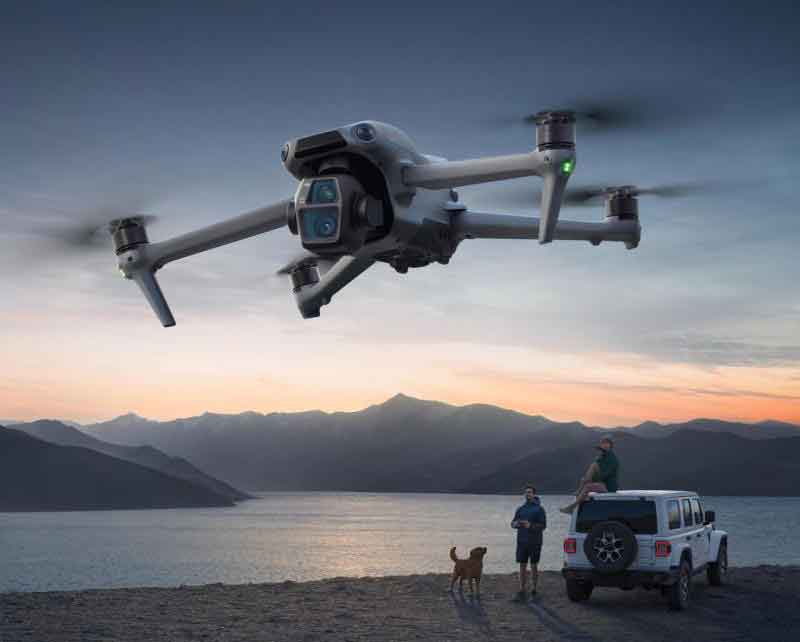
Among various path-planning methodologies, sampling-based algorithms like the Rapidly-exploring Random Tree (RRT) have gained prominence for high-dimensional spaces due to their probabilistic completeness. However, the standard RRT algorithm and its asymptotically optimal variant, RRT*, suffer from inherent randomness, slow convergence, and the generation of suboptimal, non-smooth paths with many redundant nodes. These characteristics are unsuitable for precise UAV drone operations in cluttered substation yards. To address these shortcomings, we propose an enhanced algorithm termed the Informed-Smart RRT* (IS-RRT*). This algorithm integrates several key improvements: an elliptical informed sampling strategy to focus the search, a goal-bias heuristic to guide growth, an intelligent node optimization routine inspired by RRT*-Smart to prune redundant waypoints, and a final path smoothing step using cubic B-spline curves, all while enforcing UAV kinematic constraints.
Core Principles of the IS-RRT* Algorithm
The overall workflow of our proposed IS-RRT* algorithm is designed to systematically address the weaknesses of traditional RRT methods for UAV drone navigation. It begins with an environmental pre-processing step where a safety buffer is added around all obstacles, simulating the minimum safe operating distance for a UAV drone in a high electromagnetic field. The core path search then employs an improved sampling strategy, followed by a path optimization and smoothing phase.
Optimized Sampling Node Generation
The first major enhancement lies in how the algorithm generates new candidate nodes for the exploration tree. Instead of sampling uniformly across the entire free space, we employ a dynamic, focused approach.
Elliptical Informed Sampling Strategy
Once an initial feasible path is found, we adopt the Informed sampling concept. The search space is constrained to a hyper-ellipsoid whose foci are the start (X_start) and goal (X_goal) points. Let \(c_{best}\) be the cost (length) of the best path found so far, and \(c_{min}\) be the straight-line Euclidean distance between start and goal. The sampling is restricted to points x that satisfy the following condition for an ellipse (in 2D) or ellipsoid (in 3D):
$$ \frac{{\|x – X_{start}\|}_2 + {\|x – X_{goal}\|}_2}{2} \leq \frac{c_{best}}{2} $$
Equivalently, for a 2D scenario aligned with the start-goal vector, the ellipse is defined by:
$$ \frac{x^2}{a^2} + \frac{y^2}{b^2} = 1 $$
where the major axis length \(a = c_{best}/2\) and the minor axis length \(b = \sqrt{c_{best}^2 – c_{min}^2}/2\). As the algorithm iteratively rewires the tree to find shorter paths, \(c_{best}\) decreases, causing the ellipse to shrink. This progressively focuses the sampling on the region that could potentially contain a better path, dramatically improving convergence speed compared to global sampling used in RRT and RRT*. For a UAV drone’s path in 3D, this extends to a sampling ellipsoid, significantly reducing the vast, unproductive search volume.
Goal-Biased Sampling
To further accelerate the tree’s growth towards the target and reduce aimless exploration, we introduce a simple yet effective goal-bias strategy. During each sampling step, with a predefined probability \(P\) (e.g., 0.05 to 0.1), the algorithm directly selects the goal point \(X_{goal}\) as the random sample \(X_{rand}\), instead of generating a random point within the ellipse.
$$ X_{rand} = \begin{cases}
X_{goal} & \text{if } rand(0,1) < P \\
\text{Sample\_In\_Ellipse}() & \text{otherwise}
\end{cases} $$
When a random point \(X_{rand}\) is sampled, a new node \(X_{new}\) is generated by extending from the nearest tree node \(X_{nearest}\) by a fixed step size \(S\):
$$ X_{new} = X_{nearest} + S \cdot \frac{X_{rand} – X_{nearest}}{\|X_{rand} – X_{nearest}\|} $$
This heuristic gives a deliberate directional nudge to the tree expansion, helping the UAV drone path finder reach the goal region more quickly, especially in environments with narrow passages or around complex obstacles in a substation.
Path Optimization and Smoothing
Finding a feasible path is only the first step. The path generated by the sampling phase often contains unnecessary zigzags and redundant nodes, making it inefficient and kinematically challenging for a UAV drone to follow.
Improved RRT*-Smart Node Pruning
We integrate an enhanced logic inspired by the RRT*-Smart algorithm to post-process the initial path. The core idea is to “shortcut” the path by removing intermediate nodes if a direct connection between non-adjacent nodes is collision-free and reduces the overall path cost. Starting from the beginning of the path, we examine sequences of three consecutive nodes: \(X_{parent}\), \(X_i\), \(X_{i+1}\). If the direct edge from \(X_{parent}\) to \(X_{i+1}\) is collision-free and shorter than the sum of edges \(X_{parent}\)-\(X_i\) and \(X_i\)-\(X_{i+1}\), then node \(X_i\) is deemed redundant and is removed from the path. The process continues recursively. This optimization significantly reduces the number of waypoints and overall path length, resulting in a straighter, more efficient trajectory for the UAV drone.
Kinematic Constraint Enforcement and B-Spline Smoothing
Even after pruning, the path consists of straight-line segments connected at sharp angles. A real UAV drone cannot execute instantaneous turns; it is constrained by a maximum bank or turning angle \(\alpha_{max}\). We first analyze the path and prune any turn that exceeds this mechanical limit by inserting intermediate points. Finally, to generate a smooth, continuous, and flyable path, we fit a cubic B-spline curve through the optimized set of waypoints. The B-spline curve \(C(t)\) is defined by:
$$ C(t) = \sum_{i=0}^{n} N_{i,3}(t) P_i $$
where \(P_i\) are the control points (derived from our path waypoints) and \(N_{i,3}(t)\) are the cubic B-spline basis functions. This curve guarantees \(C^2\) continuity (continuous second derivative), meaning the path is smooth with no sudden changes in direction or curvature, which is essential for stable and energy-efficient UAV drone flight. The final smoothed path is then checked again for collisions to ensure safety is not compromised.
Simulation Experiments and Performance Analysis
To validate the effectiveness of the IS-RRT* algorithm for UAV drone path planning in substations, we conducted extensive simulation experiments in both 2D and 3D environments modeled after typical electrical substation layouts, comparing it against the standard RRT, RRT*, and Informed-RRT* algorithms. Performance was evaluated based on three key metrics: average path length, average planning time, and average number of nodes in the final path. Each simulation was run 200 times to account for the probabilistic nature of the algorithms.
Two-Dimensional Substation Environment
The 2D map simulated a 100m x 100m substation area with obstacles representing buildings and equipment like capacitor banks and switchgear. The UAV drone’s task was to plan a path from a starting point near a control room to a target capacitor bank. A safety buffer was added around all obstacles.
The results clearly demonstrated the superiority of the IS-RRT* algorithm. Visually, the IS-RRT* tree was much more focused, with sampling concentrated in the informed ellipse, leading to a direct and smooth path. In contrast, RRT and RRT* showed trees sprawling in all directions, and Informed-RRT* had an initial phase of global search. The quantitative data, summarized in the table below, confirms the significant improvements.
| Algorithm | Average Path Length (m) | Average Planning Time (s) | Average Node Count |
|---|---|---|---|
| RRT | 126.56 | 1.372 | 318.37 |
| RRT* | 116.15 | 1.444 | 192.64 |
| Informed-RRT* | 95.24 | 1.285 | 189.33 |
| IS-RRT* (Proposed) | 87.05 | 0.194 | 82.88 |
Compared to the baseline algorithms, IS-RRT* achieved the following improvements for the UAV drone path:
- Path Length: Reduced by 31.22% vs. RRT, 25.05% vs. RRT*, and 8.6% vs. Informed-RRT*.
- Planning Time: Accelerated by 85.85% vs. RRT, 86.55% vs. RRT*, and 84.89% vs. Informed-RRT*.
- Node Count: Decreased by 73.67% vs. RRT, 56.98% vs. RRT*, and 56.23% vs. Informed-RRT*.
Furthermore, the results from IS-RRT* showed very low variance, indicating high stability and reliability, effectively mitigating the randomness inherent in traditional RRT methods.
Three-Dimensional Substation Environment
A more complex and realistic 3D environment (100m x 100m x 40m) was constructed, containing obstacles modeling structures like transformers, circuit breakers, and buildings. The UAV drone was tasked with a multi-point inspection route, visiting several equipment locations before reaching a final goal.
In 3D, the advantages of IS-RRT* were even more pronounced. The paths generated by RRT and RRT* were tortuous and contained many sharp turns. Informed-RRT* performed better but still had redundant segments. IS-RRT* produced the most direct, smooth, and kinematically feasible path for the UAV drone, efficiently navigating the 3D space. The performance metrics are consolidated in the following table:
| Algorithm | Average Path Length (m) | Average Planning Time (s) | Average Node Count |
|---|---|---|---|
| RRT | 356.81 | 3.560 | 145.22 |
| RRT* | 315.57 | 6.503 | 89.77 |
| Informed-RRT* | 292.07 | 3.485 | 67.25 |
| IS-RRT* (Proposed) | 241.25 | 1.743 | 20.94 |
The IS-RRT* algorithm delivered outstanding performance in the 3D scenario for the UAV drone inspection task:
- Path Length: Shortened by 32.39% vs. RRT, 23.55% vs. RRT*, and 17.40% vs. Informed-RRT*.
- Planning Time: Faster by 51.04% vs. RRT, 73.20% vs. RRT*, and 49.98% vs. Informed-RRT*.
- Node Count: Reduced by 85.58% vs. RRT, 76.67% vs. RRT*, and 68.86% vs. Informed-RRT*.
Conclusion
This paper presents the IS-RRT* algorithm, a comprehensive enhancement of the classic RRT* framework, specifically tailored for autonomous UAV drone path planning in the complex and hazardous environment of electrical substations. The algorithm systematically addresses the key limitations of prior methods: inefficiency due to global random sampling, poor path quality with redundant nodes, and kinematically infeasible sharp turns. By integrating a dynamic elliptical informed sampling strategy, a goal-biased heuristic, an intelligent path pruning mechanism, and cubic B-spline smoothing under UAV drone turning constraints, IS-RRT* achieves a remarkable balance between speed, optimality, and smoothness. Simulation results in both 2D and 3D substation models conclusively demonstrate that IS-RRT* significantly outperforms standard RRT, RRT*, and Informed-RRT* algorithms in terms of shorter flight paths, drastically reduced computation time, and fewer waypoints, all while generating smooth, safe, and flyable trajectories. Therefore, the IS-RRT* algorithm provides a robust and effective solution for enabling efficient and reliable autonomous UAV drone inspection in modern power substations.