
The rapid evolution of the unmanned aerial vehicle (UAV) sector has ushered in a new era for civilian UAV applications, transcending beyond recreational and small-scale commercial uses. Among these, large civilian UAVs, typically characterized by a maximum take-off weight exceeding 150 kg, are emerging as a transformative force. Their inherent advantages of substantial payload capacity, extended endurance, and long-range operational capability position them as ideal platforms for logistics, emergency response, large-scale agricultural monitoring, and infrastructure inspection. The future application landscape for these sophisticated aerial systems is exceptionally broad, promising to redefine efficiency and reach in numerous industries. This potential is further amplified by supportive policy frameworks, such as those outlined in national development plans which explicitly advocate for the innovative advancement of civilian UAV technologies.
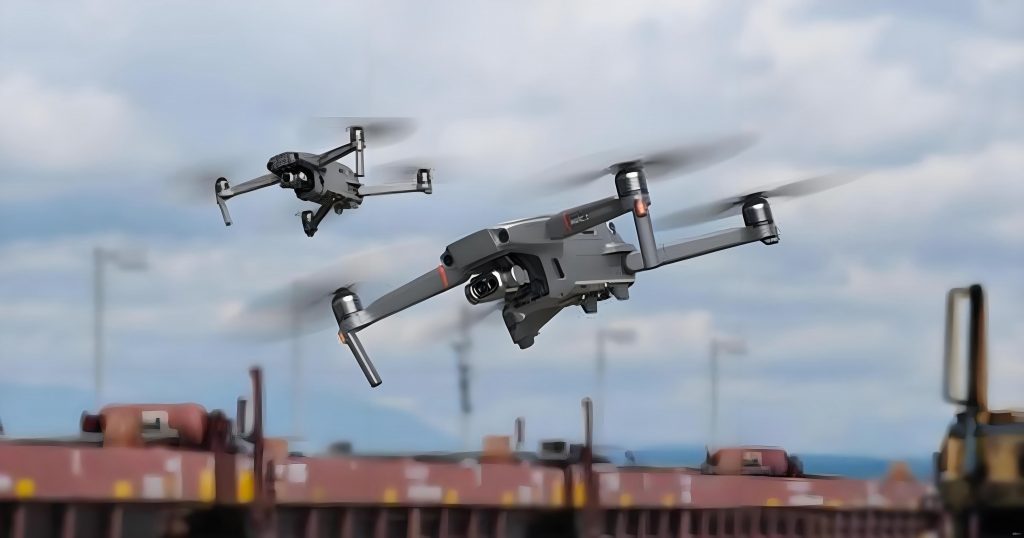
In this context of high expectations and accelerated development, understanding the trajectory of technological innovation is paramount. Patent intelligence analysis serves as a powerful lens through which to discern the direction, intensity, and key players in technological fields. By quantitatively and qualitatively examining patent filings, one can map the evolution of core technologies, identify emerging hotspots, and anticipate future trends. This article employs such a patent-centric methodology to conduct a deep dive into the critical technological domains underpinning large civilian UAVs. The analysis encompasses airframe design, flight control systems, communication links, propulsion systems, simulation technologies, and ground control stations. The objective is to provide a comprehensive intelligence support framework that can inform R&D strategies, foster innovation, and contribute to the robust and mature development of the large civilian UAV industry.
Methodology and Data Corpus
The foundation of this analysis is a globally sourced patent dataset, retrieved from professional databases including PatSnap and Innojoy. The retrieval strategy was meticulously crafted based on a systematic decomposition of large civilian UAV technology. Core technical keywords and their combinations related to each key domain were identified and utilized in iterative search queries. The focus was placed on invention patents and utility models that directly pertain to systems for UAVs with significant payload and size. After comprehensive searching, the resulting dataset was refined through processes such as patent family merging and manual noise reduction to eliminate irrelevant documents. The data cutoff date was set at January 31, 2021, resulting in a final corpus of 2,750 unique patent families. The distribution of these patents across the six key technology areas is summarized in the table below.
| Technology Area | Number of Patent Families | Primary Focus |
|---|---|---|
| Airframe Design | 614 | Structural configuration, aerodynamics, landing gear |
| Flight Control System | 1184 | Navigation, stabilization, autonomy, hardware/software |
| Communication Link | 255 | Data transmission, command & control links, networking |
| Propulsion System | 132 | Engines, motors, energy management, propulsion-airframe integration |
| Simulation & Testing | 119 | Flight modeling, operator training, systems integration testing |
| Ground Control Station (GCS) | 125 | Mission planning, vehicle monitoring, human-machine interface |
In-Depth Analysis of Key Technology Areas
1. Airframe Design: Evolving Beyond Conventional Platforms
The airframe constitutes the physical backbone of any aircraft, and for large civilian UAVs, its design is a critical compromise between aerodynamic efficiency, structural integrity, mission adaptability, and operational cost. Historically, many early large civilian UAV platforms were derivatives of existing manned aircraft or military UAVs, leading to a period of incremental innovation. The patent trend reflects this, with a modest number of filings annually until around 2012. A significant inflection point occurred post-2013, driven by growing commercial interest and technological exploration of novel configurations like tail-sitters, tilt-rotors, and blended-wing-body designs. This surge peaked around 2018, followed by a stabilization at a higher baseline activity level, indicating sustained R&D focus.
The technological distribution within airframe design patents reveals a clear shift towards enabling greater operational flexibility. While conventional fixed-wing designs remain prevalent due to their efficiency for cruise, the patent activity highlights intense development in Vertical Take-Off and Landing (VTOL) or Short Take-Off and Landing (STOL) solutions. These are primarily categorized into tilt-rotor and compound-wing configurations. The tilt-rotor design, which involves rotating engine nacelles or entire wings to transition between vertical and horizontal flight, offers superior speed and range compared to helicopters but presents significant mechanical and control complexities. The compound-wing configuration, often combining fixed wings with dedicated lift rotors, offers a mechanically simpler and potentially more cost-effective path to VTOL capability, albeit sometimes with compromises in forward flight efficiency.
| Design Branch | Patent Focus Areas | Advantages for Large Civilian UAVs | Key Challenges |
|---|---|---|---|
| Fixed-Wing (Conventional & Advanced) | High-aspect-ratio wings, folding mechanisms, lightweight composite structures, aerodynamic optimization for specific missions (e.g., high-altitude long endurance). | High aerodynamic efficiency, long range/endurance, mature design knowledge. | Requires runway or launcher; limited operational flexibility in confined areas. |
| Tilt-Rotor / Tilt-Wing | Robust and reliable rotation mechanisms, aerodynamic interference management during transition, flight control laws for transition phase, structural integration. | True VTOL capability, high cruise speed, excellent operational flexibility. | High mechanical complexity, weight penalty, challenging flight dynamics during transition, higher cost. |
| Compound-Wing / Hybrid VTOL | Optimal placement and number of lift vs. cruise rotors, drag reduction strategies for lift rotors in cruise, integrated flight control for multi-rotor/fixed-wing modes. | VTOL/STOL capability, relatively simpler mechanics than tilt-rotor, good compromise on performance. | Drag from non-retracting lift rotors, complex energy management, potential vibration issues. |
| Conversion & Modification | Adaptation kits for manned aircraft (e.g., automated landing gear, flight control retrofits), structural reinforcement for unmanned operation, reliability enhancements for reduced maintenance. | Leverages proven airframes, faster time-to-market, potentially lower certification burden. | May not be optimized for unmanned operations, legacy system integration challenges. |
From a patent applicant perspective, traditional aerospace giants and new entrants are both active. Companies with deep expertise in vertical flight, such as Bell Textron (developer of the V-22 Osprey tilt-rotor), hold a significant portfolio in relevant enabling technologies. Simultaneously, logistics companies and tech-focused UAV developers, including SF Express and JD.com in China, are filing patents for bespoke cargo civilian UAV airframes tailored for parcel delivery networks, often favoring compound or multi-rotor VTOL designs for last-mile logistics.
2. Flight Control System: The Brain of Autonomous Operations
The flight control system (FCS) is unequivocally the most critical and patent-dense domain for large civilian UAVs. It encompasses both the hardware (autopilot, sensors, actuators) and the software algorithms that enable stable, safe, and autonomous flight. The patent filing trend shows exponential growth, particularly from 2015 onwards, mirroring advancements in computing power, sensor miniaturization, and artificial intelligence. This growth is overwhelmingly driven by control methodologies, while hardware-related patents, though essential, show a more gradual increase.
The FCS can be decomposed into two interrelated streams: Control Hardware & Architecture and Control Algorithms & Methods.
Control Hardware & Architecture: This focuses on the reliability and robustness of the physical and logical components. Key areas include:
- Autopilot Systems: Integrated computing platforms capable of executing complex flight laws and mission management software.
- Redundancy Management (Fault Tolerance): Techniques to ensure continued safe operation despite failures. This involves redundant sensors (e.g., multiple IMUs, GPS receivers), computers (triple or dual redundant computers voting on outputs), and actuators. The management logic for detecting faults and reconfiguring the system is a key patent area. A common scheme for flight-critical computers is a hot-standby parallel redundancy for fast, seamless failover.
- Sensor Fusion: Algorithms that optimally combine data from heterogeneous sensors (GPS, IMU, vision, LiDAR, radar) to generate a precise and reliable state estimate (position, velocity, attitude). This is often framed as an estimation problem, commonly solved using Kalman Filter variants. The state estimation equation can be represented as:
$$ \hat{x}_{k|k} = \hat{x}_{k|k-1} + K_k (z_k – H_k \hat{x}_{k|k-1}) $$
where $\hat{x}$ is the state estimate, $z$ is the measurement, $H$ is the observation matrix, and $K$ is the Kalman gain calculated from error covariances.
Control Algorithms & Methods: This is the most prolific area of innovation, covering the intellectual core of UAV autonomy.
- Trajectory Planning & Tracking: Generating optimal or feasible paths from start to goal while avoiding obstacles and adhering to dynamic constraints (e.g., turn radius, climb rate). This often involves solving an optimization problem, potentially formulated as:
$$ \min_{u(t)} J = \int_{t_0}^{t_f} L(x(t), u(t), t) \, dt + \Phi(x(t_f)) $$
subject to: $\dot{x} = f(x, u)$, $g(x,u) \leq 0$, $h(x) = 0$
where $J$ is the cost functional (e.g., time, energy), $x$ is the state, $u$ is the control input, and $g$, $h$ represent constraints. Modern approaches integrate real-time obstacle maps from vision or LiDAR for dynamic re-planning. - Obstacle Detection & Avoidance (ODA): Closely linked to planning, ODA focuses on real-time reaction to unforeseen static or dynamic obstacles. Patent activity has shifted from basic reactive behaviors using ultrasonic/infrared sensors to sophisticated perception-based systems employing deep learning for object recognition and semantic understanding of the environment.
- Precision Landing & Take-off Control: Especially critical for large civilian UAVs operating in unprepared areas or on moving platforms (e.g., ships). Techniques involve vision-based navigation, LiDAR altimetry, and robust control laws to reject disturbances like wind gusts during critical low-speed phases.
- Fault Detection, Isolation, and Recovery (FDIR): Advanced algorithms that diagnose system malfunctions and execute contingency plans, such as initiating a safe abort or transitioning to a degraded but controllable flight mode.
- Swarm/Formation Control: For applications requiring multiple coordinated large civilian UAVs (e.g., large-area mapping). Patents cover communication topologies, consensus algorithms, and collision-free formation maneuvering.
| Applicant Type | Representative Entities | Strengths & Patent Focus |
|---|---|---|
| Legacy Aerospace Corporations | Boeing, Airbus | System-level integration, robust fault-tolerant architectures, certification-oriented designs for high-reliability operations. |
| Avionics & Systems Specialists | Honeywell, Thales | Core avionics hardware (autopilots, sensors), integrated navigation solutions (GPS/INS), safety-critical software. |
| Leading Academic Institutions | Beihang University, Nanjing University of Aeronautics and Astronautics | Fundamental algorithm research (planning, control, vision), novel concepts for autonomy, prolific publishing and patenting from government-funded projects. |
| Dedicated UAV Companies | DJI (in relevant areas), General Atomics (transitioning tech) | Practical, cost-effective solutions for specific market segments, innovative sensor integration, user-friendly automation features. |
3. Communication Link: The Vital Data Tether
The communication link is the bidirectional data pipeline between the large civilian UAV and its ground control station. Its reliability, bandwidth, latency, and range are fundamental to mission success and safety. Patent activity in this domain began to rise notably around 2011, coinciding with the exploration of beyond-visual-line-of-sight (BVLOS) operations for commercial civilian UAVs.
The technology distribution is dominated by solutions tailored to different operational envelopes:
- Satellite Communication (SatCom): Essential for true long-range, transoceanic, or high-altitude BVLOS operations of large civilian UAVs. Patents cover efficient antenna designs for airborne platforms, waveform optimization for the satellite channel, and robust protocols to handle latency and intermittent connectivity.
- Terrestrial Line-of-Sight (LOS) & Cellular (4G/5G): For regional BVLOS operations within cellular network coverage. 5G, with its enhanced mobile broadband (eMBB) and ultra-reliable low-latency communication (URLLC) capabilities, is a major patent hotspot. Patents focus on network slicing for guaranteed UAV service quality, handover protocols between cells, and direct air-to-ground communication modes. The potential data rate in such links can be approximated by the Shannon-Hartley theorem:
$$ C = B \log_2(1 + \frac{S}{N}) $$
where $C$ is channel capacity, $B$ is bandwidth, and $S/N$ is the signal-to-noise ratio. 5G’s large bandwidths directly enable high-capacity links for sensor data streaming. - Mesh Networking & Air-to-Air Links: For swarms or relay networks, patents describe protocols for establishing and maintaining dynamic, self-healing data networks between multiple UAVs to extend collective communication range.
Patent applicants include specialized communication firms (e.g., Rockwell Collins, Ericsson), telecom research institutes, and UAV integrators who are developing integrated communication management systems tailored for the specific regulatory and operational needs of large civilian UAVs.
4. Propulsion System: Balancing Power, Endurance, and Efficiency
The propulsion system defines the mission envelope in terms of speed, altitude, endurance, and payload. For large civilian UAVs, the choices are heavily weighted by the requirement for long range and heavy lift. Early patents were sparse, as developers often adapted certified aircraft engines. However, dedicated R&D into optimized propulsion for civilian UAVs has gained momentum since the late 2000s.
The patent landscape reveals several competing and complementary pathways:
- Internal Combustion Engines (ICE): Still dominant for heavy-lift cargo or high-altitude long-endurance (HALE) civilian UAVs due to their superior energy density. Patents focus on adaptations for reliable unattended operation (e.g., automated start/stop sequences, advanced health monitoring), improved fuel efficiency, and hybridization concepts.
- Hybrid-Electric Systems: A major innovation hotspot, combining a generator (often a small ICE or turbine) with batteries and electric motors. This architecture aims to offer the endurance of fuel with the instant torque, efficiency, and control flexibility of electric propulsion, especially beneficial for VTOL aircraft. Patent activity centers on optimal power management strategies, thermal management of the integrated system, and compact, lightweight generator-motor designs. A simplified energy balance model for a series hybrid can be expressed as:
$$ P_{req}(t) = P_{gen}(t) + P_{batt}(t) – P_{loss}(t) $$
where $P_{req}$ is the total power demanded by the propulsors and avionics, $P_{gen}$ is from the generator, $P_{batt}$ is from the battery (positive for discharge, negative for charge), and $P_{loss}$ accounts for system inefficiencies. The control strategy patent aims to optimally schedule $P_{gen}(t)$ to minimize fuel use while preserving battery state-of-charge. - Full Electric: While challenging for the largest platforms due to current battery energy density, it is actively explored for medium-range applications. Patents focus on advanced battery management systems (BMS), in-flight charging concepts, and high-efficiency, high-power-density electric motors.
Applicants range from established engine manufacturers (e.g., Rolls-Royce working on hybrid-electric concepts) to UAV-specific propulsion startups and large aerospace firms developing integrated solutions.
5. Simulation & Testing: De-risking Development and Operations
For large, expensive civilian UAVs, comprehensive simulation and testing is non-negotiable for ensuring safety, reducing development cost, and training operators. The patent domain, though smaller in volume, is crucial. It is predominantly led by academic institutions and major aerospace defense contractors with deep simulation expertise.
Key patent branches include:
- High-Fidelity Flight Dynamics Modeling: Creating accurate software representations of the UAV’s aerodynamics, propulsion, and systems to test performance across the entire flight envelope.
- Hardware-in-the-Loop (HIL) and Software-in-the-Loop (SIL) Testing: Patents cover architectures for integrating real flight hardware (autopilot, sensors) or software with simulated vehicle and environment models to validate system behavior under extreme or fault conditions.
- Mission Simulation & Operator Training: Developing immersive training environments for ground pilots, focusing on BVLOS procedures, emergency response, and payload operation. This includes simulating communication delays, weather effects, and air traffic interactions.
- Sensor & Perception Simulation: Generating synthetic but physically accurate camera, LiDAR, and radar data to train and test computer vision algorithms for ODA and navigation in a safe, virtual world.
6. Ground Control Station: The Mission Command Center
The Ground Control Station (GCS) is the human operator’s window into the UAV’s world and the interface for mission command. For large civilian UAVs with complex missions, the GCS must be powerful, intuitive, and reliable. Patent trends show development focused on moving from single-vehicle, proprietary stations to scalable, network-centric command systems.
| Functional Area | Patent Innovation Focus | Impact on Large Civilian UAV Operations |
|---|---|---|
| Human-Machine Interface (HMI) | Intuitive mission planning tools (drag-and-drop waypoints), synthetic 3D displays integrating vehicle state and sensor feed, alert management systems, customizable data widgets. | Reduces operator workload, minimizes error probability, enables effective single-operator control of complex missions. |
| Multi-Vehicle Control & Fleet Management | Orchestration interfaces for scheduling and monitoring multiple UAVs, conflict detection and resolution for shared airspace, dynamic task assignment algorithms. | Enables scalable commercial operations (e.g., logistics fleets), optimizes asset utilization. |
| Data Handling & Exploitation | Real-time processing and visualization of high-bandwidth sensor data (e.g., SAR, hyperspectral imagery), automated data tagging, cloud-based data storage and sharing architectures. | Turns the UAV into a actionable data platform, supporting immediate decision-making in applications like disaster response or precision agriculture. |
| Interoperability & Open Architecture | Middleware for integrating different UAV types and payloads, compliance with standards like STANAG 4586, modular software frameworks. | Reduces lifecycle costs, allows operators to mix and match best-in-class vehicles and payloads, future-proofs investments. |
Synthesis and Strategic Implications
The patent intelligence analysis across these six core domains reveals a clear and multi-faceted innovation trajectory for large civilian UAVs. The technology is maturing from adapted solutions towards bespoke, integrated systems designed explicitly for the demands of commercial, unmanned aviation.
Convergence of Key Trends: Several macro-trends cut across individual technology areas. First, the drive for autonomy is pervasive, fueled by AI/ML advancements in flight control, perception, and planning. Second, the need for operational flexibility is pushing airframe design towards VTOL solutions and communication systems towards multi-link, resilient architectures. Third, efficiency and sustainability concerns are catalyzing innovation in hybrid-electric propulsion and aerodynamic optimization. Finally, the imperative for safe and certifiable integration into national airspace is driving patents in robust FDIR, reliable communication, and advanced simulation for verification and validation.
Strategic Recommendations:
- For R&D Entities: Focus should be placed on the intersection points of these trends. Developing intelligent flight control algorithms capable of managing the complex dynamics of novel VTOL airframes, or creating optimal energy management systems for hybrid-electric propulsion within an autonomous mission context, represent high-value innovation avenues. Collaboration between airframe designers, propulsion experts, and control theorists is essential.
- For Industry Players & Investors: The patent landscape indicates that while foundational hardware (engines, high-end autopilots) remains concentrated with traditional aerospace suppliers, significant opportunity exists in system integration, software-defined functionality, and developing service-oriented platforms centered on the data produced by large civilian UAVs.
- For Policymakers: Supporting the development and standardization of test protocols for autonomous functions, BVLOS communication links, and cybersecurity for GCS-UAV links will be critical to enable the safe and widespread adoption forecast for the large civilian UAV sector.
The large civilian UAV is evolving from a concept into a practical tool. The vibrant patent activity analyzed herein provides a validated map of the technological challenges being tackled and the directions of progress. By leveraging this intelligence, stakeholders can make informed decisions, prioritize resources effectively, and contribute to the responsible and innovative advancement of this transformative industry.