
As someone deeply involved in the aerospace and defense sector, I have witnessed firsthand the transformative impact of military drone technology. The rapid advancement and proliferation of various drone platforms have fundamentally altered the nature of modern warfare and military operations. While the core advantage of military drones lies in reducing personnel casualties and operational costs compared to manned aircraft, the safety risks inherent in their development and manufacturing phases remain significant and are not proportionally diminished. Currently, there is a lack of systematically established, universally recognized safety production risk prevention standards specifically for the military drone development lifecycle globally. Drawing from practical experience in constructing Risk Graded Control and Hidden Hazard Investigation & Governance systems, this article analyzes typical problems encountered during safety risk identification and assessment within military drone programs. It explores the rationality of existing processes and the feasibility of solutions, ultimately proposing an optimized model tailored for safety risk management in China’s military drone domain.
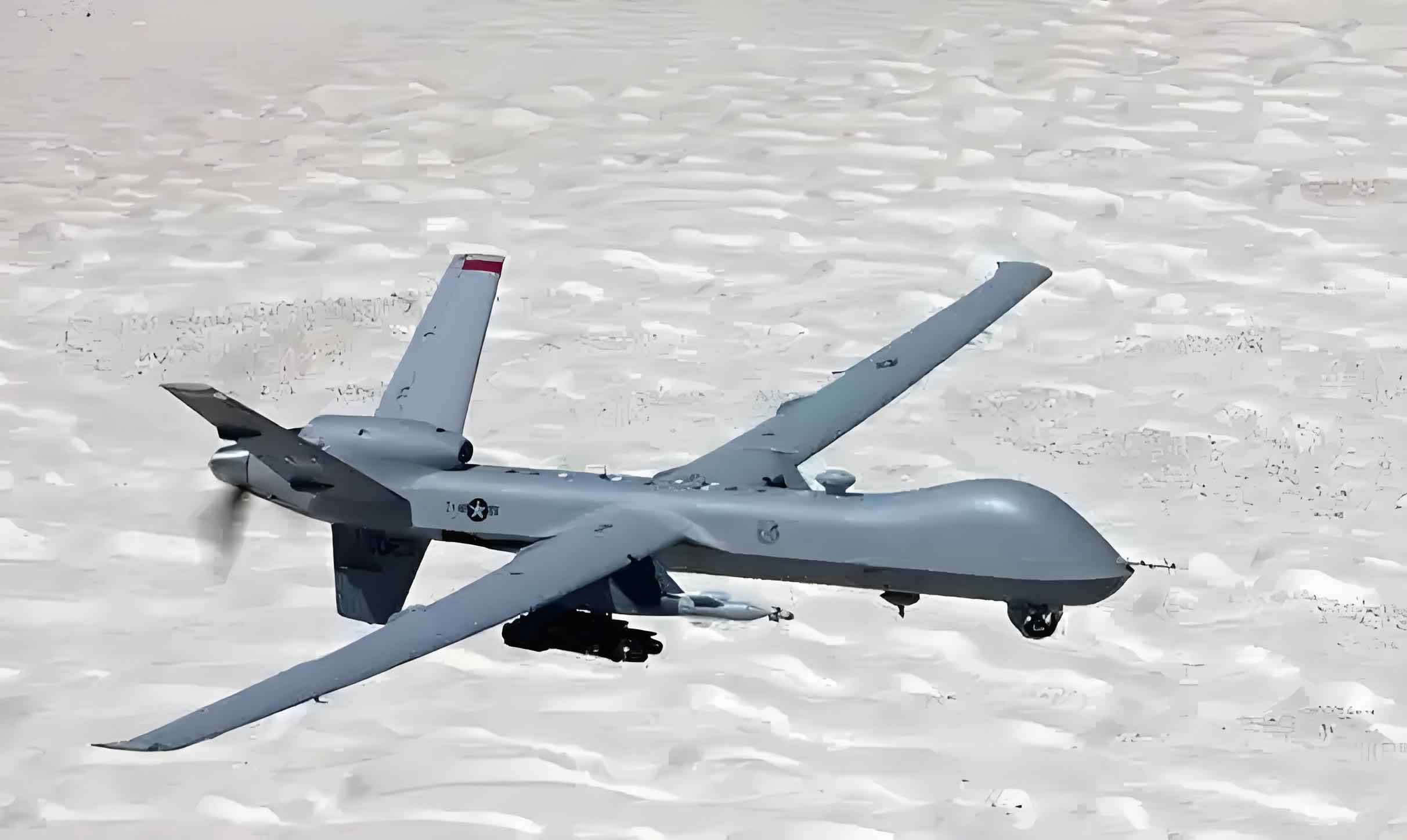
The complexity of a modern military drone system, as illustrated, underscores the multitude of potential failure points and hazards that must be managed throughout its lifecycle, from design to disposal.
Current State of Safety Risk Identification and Assessment in Military Drone Development
1. Status of Safety Production Risk Identification
In current practice, safety risk identification for military drones often suffers from incomplete hazard source recognition, inaccurate risk evaluation, and non-specific control measures. For instance, a typical development team might identify risk items across six categories: product design, process, testing, occupational health, emergency management, and general office operations. Several recurrent issues plague this process:
- Misunderstanding of Core Concepts: A fundamental confusion exists between terms like “hazard source,” “risk,” and “danger point,” leading to inaccurate descriptions. For example, descriptions such as “external personnel bringing tools that may cause injury” or “injuries from lifting heavy objects” are often vague and do not properly isolate the root hazard.
- Incomplete Identification: The focus tends to be narrowly placed on equipment and facilities, neglecting critical management factors, human unsafe acts, and environmental conditions that contribute to risk.
- Faulty Logic Between Hazard and Risk: The logical link is often broken. A hazard source might be described as “personnel activity,” while the associated risk is listed as “failure to hold required certifications,” which are not directly correspondent.
- Overly Broad Identification Units: Different hazard categories and accident types are grouped into a single, coarse process step. For example, combining “lifting” and “transferring heavy objects using a crane” into one step obscures the distinct hazards, risk levels, and control measures for each sub-activity.
- Non-standard Activity Descriptions: Process steps are described ambiguously (e.g., “factory disinfection personnel”), which leads to misinterpretation and inconsistent risk analysis.
- Dilution of Core Risks: A large proportion of identified risk items often pertains to general daily office management, which can overshadow the more critical and specific risks inherent to the actual military drone product development cycle.
These problems highlight a foundational gap in safety knowledge among personnel, resulting in identification that is neither comprehensive nor precise.
2. Status of Safety Risk Assessment
Prior to standardization, teams frequently employed methods like the LEC (Likelihood, Exposure, Consequence) scoring system. This approach presents notable drawbacks:
- High Subjectivity: The LEC method relies heavily on the evaluator’s personal judgment for scoring likelihood, exposure, and consequence, leading to significant variability and potential bias in the final risk value (D), which typically falls within a broad range (e.g., 6–63).
- Lack of Hierarchy in Controls: Proposed safety and occupational health measures often fail to adhere to the hierarchy of risk control (elimination, substitution, engineering controls, administrative controls, PPE), potentially resulting in ineffective risk mitigation.
- Incomplete Risk Registers: Critical metadata is frequently missing from risk logs, such as clear assignment of ownership (responsible department/team/individual, control tier), risk category, and detailed control action specifications.
Optimization Methodology and Framework
To address these deficiencies, our optimization is grounded in national guidelines and standards, including opinions on building dual-prevention mechanisms and standards for enterprise safety risk classification. The framework synthesizes lessons learned from multiple iterations of creating and updating “four-color” risk registers. The core optimizations are summarized in the table below:
| Serial No. | Existing Problem | Optimization Content |
|---|---|---|
| 1 | Inaccurate hazard source description | Standardize description to: “Energy / Hazardous material that may lead to death/injury/illness/property damage due to unsafe condition/unsafe act/management defect/environmental factor.” |
| 2 | Incomplete hazard identification | Adopt a systematic approach considering three temporal states (past, present, future) and three operational states (normal, abnormal, emergency). Identify hazards from energy/materials, focusing on geography, layout, infrastructure, environment, process, materials, and management systems. |
| 3 | Illogical link between hazard and risk | Clarify that a hazard source is the foundation of risk. Risk is defined as the potential accident type and its consequences arising from the hazard. |
| 4 | Overly broad identification units | Categorize activities into three main classes: Product Design, Office & General Management, and Production Site. Further subdivide based on actual workflows (e.g., design into aerodynamics, structures, propulsion, etc.; production into 81 detailed process steps). |
| 5 | Non-standard process descriptions | Standardize activity description as: “Perform [specific action] in [specific area] using [specific materials/equipment].” Use clear verbs like “manage,” “operate,” “maintain,” “inspect.” |
| 6 | Core product risks overshadowed by general admin risks | Focus identification on the product lifecycle. For design teams, start from product design and extend to associated production, testing, maintenance, and disposal hazards. |
| 7 | High subjectivity in LEC method | Select assessment methods (e.g., Risk Matrix) appropriate to the unit’s characteristics and organizational objectives. Use defined criteria for scoring factors. Determine risk level using the method’s acceptability criteria or the ALARP (As Low As Reasonably Practicable) principle. |
| 8 | Controls lack hierarchical structure | Mandate that control measures follow the priority order: 1) Engineering, 2) Administrative, 3) Training, 4) PPE, 5) Emergency Preparedness. |
| 9 | Missing metadata in risk register | Enrich the register with fields for control ownership (Department/Team, Responsible Person), risk category, and detailed control measures. |
The Optimized Model for Hazard Identification and Risk Assessment
1. Preliminary Preparation
Effective preparation is critical. The team must gather and review comprehensive data, including:
* Facility layout diagrams, existing danger point lists, and major equipment inventories.
* Chemical and physical property data sheets for raw materials and components.
* Documentation covering the product’s full lifecycle: transportation, use scenarios (including anticipated operational environments), maintenance, and ultimate disposal requirements (e.g., for lithium batteries).
* Equipment manuals, trial run protocols, operating procedures, maintenance guides, and emergency response plans.
* System assembly/use manuals highlighting safety-critical components and required technical safeguards.
2. Hazard Identification and Risk Assessment Process
The optimized workflow is a structured, iterative process designed for clarity and comprehensiveness.
Step 1: Define Assessment Units. To accurately locate risks, units are defined spatially (location, building, room, specific area) and by activity (the specific work being performed).
Step 2: Identify Job Activities & Steps. Using methods like Job Hazard Analysis (JHA), overall tasks are broken down into discrete, manageable steps. This granularity is key for accurate hazard spotting.
Step 3: Identify Hazard Sources. For each step, the team systematically asks what energies (kinetic, electrical, chemical, thermal) or hazardous materials are present. They then identify how these could cause harm due to:
* Unsafe Acts (Human Factor)
* Unsafe Conditions (Equipment/Mechanical)
* Management Deficiencies
* Environmental Factors
The description follows the standardized format established in Table 1.
Step 4: Determine Risk Name (Potential Accident). Based on the hazard, the potential undesirable event is classified using standard accident typologies (e.g., Object Strike, Fire, Explosion, Fall from Height).
Step 5: Analyze Risk and Determine Level. A Risk Matrix (LS) method is preferred for its balance of objectivity and simplicity. The risk value (R) is calculated as:
$$ R = L \times S $$
where:
* L (Likelihood): Probability of occurrence on a defined scale (e.g., 1-5).
* S (Severity): Consequence severity on a defined scale (e.g., 1-5).
The resulting R value maps to a risk level (e.g., Low/Blue, Moderate/Yellow, High/Orange, Extreme/Red). This level can be aligned with organizational danger point classifications. For example, a Level I danger point might be automatically classified as Extreme Risk (Red).
Step 6: Propose Hierarchical Control Measures. For risks above the low threshold, measures are developed following the hierarchy. The table below provides examples relevant to military drone development:
| Priority | Control Category | Meaning | Military Drone Development Example |
|---|---|---|---|
| 1 | Engineering Controls | Physical modifications, technical solutions, or hardware to eliminate/isolate the hazard. | For “object strike from fastener failure”: Mandate specific torque specifications for critical fasteners in design documents and assembly instructions. |
| 2 | Administrative Controls | Changes in procedures, policies, or work practices. | For “runway excursion due to tire老化”: Include material fatigue testing and specification requirements in the airframe design mandate. |
| 3 | Training & Awareness | Education, instruction, and competency development. | For “dropped payload during integration”: Conduct pre-test briefings and training on secure attachment procedures and inspection checks. |
| 4 | Personal Protective Equipment (PPE) | Equipment worn by individuals as a last line of defense. | For “head injury from falling objects during assembly”: Require safety helmets, safety shoes, and cut-resistant gloves in designated areas. |
| 5 | Emergency Preparedness | Plans and resources to respond to an incident. | For “burn injury from hot engine components”: Establish and train on first-aid procedures for burns, with kits readily available. |
Step 7: Assign Clear Ownership. Each risk and its controls are assigned to a specific department, project team, or test unit, with a named individual responsible for implementation and monitoring.
Step 8: Document and Dynamically Update. All information is recorded in a centralized, living risk register that is reviewed and updated regularly to reflect changes in processes, designs, or incidents.
3. Practical Application and Results
This optimized model was applied within a specific military drone development program. The team meticulously categorized activities as previously outlined. For the Product Design class, they decomposed activities down to specific steps like aerodynamic simulation, structural load testing, propulsion system ground runs, flight control software integration, and live flight test operations. This detailed breakdown enabled a far more thorough hazard hunt.
The outcome was a risk register containing dozens of hazard sources, with a balanced distribution: 48% from core product design and development activities, 33% from office and general management, and 19% from the physical production site. This represented a significant shift, ensuring that the unique and high-stakes risks of developing a complex military drone system were properly captured and prioritized. The issues of incompleteness, inaccuracy, and weak controls were substantially mitigated, providing a robust template for other military drone programs.
Conclusion
The sector for military drones is in a state of rapid evolution, demanding that safety risk management models also evolve iteratively. By returning to fundamental concepts and establishing a clear, standardized, and process-driven framework for hazard identification and risk assessment, we can move beyond subjective, inconsistent practices. The optimized model presented here, integrating systematic unit breakdown, clear terminology, objective assessment matrices, and a hierarchical control strategy, provides a solid foundation. It enables effective monitoring of safety throughout the complex military drone development lifecycle, offering a structured yet adaptable process that supports both management oversight and on-the-ground risk control. This proactive approach is essential for safeguarding personnel, protecting valuable assets, and ensuring the successful and responsible development of advanced military drone technologies.