
The rapid advancement of technologies related to Military Unmanned Aerial Vehicles (UAVs) has led to the proliferation of diverse models, making them an indispensable component of modern localized conflicts and military operations. This evolution has fundamentally altered the methods of military engagement and the modalities of military actions. Compared to manned aircraft, the inherent advantage of military UAVs lies in reducing the risk of personnel casualties and lowering operational costs. However, the safety risks present during the development and manufacturing phases of these complex systems have not diminished proportionally. Presently, comprehensive and systematic standards for preventing occupational safety risks during the development process of military UAVs are not well-established globally. This article analyzes typical issues encountered in safety risk identification and assessment within the realization process of military UAVs, drawing from practical experience in constructing a dual-prevention mechanism that integrates risk classification control with hidden hazard investigation and management. It examines the rationality of existing processes and the feasibility of proposed solutions, aiming to explore a model for occupational safety risk identification and assessment tailored to China’s military UAV sector.
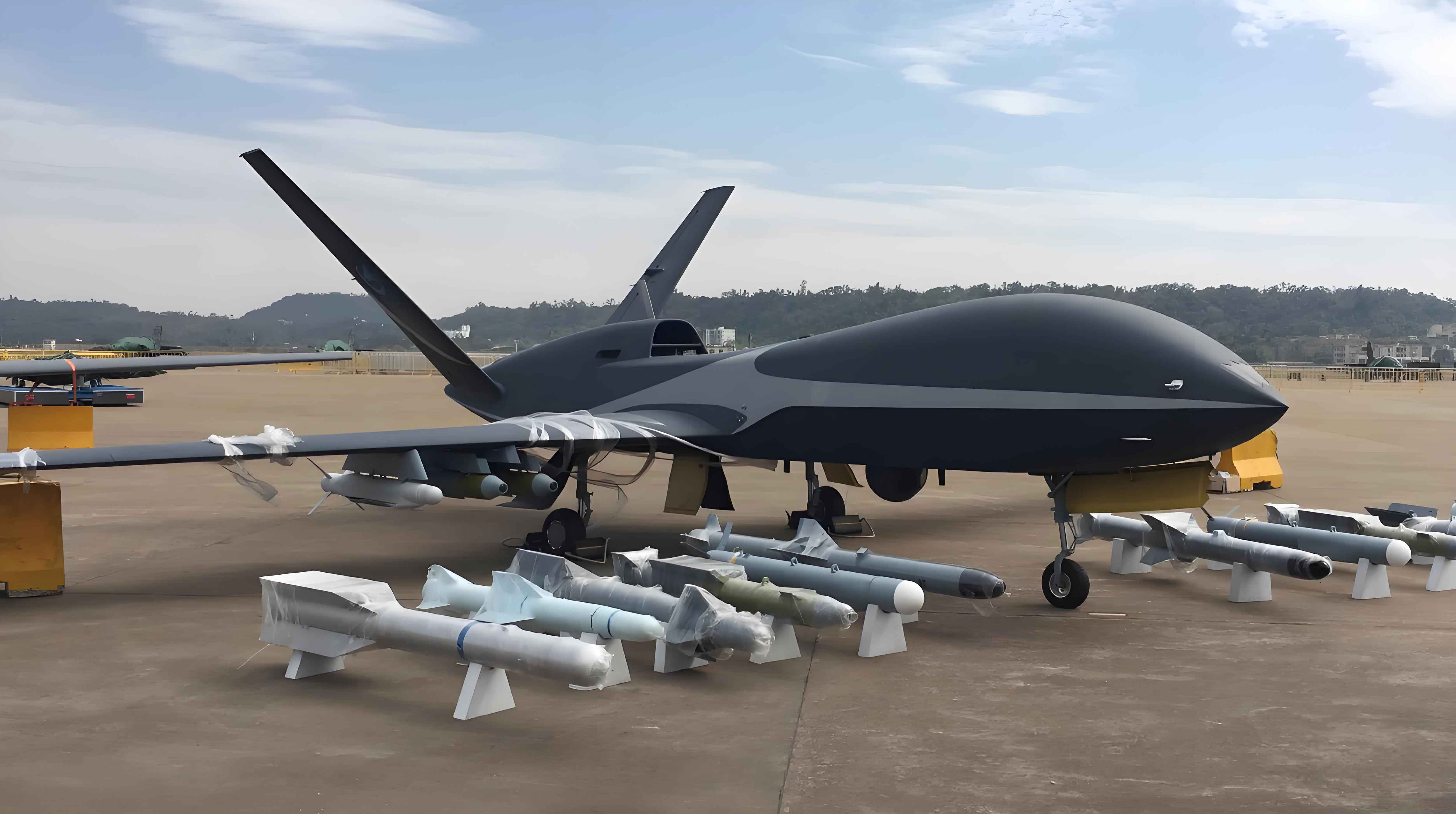
The development of a military UAV is a multifaceted engineering endeavor involving high-level system integration, novel material applications, complex energy systems (like high-density lithium batteries), and hazardous operations such as live engine tests and controlled explosive device handling. Therefore, a structured approach to safety is paramount from the initial design phase through to testing and disposal.
I. Current State of Safety Risk Identification and Assessment in Military UAV Development
1. Status of Occupational Safety Risk Identification
Current practices in occupational safety risk identification for military UAV programs often grapple with several critical shortcomings: incomplete hazard source identification, inaccurate risk evaluation, and poorly targeted control measures. For instance, one military UAV development team identified risk items across six dimensions: product design, process, testing, occupational health, emergency management, and administrative operations. Analysis of these items revealed persistent issues.
Firstly, a superficial understanding of core definitions leads to imprecise descriptions of hazard sources. Examples include overly broad statements like “visitors carrying tools, equipment, or materials that may cause injury into the workplace,” “injury while moving heavy objects,” or “motor vehicle operation on icy or waterlogged roads.” Secondly, identification is often non-comprehensive, focusing predominantly on physical equipment and facilities while neglecting critical management factors and unsafe human acts. Thirdly, there is a frequent logical disconnect between the identified hazard source and the described risk. For example, a hazard source described as “personnel activity in an office area” was linked to a risk named “failure to hold required certifications,” which is a management control failure, not a direct hazard. Fourthly, the division of identification units is often too coarse. Grouping distinct processes with different hazard sources, risk magnitudes, and control measures (e.g., combining “lifting” and “transferring heavy loads using a crane” into one step) can lead to significant deviations in risk rating. Fifthly, descriptions of work activities or production processes are non-standardized and ambiguous (e.g., “factory disinfection personnel”), causing confusion. Finally, a large proportion of identified risk items pertain to general daily administrative management, which may not represent the principal risks intrinsic to the core military UAV product development cycle.
These problems highlight a fundamental gap in safety基础知识 among personnel conducting risk identification, including confusion between concepts like hazard source, risk, and critical control point, ultimately resulting in identification that is neither holistic nor accurate.
2. Status of Safety Risk Assessment
Prior to the standardization of assessment methods, project teams frequently employed semi-quantitative tools like the Graham Risk Score (LEC) method. This approach, while useful, presents specific challenges in the context of military UAV development:
The LEC method assesses risk by assigning scores to three factors: Likelihood (L), Exposure (E), and Consequence (C), with the final risk value (D) calculated as:
$$ D = L \times E \times C $$
The resultant D value typically falls within a wide range (e.g., 6-63 in the mentioned case). A primary issue is the high degree of subjectivity involved in assigning values to L, E, and C, which can lead to inconsistent and unreliable risk ratings across different assessors. Secondly, existing safety risk and occupational hazard control measures often fail to adhere to the hierarchy of risk controls, potentially allowing inadequate measures to be implemented. Thirdly, risk registers frequently lack essential management information such as ownership details (control tier, responsible department/person), and clear risk categorization, hindering effective tracking and accountability.
II. Optimization Approach and Core Content
Addressing the aforementioned problems, our optimization is grounded in national guidelines and standards, including principles for building dual-prevention mechanisms and classifications for accidents and hazardous factors. The model incorporates lessons learned from multiple iterations of creating and updating “four-color” risk registers. It formalizes the logical relationships between hazard sources, risks, and critical points, defines standardized descriptions, clarifies applicable risk grading methodologies, and proposes structured improvements. The core optimization content is summarized in Table 1.
| No. | Existing Problem | Optimized Content |
|---|---|---|
| 1 | Imprecise hazard source description. | Standardize description as: “Energy / Hazardous substance may lead to personnel death/injury/occupational illness or equipment damage due to unsafe condition of an object / unsafe human act / management deficiency / environmental factor.” |
| 2 | Incomplete hazard source identification. | Identify comprehensively by considering three time states (past, present, future) and three operational states (normal, abnormal, emergency). Focus on energy/hazardous substances and examine geographical, infrastructural, procedural, material, and managerial aspects for unsafe acts, conditions, environmental factors, and management defects. |
| 3 | Illogical correlation between hazard source and risk. | Clarify that the hazard source is the foundation of risk, directly related to accident likelihood and severity. The risk is the potential accident type and consequence arising from the hazard source. |
| 4 | Overly broad identification unit division. | Categorize work activities into three main classes: 1) Product Design & Development, 2) Office & General Administration, 3) Production Site Operations. Define subdivision principles for each. Further break down into sub-classes (e.g., design into subsystems, production into specific工艺/工序). |
| 5 | Non-standard activity/process description. | Standardize descriptions as: “Performing [activity] in [location/area] using [materials/equipment].” Use clear verbs like “management of,” “operation of,” “maintenance of,” “inspection of,” “approval for.” |
| 6 | Daily management risks overshadowing core product development risks. | Focus identification on the product lifecycle. Each department, based on its specialty (e.g., aerodynamic design, structural design, propulsion, mission systems), should analyze hazards from design through production, test, maintenance, to disposal. |
| 7 | High subjectivity in LEC method application. | Select systematic assessment methods (e.g., Risk Matrix) aligned with safety objectives and unit characteristics. Assign values per method requirements. Determine risk level using the method’s acceptability criteria or the ALARP (As Low As Reasonably Practicable) principle. |
| 8 | Control measures not reflecting hierarchy of controls. | Formulate controls by priority: 1) Engineering, 2) Administrative, 3) Training, 4) Personal Protective Equipment (PPE), 5) Emergency Preparedness. |
| 9 | Missing ownership and category info in risk register. | Enhance register to include clear ownership: responsible department/project team/test crew and assigned personnel. |
III. The Optimized Hazard Identification and Risk Assessment Model and Its Application
1. Preliminary Preparation
Effective implementation begins with thorough data collection specific to the military UAV program. Key documents include:
* Facility layout diagrams, lists of critical/hazardous points, and major equipment inventories.
* Physicochemical property data and Safety Data Sheets (SDS) for all raw materials, especially hazardous chemicals.
* Information on product transportation, intended use (including anticipated operational scenarios), maintenance, and disposal.
* Equipment commissioning plans, operating and maintenance procedures, and emergency response plans.
* System assembly, user (including maintenance) manuals, highlighting warnings, technical safety measures, and required保障条件 for hazardous components.
* Requirements for end-of-life disposal, particularly for hazardous waste like decommissioned lithium batteries from disassembled military UAV systems.
2. Hazard Identification and Risk Assessment Process
The optimized, systematic process for the military UAV development lifecycle is depicted in the following flowchart and detailed steps:
Step 1: Define the Work Activity. Clearly specify the overall activity under review (e.g., “Static Load Testing of Wing Assembly,” “Ground Run-up of Propulsion System”).
Step 2: Divide into Identification & Assessment Units. Using methods like Job Hazard Analysis (JHA), break down the activity into discrete, manageable steps. Precise unit definition is crucial for accurate risk localization (e.g., “Composite lay-up in Clean Room A,” “Final torque check on landing gear attachment bolts in Final Assembly Bay 3”).
Step 3: Identify Hazard Sources. For each step, conduct a thorough identification. Inputs should include the defined work steps. The team must consider the “Three Time States” and “Three Operational States.” The search should be anchored in identifying sources of energy (kinetic, electrical, chemical, thermal, etc.) or hazardous substances. The examination must cover human factors (unsafe acts), material/equipment factors (unsafe conditions), environmental factors, and organizational factors (management defects). The description must follow the standardized format linking energy/substance to a potential causal factor and outcome.
Step 4: Determine Risk Name (Accident Type). Based on the potential outcome of the hazard source, classify the risk according to standard accident typologies (e.g., “Fire,” “Explosion,” “Mechanical Impact,” “Electric Shock,” “Toxic Substance Release,” “High-Energy Radiation Exposure”).
Step 5: Conduct Risk Analysis & Determine Level. Employ a suitable assessment method. A Risk Matrix (LS) method is often more structured for engineering contexts than LEC. It uses two parameters: Severity (S) of consequences and Likelihood (L) of occurrence. The risk level (R) is determined by:
$$ R = f(S, L) $$
Where the function \( f \) is defined by a matrix. For a military UAV program, a typical 5×5 matrix might be used:
$$ R = S \times L \quad \text{(where S and L are rated on a scale, e.g., 1-5)} $$
Or more commonly, a lookup table assigns a risk rating (e.g., Low, Medium, High, Critical) based on the (S, L) pair. The assessment must align with predefined organizational criteria for each level. Furthermore, if a hazard is associated with a pre-identified “Critical Control Point” (CCP), its risk level should be assigned accordingly (e.g., CCP-I mandates a “Critical/Red” risk rating).
Step 6: Propose Risk Control Measures. Develop controls based on the hierarchy. Table 2 provides a detailed breakdown of control categories with examples pertinent to military UAV development.
Step 7: Assign Ownership. For each risk, especially those rated Medium and above, designate a clear owner: the responsible department, specific project team, or test crew, down to an individual where applicable.
Step 8: Document and Dynamically Update the Risk Register. Consolidate all information into a living risk register. This document must be reviewed and updated regularly, especially after design changes, incident investigations, or the introduction of new processes/materials in the military UAV program.
| No. | Category | Description | Application Example in Military UAV Context |
|---|---|---|---|
| 1 | Engineering Controls | Hardware modifications, technical solutions, or physical barriers that eliminate, reduce, or isolate the hazard. | For the risk of “object strike” from fastener failure: “Incorporate precise torque specifications for critical fasteners into the design input. Explicitly annotate these torque values on the assembly instruction cards.” |
| 2 | Administrative Controls | Policies, procedures, work instructions, permits, and supervision aimed at managing exposure to the hazard. | For the risk of “runway excursion” from tire failure: “Specify material selection criteria and fatigue testing requirements for landing gear tires in the airframe development specification.” |
| 3 | Training & Awareness | Education, instruction, and competency assurance to ensure personnel understand risks and procedures. | For the risk of “object strike” from payload release mechanism failure: “Conduct pre-test briefings based on the test plan, focusing on safety-critical steps like payload attachment verification.” |
| 4 | Personal Protective Equipment (PPE) | Equipment worn by individuals as a last line of defense. | For the risk of “object strike” during吊装 operations: “Mandate the use of safety helmets, safety-toe footwear, and cut/abrasion-resistant gloves within designated operational areas.” |
| 5 | Emergency Preparedness | Plans, resources, and training to respond effectively if an incident occurs. | For the risk of “thermal burn” from handling hot engine components: “Establish and drill a first-aid response procedure: cool the burn with clean, running water, remove constrictive items, apply sterile dressing, and seek medical attention.” |
3. Application Example
The optimized model was applied within a specific military UAV development team. The team structured its identification into the three main classes. The Product Design & Development class was meticulously broken down. Design activities were segmented by subsystem (aerodynamics, structures, propulsion, avionics, C2, etc.), manufacturing into steps like requirements handover and production support, and testing into over 20 detailed steps from test planning, through ground operations (fueling, battery charging, engine run), to final flight test execution.
By focusing on the product lifecycle from each discipline’s perspective, the team identified several dozen distinct hazard sources. The distribution was: Product Design & Development (48%), Office & General Administration (33%), and Production Site Operations (19%). This balanced register effectively covered the principal risks inherent to military UAV development, addressing the previous issues of incompleteness, inaccuracy, and poor targeting of controls. The resulting framework provides a valuable reference for standardizing safety risk management across other military UAV programs.
IV. Conclusion
The military UAV industry is in a phase of accelerated development and technological iteration. Consequently, the occupational safety risk management models employed during the development of these sophisticated systems must evolve continuously. They require regular updates and refinements to address emerging challenges. This article, starting from the fundamental concepts and logical relationships of hazards and risks, and building upon empirical experience from optimizing dual-prevention mechanisms, has explored the application of a structured risk classification and control model for military UAV development. The proposed model offers a more standardized specification for implementing safety risk identification and control within the military UAV system development process. Its application enhances the effective monitoring of safety throughout the development lifecycle and provides a robust,完善 process to support management activities and on-site risk分级管控, thereby contributing to the safer realization of advanced military UAV capabilities.