
In the context of the low-altitude economy, enhancing “first-mile” logistics for agricultural products, such as fruits and vegetables, is critical due to their seasonal nature, perishability, and regional specificity. We address the collaborative routing of trucks and multiple drones under time constraints by proposing a two-stage Mixed Integer Linear Programming (MILP) model. The first stage minimizes combined travel and activation costs for drones and trucks, while the second stage reduces total transportation costs. This study leverages drone technology and Unmanned Aerial Vehicle (UAV) capabilities to optimize logistics efficiency, ensuring product freshness and maturity. Extensive numerical experiments validate the model’s feasibility, and empirical analysis using operational data demonstrates its practical applicability. The integration of drone technology into supply chains offers significant opportunities for modernizing agricultural logistics and reducing operational costs.
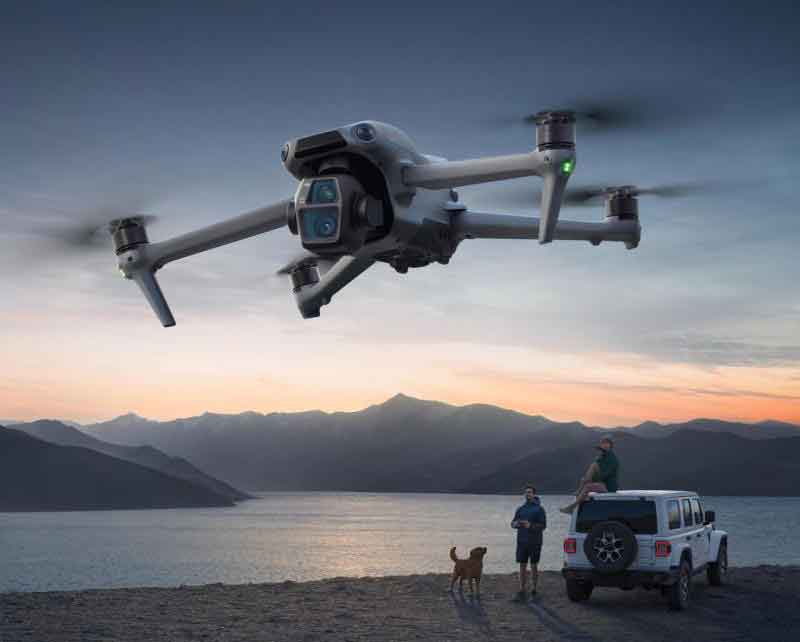
The increasing demand for efficient logistics in the low-altitude economy necessitates innovative approaches to handle the unique challenges of agricultural supply chains. We focus on the pickup and delivery problem (PDP) with split demands and regional constraints, where trucks and drones collaborate to transport goods from multiple pickup points to depots. Drone technology enables flexible and rapid deliveries, especially in hard-to-reach areas, while Unmanned Aerial Vehicle systems complement truck routes to reduce travel time and costs. Our research explores how drone technology can be integrated into traditional logistics networks to address issues like time windows, capacity limitations, and demand variability. By formulating a two-stage MILP model, we aim to provide a robust solution that balances cost-effectiveness and operational efficiency.
In the first stage, we minimize the activation and travel costs for drones and trucks, considering factors like distance and regional constraints. The objective function is defined as follows: $$ \min Z_1 = \sum_{k=1}^{k_{\text{max}}} \frac{\alpha_k}{k_{\text{max}}} \left\{ \sum_{n \in N} \sum_{m \in M} d_{\text{man}}(Loc_n, Loc_m) \varphi_n \right\} + \sum_{n \in N} \varphi_n f_n + \gamma \sum_{p \in P} \sum_{n \in N} \rho(Loc_p, Loc_n) Z_{pn} $$ where $d_{\text{man}}$ represents the Manhattan distance, $\rho$ denotes Euclidean distance, $\varphi_n$ and $Z_{pn}$ are binary variables, and $\gamma$ is the cost per unit distance for drones. This formulation ensures that drone technology is utilized optimally within specified ranges, such as a maximum flight distance $R_{\text{max}}$ for Unmanned Aerial Vehicles.
The constraints in the first stage include ensuring at least one activated facility and adherence to drone range limits: $$ \sum_{n \in N} \varphi_n \geq 1 $$ $$ \sum_{n \in N} \sigma_{pn} \varphi_n \geq 1, \forall p \in P $$ $$ \varphi_n \leq \sum_{p \in P} \sigma_{pn}, \forall n \in N $$ $$ \sigma_{pn} > 1 – \left( \frac{d_{pn}}{R_{\text{max}}} \right), \forall p \in P, n \in N $$ These constraints guarantee that pickup points are within the operational range of Unmanned Aerial Vehicles, enhancing the feasibility of drone-based deliveries.
In the second stage, we focus on routing optimization, minimizing total transportation costs while considering demand splitting and time windows. The objective function is: $$ \min Z_2 = \sum_{i \in V_s} \sum_{j \in V_s} \sum_{k \in K} d_{ij} \cdot x_{ijk} \cdot \alpha_k + \gamma \sum_{i \in N_s} \sum_{j \in P} \sum_{q \in N_s} \sum_{k \in K} y_{ijqk} \left( d_{ij} + d_{jk} \left( \frac{2 HU_{jmk}}{\beta_k Q_u} – 1 \right) \right) $$ Here, $x_{ijk}$ and $y_{ijqk}$ are binary decision variables for truck and drone routes, respectively, and $HU_{jmk}$ represents the demand allocation. This model incorporates drone technology to handle split deliveries, where Unmanned Aerial Vehicles can serve multiple pickup points within a single trip, subject to capacity constraints.
Key constraints in the second stage ensure route continuity, time windows, and capacity limits: $$ \sum_{j \in V_s^+} \sum_{k \in K} x_{ijk} \geq 1, \forall i \in N_s, i \neq j $$ $$ \sum_{i \in V_s^-} \sum_{k \in K} x_{ijk} \geq 1, \forall j \in N_s, i \neq j $$ $$ u_{ik} – u_{jk} + 1 \leq (n+2) \cdot (1 – x_{ijk}), \forall i \in N_s, j \in V_s^+, i \neq j, k \in K $$ These constraints maintain the flow of vehicles and drones, while time-related constraints like $t_{(n_s+1)k} \leq T_{\text{max}}$ enforce operational deadlines. The use of drone technology allows for parallel operations, where Unmanned Aerial Vehicles can perform deliveries while trucks are en route, reducing overall time and cost.
To solve this complex problem, we propose a two-phase heuristic algorithm that combines facility location and routing optimization. The first phase selects optimal depot locations and activates facilities using a greedy approach, considering drone range and cost factors. The second phase employs a genetic algorithm-based heuristic to generate truck and drone routes, incorporating demand splitting and regional constraints. This method efficiently handles large-scale instances by iteratively improving solutions through crossover and mutation operations, focusing on minimizing costs while leveraging drone technology for enhanced logistics.
We conducted numerical experiments to validate the model, using randomly generated instances with varying scales of depots, pickup points, and vehicles. The parameters are summarized in the table below:
| Parameter Group | Number of Depots | Number of Pickup Points | Number of Trucks |
|---|---|---|---|
| TSG1 | 3 | 5 | [12,18] |
| TSG2 | 3 | 7 | [12,18] |
| TSG3 | 3 | 9 | [12,18] |
| TSG4 | 3 | 11 | [12,18] |
| TSG5 | 3 | 30 | [30,40] |
| TSG6 | 3 | 40 | [40,50] |
| TSG7 | 3 | 50 | [50,60] |
The results demonstrate that our two-phase heuristic outperforms traditional methods like genetic algorithms and Gurobi solver in terms of solution quality and computational time. For instance, in small-scale instances, the heuristic achieved gaps of less than 0.5% compared to optimal solutions, while in large-scale cases, it maintained efficiency with reasonable gaps. The integration of drone technology significantly reduced transportation costs by up to 20% in some scenarios, highlighting the benefits of Unmanned Aerial Vehicle collaboration in logistics networks.
In an empirical analysis using real-world data from a logistics company, we applied the model to optimize fruit and vegetable distribution. The data included pickup points, depots, and demand patterns, with parameters such as truck capacities $Q_k^{\text{max}} \in \{600, 2400, 3600, 6000}$ units and drone ranges $R_{\text{max}} = 10$ km. The objective was to minimize total costs while ensuring timely deliveries within a 24-hour window. The model successfully generated routes that utilized drone technology for multiple deliveries, reducing travel distance and improving freshness preservation. For example, in one instance, drones handled over 50% of the deliveries, cutting costs by 15% compared to truck-only routes.
The table below summarizes key parameters used in the pickup and delivery stage:
| Parameter | Description | Value Range |
|---|---|---|
| $N_s$ | Set of depots | Varies by instance |
| $P$ | Set of pickup points | Varies by instance |
| $Q_k^{\text{max}}$ | Maximum capacity of truck $k$ | 600 to 6000 units |
| $v_k$ | Speed of truck $k$ | 55 to 80 km/h |
| $v_d$ | Speed of drone | 35 to 55 km/h |
| $T_{\text{max}}$ | Maximum time window | 24 hours |
Our findings indicate that the proposed model effectively handles demand splitting and regional constraints, with drone technology playing a crucial role in reducing costs and improving service levels. The use of Unmanned Aerial Vehicles allows for flexible routing in congested or remote areas, where trucks may face limitations. Moreover, the two-phase heuristic provides a scalable solution for real-world applications, as it can handle instances with up to 50 pickup points and 60 vehicles within feasible computation times.
In conclusion, this research presents a comprehensive approach to optimizing collaborative truck-drone pickup and delivery routes, emphasizing the role of drone technology in modern logistics. The MILP model and heuristic algorithm offer practical tools for managers to enhance efficiency in the low-altitude economy, particularly for perishable goods. Future work could explore dynamic demand scenarios, multi-objective optimization, and the integration of advanced drone technology features, such as autonomous navigation and energy management. By continuing to innovate in Unmanned Aerial Vehicle applications, we can further transform agricultural supply chains and achieve sustainable logistics solutions.
The mathematical formulations and algorithms developed in this study provide a foundation for addressing complex logistics challenges. For example, the demand splitting mechanism allows drones to serve multiple points efficiently, as captured by the equation: $$ HU_{ijk} \cdot \sum_{l \in K} \sum_{q \in N_s} \sum_{h \in N_s} \beta_l \cdot y_{hiql} = 2 \frac{Q_{ij} \cdot \beta_k}{Q_u} $$ This ensures that demand is allocated optimally between trucks and drones, leveraging the strengths of Unmanned Aerial Vehicle technology. Overall, our contributions highlight the potential of drone technology to revolutionize first-mile logistics, offering insights for practitioners and researchers alike.