
In recent years, the proliferation and advancement of unmanned aerial vehicle (UAV) technology, particularly in the small and micro categories, have significantly transformed the modern battlespace. These systems offer advantages such as low observability, ease of operation, and high flexibility, making them potent tools for surveillance, harassment, and precision strikes. Notable incidents, including the swarm attack on Russian bases in Syria and the decisive role of drones in the Nagorno-Karabakh conflict, have starkly highlighted the urgent need for robust countermeasures. Consequently, the development and refinement of anti-drone capabilities have become a critical priority for defense forces worldwide. At the heart of any effective anti-drone architecture lies the reconnaissance and intelligence system. Its primary mission is to provide timely, accurate, and continuous detection, tracking, and identification of hostile UAVs—especially the challenging small and micro varieties—enabling successful engagement by kinetic or non-kinetic effectors. Evaluating the operational effectiveness of such a complex, multi-faceted system is therefore paramount. It informs equipment procurement, guides tactical employment, identifies capability gaps, and supports the development of new operational concepts. This article presents a structured methodology for assessing the operational effectiveness of a composite anti-drone reconnaissance and intelligence system, integrating the Analytic Hierarchy Process (AHP) and Fuzzy Comprehensive Evaluation.
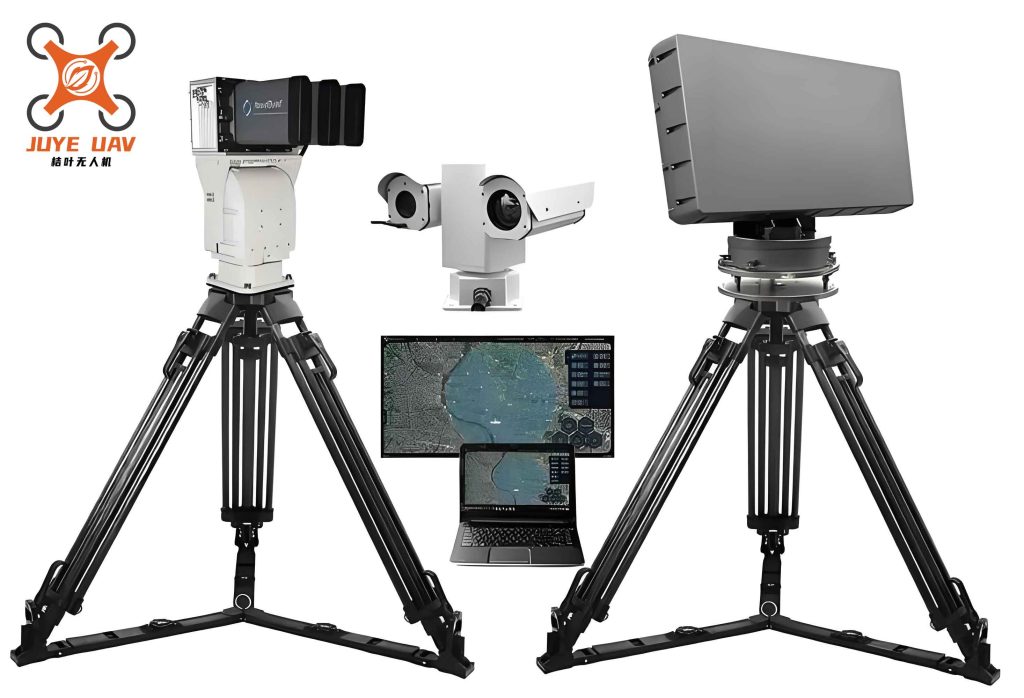
The core challenge in anti-drone reconnaissance stems from the inherent limitations of any single sensor when dealing with low-altitude, low-radar-cross-section (RCS), and slow-moving UAVs. A layered, multi-spectral approach is essential. A typical modern anti-drone reconnaissance system integrates several key sub-systems, each with distinct operational principles and complementary strengths and weaknesses. First, Radio Frequency (RF) detection systems operate passively, scanning for the control, telemetry, and video-downlink signals emitted by the UAV or its ground control station. This method offers the advantage of covertness but fails against autonomous or radio-silent drones. Its primary functions are signal detection, frequency measurement, and direction finding. Second, radar systems provide active, all-weather detection. They excel at precise ranging, velocity measurement, and multi-target tracking. However, their performance can degrade against targets with very low radial velocity or extremely small RCS, a common trait of mini-UAVs. Third, electro-optical/infrared (EO/IR) systems, comprising daylight cameras, thermal imagers, and laser rangefinders, offer high-resolution imagery and accurate angular tracking. They are excellent for visual confirmation and non-cooperative identification but are limited by weather conditions (fog, rain) and field of view. The integration and netting of these heterogeneous sensors create a more resilient and capable anti-drone surveillance picture than any component could achieve alone.
The foundation of any credible effectiveness evaluation is a scientifically constructed, hierarchical, and quantifiable指标体系. This index system must directly reflect the system’s operational使命 and decompose its core capabilities into measurable technical parameters. Based on the functional analysis of the aforementioned sub-systems, we can construct a two-tiered evaluation index system. The first tier (Capability Layer) consists of the three major functional capabilities: Radio Detection Capability (C1), Radar Detection Capability (C2), and EO/IR Detection Capability (C3). Each of these is then decomposed into a second tier (Parameter Layer) comprising the key performance parameters that fundamentally determine the capability’s efficacy.
For the anti-drone Radio Detection Capability (C1), the critical parameters are:
- Frequency Coverage Range (P11): The span of the RF spectrum the system can monitor, crucial for detecting drones operating on various bands.
- Direction Finding (DF) Accuracy (P12): The angular precision in locating the signal source, vital for cueing other sensors or geolocating the pilot.
- Frequency Measurement Accuracy (P13): The precision in identifying the exact signal frequency.
- System Reaction Time (P14): The latency from signal reception to reporting a track, critical for engaging fast-moving threats.
For the anti-drone Radar Detection Capability (C2), the parameters include:
- Maximum Detection Range (P21): The furthest distance at which a typical mini-UAV can be reliably detected.
- Probability of Detection (P22): The likelihood of detecting a UAV within the radar’s coverage volume under specified conditions.
- Azimuth Measurement Accuracy (P23): The precision in measuring the target’s horizontal angle.
- Elevation Measurement Accuracy (P24): The precision in measuring the target’s vertical angle.
- Number of Simultaneous Tracks (P25): The system’s capacity to maintain tracks on multiple targets concurrently, essential for dealing with swarms.
- Minimum/Maximum Detectable Velocity (P26): The range of radial speeds the radar can reliably track, important for filtering out clutter and detecting very slow drones or rotorcraft.
For the anti-drone EO/IR Detection Capability (C3), key parameters are:
- Maximum Tracking Angular Rate (P31): The highest angular speed at which the system can keep a target in its field of view.
- Tracking Accuracy (P32): The angular precision of the tracking loop.
- Laser Rangefinder Accuracy (P33): The precision of the distance measurement provided by the integrated laser.
- System Reaction Time (P34): The time from target acquisition initiation to stabilized track.
This hierarchy can be summarized in the following structure:
Hierarchical Index System for Anti-Drone Reconnaissance Effectiveness
| Target Layer (A) | Capability Layer (C) | Parameter Layer (P) |
|---|---|---|
| Operational Effectiveness of the Anti-Drone Reconnaissance & Intelligence System | C1: Radio Detection Capability | P11: Frequency Coverage Range |
| P12: Direction Finding Accuracy | ||
| P13: Frequency Measurement Accuracy | ||
| P14: Reaction Time | ||
| C2: Radar Detection Capability | P21: Max Detection Range | |
| P22: Probability of Detection | ||
| P23: Azimuth Accuracy | ||
| P24: Elevation Accuracy | ||
| P25: Simultaneous Tracks | ||
| P26: Detectable Velocity Range | ||
| C3: EO/IR Detection Capability | P31: Max Tracking Angular Rate | |
| P32: Tracking Accuracy | ||
| P33: Laser Rangefinder Accuracy | ||
| P34: Reaction Time |
To evaluate the overall system effectiveness, we must not only identify these parameters but also understand their relative importance within the anti-drone mission context. The Analytic Hierarchy Process (AHP) is a perfect tool for this task, as it systematically derives weights through pairwise comparisons based on expert judgment. The process begins by constructing judgment matrices. For a set of n elements (e.g., the three Capabilities C1, C2, C3), a reciprocal matrix A of order n×n is formed, where each entry $$a_{ij}$$ represents the relative importance of element i compared to element j. The standard 1-9 scale, shown in Table 1, is used to quantify these judgments.
| Intensity of Importance | Definition | Explanation |
|---|---|---|
| 1 | Equal Importance | Two elements contribute equally to the objective. |
| 3 | Moderate Importance | Experience and judgment slightly favor one element over another. |
| 5 | Strong Importance | Experience and judgment strongly favor one element over another. |
| 7 | Very Strong Importance | One element is favored very strongly over another; its dominance is demonstrated in practice. |
| 9 | Extreme Importance | The evidence favoring one element over another is of the highest possible order of affirmation. |
| 2,4,6,8 | Intermediate Values | Used to compromise between two adjacent judgments. |
For instance, if Radar Detection (C2) is considered “moderately to strongly more important” than Radio Detection (C1) for the core anti-drone mission, a value of 4 might be assigned to $$a_{21}$$, making $$a_{12} = 1/4$$. Through expert consultation, we construct the judgment matrices. Let B0 be the matrix for the Capability Layer relative to the overall goal (A), and B1, B2, B3 be the matrices for the parameters under C1, C2, and C3, respectively.
$$ \mathbf{B_0} = \begin{bmatrix}
1 & 1/3 & 3 \\
3 & 1 & 5 \\
1/3 & 1/5 & 1
\end{bmatrix} \quad \text{(C1, C2, C3 relative to A)} $$
The weight vector for each matrix, representing the local priority of its elements, is calculated using the eigenvalue method. A common approximation is the geometric mean (or root method):
Step 1: Calculate the geometric mean for each row i.
$$ M_i = \left( \prod_{j=1}^{n} a_{ij} \right)^{1/n} $$
Step 2: Normalize the geometric means to obtain the weight vector w.
$$ w_i = \frac{M_i}{\sum_{k=1}^{n} M_k} $$
For matrix B0:
$$ M_1 = (1 \times 1/3 \times 3)^{1/3} = 1 $$
$$ M_2 = (3 \times 1 \times 5)^{1/3} \approx 2.466 $$
$$ M_3 = (1/3 \times 1/5 \times 1)^{1/3} \approx 0.405 $$
Sum = 1 + 2.466 + 0.405 = 3.871
$$ w_1 = 1 / 3.871 \approx 0.258, \quad w_2 = 2.466 / 3.871 \approx 0.637, \quad w_3 = 0.405 / 3.871 \approx 0.105 $$
Thus, the local weight vector for capabilities is: $$ \mathbf{w_{0}} = [0.258, 0.637, 0.105]^T $$. This suggests that for this expert judgment, Radar Detection (C2) is the most critical capability for the anti-drone system, followed by Radio Detection (C1), with EO/IR (C3) being less weighted in this specific operational context.
A critical step in AHP is consistency validation. Human judgments may not be perfectly consistent. We calculate the Consistency Index (CI) and Consistency Ratio (CR). First, find the principal eigenvalue $$ \lambda_{max} $$.
$$ \lambda_{max} \approx \frac{1}{n} \sum_{i=1}^{n} \frac{(\mathbf{A w})_i}{w_i} $$
Where $$ (\mathbf{A w})_i $$ is the i-th element of the vector resulting from the multiplication of matrix A and vector w.
$$ CI = \frac{\lambda_{max} – n}{n – 1} $$
The CI is compared to the Random Index (RI), an average CI derived from random matrices of the same order (see Table 2).
$$ CR = \frac{CI}{RI} $$
A CR value less than 0.10 is generally considered acceptable, indicating a reasonable level of consistency in the judgments.
| n | 1 | 2 | 3 | 4 | 5 | 6 | 7 | 8 | 9 |
|---|---|---|---|---|---|---|---|---|---|
| RI | 0.00 | 0.00 | 0.58 | 0.90 | 1.12 | 1.24 | 1.32 | 1.41 | 1.45 |
For B0 (n=3, RI=0.58), calculation yields $$ \lambda_{max} \approx 3.039 $$, $$ CI \approx 0.0195 $$, and $$ CR \approx 0.0336 < 0.10 $$, which is acceptable. This process is repeated for matrices B1, B2, and B3 to obtain local weights for all parameters.
Finally, the global weight $$ W_{global}(P_{ij}) $$ for each bottom-level parameter (e.g., P11, P21) relative to the total goal (A) is calculated by multiplying its local weight within its capability by the weight of that capability:
$$ W_{global}(P_{ij}) = w_{0}(C_i) \times w_{i}(P_{ij}) $$
Where $$ w_{0}(C_i) $$ is the weight of capability i from B0, and $$ w_{i}(P_{ij}) $$ is the local weight of parameter j under capability i from matrix Bi. The resulting global weight vector W for all 14 parameters quantifies their overall importance in the anti-drone reconnaissance effectiveness evaluation.
While AHP determines *what* is important and *how much*, it does not assess *how well* the system performs on those parameters. Performance is often fuzzy; an expert cannot simply state a detection range is “good” or “bad” without context. The Fuzzy Comprehensive Evaluation (FCE) method is ideal for this, handling qualitative judgments and uncertainty. The first step is to define an evaluation set V. A five-level set is commonly used:
$$ \mathbf{V} = \{ \text{Excellent (E)}, \text{Good (G)}, \text{Medium (M)}, \text{Poor (P)}, \text{Very Poor (VP)} \} $$
For each parameter $$ P_k $$, a group of m experts (or system users) provide ratings based on their experience with the system in exercises or simulations. Suppose 6 experts rate parameter P11 (Frequency Coverage Range). Their ratings form a frequency distribution matrix D11:
$$ \mathbf{D_{11}} = \begin{bmatrix}
0.3 & 0.5 & 0.1 & 0.1 & 0 \\
0.2 & 0.4 & 0.2 & 0.2 & 0 \\
0.2 & 0.5 & 0.2 & 0.1 & 0 \\
0.1 & 0.4 & 0.3 & 0.1 & 0.1 \\
0.2 & 0.3 & 0.3 & 0.1 & 0.1 \\
0.2 & 0.4 & 0.2 & 0.1 & 0.1
\end{bmatrix} $$
Here, the first expert assigned 0.3 membership to “Excellent”, 0.5 to “Good”, etc., ensuring each row sums to 1. The fuzzy evaluation vector $$ \mathbf{R_{11}} $$ for P11 is obtained by averaging the columns:
$$ \mathbf{R_{11}} = \left[ \frac{1}{6}\sum_{i=1}^{6} d_{i1}, \frac{1}{6}\sum_{i=1}^{6} d_{i2}, …, \frac{1}{6}\sum_{i=1}^{6} d_{i5} \right] = [0.183, 0.433, 0.217, 0.117, 0.050] $$
This vector means that for P11, the collective judgment is 18.3% “Excellent”, 43.3% “Good”, and so on. This process is repeated for all 14 parameters, assembling the complete fuzzy relation matrix R (14 rows × 5 columns).
The final comprehensive evaluation vector E for the entire anti-drone reconnaissance system is calculated by synthesizing the global weight vector W from AHP with the fuzzy matrix R:
$$ \mathbf{E} = \mathbf{W} \cdot \mathbf{R} = [W_1, W_2, …, W_{14}] \cdot \begin{bmatrix} R_1 \\ R_2 \\ \vdots \\ R_{14} \end{bmatrix} $$
The result is a 1×5 vector: $$ \mathbf{E} = [e_E, e_G, e_M, e_P, e_{VP}] $$, where each element represents the degree to which the overall system belongs to each evaluation grade.
For a concrete example, assume the calculated global weight vector W (after performing all AHP steps for B1, B2, B3 and synthesizing) and the aggregated fuzzy matrix R are as follows (using example data):
$$ \mathbf{W} \approx [0.134, 0.068, 0.031, 0.025, 0.174, 0.082, 0.052, 0.036, 0.027, 0.266, 0.027, 0.015, 0.007, 0.056] $$
$$ \mathbf{R} \approx \begin{bmatrix}
0.183 & 0.433 & 0.217 & 0.117 & 0.050 \\
0.236 & 0.281 & 0.384 & 0.060 & 0.039 \\
0.132 & 0.352 & 0.352 & 0.132 & 0.032 \\
\vdots & \vdots & \vdots & \vdots & \vdots \\
0.033 & 0.317 & 0.217 & 0.117 & 0.316
\end{bmatrix} $$
Performing the weighted synthesis $$ \mathbf{E} = \mathbf{W} \cdot \mathbf{R} $$ yields:
$$ \mathbf{E} \approx [0.206, 0.349, 0.257, 0.126, 0.063] $$
This result can be interpreted as: The overall operational effectiveness of this anti-drone reconnaissance and intelligence system is judged to be 20.6% “Excellent”, 34.9% “Good”, 25.7% “Medium”, 12.6% “Poor”, and 6.3% “Very Poor”. According to the principle of maximum membership, the overall rating would be “Good”. A more nuanced analysis can be performed by calculating a crisp score if numerical equivalents are assigned to the linguistic terms (e.g., E=90, G=80, M=70, P=60, VP=50):
$$ \text{Total Score} = 90*0.206 + 80*0.349 + 70*0.257 + 60*0.126 + 50*0.063 \approx 75.2 $$
This score provides a single quantitative measure for comparison. The evaluation vector E also highlights areas for improvement; the combined membership for “Poor” and “Very Poor” is about 0.189, indicating aspects where the system’s performance is suboptimal and should be addressed to enhance future anti-drone capabilities.
In conclusion, the operational effectiveness of a modern anti-drone reconnaissance system is inherently multi-dimensional and complex. The integrated AHP-Fuzzy evaluation methodology presented here offers a structured, transparent, and rational framework to tackle this complexity. AHP effectively decomposes the problem and quantifies the relative importance of diverse technical parameters within the specific context of countering UAV threats. The Fuzzy Comprehensive Evaluation then captures the imprecise, experience-based judgments of operators and experts regarding system performance. Together, they transform qualitative insights and heterogeneous data into a clear, actionable evaluation result. This approach is not only logically sound and operable but also produces results that are comprehensible to decision-makers, supporting critical decisions in the procurement, deployment, and evolution of anti-drone defenses. Future work could involve refining the index system with real-world operational data, incorporating dynamic weighting based on specific threat scenarios, and extending the model to evaluate the entire anti-drone kill chain, from detection to neutralization.