
In modern air defense operations, effective training is paramount to ensuring the readiness and proficiency of ground-based air defense systems, which primarily include missiles and anti-aircraft artillery. These systems rely on detection means such as radar and electro-optical sensors to engage targets across various airspace domains—high, medium, low, and ultra-low altitudes—against threats like fighter aircraft, helicopters, unmanned aerial vehicles, cruise missiles, and paratroopers. To enhance operational effectiveness, realistic training that simulates actual combat scenarios is essential. Typically, target drones are employed to mimic enemy aircraft, providing a platform for tracking, engagement, and evaluation. However, the characteristics of these target drones, including their performance, cost, technical complexity, and site requirements, significantly influence the overall training implementation and outcomes. This article explores the feasibility and methodologies of using civilian drones as cost-effective and accessible alternatives for air defense training, addressing the limitations of traditional target drones.
From my perspective as a practitioner in defense training and technology, I have observed that conventional target drones often fall short in meeting the needs of routine, large-scale training exercises. This discussion will delve into the shortcomings of existing target drones, highlight the advantages of civilian drones, outline a practical implementation framework, and analyze key technical and logistical considerations. By leveraging the rapid advancements in the civilian drone market, we can potentially revolutionize air defense training, making it more frequent, affordable, and adaptable to diverse scenarios.
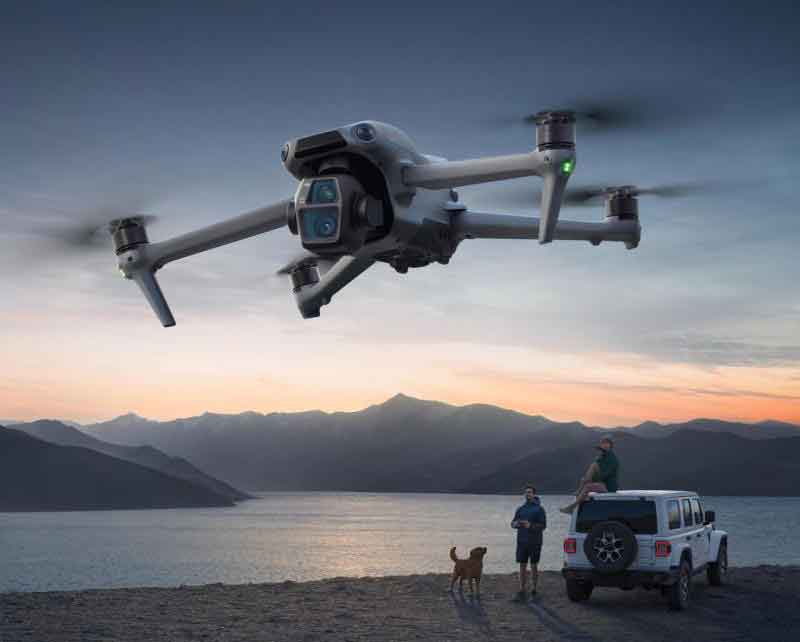
The use of civilian drones in military applications is not entirely new, but their specific role as target drones for air defense systems warrants detailed examination. As we navigate this topic, I will emphasize the term “civilian drones” repeatedly to underscore their relevance and potential. Throughout this article, we will incorporate tables and formulas to summarize critical data and relationships, ensuring a comprehensive understanding of the subject.
Deficiencies of Existing Target Drones
Target drones are generally categorized into manned and unmanned types. Manned target drones, which include specialized aircraft, active-duty fighters, or retrofitted retired planes, are coordinated and managed by air force and air traffic control authorities. While they offer advanced and stable performance closely resembling real threats, their utilization is fraught with challenges. The technical and environmental requirements are stringent, flight costs are exorbitant, and scheduling is often constrained by the air force’s own training agendas. Cross-service approvals involve multiple steps and complex coordination, making it difficult to arrange frequent, multi-sortie training sessions. Consequently, manned target drones are typically reserved for large-scale exercises in major ranges, limiting opportunities for grassroots units or regular training cycles.
Unmanned target drones, specifically designed for testing and training in dedicated ranges, come in various models based on speed. However, they too suffer from high complexity, operational difficulties, and substantial costs. For instance, a low-speed target drone may incur hourly flight costs of approximately $6,000 (equivalent to 40,000 Chinese Yuan) and a destruction cost nearing $30,000 (200,000 Chinese Yuan), while high-speed variants can escalate to $30,000 per hour and $300,000 per kill. Such expenses are prohibitive for routine training in基层 units or during initial equipment familiarization. Moreover, existing unmanned target drones often have fixed attributes—such as airframe design, speed profiles, and flight paths—with limited model options and customization possibilities, hindering their ability to simulate specific threat profiles.
To quantify these issues, consider the cost-benefit analysis. Let \( C_{\text{total}} \) represent the total cost of a training sortie using traditional target drones, which can be expressed as:
$$ C_{\text{total}} = C_{\text{flight}} \times t + C_{\text{destruction}} \times P_{\text{kill}} $$
where \( C_{\text{flight}} \) is the hourly flight cost, \( t \) is the flight duration in hours, \( C_{\text{destruction}} \) is the cost if the drone is destroyed, and \( P_{\text{kill}} \) is the probability of kill during training. For基层 units with limited budgets, high values of \( C_{\text{flight}} \) and \( C_{\text{destruction}} \) render such training unsustainable. This economic barrier underscores the need for alternatives like civilian drones.
| Target Drone Type | Hourly Flight Cost (Approx.) | Destruction Cost (Approx.) | Scheduling Flexibility | Customization Potential |
|---|---|---|---|---|
| Manned Target Drones | $20,000 – $100,000 | $500,000+ | Low | Low |
| Dedicated Unmanned Target Drones | $6,000 – $30,000 | $30,000 – $300,000 | Moderate | Moderate |
| Civilian Drones (Proposed) | $100 – $1,000 | $1,000 – $10,000 | High | High |
As shown in the table, civilian drones offer a dramatic reduction in costs and greater flexibility, making them attractive for frequent training. This economic advantage is a key driver for their adoption.
Advantages of Civilian Drones
The 21st century has witnessed unprecedented growth in drone technology, with civilian drones leading the charge in accessibility and innovation. From my experience, the civilian drone market has matured rapidly, offering high-quality, affordable platforms that can be adapted for defense training. The global proliferation of civilian drones—with sales reaching 390,000 units in 2014 and a projected fleet of 16 million by 2020—demonstrates their viability. Major companies like DJI, 3D Robotics, and others have invested heavily, fostering a robust ecosystem with diverse models and support services.
Civilian drones, particularly multi-rotor variants, exhibit several compelling advantages. First, they are cost-effective, with prices ranging from a few hundred to several thousand dollars for advanced models capable of reaching altitudes up to 6000 meters. Second, they are user-friendly, incorporating technologies such as autonomous flight control, GPS navigation, attitude measurement, and multi-channel communication. These features simplify operation, reduce the need for specialized training, and enhance safety through functions like geofencing and automatic return-to-home. Third, civilian drones are highly modular and customizable. With payload capacities and endurance that allow for modifications, users can easily attach reflective materials, sensors, or other payloads to mimic threat characteristics. The open-source nature of many platforms further facilitates customization for specific training needs.
To illustrate, let \( A_{\text{drone}} \) represent the adaptability score of a drone platform, which can be modeled as:
$$ A_{\text{drone}} = \alpha \cdot \frac{P_{\text{payload}}}{W_{\text{empty}}} + \beta \cdot \frac{E_{\text{battery}}}{t_{\text{flight}}} + \gamma \cdot M_{\text{modules}} $$
where \( P_{\text{payload}} \) is the payload capacity, \( W_{\text{empty}} \) is the empty weight, \( E_{\text{battery}} \) is the battery energy, \( t_{\text{flight}} \) is the flight time, \( M_{\text{modules}} \) is the number of modular components, and \( \alpha, \beta, \gamma \) are weighting factors. Civilian drones often score high on this metric due to their design ethos of versatility.
Moreover, the regulatory environment for civilian drones is evolving, with frameworks that can be leveraged for controlled training exercises. By utilizing civilian drones, units can conduct training on-demand, without the bureaucratic hurdles associated with traditional target drones. This agility is crucial for maintaining high readiness levels.
Implementation Framework for Using Civilian Drones as Target Drones
Based on my analysis, the successful integration of civilian drones into air defense training requires a systematic approach. The proximity of a target drone’s performance to that of actual threats directly impacts the realism and effectiveness of training. Therefore, we must develop detailed plans that address the discrepancies between civilian drone capabilities and training requirements. The general implementation process can be summarized as follows.
First, conduct a needs assessment to define the training objectives, such as testing radar detection limits or practicing engagement sequences. Second, select appropriate civilian drone models based on parameters like speed, altitude, endurance, and payload. Third, plan the flight routes considering the engagement zones of air defense systems. Fourth, implement necessary modifications to enhance the drone’s signature characteristics. Fifth, execute the training sorties with proper safety protocols. Sixth, collect and analyze data for performance evaluation. This cyclical process ensures continuous improvement.
To formalize this, let \( T_{\text{effectiveness}} \) denote the training effectiveness score, which depends on multiple factors:
$$ T_{\text{effectiveness}} = \int_{0}^{t_{\text{sortie}}} \left( S_{\text{signature}}(t) \cdot D_{\text{system}}(t) \cdot E_{\text{environment}}(t) \right) dt $$
where \( S_{\text{signature}}(t) \) is the signature similarity to real threats, \( D_{\text{system}}(t) \) is the detection and engagement capability of the air defense system, and \( E_{\text{environment}}(t) \) accounts for environmental conditions. By optimizing \( S_{\text{signature}}(t) \) through modifications, we can maximize \( T_{\text{effectiveness}} \).
The following table outlines key steps and considerations in the implementation framework:
| Step | Action Items | Key Considerations for Civilian Drones |
|---|---|---|
| 1. Needs Assessment | Define training goals, threat profiles, and evaluation metrics. | Align civilian drone capabilities with simulated threats (e.g., speed, altitude). |
| 2. Drone Selection | Choose model based on performance specs (speed, endurance, payload). | Ensure compatibility with modification kits and safety features. |
| 3. Flight Route Planning | Design routes within system engagement envelopes. | Account for drone range, battery life, and obstacle avoidance. |
| 4. Modification & Customization | Enhance radar/IR/visual signatures; add recovery systems. | Balance payload vs. flight performance; use cost-effective materials. |
| 5. Training Execution | Conduct sorties with real-time monitoring and control. | Implement failsafe measures; ensure communication reliability. |
| 6. Data Analysis & Evaluation | Collect sensor data, engagement results, and drone telemetry. | Use software tools to assess system performance and training outcomes. |
This structured approach mitigates risks and enhances the utility of civilian drones in training scenarios.
In-Depth Analysis of Key Technical and Logistical Issues
To effectively employ civilian drones as target drones, we must address several critical areas: signature characteristics, flight performance, economic viability, and safety. Each of these aspects interrelates and requires careful balancing during planning and execution.
Signature Characteristics for Detection Systems
Air defense systems rely on radar, electro-optical, and infrared sensors for target acquisition and tracking. Therefore, civilian drones must exhibit signature properties similar to real threats to validly test these systems.
Radar Cross-Section (RCS): The RCS, denoted as \( \sigma \), measures a target’s ability to reflect radar signals back to the receiver. It is a function of the drone’s geometry, material, and orientation relative to the radar. For a given radar with a minimum detectable signal \( S_{\text{min}} \), the maximum detection range \( R_{\text{max}} \) can be estimated using the radar range equation:
$$ R_{\text{max}} = \left( \frac{P_t G^2 \lambda^2 \sigma}{(4\pi)^3 S_{\text{min}} L} \right)^{1/4} $$
where \( P_t \) is transmitted power, \( G \) is antenna gain, \( \lambda \) is wavelength, and \( L \) represents losses. If a civilian drone’s inherent RCS is too low, it may fall below \( S_{\text{min}} \) at desired ranges. To augment RCS, we can attach corner reflectors or apply metallic coatings. The effective RCS after modification, \( \sigma_{\text{eff}} \), can be modeled as:
$$ \sigma_{\text{eff}} = \sigma_{\text{base}} + \sum_{i=1}^{n} \sigma_{\text{add},i} $$
where \( \sigma_{\text{base}} \) is the base RCS of the civilian drone, and \( \sigma_{\text{add},i} \) are contributions from added reflectors. This allows us to tailor the signature for different training scenarios.
Doppler Frequency: Moving targets induce a Doppler shift \( f_d \) in the reflected radar signal, given by \( f_d = \frac{2v_r}{\lambda} \), where \( v_r \) is radial velocity. Modern radars use Doppler processing to distinguish targets from clutter. If a civilian drone flies too slowly, its Doppler shift might be filtered out as clutter. Thus, flight paths should incorporate sufficient radial velocity components. For a drone with ground speed \( v_g \) and flight path angle \( \theta \) relative to the radar, the radial velocity is \( v_r = v_g \cos \theta \). Planning routes to maintain \( v_r \) above a threshold ensures detectability.
Electro-Optical and Infrared Signatures: For visual and IR sensors, the apparent size, contrast, and thermal emissions are crucial. The angular extent \( \alpha \) of a drone as seen by a sensor is \( \alpha \approx \frac{L}{R} \) radians, where \( L \) is characteristic length and \( R \) is range. To enhance visibility, we can modify the drone’s color scheme or add heat sources like incandescent bulbs for IR signatures. The thermal radiation power \( P_{\text{IR}} \) can be approximated by the Stefan-Boltzmann law: \( P_{\text{IR}} = \epsilon \sigma_{\text{SB}} A T^4 \), where \( \epsilon \) is emissivity, \( \sigma_{\text{SB}} \) is the Stefan-Boltzmann constant, \( A \) is surface area, and \( T \) is temperature. By increasing \( T \) or \( \epsilon \), we can boost IR signature for training purposes.
Flight Performance Parameters
Civilian drones must meet certain flight criteria to simulate threats effectively. Key parameters include maximum speed \( v_{\text{max}} \), service ceiling \( h_{\text{max}} \), endurance \( t_{\text{end}} \), and control range \( R_{\text{control}} \). These should align with the engagement envelopes of air defense systems. For example, if a system is designed to engage low-altitude targets up to 1000 meters, the civilian drone should be capable of sustained flight at that altitude. The required endurance for a sortie covering a distance \( d \) is \( t_{\text{end}} \geq \frac{d}{v_{\text{avg}}} \), where \( v_{\text{avg}} \) is average speed. Battery technology limits current civilian drones, but hybrid or fuel-based options can extend endurance.
We can compare different civilian drone models using a performance index \( I_{\text{flight}} \):
$$ I_{\text{flight}} = w_1 \frac{v_{\text{max}}}{v_{\text{req}}} + w_2 \frac{h_{\text{max}}}{h_{\text{req}}} + w_3 \frac{t_{\text{end}}}{t_{\text{req}}} + w_4 \frac{P_{\text{payload}}}{P_{\text{req}}} $$
where \( w_i \) are weights, and subscript “req” denotes training requirements. A score above 1 indicates suitability. The table below summarizes typical values for popular civilian drones.
| Civilian Drone Model | Max Speed (m/s) | Max Altitude (m) | Endurance (min) | Payload Capacity (kg) | Approx. Cost (USD) |
|---|---|---|---|---|---|
| DJI Phantom 4 Pro | 20 | 6000 | 30 | 1 | 1,500 |
| 3DR Solo | 25 | 4000 | 25 | 0.5 | 1,000 |
| Yuneec Typhoon H | 20 | 5000 | 25 | 1.5 | 1,200 |
| Custom Hexacopter | 30 | 3000 | 40 | 5 | 3,000 |
These civilian drones offer varying trade-offs, allowing selection based on specific needs.
Economic Viability and Cost-Benefit Analysis
The low cost of civilian drones is a major advantage. Let \( C_{\text{civilian}} \) be the total cost per sortie for a civilian drone, expressed as:
$$ C_{\text{civilian}} = C_{\text{acquisition}} / N_{\text{sorties}} + C_{\text{mod}} + C_{\text{operation}} $$
where \( C_{\text{acquisition}} \) is purchase price, \( N_{\text{sorties}} \) is expected number of sorties per drone, \( C_{\text{mod}} \) is modification cost, and \( C_{\text{operation}} \) includes battery, maintenance, and personnel expenses. For a $1,000 drone used over 100 sorties with $200 in modifications and $50 per sortie operation, \( C_{\text{civilian}} \approx $80 \) per sortie—orders of magnitude lower than traditional target drones. This affordability enables high-frequency training, which is critical for skill retention and system testing.
Moreover, civilian drones often feature high recovery rates due to their autonomous landing and durability, reducing replacement costs. The probability of recovery \( P_{\text{recovery}} \) can be modeled as a function of safety features and operational practices, further driving down expenses.
Safety and Security Considerations
Safety is paramount when deploying civilian drones in training environments. Key aspects include:
- Airworthiness: Civilian drones should be tested for stability in wind, electromagnetic compatibility (especially with radar emissions), and water resistance. The risk of mid-air failure or crash must be minimized through pre-flight checks and failsafe modes.
- Operational Safety: Designated flight zones, altitude limits, and real-time monitoring prevent collisions with personnel or equipment. Functions like automatic return-to-home on signal loss enhance reliability.
- Security: Many civilian drones come with cameras, GPS, Wi-Fi, and data storage, posing potential security risks. To mitigate, we can disable or encrypt data transmissions, sanitize storage media post-flight, and use secure communication protocols. The risk of eavesdropping or data leakage should be addressed in training protocols.
We can quantify safety performance using a risk index \( R_{\text{index}} \):
$$ R_{\text{index}} = \sum_{i} p_i \cdot s_i $$
where \( p_i \) is probability of incident type \( i \) (e.g., crash, signal loss), and \( s_i \) is severity score. By selecting civilian drones with low \( R_{\text{index}} \) and implementing robust procedures, we ensure safe training.
Conclusion and Future Outlook
In conclusion, the use of civilian drones as target drones for air defense training is not only feasible but also highly advantageous. From my perspective, the convergence of market maturity, cost-effectiveness, ease of use, and customization potential makes civilian drones a transformative tool for enhancing training frequency and realism. By addressing signature characteristics through modifications, carefully planning flight performance parameters, optimizing economic outcomes, and adhering to safety protocols, defense units can effectively integrate these platforms into their training regimens.
The iterative process of needs assessment, drone selection, modification, and execution—supported by data analysis—enables continuous improvement. As civilian drone technology advances, with developments in longer endurance, higher speeds, and better payloads, their applicability will only expand. Furthermore, the growing ecosystem of accessories and software will facilitate even more realistic simulations.
Embracing civilian drones for training does not replace traditional methods entirely but complements them, offering a scalable solution for grassroots units and routine exercises. This approach aligns with broader trends in defense innovation, where commercial off-the-shelf technology is leveraged to increase agility and reduce costs. As we move forward, collaborative efforts between defense agencies and civilian drone manufacturers could yield specialized variants optimized for training, further bridging the gap between simulation and reality.
Ultimately, the adoption of civilian drones in air defense training represents a pragmatic step toward more accessible, frequent, and effective preparedness. By harnessing the power of these versatile platforms, we can ensure that air defense systems remain sharp and responsive in the face of evolving threats.