
The evolution of civilian UAV technology represents a significant paradigm shift in aviation, transitioning from military applications to a broad spectrum of civilian uses. Beginning in the 1990s, technologies developed for military unmanned systems began spilling over into the civilian market, initiating the development of the civilian UAV industry. This journey started with the explosive growth of consumer-grade drones for aerial photography and entertainment, and has rapidly expanded to encompass industrial applications. Today, civilian UAVs are pivotal in agriculture (for crop protection), aerial surveying, policing, power line and pipeline inspection, energy sector monitoring, and environmental protection, continuously enriching their application scenarios. In recent years, the concept of employing large civilian UAVs for missions such as resource exploration, patrols, express logistics, and even commercial passenger transport has gained traction, moving into product development and operational testing phases.
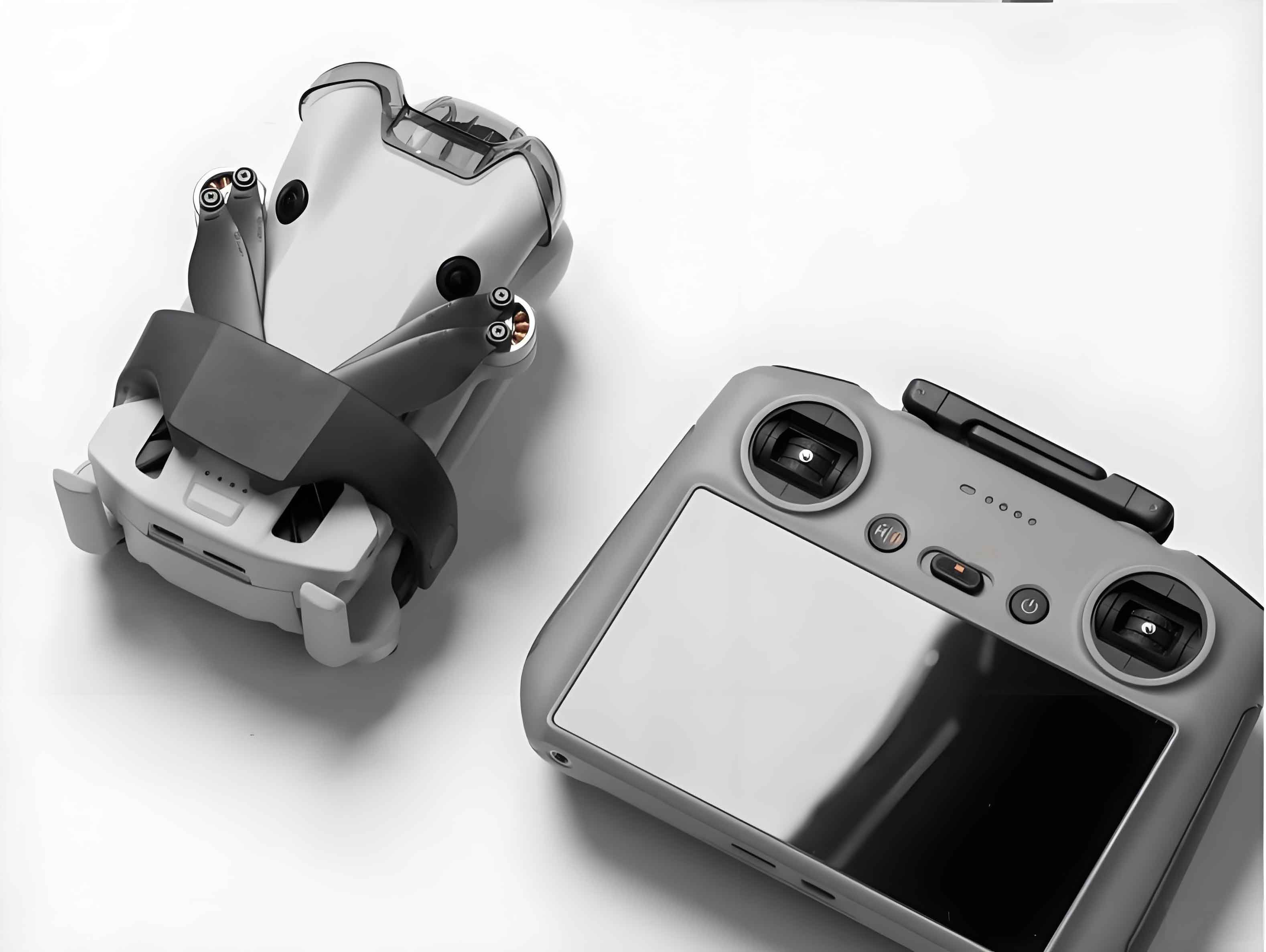
These large civilian UAVs are characterized by significant take-off weights and high operational altitudes, potentially operating in non-segregated airspace alongside manned aircraft. This integration introduces substantial risks; a loss of control could pose a serious threat to other airspace users and to people and property on the ground. Consequently, the safety requirements for these systems are significantly higher, and the need for robust regulatory oversight is more urgent than ever. This paper focuses on the airworthiness management of large civilian UAVs. It summarizes global progress in civilian UAV airworthiness regulation, analyzes the management framework and current status for large systems, and delves into methodologies for developing airworthiness requirements and selecting a certification basis. The findings aim to provide a reference for future airworthiness management activities concerning large civilian UAVs.
Progress in Civilian UAV Airworthiness Management
The foundational challenge in civilian UAV airworthiness management is the categorization of the regulatory subject. Consequently, definitions and classifications for large civilian UAVs vary across jurisdictions, leading to different management approaches. This section examines the regulatory progress in key regions.
European Airworthiness Management Progress
Europe’s structured approach began with the Joint Aviation Authorities (JAA) and EUROCONTROL forming a UAV Working Group in 2002. Its 2004 report emphasized leveraging existing manned aircraft regulations with necessary tailoring. This philosophy was formalized by EASA in its 2009 “Policy for Unmanned Aerial Vehicle (UAV) Certification,” which proposed establishing a certification basis by equivalencing the UAV system to a manned aircraft, selecting and adapting existing standards, and adding special conditions for UAV-unique features.
A pivotal development was EASA’s 2015 “Concept of Operations for Drones,” introducing a risk-based regulatory model with three categories:
| Category | Description | Regulatory Oversight |
|---|---|---|
| Open | Low-risk operations (e.g., Visual Line of Sight, below 150m, away from airports). | No aircraft or operator certification required; no prior authorization. |
| Specific | Medium-risk operations. | Requires operational authorization from the authority based on a specific risk assessment. |
| Certified | High-risk operations (e.g., over assemblies of people, transporting people, operating in non-segregated airspace). | Requires full type certification of the aircraft, approval of involved organizations, and licensed personnel, akin to manned aviation. |
While rulemaking for the ‘Certified’ category was initially prioritized lower, EASA has pursued pilot certification projects for large civilian UAVs like the Atlante fixed-wing and Camcopter S-100 rotorcraft, applying adapted manned aircraft standards.
United States Airworthiness Management Progress
The FAA’s initial approach, managed by the Unmanned Aircraft Systems Project Office (AIR-60), distinguished between public and civil aircraft. Civil civilian UAVs typically required an experimental Special Airworthiness Certificate (SAC) under Order 8130.34, limiting their use. The 2012 FAA Modernization and Reform Act provided the legislative framework for UAS integration, leading to a tiered regulatory structure.
The FAA’s priority has been to first integrate small UAS operating within visual line of sight. This was achieved with the 2016 enactment of Part 107 for small UAS under 25 kg. For larger civilian UAVs, the path to certification remains largely on a case-by-case basis. A landmark step is the FAA’s 2017 initiative to determine the applicable airworthiness standards for the Camcopter S-100 (approx. 200 kg), which is pursuing a Special Class Type Certificate under 14 CFR §21.17(b).
Chinese Airworthiness Management Progress
Early Chinese management involved issuing special flight permits for individual UAVs based on applicable parts of existing regulations. A significant development was the 2017 “Provisions on the Real-Name Registration of Civil Unmanned Aircraft,” mandating registration for civilian UAVs over 250 grams. While a 2016 proposal categorized UAVs into “Special,” “Limited,” and “Standard” classes—with the latter requiring full type certification—it was not formalized. The current focus is on developing a comprehensive “UAV Airworthiness Management Roadmap” to establish a future certification framework.
Key Issues in Airworthiness Management for Large Civilian UAVs
The global direction indicates that large civilian UAVs intended for high-risk operations will require full type certification. This necessitates solving core problems: developing appropriate airworthiness standards, selecting a certification basis, and addressing key certification elements.
Developing Airworthiness Requirements for Large Civilian UAVs
In the absence of official, dedicated civilian UAV certification regulations, existing technical standards provide a blueprint. These are predominantly based on manned aircraft regulations, adapted for unmanned systems. The adaptation process for a given manned aircraft regulation (e.g., CS-23, FAR 25) can be modeled as a function of clause applicability:
Let \( R_{manned} \) be the set of clauses in the baseline manned aircraft regulation.
For each clause \( c_i \in R_{manned} \), its applicability to a civilian UAV system is determined, resulting in three subsets:
- \( C_{direct} \): Clauses directly applicable without change.
- \( C_{adapted} \): Clauses applicable after modification.
- \( C_{not\_applicable} \): Clauses not applicable to UAVs.
The derived UAV regulation \( R_{UAV} \) is then constructed as:
$$ R_{UAV} = C_{direct} \cup C’_{adapted} \cup C_{new} $$
where \( C’_{adapted} \) are the modified clauses and \( C_{new} \) are new clauses addressing UAV-specific attributes like Command & Control (C2) Link and Ground Control Station (GCS).
Analysis of prominent standards confirms this model:
1. NATO STANAG 4671: Based on EASA CS-23, for UAVs 150 kg to 20,000 kg.
| Applicability Analysis of CS-23 to UAVs (STANAG 4671 Basis) | Number of Clauses | Percentage |
|---|---|---|
| Total CS-23 Clauses Analyzed | 369 | 100% |
| Directly Applicable | 78 | 21.14% |
| Applicable After Adaptation | 190 | 51.49% |
| Not Applicable | 101 | 27.37% |
| Source of Clauses in STANAG 4671 | Number of Clauses | Percentage |
|---|---|---|
| Total Clauses in STANAG 4671 | 385 | 100% |
| Directly Carried Over from CS-23 | 78 | 20.26% |
| Adapted from CS-23 | 190 | 49.35% |
| New UAV-Specific Clauses | 117 | 30.39% |
2. JARUS CS-LURS & CS-LUAS: For light UAVs (up to 750 kg), based on CS-VLR and CS-VLA respectively.
| Standard | Base Regulation | % Directly Applicable | % Applicable After Adaptation | % New UAV-Specific Clauses |
|---|---|---|---|---|
| CS-LURS (Rotorcraft) | CS-VLR | 56.76% | 19.37% | 23.87% |
| CS-LUAS (Aeroplane) | CS-VLA | 37.87% | 31.06% | 31.06% |
The key takeaway is that approximately 70% of manned aircraft regulatory clauses are typically directly applicable or applicable after adaptation to a civilian UAV system. The remaining ~30% are new requirements addressing the core UAV system attributes: the C2 Link, Ground Control Station, and Detect and Avoid (DAA) systems. The precise distribution depends on the UAV configuration and the chosen baseline regulation.
Selecting the Certification Basis for a Large Civilian UAV
In the current regulatory environment, where dedicated civilian UAV certification standards are not yet codified into law, determining the certification basis for a specific large civilian UAV project is critical. Three primary methodological approaches can be considered:
Approach 1: Adapted Manned Aircraft Regulations
This involves selecting a manned aircraft regulation commensurate with the UAV’s characteristics (e.g., CS-23/25 for fixed-wing, CS-27/29 for rotorcraft). Each clause is reviewed for applicability: directly applicable clauses are retained, inapplicable ones are deleted, and partially applicable ones are adapted. Special Conditions are added to cover UAV-specific systems (C2 Link, GCS, DAA). This is the most common approach in current pilot certification projects (e.g., Camcopter S-100 using adapted FAR 27/33).
Approach 2: Industry Consensus Standards as Special Conditions
Standards developed by bodies like JARUS (CS-LURS, CS-LUAS), RTCA (for C2 and DAA MASPS), or ASTM may be accepted by the authority as a means of compliance, particularly for UAV-specific systems. This approach leverages specialized technical work. For instance, EASA has referenced JARUS CS-LURS in the Camcopter S-100 certification basis. This approach is highly efficient when a suitable, recognized standard exists for the civilian UAV type.
Approach 3: Applicant-Developed Standards
The applicant may develop proprietary design and construction standards, drawing from military standards, industry best practices, and specific safety assessments. These standards, upon acceptance by the authority, become the certification basis. This approach offers maximum flexibility and is particularly suited to novel configurations or conversions of previously certified manned aircraft where the airframe’s airworthiness is already established, and the focus is on the novel UAV systems. The workload is high, as a comprehensive set of requirements must be developed and justified.
The choice among these approaches depends on the project context, regulatory posture, and available standards. A comparative analysis is summarized below:
| Approach | Applicability / Generality | Development Effort | Key Considerations |
|---|---|---|---|
| 1. Adapted Manned Regulations | Medium. Best for conventional UAV configurations similar to manned aircraft. | Medium. Requires detailed clause-by-clause review and adaptation. | Well-understood process by authorities; provides a comprehensive baseline. |
| 2. Industry Standards | Low to Medium. Dependent on the existence and scope of a suitable, recognized standard. | Low. Primarily involves selecting and justifying the use of the standard. | Efficient path if a perfect standard match exists; requires authority buy-in. |
| 3. Applicant-Developed Standards | High. Applicable to any UAV type, especially novel or converted designs. | High. Requires drafting a complete, justified set of requirements. | Maximum flexibility; essential for pioneering designs without precedent. |
A pragmatic strategy often involves a hybrid method. For example, the airframe and propulsion certification basis may be built using Approach 1 (adapted CS-23), while the UAV-specific systems may leverage Approach 2 (using a JARUS standard for the GCS) or Approach 3 (company-developed requirements for a proprietary C2 link).
Conclusion and Future Outlook
The integration of large civilian UAVs into the shared airspace is an inevitable step in the evolution of aviation. Ensuring their safety through robust airworthiness management is paramount. The global regulatory community has converged on a risk-based, categorized approach, with high-risk operations necessitating full type certification—a path now being actively explored for large civilian UAVs through pilot projects in Europe, the US, and elsewhere.
The development of dedicated airworthiness requirements for civilian UAVs will continue to be grounded in the well-established principles and detailed clauses of manned aircraft regulations. Analytical models show that a significant majority (around 70%) of these clauses remain relevant, requiring either direct application or careful adaptation. The distinctive challenge lies in comprehensively addressing the novel elements of the UAV system, primarily the command and control link, the ground control station, and sense-and-avoid capabilities, which constitute roughly 30% of the new regulatory framework.
For applicants seeking certification in the current transitional regulatory landscape, the strategic selection of a certification basis is a critical first step. The three methodologies outlined—adapting manned aircraft regulations, employing consensus industry standards, or developing applicant-specific standards—offer a spectrum of options balancing generality, effort, and flexibility. A hybrid approach, tailoring the method to different aspects of the civilian UAV, is often the most effective practical solution.
As the technology and operational concepts for large civilian UAVs mature, so too must the regulatory framework. Continued collaboration between authorities, standards development organizations, and industry is essential to create clear, safe, and proportionate airworthiness pathways. This will enable the safe realization of the immense economic and societal potential offered by these advanced civilian UAV systems, from long-range logistics to transformative new services, while upholding the highest standards of aviation safety.