
The proliferation of civilian drones, or Unmanned Aerial Vehicles (UAVs), represents a paradigm shift in modern technology application, transitioning from predominantly military use to a broad spectrum of civil functions including logistics, aerial photography, precision agriculture, and recreational activities. This rapid expansion has catalyzed growth across associated upstream and downstream industries, establishing civilian drones as a significant consumer trend with profound socio-economic implications. However, this ascent is accompanied by a complex array of risks that challenge existing regulatory paradigms. This article aims to systematically categorize the prevalent risks in the domain of civilian drones and propose a robust, principled framework for flight safety legal regulation. A thorough examination of these elements is crucial for the effective implementation of legislation, judicature, and law enforcement, enhancing public awareness and providing stakeholders with the tools to mitigate operational challenges.
The foundational step in constructing an effective regulatory environment is a clear, practice-oriented understanding of the inherent risks. According to the newly implemented “Interim Regulations on the Flight Management of Unmanned Aircraft” (effective January 2024), an unmanned aircraft is defined as an aircraft without a pilot on board, comprising both remotely piloted and fully autonomous aircraft. In practical application, the operation of civilian drones can lead to various legal and safety issues: mid-air collisions raising questions of property tort; crashes causing personal injury akin to falling objects; unauthorized incursions into restricted zones potentially constituting crimes; and surveillance activities infringing upon personal privacy. Current legal frameworks often lack the granularity to address these novel scenarios effectively. Therefore, a meticulous risk assessment is indispensable for informing the development of precise safety regulations that protect citizens, property, and national airspace integrity.
I. A Taxonomy of Risks in the Civilian Drone Ecosystem
The operational landscape for civilian drones introduces multifaceted risks that can be broadly classified into several interconnected categories. The matrix below summarizes the primary risk domains, their manifestations, and potential consequences.
| Risk Category | Primary Manifestations | Potential Impact | Stakeholders Affected |
|---|---|---|---|
| Societal & National Security Risk | Unauthorized flights in controlled airspace; Data interception/exploitation; Interference with critical infrastructure (airports, power grids); Use for illicit surveillance or smuggling. | Disruption of low-altitude order; Compromise of sensitive data; Threats to aviation safety (e.g., airport incursions); Erosion of public security and sovereignty. | General Public, Government, Commercial Aviation, National Security Agencies. |
| Personal Safety & Privacy Risk | Drone loss of control leading to crash/fall; Collision with persons or property; Invasive recording/photography without consent; Stalking or harassment. | Bodily injury or fatality; Damage to personal property; Violation of privacy rights; Psychological distress. | Individuals, Private Property Owners. |
| Economic & Liability Risk | Damage to third-party property; Loss or damage of the drone asset itself; Business interruption (e.g., halted airport operations); Insurance claim complexities. | Financial losses for operators and victims; Increased operational costs for businesses; Strain on legal and insurance systems. | Drone Operators, Businesses, Insurance Companies, Property Owners. |
| Airspace Management & Operational Risk | Lack of pilot competency; Failure of onboard systems (GNSS, communication); Unpredictable flight behavior; “See-and-avoid” limitation. | Mid-air collisions (between drones or with manned aircraft); Uncontrolled descent; Inefficient use of airspace. | All Airspace Users, Air Navigation Service Providers (ANSP). |
The societal security risk is particularly acute due to nascent regulatory regimes. Cumbersome flight planning processes often incentivize operators to fly without authorization, creating an unmanaged population of civilian drones vulnerable to external interference and data compromise. Furthermore, unauthorized flights, especially near airports, pose a catastrophic risk to manned aviation. The probability of a catastrophic event can be modeled as a function of these risk factors:
$$ P_{catastrophe} = f(R_{unauth}, R_{comp}, R_{prox}, R_{sys}) $$
Where:
$R_{unauth}$ = Risk factor from unauthorized operations
$R_{comp}$ = Risk factor from operator competency deficit
$R_{prox}$ = Risk factor from proximity to critical infrastructure
$R_{sys}$ = Risk factor from systemic/technological failure
Personal safety risks stem largely from operator inexperience. Unlike manned aviation, pilot training for civilian drones is often informal, leading to inadequate responses in emergencies and subsequent crashes. The kinetic energy $(E_k)$ of a falling drone, which determines its potential for damage, is given by:
$$ E_k = \frac{1}{2} m v^2 $$
where $m$ is the mass of the drone and $v$ is its velocity upon impact. Even lightweight models can cause significant injury when falling from altitude. Concurrently, the low barrier to equipping drones with cameras facilitates privacy violations, creating a pervasive sense of surveillance among the public.
II. Foundational Principles for Formulating Flight Safety Law
The construction of a legal framework for civilian drones must be guided by core principles that balance competing interests and foster responsible innovation.
- Principle of Balanced Interests: Regulation must equitably safeguard public security, national interests, personal privacy, and economic freedoms. It should harmonize the right to technological exploration with the necessity of legal constraint, ensuring no single interest disproportionately dominates.
- Principle of Coordinated Development and Oversight: Regulation should not stifle industry growth. The objective is synergistic progress—developing the sector within a framework of safety and accountability. Oversight and innovation must advance in tandem, each reinforcing the other.
- Principle of Guided Mandatory Compliance: The framework should combine instructive guidelines with enforceable mandates. It should educate operators on safe and ethical use while establishing clear, stringent penalties for malicious or negligent violations that endanger public welfare.
- Principle of Inclusive Stakeholder Consultation: Effective regulation requires input from manufacturers, operators, regulatory bodies, legal experts, and the public. Transparent channels for feedback and dialogue are essential for creating legitimate, practical, and widely accepted rules.
III. Proposals for a Robust Flight Safety Legal and Regulatory Framework
Based on the risk taxonomy and guiding principles, a multi-layered regulatory architecture is proposed. The following table outlines a potential regulatory framework.
| Regulatory Pillar | Key Components | Implementation Mechanism | Expected Outcome |
|---|---|---|---|
| 1. Operator Competency & Licensing | Tiered licensing based on drone category (mass, capability) and operation risk; Mandatory theoretical & practical training; Recurrent training requirements; Medical fitness standards for higher-risk categories. | Nationally accredited training organizations; Standardized testing protocols; Centralized digital license registry. | Significant reduction in accidents caused by human error; Standardized skill level across operators. |
| 2. Aircraft Certification & Airworthiness | Type certification for drones above a certain mass/risk threshold; Production compliance oversight; Mandatory technical standards (e.g., Remote ID, geofencing); Periodic maintenance requirements. | Streamlined certification processes aligned with risk; Designated approval authorities; Use of consensus standards (e.g., ASTM, EUROCAE). | Assured technical safety and reliability of drones in the airspace; Facilitates tracking and identification. |
| 3. Operational Authorization & Airspace Integration | Simplified, digital flight planning/notification for low-risk operations; Specific Operational Risk Assessment (SORA) for higher-risk BVLOS flights; Dynamic, digitized airspace zoning (No-Fly, Restricted, Warning zones). | UAS Traffic Management (UTM) ecosystem; Automated approval workflows for pre-defined low-risk scenarios; Real-time airspace information services. | Efficient, safe integration into all classes of airspace; Enables scalable commercial operations (e.g., delivery, inspections). |
| 4. Surveillance, Enforcement & Liability | Remote ID as a mandatory capability; Monitoring and enforcement capabilities for authorities; Clear liability and insurance rules; Penalties proportional to the severity of violations. | Leveraging UTM for compliance monitoring; Dedicated enforcement units; Mandatory third-party liability insurance for relevant categories. | Effective deterrence against violations; Clear pathways for accountability and compensation after incidents. |
1. Tiered Operator Licensing and Training Regime: A competency-based system, analogous to driver’s licenses, is essential. Training and licensing must be proportional to the risk posed by the operation. For instance, operating a small drone for recreational photography in visual line-of-sight (VLOS) requires different competencies than piloting a large drone for beyond visual line-of-sight (BVLOS) cargo delivery over populated areas. The required competency level $(C_{req})$ can be expressed as a function of operational complexity parameters:
$$ C_{req} = \alpha M + \beta O + \gamma E $$
Where $M$ represents the mass/energy factor of the drone, $O$ represents the operational complexity (e.g., BVLOS, over people), $E$ represents the environment density (e.g., urban vs. rural), and $\alpha, \beta, \gamma$ are weighting coefficients. While regulations like the Interim Regulations exempt operators of micro and lightweight drones in simple scenarios from formal licensing, a foundational knowledge test or online certification is advisable to instill core safety and legal awareness.
2. Streamlined Operational Approval and Airspace Access: The traditional, complex flight approval process is a key driver of non-compliance. The solution lies in digitalization, risk-based categorization, and automation. Low-risk operations (e.g., VLOS in permitted areas with a micro drone) could be covered by a standard set of rules requiring no prior permission. Medium-risk operations might require a notification via a digital platform, while high-risk operations would undergo a detailed authorization process. The approval status $(A)$ can be dynamically determined:
$$ A = \begin{cases}
\text{Open} & \text{if } R_{op} < T_1 \\
\text{Notification Required} & \text{if } T_1 \leq R_{op} < T_2 \\
\text{Specific Authorization Required} & \text{if } R_{op} \geq T_2
\end{cases} $$
where $R_{op}$ is the calculated risk score of the intended operation and $T_1$, $T_2$ are regulatory risk thresholds.
3. Dynamic and Technology-Enabled Airspace Zoning: Static paper maps of restricted zones are insufficient. Airspace restrictions must be dynamic (changing based on time or events) and digitally accessible. Geofencing—a technology where the drone’s software prevents it from entering coordinates of a no-fly zone—should be mandated for relevant categories of civilian drones. The regulatory framework must define these zones with precision (airports, critical government facilities, crowded venues) and ensure they are encoded into a digital format that drones and flight planning apps can universally access. The safety buffer for a critical infrastructure point can be modeled as a function of drone performance and reaction time:
$$ B_{min} = v_{max} \cdot t_{react} + d_{margin} $$
where $B_{min}$ is the minimum geofence buffer radius, $v_{max}$ is the maximum speed of the relevant drone category, $t_{react}$ is the system’s reaction time, and $d_{margin}$ is an added safety margin.
4. Fostering the Development and Adoption of a UAS Traffic Management (UTM) Ecosystem: A UTM is a foundational digital infrastructure for scalable and safe drone operations. It is not a single system but a federated ecosystem of services providing coordination, communication, and information sharing between operators, authorities, and other airspace users.
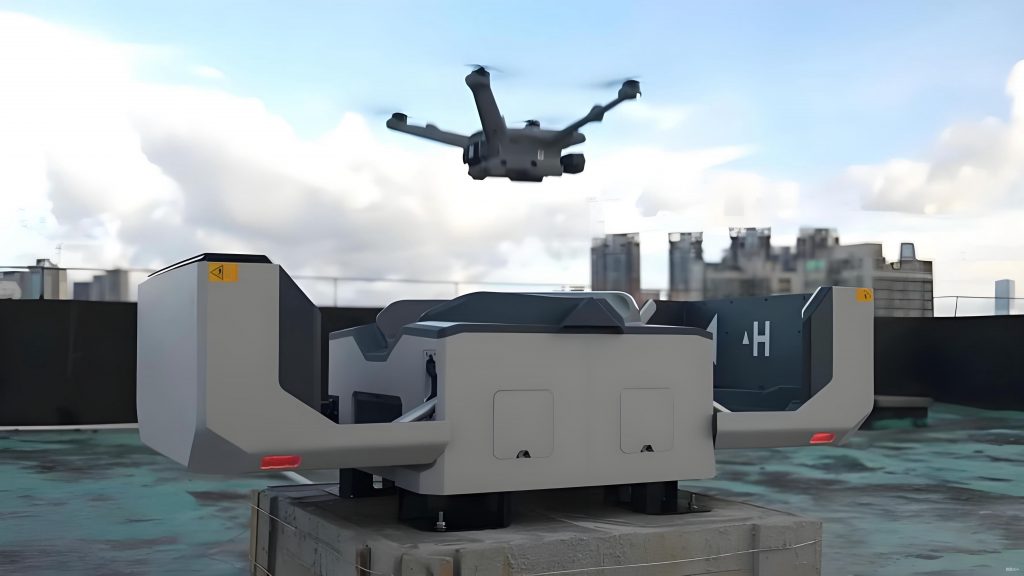
Such a platform enables functionalities like digital flight planning, real-time airspace status, strategic de-confliction of flight intentions, and urgent communication with operators. Authorities can issue real-time alerts or emergency instructions to drones in a specific volume of airspace. Crucially, UTM paves the way for the seamless integration of civilian drones into increasingly crowded lower airspace alongside traditional manned aviation. Its performance in ensuring safety can be conceptualized as a system reliability function:
$$ R_{UTM}(t) = e^{-\lambda t} $$
where $R_{UTM}(t)$ is the probability the UTM system performs without a critical failure up to time $t$, and $\lambda$ is the constant failure rate, which rigorous design and testing aim to minimize.
Conclusion
The integration of civilian drones into societal and economic fabric is inevitable and holds immense promise. However, this integration must be guided by a pre-emptive, nuanced, and adaptive legal-regulatory framework. The analysis must extend beyond mere flight physics to encompass data security, privacy ethics, and economic liability. Law, by its nature, reacts to developed realities; therefore, continuous, interdisciplinary research into the evolving use-cases and associated risks of civilian drones is paramount. By adhering to principles of balance, coordinated development, and inclusive consultation, and by implementing a layered framework centered on competency, certified technology, smart airspace management, and digital traffic coordination, we can mitigate risks and unlock the full, safe potential of civilian drone technology. The ultimate goal is a harmonious sky where innovation and safety coexist, fostering public trust and enabling sustainable growth in this dynamic sector.