
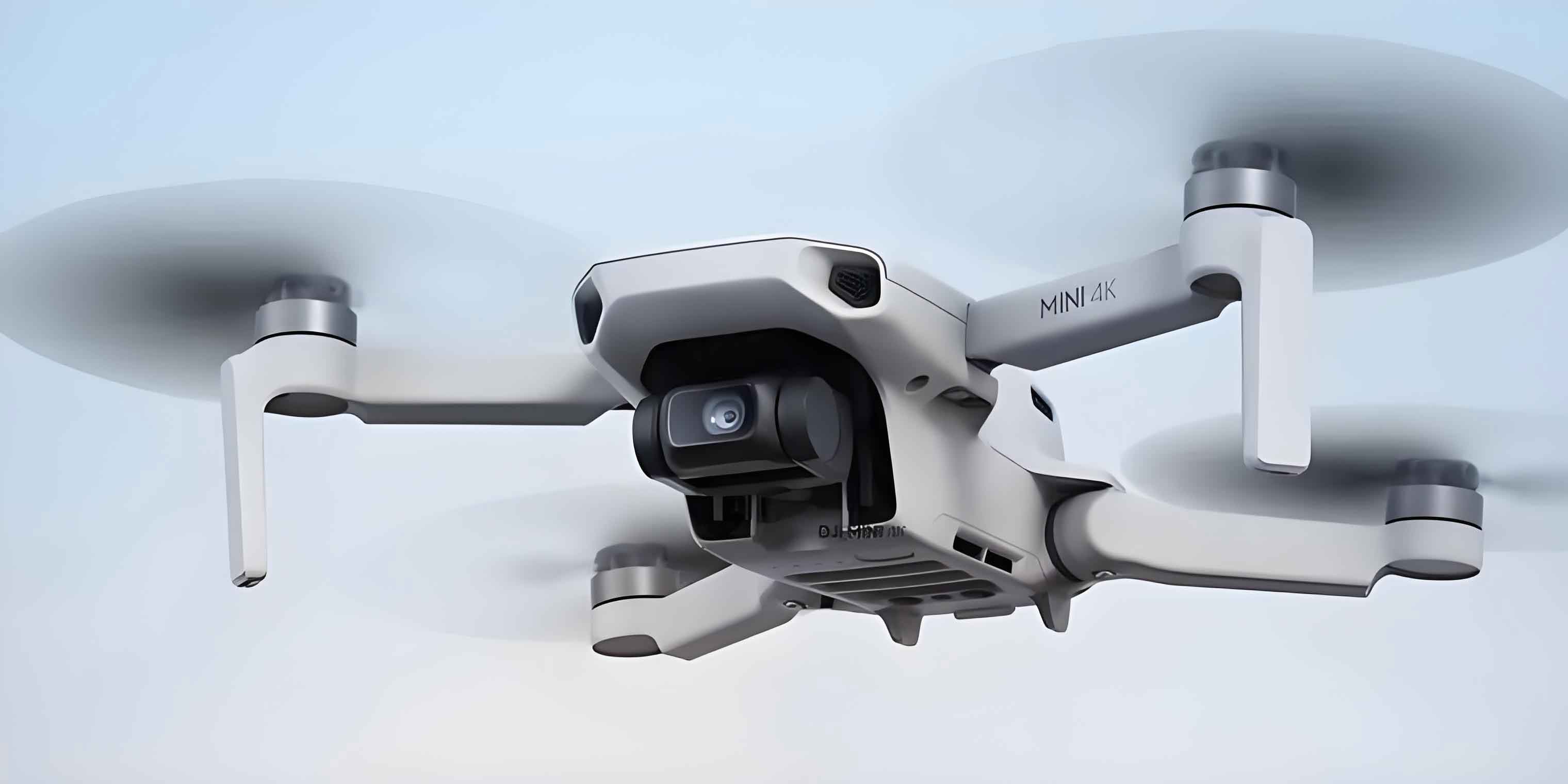
The rapid ascent of the low-altitude economy has firmly positioned the **unmanned drone** as a pivotal technological enabler. From urban logistics and infrastructure inspection to precision agriculture and emergency response, the applications for these versatile systems are expanding at an unprecedented rate. However, this operational expansion thrusts **unmanned drones** from the relative calm of open skies into the highly complex and often hostile aerodynamic environments characteristic of sub-1000-meter airspace. Unlike high-altitude flight, the low-altitude regime is a turbulent tapestry woven from intricate wind fields, severe spatial constraints, and increasingly, the proximity of other aerial vehicles. The aerodynamic performance, stability, and ultimately the safety of an **unmanned drone** are profoundly challenged in this domain. This article synthesizes current research, presenting a first-person perspective on the tripartite aerodynamic challenges facing low-altitude **unmanned drone** operations: complex wind fields, spatially constrained environments, and multi-**unmanned drone** settings. I will systematically dissect the characteristics, modeling approaches, and resultant aerodynamic impacts of each environment, culminating in a discussion of persistent challenges and future research trajectories.
### 1. The Turbulent Crucible: Complex Low-Altitude Wind Fields
The atmospheric boundary layer (ABL) is the arena for low-altitude **unmanned drone** flight. Its flow is inherently turbulent, non-stationary, and dramatically modified by surface interactions. For an **unmanned drone**, especially small-scale variants with low inertia, these wind fields are not merely a nuisance but a primary source of destabilizing forces and control challenges.
#### 1.1 Characteristics and Modeling of Low-Altitude Wind
Low-altitude wind is marked by strong shear, high turbulence intensity, and significant spatiotemporal variability. Mechanical forcing from ground roughness and thermal convection from surface heating are the primary generation mechanisms. In urban corridors, this complexity is amplified through wind-structure coupling, leading to phenomena like street canyon flows, corner accelerations, and unsteady wake interactions behind buildings. The wind field around an **unmanned drone** in a city is a superposition of these multi-scale phenomena.
Computational Fluid Dynamics (CFD) is the cornerstone for modeling these environments. The choice of turbulence model dictates the fidelity and computational cost. While Reynolds-Averaged Navier-Stokes (RANS) models offer practical solutions for time-averaged flow studies, they fail to capture the unsteady gusts critical for **unmanned drone** response. The governing RANS equations for incompressible flow are:
$$ \frac{\partial \bar{u}_i}{\partial x_i} = 0 $$
$$ \frac{\partial \bar{u}_i}{\partial t} + \bar{u}_j \frac{\partial \bar{u}_i}{\partial x_j} = -\frac{1}{\rho}\frac{\partial \bar{p}}{\partial x_i} + \nu \frac{\partial^2 \bar{u}_i}{\partial x_j \partial x_j} – \frac{\partial \overline{u’_i u’_j}}{\partial x_j} $$
where \( \bar{u}_i \) and \( \bar{p} \) are the mean velocity and pressure, and \( \overline{u’_i u’_j} \) is the Reynolds stress tensor requiring modeling.
For high-fidelity simulation of the transient wind hazards an **unmanned drone** might face, Large Eddy Simulation (LES) or hybrid models like Detached Eddy Simulation (DES) are essential. LES directly resolves large, energy-carrying eddies while modeling subgrid-scale effects:
$$ \frac{\partial \tilde{u}_i}{\partial t} + \tilde{u}_j \frac{\partial \tilde{u}_i}{\partial x_j} = -\frac{1}{\rho}\frac{\partial \tilde{p}}{\partial x_i} + \nu \frac{\partial^2 \tilde{u}_i}{\partial x_j \partial x_j} – \frac{\partial \tau_{ij}^{sgs}}{\partial x_j} $$
where \( \tilde{u}_i \) denotes filtered velocity and \( \tau_{ij}^{sgs} \) is the subgrid-scale stress tensor. Recent advances integrate machine learning with CFD, using deep learning models like Convolutional Neural Networks (CNNs) or Fourier Neural Operators (FNOs) to either accelerate simulations or reconstruct full wind fields from sparse sensor data, promising near-real-time wind prediction for **unmanned drone** path planning.
#### 1.2 Experimental Replication and Aerodynamic Impact
Experimentally, wind tunnels equipped with spires, roughness elements, and active grids are used to simulate atmospheric boundary layers and gust fields. More recently, Fan Array Wind Generators (FAWGs) or “wind walls” have emerged, capable of generating programmable, spatially-varying wind fields to test **unmanned drone** response in highly dynamic conditions.
The aerodynamic impact on an **unmanned drone** is multifaceted. Complex wind fields directly alter the inflow conditions to the rotors, causing fluctuations in thrust and torque. A simplified model for rotor thrust \( T \) under varying axial inflow velocity \( V_z \) can be expressed through momentum theory:
$$ T = 2 \rho A (V_z + v_i) v_i $$
where \( \rho \) is air density, \( A \) is rotor disk area, and \( v_i \) is the induced velocity, which itself is a function of the total inflow. Unsteady winds make \( V_z \) a time-varying parameter, leading to complex, non-linear thrust dynamics. Furthermore, wind shear and gusts impose differential loads across the airframe and rotors of a multi-rotor **unmanned drone**, generating disturbance moments that the flight controller must reject. The table below summarizes key low-altitude wind phenomena and their primary impact on **unmanned drone** aerodynamics.
| Wind Phenomenon | Characteristics | Primary Aerodynamic Impact on Unmanned Drone |
|---|---|---|
| Atmospheric Turbulence | Random velocity fluctuations with a wide range of scales (eddies). | Broad-spectrum excitation causing vibration, fluctuating loads on rotors and airframe, and tracking errors. |
| Wind Shear | Sustained change in wind speed/direction with altitude or horizontal distance. | Differential thrust/load across rotors, leading to rolling/pitching moments and altitude drift. |
| Gusts (Discrete) | Short-duration, coherent increase in wind speed. | Sudden translational acceleration, transient attitude disturbance, potential for pilot-induced oscillation. |
| Building Wake & Street Canyon | Separated, recirculating, and channeled flows with high vorticity. | Severe, localized wind direction changes; violent turbulence; possible loss of lift or uncontrollable rotation. |
### 2. The Wall Effect: Aerodynamics in Spatially Constrained Environments
A defining feature of low-altitude **unmanned drone** missions—such as indoor inspection, bridge monitoring, or warehouse inventory—is operation in close proximity to surfaces. The presence of walls, ceilings, and floors fundamentally alters the flow field generated by the drone’s rotors, creating “ground,” “ceiling,” and “sidewall” effects. These are not merely variations of a single phenomenon but distinct aerodynamic interactions with unique consequences for an **unmanned drone**.
#### 2.1 Fundamental Wall Effect Theories and Models
When a rotor operates near a surface, its wake is obstructed and re-circulated. The most studied case is the ground effect (IGE). A classic analytical model for the thrust increase of a rotor in ground effect, compared to out-of-ground effect (OGE) thrust \( T_\infty \), is given by:
$$ \frac{T_{IGE}}{T_\infty} = \frac{1}{1 – \left(\frac{R}{4z}\right)^2} $$
where \( R \) is rotor radius and \( z \) is the height above ground. This model, derived from image vortex methods, predicts increased thrust due to a reduction in induced velocity \( v_i \). Conversely, the ceiling effect typically shows a more complex relationship, often modeled empirically. For a ceiling at height \( h_c \), a modified form can be:
$$ \frac{T_{CE}}{T_\infty} \approx 1 + k_c \left(\frac{R}{h_c}\right)^{n_c} $$
where \( k_c \) and \( n_c \) are empirical constants, with studies showing this can also increase thrust but with different flow mechanisms. The sidewall effect is generally weaker in terms of net thrust change but critical as it breaks symmetry, inducing a yawing moment on the **unmanned drone**. A representative model for the side force \( F_s \) due to a sidewall at distance \( d_s \) is:
$$ F_s \approx \frac{\rho (\Omega R)^2 R^3}{d_s} \cdot C_F(\theta) $$
where \( \Omega \) is rotational speed and \( C_F \) is a coefficient dependent on the rotor’s azimuthal position \( \theta \) relative to the wall.
#### 2.2 Complex and Coupled Wall Interactions
Real-world scenarios for an **unmanned drone** rarely involve a single, infinite plane. Complex interactions arise from angled surfaces (e.g., a sloped roof), finite-sized obstacles, and the coupling of multiple walls (e.g., a corner or corridor). In a corner, the flow from a rotor can be entrapped, leading to a “fountain effect” that significantly alters pressure distribution and can cause severe thrust loss and instability for the **unmanned drone**. The following table classifies wall effects and their implications.
| Constraint Type | Description | Aerodynamic Consequence for Unmanned Drone | Typical Modeling Challenge |
|---|---|---|---|
| Ground Effect | Rotor operating near a horizontal surface below it. | Increased thrust, reduced power requirement for hover. Can become non-uniform and unstable at very low heights. | Modeling thrust augmentation and transition to unsteady flow at z/R < 0.5. |
| Ceiling Effect | Rotor operating near a horizontal surface above it. | Increased thrust and efficiency due to constrained outflow. Risk of “suction” or adhesion force at very close distances. | Capturing the pressure build-up above the rotor and the resulting force/moment transients. |
| Sidewall Effect | Rotor operating near a vertical surface. | Asymmetric rotor loading, leading to a lateral force and yaw moment. Minor net thrust variation. | Predicting the asymmetric induced velocity field and the resulting periodic blade loads. |
| Coupled Effect (e.g., Corner) | Rotor operating near the intersection of two or more surfaces. | Complex flow recirculation, often leading to significant thrust degradation, high unsteadiness, and potentially uncontrollable moments. | High-fidelity CFD (e.g., LES) is often required; analytical models are scarce and scenario-specific. |
The control of an **unmanned drone** in these environments is non-trivial. Adaptive or model-predictive controllers that incorporate these proximity-effect models are necessary to maintain stable flight, such as during the precise perching of an **unmanned drone** on a windowsill or its navigation within a narrow pipe.
### 3. The Swarm Sky: Aerodynamic Interference in Multi-Unmanned Drone Environments
As low-altitude traffic densifies, the operational paradigm shifts from isolated vehicles to coordinated fleets or unintentionally proximate systems. In both cases, the aerodynamic wake generated by one **unmanned drone** becomes a significant disturbance for its neighbors. This wake interference is a critical, often limiting, factor for the safety and efficiency of multi-**unmanned drone** operations.
#### 3.1 Wake Characterization and Interaction Mechanisms
The wake of a rotary-wing **unmanned drone** is a concentrated vortex sheet that rolls up into tip vortices, descending and contracting downstream. For a hovering rotor, the induced velocity \( w \) at a point downstream can be approximated using a simple vortex model. The axial velocity in the far wake (Trefftz plane) of a rotor with thrust \( T \) and radius \( R \) at a distance \( r \) from the centerline is approximately:
$$ w(r) \approx -\frac{T}{2\pi \rho \sqrt{V_\infty^2 + (2v_i)^2}} \cdot \frac{1}{r} \quad \text{(for a simplified line vortex model)} $$
where \( V_\infty \) is the flight speed. When a second **unmanned drone**’s rotor ingests this disturbed flow, its effective inflow velocity is modified, altering its thrust and power according to its own rotor dynamics. For two drones in tandem, the downstream vehicle experiences a downwash, reducing its lift and increasing its required power. In echelon formations, the interaction can be more complex, involving lateral velocity components.
The key dimensionless parameters governing the severity of interference on a follower **unmanned drone** are the lateral separation \( \Delta y / D \), vertical separation \( \Delta z / D \), and streamwise separation \( \Delta x / D \), where \( D \) is the rotor diameter. The advance ratio \( \mu = V_\infty / (\Omega R) \) also dictates whether the wake is directed downward or swept backward.
#### 3.2 Modeling for Formation Flight and Swarming
Research into multi-**unmanned drone** aerodynamics spans high-fidelity CFD, reduced-order modeling, and control-integrated approaches. High-fidelity CFD with overset grids can resolve the complex vortex interactions but is prohibitively expensive for control design. A common reduced-order approach is to model each rotor as an actuator disk, superimposing their induced velocity fields. The total induced velocity \( \mathbf{v}_i^{(k)} \) at the location of rotor \( k \) from \( N \) other rotors is:
$$ \mathbf{v}_i^{(k)} = \sum_{j=1, j \neq k}^{N} \mathbf{K}( \mathbf{r}_k – \mathbf{r}_j, T_j ) \cdot \mathbf{v}_i^{j} $$
where \( \mathbf{K} \) is a geometric influence function (often based on potential flow or empirical fits) that decays with distance \( \mathbf{r}_k – \mathbf{r}_j \) and depends on the thrust \( T_j \) of the interfering rotor. This allows for the efficient computation of interference forces and moments on each **unmanned drone** within a swarm.
These models are increasingly integrated into swarm control algorithms. For example, a cost function \( J \) for trajectory planning in a dense swarm might include an aerodynamic penalty term:
$$ J = \int ( \text{Tracking Error} + \text{Control Effort} + \lambda \cdot \Phi_{aero}(\mathbf{v}_i^{(k)}) ) dt $$
where \( \Phi_{aero} \) quantifies the undesirable effects of wake interaction (e.g., increased power or control variance), and \( \lambda \) is a weighting factor. This enables the generation of paths that are not only collision-free but also aerodynamically efficient. The table below categorizes multi-**unmanned drone** operational contexts and their dominant interference characteristics.
| Operational Context | Description | Dominant Aerodynamic Interference | Key Research Focus |
|---|---|---|---|
| Close-Proximity Formation Flight | Drones flying in a precise, coordinated pattern (e.g., V-formation for fixed-wing, geometric clusters for multi-rotors). | Intentional or unavoidable wake immersion. For rotary-wing, the downstream drone experiences downwash (thrust loss). For fixed-wing, upwash/downwash regions affect lift and drag. | Developing accurate, real-time capable interference models for distributed model-predictive control (DMPC) to maintain formation stability and efficiency. |
| Dense Swarming in Confined Airspace | Many drones operating independently but in a shared volume, typical for light shows or certain logistics hubs. | Intermittent and stochastic wake encounters. The net effect is increased control effort and energy consumption across the swarm, with a statistical risk of severe destabilization. | Establishing probabilistic “aerodynamic separation minima” and designing robust controllers that can reject random wake disturbances. |
| Heterogeneous Operations (e.g., Marsupial Systems) | A large carrier drone deploying/retrieving smaller drones. Drones of different sizes and configurations operating together. | The smaller drone operates entirely within the powerful, complex wake field of the larger carrier. Asymmetric and severe loading on the smaller vehicle. | High-fidelity simulation and wind-tunnel testing to map safe approach/departure corridors and docking trajectories for the smaller unmanned drone. |
### 4. Synthesis, Challenges, and Future Vistas
The preceding sections delineate a landscape where the aerodynamics of an **unmanned drone** cannot be considered in isolation. It is a tightly coupled system where the vehicle dynamically interacts with a multifaceted environment. Synthesizing these perspectives reveals several cross-cutting challenges and fertile grounds for future research.
#### 4.1 Core Scientific and Technical Challenges
1. **Multi-Physics, Multi-Scale Modeling:** A grand challenge is the creation of unified, computationally tractable models that can predict the forces and moments on an **unmanned drone** subject to simultaneous gusts, wall proximity, and wake interference. This requires bridging scales from the micro-turbulence in a building wake to the macro-planning of a swarm’s path.
2. **Real-Time Aerodynamic State Estimation:** For effective control, an **unmanned drone** must estimate the *aerodynamic disturbances* it is experiencing, not just its kinematic state. This involves fusing data from onboard sensors (IMUs, airspeed probes, possibly pressure arrays) with prior environmental knowledge (e.g., a city’s wind map) to distinguish wind gusts from wall effects or wake encounters.
3. **Validation and Testing:** Generating high-fidelity, reproducible test environments that combine complex wind, structures, and multiple drones remains difficult. While wind tunnels with active grids and FAWGs advance gust testing, and motion capture systems enable multi-drone flight studies, integrated testing facilities that replicate full low-altitude complexity are rare.
#### 4.2 Future Research Directions
Looking forward, I believe progress will be driven by several converging trends:
* **Physics-Informed Machine Learning (PI-ML):** The fusion of deep learning with fundamental fluid dynamic principles offers a powerful path forward. PI-ML models can be trained on high-fidelity CFD or experimental data to create super-fast surrogate models for wind field prediction, wall-effect force maps, or wake interaction functions, which can then be embedded in **unmanned drone** flight controllers.
* **Morphing and Adaptive Aerodynamics:** Future **unmanned drone** designs may incorporate morphing rotors, variable-geometry ducts, or adaptive surfaces to mitigate environmental effects. For example, a rotor blade whose twist or planform can adapt in real-time could compensate for the asymmetric inflow caused by a sidewall or a neighbor’s wake.
* **Integrated Airspace Management:** As traffic density increases, the concept of “Aerodynamic Weather” will become part of the airspace management lexicon. Dynamic geofencing that considers not just physical obstacles but also hazardous aerodynamic zones (e.g., strong shear layers downwind of a building) will be necessary for safe large-scale deployment of **unmanned drone** fleets.
In conclusion, the journey of the **unmanned drone** into the demanding low-altitude realm has exposed profound aerodynamic interdependencies. Success in this domain—measured by safety, reliability, and efficiency—will hinge not just on better control algorithms or more powerful batteries, but on a deeper, systemic understanding of how the vehicle couples with its fluid environment. By treating the **unmanned drone** not as an isolated entity but as an active participant in a complex aerodynamic dance, researchers and engineers can unlock the full potential of low-altitude operations.