
From my perspective as an observer of modern naval developments, the term “naval military UAV” encompasses a diverse array of unmanned aerial vehicles designed for various missions, capable of being carried, launched, and recovered by surface ships and even submarines. The rapid advancement of contemporary science and technology, coupled with the widespread application of high-tech innovations in this field, has not only enabled the initial deployment of military UAVs on aircraft carriers for tasks such as theater reconnaissance, communication relay, and targeted strikes but has also led to an increasing variety, performance, and models of these systems. In terms of size, weight, range, launch and recovery methods, onboard equipment, and specific mission capabilities, military UAVs are increasingly meeting the operational requirements of general surface combatants and submarines, thereby beginning to demonstrate immense potential to influence and transform future naval warfare methods and even the very nature of conflict. Undoubtedly, with the continuous development of naval military UAV technology, their technical level, mission functions, and combat applications will mature in the relatively near future, inevitably prompting a new revolutionary change in modern navies and the maritime battlefield.
I believe that naval military UAVs serve as a force multiplier for modern maritime power. When military UAVs are deployed on aircraft carriers—large floating airfields at sea—they primarily showcase advantages over manned aircraft, such as simplified takeoff and landing, operational flexibility, low cost, avoidance of personnel casualties, good concealment, and strong security. For navies possessing large aircraft carriers, the development of military UAVs is still at a stage where they can replace manned aircraft in high-risk battlefield environments and for ultra-long-duration missions, yet this alone is insufficient to cause a qualitative leap in the overall combat capability of modern carrier fleets. However, when multi-functional military UAVs can be deployed from general surface ships or even submarines, their significance for a single vessel or an entire fleet becomes far more profound. These military UAVs can not only perform tasks currently undertaken by shipborne helicopters but also possess unparalleled advantages in deployment capability, operational cost, and mission scope. Moreover, by exponentially expanding the observation, surveillance, and strike ranges of ships and fleets, they can substantially multiply the overall combat capability of combat vessels.
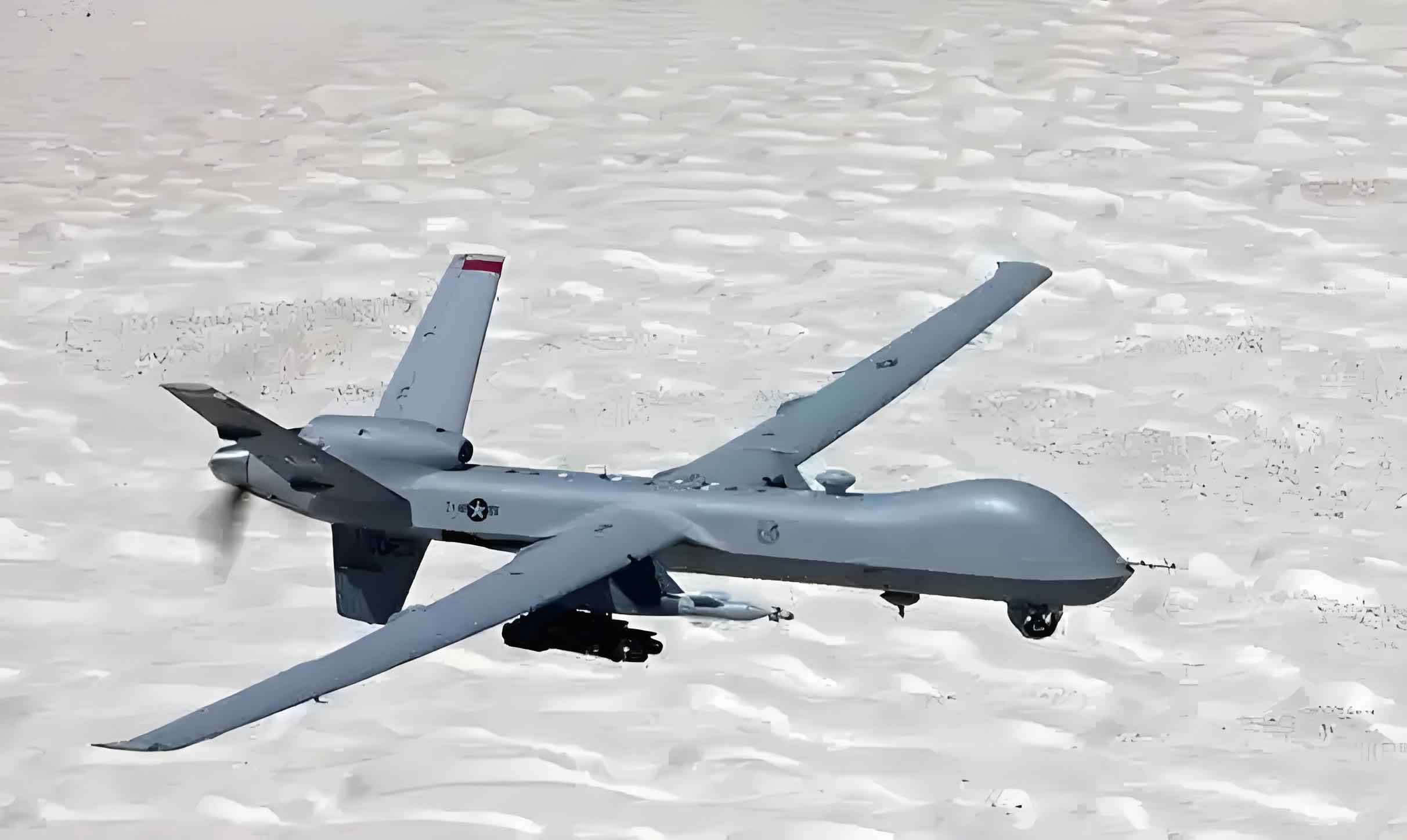
In my analysis, the current generation of naval military UAVs entering practical use on destroyers and frigates in developed navies worldwide must be relatively small in dimensions and volume, as well as lightweight, to accommodate the limited space on combat vessels. Whether employing short takeoff, vertical takeoff and landing, or booster-assisted launch, these systems have no particularly stringent usage requirements. Despite their compact size, they extensively incorporate modular microelectronic equipment, miniature and efficient information communication systems, and even weapon systems. Consequently, they are evolving from current roles in battlefield reconnaissance, communication relay, and electronic warfare toward unmanned attack operations against land, sea, and air targets. The proliferation of military UAVs is a testament to their versatility and strategic value.
First, let’s consider battlefield reconnaissance, which is arguably the most widely and maturely applied domain for military UAVs. Modern technology enables the smallest military UAVs, with volumes and structures comparable to earlier remote-controlled aircraft models, to be conveniently deployed and operated from general surface ships. They can carry advanced, lightweight electro-optical, infrared, and radar detection devices simultaneously or separately, leveraging their long endurance, high flight altitude, and low detectability to perform reconnaissance missions. These shipborne unmanned reconnaissance aircraft can conduct long-term real-time observation and monitoring of sea areas beyond the detection range of shipborne radars during peacetime, and in wartime, they can perform tactical, operational, and strategic reconnaissance over vast theaters, even providing early warning in critical directions, thereby expanding the observation distance and area of combat vessels by several orders of magnitude. Currently, developed navies are not only beginning to field shipborne unmanned reconnaissance aircraft but are also striving to advance them toward stealth capabilities, all-weather operability, and improved target resolution. The increasing sophistication of military UAVs in reconnaissance roles underscores their critical role in modern naval operations.
Communication relay military UAVs are models capable of long-endurance cruising at medium or high altitudes, carrying radio relay communication equipment to serve as nodes in theater information networks for battlefield communication relay and switching. The use of military UAVs for communication relay has gained increasing attention since the 1990s, enabling over-the-horizon guidance for ship-to-ship and ship-to-land missiles with extended ranges. As is well known, due to the Earth’s curvature, most shipborne fire-control radars have a maximum effective range of only tens of kilometers. To fully utilize missiles with ranges of hundreds or even thousands of kilometers, the problem of long-distance guidance equipment must be solved. While previously used manned platforms partially met the needs for relay guidance of long-range strike weapons, they are clearly inferior to military UAVs in terms of sortie capability, response speed, battlefield concealment, and survivability. Naval military UAVs have a low probability of detection, strong survivability in complex or high-threat environments, and no risk of personnel casualties, making them ideal nodes and platforms for over-the-horizon combat relay guidance. Currently deployed systems like the German Navy’s “Sea Avionics” and the British Navy’s “Sky Spy” fall into this category. The evolution of military UAVs as communication assets highlights their strategic importance in networked warfare.
In the modern maritime battlefield, electronic warfare is among the most critical operational methods, and naval military UAVs are already capable of playing very significant roles in maritime or naval air electronic combat. For instance, prior to engagements, naval military UAVs equipped with electronic reconnaissance and electronic countermeasures equipment can be deployed into mission areas to scout enemy electronic, communication, and command systems, even luring enemy radars to activate and expose their operational parameters—a highly necessary yet extremely dangerous mission. Military UAVs executing electronic jamming tasks can accompany own long-range strike weapons, manned or unmanned attack aircraft formations into combat, providing cover for these assets through active or passive jamming. Based on the performance of small military UAVs that have undertaken such tasks in past land battles (e.g., during the 1982 Lebanon War, where Israeli forces used similar tactical means when attacking Syrian air defense missile sites in the Bekaa Valley), employing naval military UAVs for such roles is not only feasible but essential. The adaptability of military UAVs in electronic warfare demonstrates their multi-role potential.
With continuous advancements in technology and performance, naval military UAVs will eventually be able to undertake missions such as attacking maritime and ground targets, air combat, and even intercepting incoming missiles—tasks previously only performed by manned fighter aircraft. When this goal becomes reality, the use of ship-based air power will no longer require consideration of personnel casualties as it does today and will be more suitable for covert penetration operations. Since military UAVs are not constrained by human physiological and psychological factors, they can be developed toward hypersonic speeds and maneuverability with nearly 20G overloads based on mission requirements, endowing them with more advanced and powerful combat performance. The future of military UAVs in strike roles promises to redefine aerial combat dynamics.
From my observation, the rapid evolution of aviation, electronics, and other technologies, especially the comprehensive application and飞速发展 of navigation, communication, propulsion, automatic control, materials, and artificial intelligence in the aerospace field, has rapidly elevated the technological level of contemporary military UAVs to an unprecedented new height. Modern advanced autonomous control technology enables military UAVs to evolve from early radio remote control to autonomous takeoff, landing, and mission execution along pre-set routes. The integration of advanced aerodynamic design and control technology, information technology, high-performance engine technology, and onboard equipment further drives military UAVs toward faster flight speeds, higher altitudes, and enhanced tactical performance for various military missions. Moreover, the application and continuous improvement of mature stealth technologies, such as integrated design, structural materials, radar-absorbent coatings, infrared suppression, and engine noise reduction, significantly enhance the concealment of military UAVs in modern battlefield environments. Looking ahead, there is no reason to doubt that the development prospects of naval unmanned combat aircraft are far broader than those of manned combat aircraft. The technological trajectory of military UAVs suggests a paradigm shift in naval aviation.
In the field of naval military UAVs, the United States Navy has undoubtedly been at the forefront globally. The U.S. military has not only deployed large-sized military UAVs on aircraft carriers and other large surface ships for relevant missions but has also actively researched and tested small-sized, multi-mission, and high-performance military UAVs deployable on general surface combatants. As early as June 2005, the U.S. Navy held a naval UAV aerial demonstration at a naval air station, highlighting the技术和能力 of naval military UAVs. This demonstration showcased various models and用途 of naval military UAVs, including “Neptune,” RQ-2B “Pioneer,” “Dragon Eye,” “Silver Fox,” “Sentry,” “Skylark,” “Scan Eagle,” and “Fire Scout,” with the most attention-grabbing being a full-scale Joint Unmanned Combat Air System X-45C. This unmanned combat aircraft will undertake missions such as suppression of enemy air defenses, aerial strikes, electronic attack, surveillance, and reconnaissance in future maritime battlefields. This demonstration provided a deeper impression of the application scope and development direction of U.S. naval military UAVs. In recent years, U.S. Navy experts have envisioned配置 10-15 small multi-functional unmanned combat aircraft on future “Ticonderoga”-class cruisers and “Arleigh Burke”-class destroyers. The envisioned unmanned combat aircraft would use specially developed, space-efficient electromagnetic catapults for launch and conventional low-speed landing or mechanical arm recovery. By configuring different mission modules, these military UAVs could flexibly perform maritime reconnaissance, early warning, communication relay, combat attack, and even anti-submarine warfare tasks, thereby multiplying the overall combat capability of the host ship. In such a scenario, only a few such surface combatants could execute missions previously only manageable by large carrier strike groups, with greater concealment, cost-effectiveness, and no risk of personnel casualties. The realization of this vision seems not far off. The U.S. focus on military UAVs underscores their strategic priority in maintaining maritime dominance.
Turning to the development of military UAVs in other regions, particularly China, from国内外相关报道及评论, research on military UAVs in China began in the late 1950s. After a period of exploratory research, the basic principles of autonomous takeoff and landing were understood, and actual aircraft development commenced in the mid-to-late 1960s. In 1968, the state assigned the task of developing a high-speed unmanned target drone for fighter aircraft, surface-to-air missile, and anti-aircraft artillery training, undertaken by Nanjing Aeronautical Institute. The model was successfully developed in the mid-1970s and designated as the Target-5 unmanned target drone. This aircraft drew on some technologies from early imported Soviet La-17 target drones, featuring a conventional aerodynamic layout, slender rotating body fuselage, rectangular wings, parabolic rotating body streamlined shapes at the nose and tail, a cylindrical middle section, an engine nacelle suspended under the fuselage, wingtip pods, and rectangular horizontal and vertical tails. It used nearly retired domestic WP-6 turbojet engines as powerplants and domestic autopilots. The Target-5 military UAV employed a three-wheel unpowered takeoff trolley for automatic taxiing takeoff; when nearing takeoff speed, it separated from the trolley, climbed under program control, then continued climbing via radio remote control, later transitioning to level flight or other maneuvers as needed. The target drone could be guided into the target area multiple times; if not shot down within its maximum endurance, it could be guided to land via belly landing for recovery and reuse after repair. The Target-5 (CK-1) military UAV had a length of 8.435 meters, wingspan of 7.5 meters, height of 2.955 meters, empty weight of 2000-2500 kg, fuel capacity of 600-840 kg, flight speed of 850-900 km/h, range of 600 km, endurance of 70 minutes (low altitude) or 45-60 minutes (high altitude), maximum ceiling of 18,000 meters, and typical operating altitude of 500-5000 meters. This military UAV had series models including low-altitude target drones, high-maneuverability target drones, and ultra-low-altitude target drones. Its improved version, CK-1A, successfully completed aerial sampling missions for nuclear tests four times, entirely replacing the earlier method of using manned aircraft. The early development of military UAVs in China laid a foundation for future advancements.
In 1969, the state assigned the task of developing a high-altitude unmanned photographic reconnaissance aircraft for military reconnaissance, aerial photography, target drone use, geological survey, and atmospheric sampling, undertaken by the then Beijing Aeronautical Institute. The aircraft was successfully developed in the late 1970s and designated as the WZ-5 military UAV. During its development, reference was made to U.S. “Firebee” high-altitude unmanned reconnaissance aircraft shot down and captured multiple times by the Chinese Air Force in territorial air defense operations in the 1960s, resulting in a very similar外形. The WZ-5 was launched from a母机 wing pylon. The initial carrier aircraft was a specially modified early imported Soviet Tu-4 bomber, later replaced by domestically produced Y-8 transport aircraft. The WZ-5 had a length of 8.97 meters, wingspan of 9.76 meters, height of 2.18 meters, empty weight of 1060 kg, maximum takeoff weight of 1700 kg, fuel weight of 620 kg, and mission equipment weight of 65 kg. It was equipped with a small, short-life WP-11 turbojet engine, a complete set of automatic control systems, and radio remote control and telemetry systems. The fuselage was divided into radar compartment, photographic compartment, fuel tank, engine nacelle, avionics compartment, and parachute compartment. When performing visible light photographic reconnaissance, the camera lens could tilt-rotate around its longitudinal axis or point vertically downward, shooting from five photographic windows. The WZ-5 had no takeoff or landing gear and was air-dropped from the carrier aircraft at 400-5000 meters altitude. After release, the military UAV automatically climbed to operating altitude,飞行 under pre-programmed control for altitude, speed, flight time, and range. After mission completion, it automatically returned to the recovery area上空 and parachuted for recovery under program or remote control. The WZ-5 had an endurance of 3 hours, range of 2500 km, maximum flight altitude of 17,500 meters, and maximum speed of 800 km/h, representing a high-performance multi-purpose high-altitude military UAV and a significant leap in China’s military UAV technology. This military UAV achieved design finalization in 1980 and entered service with the Chinese Air Force in 1981. The success of the WZ-5军事 UAV demonstrated China’s growing capabilities in this domain.
From the late 1970s, China’s Northwestern Polytechnical University conducted in-depth exploration and research on flight dynamics, autopilots, high-precision navigation, small airborne remote sensing instruments, and large-scale aerial surveying based on small model target drones, achieving important progress. In 1982, the D-4 low-speed small unmanned aircraft was successfully developed. This military UAV had a length of 3.3 meters, wingspan of 4.3 meters, maximum takeoff weight of 140 kg, powered by a small piston engine, launched from a zero-length launcher using booster rockets, and recovered by parachute. It was equipped with an autopilot, controlled and guided via radio remote control telemetry and positioning systems to fly预定航线; when航迹精度要求不高, it could also fly under program control. The D-4 military UAV had an operational radius of 40 km and could carry 28 kg of specialized仪器设备. Its wings and tail could be quickly assembled and disassembled, making it extremely convenient for use and transport. After its development, the application areas of the D-4 rapidly expanded from aerial photography to topographic surveying, urban surveying, railway, mining, river, and oil field exploration; forest, agricultural, and fishery yield estimation; soil conservation; flood reconnaissance; and archaeology. It could also be modified into small military UAVs with frontline reconnaissance and electronic jamming military用途. The versatility of such military UAVs highlighted their potential for both civilian and military applications.
From the 1980s to 1990s, with rapid development in China’s aviation, machinery, electronics, and other fields, as well as日益广泛的需求 from national economic and defense construction, China’s military UAV research and development entered a period of rapid growth. Not only did more related research and production institutions enter this field, but他们也 achieved a dazzling array of fruitful results in a relatively short period. In large military UAV research, Chinese researchers not only successfully modified several retired combat aircraft into military UAVs to extend their service life but also developed large supersonic military UAVs based on supersonic fighters, demonstrating strong capabilities in this area. In small and微型 military UAV research, the newly established Xi’an UAV Research and Development Center (Xi’an Aisheng Technology Group) emerged prominently. Its D-series, B-series, and ASN-series small military UAVs not only featured diverse varieties but also offered excellent performance and wide applications. Especially, the ASN-series small military UAVs have not only entered service with the Chinese military but have also successfully entered the international market. The ASN-104,批量装备中国陆军, similar in size and weight to the contemporary D-4 military UAV, is a small low-altitude low-speed unmanned reconnaissance aircraft. It is equipped with an omnidirectional flight control system, radio remote control/telemetry system, aerial cameras, and TV cameras, launched via rocket assist, with an endurance of 2 hours, range of 300 km, remote control distance of 60 km, primarily used for military reconnaissance and civilian aerial surveying, providing空中侦察及实时监视 for the army within 60 km纵深. Its developed version, ASN-105, increased the remote control distance to 100 km; this军事 UAV received the National Science and Technology Progress二等奖. Another more capable tactical unmanned reconnaissance aircraft in the series, ASN-206, is slightly larger: length 3.8 meters, wingspan 6 meters, height 1.4 meters; maximum takeoff weight 222 kg, maximum payload 50 kg, service ceiling 6000 meters, flight speed 210 km/h, range 150 km, endurance 4-8 hours; launched via booster rocket, parachute recovery, powered by a 37.3 kW piston engine; main onboard equipment includes monochrome or color multi-function vertical and panoramic cameras, infrared detection equipment, TV cameras, laser rangefinders and designators, positioning and correction equipment, etc., operated by a digital flight control and management system, maintaining contact with the ground via built-in radio systems and an advanced mission control system, with real-time transmission of video from optical/infrared cameras to ground接收站, providing real-time reconnaissance capability. It can be used for昼夜空中观测, battlefield reconnaissance, target定位, fire correction, border patrol, nuclear radiation sampling, aerial mapping, and electronic countermeasures, among other tasks. The ground support system for the ASN-206 is relatively simple and convenient, including several 6×6 flatbed trucks as transport/launch vehicles and a vehicular ground control station. This军事 UAV won the National Science and Technology Progress一等奖. The ASN系列 military UAVs exemplify China’s progress in tactical无人机 systems.
In addition to traditional fixed-wing military UAVs, Chinese research institutions have also made breakthroughs in vertical takeoff and landing military UAVs, with several unmanned helicopters亮相 at air shows. Among them, the more technologically complex and advanced is the “Seagull” unmanned helicopter developed by Beijing University of Aeronautics and Astronautics. This military UAV employs the same coaxial counter-rotating dual-rotor design as the famous Russian Kamov “Spiral” series unmanned helicopters, with excellent vertical takeoff and landing capabilities offering significant practical value and broad application prospects for small surface ships and even submarines. The development of such military UAVs enhances operational flexibility in naval contexts.
During the Zhuhai Air Shows from 2000 to 2002, China Aviation Industry Corporation I (AVIC I) Guizhou Industrial Group publicly displayed its developed long-range multi-function stealth unmanned reconnaissance aircraft—Unmanned Reconnaissance 9 (also referred to as WZ-9 or WZ-2000), attracting high attention from海外传媒. Some海外评论 noted that this军事 UAV总体上 resembled the U.S. “Global Hawk” advanced technology unmanned reconnaissance aircraft in many aspects: employing a blended wing-body design and slightly outward-canted dual vertical tails, with a prominently raised nose (presumably housing satellite communication antennas for real-time transmission of electronic intelligence data and images from long distances to ground control centers). According to the company’s exhibition description, the WZ-9 can carry various advanced optical and thermal imaging cameras or airborne reconnaissance, surveillance radars for long-range reconnaissance missions, and can also be used for aerial early warning and electronic warfare, and even carry air-to-ground attack weapons. Although the WZ-9’s dimensions are smaller than the U.S. “Global Hawk,” the public亮相 of this advanced design is of非凡 significance, sufficiently demonstrating that China’s military UAV research and development have entered the ranks of world先进水平. Overseas评论 particularly noted that as early as the 1998 Zhuhai Air Show, Chinese research departments had displayed an advanced virtual reality control system, a technology often closely associated with future advanced unmanned combat aircraft systems. Overseas评论 also pointed out that while it is difficult to speculate whether China has plans to develop军事 UAVs similar to the U.S. Boeing X-45 unmanned combat aircraft公开, it is certain that China is making efforts in this direction. The WZ-9军事 UAV represents a step toward high-altitude long-endurance capabilities.
In 2004, overseas reports indicated that the Chinese military had already equipped an unspecified number of Israeli “Harby” anti-radiation作战 military UAVs as early as the 1990s. This military UAV is equipped with radar radiation sensors, bombs, and an automatic flight control system, capable of cruising in the area of target radars for up to 2 hours, during which一旦受到雷达波束照射, it is immediately guided to实施自主攻击 against the target. Transferring such small anti-radiation作战 military UAV systems to大、中型水面战斗舰艇 poses no significant technical障碍. The introduction of this type of unmanned combat aircraft will undoubtedly greatly promote the research and development of related systems in China. The integration of such military UAVs enhances anti-access/area-denial capabilities.
At the 2006 Zhuhai Air Show, multiple Chinese军事 UAV research and development institutions collectively showcased numerous军事 UAV实物或模型以及未来概念机型, with a variety unseen in years, including multiple unmanned target drones, large, medium, and small unmanned reconnaissance aircraft; unmanned helicopters up to unmanned combat aircraft, covering tactical, theater reconnaissance, communication relay, combat attack, electronic warfare, and other various用途, demonstrating that China’s军事 UAV research and development have moved beyond previous单一化, simple development models and are rapidly transitioning toward more综合化, 系统化, and复杂化的 directions. During the air show, particularly notable were the “Xianglong” high-altitude high-speed long-endurance unmanned reconnaissance aircraft推出 by AVIC and the全新设计 “Dark Sword” unmanned combat aircraft concept model. Other domestic参展部门 displayed SH-1 and SH-3 small multi-purpose military UAVs, “Tianyi” tactical unmanned reconnaissance aircraft, TF-1 meteorological detection military UAV, and PW-series military UAVs, among others. Among them, the “Dark Sword” advanced unmanned attack/combat concept aircraft incorporates stealth, supersonic, and super-maneuverability characteristics, marking that China’s军用军事 UAV research水平 has entered the forefront of the world today. This air show served as an整体检阅 of China’s technological strength in the军事 UAV research field, giving the外界 a more直观的印象和感受 of the rapid advancement in China’s technological level in this area. It is believed that soon many models will become important equipment for China’s defense forces, and many models will be further improved and perfected, sufficiently表明 that China is即将进入军事 UAV时代. The proliferation of military UAVs at such events signals China’s commitment to this technology.
Looking ahead, the importance and necessity of naval军事 UAVs for the future development of the Chinese Navy are self-evident. Therefore, before more related information is公开, the外界 is more concerned with China’s actual capabilities,水平, and动向 in this critical field. Based on the products, concept models, and overall strength displayed by China in recent air shows, there is no doubt that China完全有能力研制能够在现役大、中型水面战舰上携带、使用和执行特定任务的小型军事 UAVs. In fact, years ago, Chinese军事 UAV research departments, in collaboration with the navy, conducted application tests of small军事 UAVs on surface ships, achieving technological breakthroughs and积累. Although the light, small军事 UAVs tested on ships in the early stages were at较低水平 in terms of operational technology, control technology, range, ceiling, and carried equipment capabilities, they made substantive progress and gains in exploring the launch, control, and recovery of shipborne军事 UAVs from surface combatants. From公开的相关图文, the早期 tested military UAV was a D-4 class or even smaller low-speed small reconnaissance/surveillance-type军事 UAV, launched from the forward deck of a 370-ton “Hainan”-class submarine chaser using a very small发射架 with booster rocket assistance, with recovery via parachute or ship-set拦阻网—the latter being more practical at sea. This small军事 UAV carried relatively light equipment, had an endurance of 4-8 hours, and a mission radius of tens to a hundred kilometers. As China’s earliest naval军事 UAV, both its endurance and operational radius were roughly equivalent to contemporary medium shipborne helicopters, though its carried equipment and mission capabilities could not yet compare. This situation and its relatively simple operational functions bear considerable similarity to the early stages of manned aircraft shipboard integration. We know that after a period of development and perfection, manned shipborne aircraft ultimately achieved立体化的海战场 and main force status in decisive battles. By today’s standards, the practical value of China’s initially shipboard-capable军事 UAVs was limited, but their exploration path in this field aligned with that of Western countries, with部分技术基本达到了 the level of the U.S. Navy’s “Pioneer” unmanned reconnaissance aircraft,可以说开辟了一个良好的开端. When future Chinese军事 UAVs achieve巨大跨越式发展 in design, production水平, and various onboard electro-optical equipment, microelectronic equipment, and information communication technology, the development of small advanced naval军事 UAVs for long-range reconnaissance, communication relay, over-the-horizon weapon guidance, naval air electronic countermeasures, and even anti-radiation operations and attacks on sea and land targets for the Chinese Navy should be promptly initiated. In my view, the current more important aspect lies in必须以前瞻性思维极早确定中国海军军事 UAVs的长远发展战略和发展规划 and integrating them into the blueprint for跨越式发展 in future Chinese naval weaponry, operational systems, and combat styles.
As a first stage, on 500-ton or 1000-2000-ton级,具有超弹中继制导及电子对抗任务的小型 naval military UAVs, such as naval versions of the ASN-206军事 UAV or unmanned helicopters, are not only technically feasible but can effectively expand the observation, control, and combat areas of such surface ships, thereby significantly enhancing their overall combat capability. On 3000-ton级以上的大中型水面舰艇, attempts can be made to configure multiple multi-function军事 UAVs, unmanned helicopters, or even类似 “Harby” anti-radiation作战及对海/对陆攻击军事 UAVs capable of carrying more equipment and having longer ranges, to further improve their comprehensive combat capability under modern conditions. Of course, for currently serving Chinese naval surface ships and even submarines, even configuring small naval军事 UAVs and related control equipment can only be arranged in a见缝插针 manner, but there is reason to believe that as军事 UAV functions and roles continue to improve, they will eventually become indispensable equipment, much like current shipborne helicopters. It can be肯定的是 that in the初级阶段 of naval军事 UAVs, they cannot yet replace the currently widely equipped shipborne helicopters on大、中型水面舰艇, but rather will coexist simultaneously, serving as effective supplements to manned helicopters or performing roles that manned helicopters难以发挥 based on mission requirements. However, from a long-term development trend perspective, the eventual replacement of manned aircraft by军事 UAVs is not impossible. As the saying goes, “A journey of a thousand miles begins with a single step,” future naval军事 UAVs will undoubtedly develop into利器 with broader applications and important roles in future maritime battlefields. Although the arrival of this moment still requires time, it must be entered into practice极早, continuously identifying issues, perfecting technology, and accumulating experience in practice. The current Chinese Navy is undoubtedly in an important period requiring the赶上先进世界水平 in equipment technology and加紧完善现代作战体系, especially出于当今外部环境和现代战争条件下捍卫国防安全及国家海上权益的必要, developing sea-based air power represented by manned shipborne combat aircraft and modern aircraft carriers is迫在眉睫. However, times are changing, and science and technology are advancing at a一日千里 pace. Today’s Chinese Navy should have a more前瞻的眼界和思维 in constructing modern sea-based air combat power,无需沿续他国持续数十年斥巨资打造大批重型航母舰队的旧辙, which is neither within the realistic national capacity to bear nor aligns with the Chinese Navy’s mission requirements, and would实际上还必然会表现为在现代科技进步面前的固步自封和刻舟求剑. Although in the next 20-40 years, the Chinese Navy should undoubtedly尽快建立以有人驾驶舰载作战飞机和航空母舰为主、规模强大而又合理、够用的海基航空作战力量, this does not conflict with seeking跨越式发展 in weaponry, operational systems, and combat styles. As one of the important areas and measures for跨越式发展, it is必须尽快将发展先进的海军军事 UAVs落实到未来海军发展战略直至远景规划中 and making unremitting efforts for it. People see that even the United States, which has一直领先于世界, places extreme重视和持续推动 on its naval军事 UAV technological development, not only having many varieties and functions of naval军事 UAVs in service on its surface ships but also conducting紧锣密鼓的研究和试验 for developing large naval军事 UAVs with long endurance, stealth, and combat capabilities deployable on its serving aircraft carriers. From the current situation, the developing X-47N remote stealth unmanned attack aircraft, though still facing technical challenges in air combat capability, can already carry bomb loads exceeding early F-117A manned combat aircraft to实施精确攻击 on known targets, thus possessing considerable practical value. It can be predicted that the X-47N will likely play an important role in future wars, penetrating enemy air defense systems,深入敌方纵深去精确打击、摧毁其军事体系要害. Recently, the U.S. Department of Defense announced that the MQ-8B “Fire Scout” vertical takeoff and landing tactical军事 UAV (VTUAV) developed by Northrop Grumman has reached “Milestone C,” meaning its low-rate initial production phase has begun. In the U.S. Department of Defense acquisition process, the “Fire Scout” is the first U.S. Navy system and the third unmanned system (UAS) across all U.S. services to reach “Milestone C,” a重大意义 step for the “Fire Scout” and all unmanned systems. After completing “Milestone C,” the “Fire Scout” will be able to conduct flight tests with payloads this fall, enter initial operational evaluation, and then as planned achieve initial operational capability in 2008. Of course, military equipment suitable for the U.S. Navy (including naval军事 UAVs)未必一定适合其他国家. In my opinion, naval军事 UAVs similar to the “Harby” in size, structure, usage, and flight performance may suit the naval combat vessels of更多国家, including the Chinese Navy. If developing unmanned combat aircraft carriers in the future, I am more inclined toward future fleets centered on万吨级左右、采用全通甲板的多用途攻击舰, with the无人机母舰 capable of carrying long-endurance early warning aircraft, anti-submarine patrol军事 UAVs, and a considerable number of high-performance stealth multi-function unmanned attack/combat aircraft. It is conceivable that the overall combat capability of such a ship formation would be几乎相当 to today’s carrier strike groups. Of course, such a母舰 does not necessarily need to be designed as a军事 UAV专用航母; it could simultaneously possess强大的两栖作战能力, thus offering greater advantages in usage cost and battlefield survivability.令人欣慰的是, the gap between China and the world’s most advanced levels in the军事 UAV research field is并不象重型航空母舰及有人驾驶舰载机领域那样大. As long as determination is made, advantages集中, and efforts持续, it is完全有可能 to achieve the goal of迎头赶上 in naval军事 UAV applications. Future battlefield military UAVs are essentially flying intelligent robots; when they become the protagonists of the battlefield, they will inevitably trigger another revolution in combat styles and the form of warfare. Experts predict that by the mid-21st century, combat军事 UAVs will趋于成熟和实用化. Placed before the Chinese Navy is无疑是一次实现跨越式发展的重要机遇. Chinese defense科技工作者 working on the front lines of national defense research will surely live up to the expectations of the country and people, making greater contributions to the rise and prosperity of the nation and ethnic group.
To summarize the technical aspects of military UAVs, I find it useful to present key parameters and formulas. For instance, the endurance (E) of a military UAV can be modeled based on fuel consumption and speed. A simple formula is:
$$ E = \frac{F}{C} $$
where \( F \) is the fuel capacity and \( C \) is the fuel consumption rate. For range (R), we have:
$$ R = V \times E $$
with \( V \) being the average velocity. These formulas highlight how军事 UAV design prioritizes efficiency.
Moreover, the cost-effectiveness of military UAVs compared to manned aircraft can be expressed as a ratio:
$$ \text{Cost-Effectiveness Ratio} = \frac{\text{Mission Capability}}{\text{Total Lifecycle Cost}} $$
where mission capability includes factors like payload, endurance, and survivability. Military UAVs often score high due to lower operational costs.
Below is a table summarizing typical military UAV categories and their characteristics:
| Category | Size | Primary Roles | Endurance | Key Technologies |
|---|---|---|---|---|
| Mini/Micro UAVs | Wingspan < 2m | Reconnaissance, Surveillance | 1-4 hours | Lightweight materials, electric propulsion |
| Tactical UAVs | Wingspan 3-8m | Reconnaissance, Communication Relay | 6-24 hours | Modular payloads, autonomous navigation |
| Strategic UAVs (HALE) | Wingspan > 20m | Long-endurance Reconnaissance, SIGINT | 24+ hours | High-altitude engines, satellite comms |
| Unmanned Combat Aerial Vehicles (UCAVs) | Varies | Strike, Air Combat, SEAD | 6-18 hours | Stealth, weapon integration, AI |
| Vertical Takeoff and Landing (VTOL) UAVs | Varies | Ship-based Operations, ASW | 4-12 hours | Rotorcraft design, precision landing |
Another important aspect is the sensor suite integration. The effectiveness of a military UAV’s reconnaissance can be quantified by the resolution (\( \delta \)) of its imaging systems, related to altitude (\( h \)) and sensor characteristics:
$$ \delta = k \cdot \frac{h}{f} $$
where \( k \) is a constant and \( f \) is the focal length. Higher resolution enables better target identification, crucial for军事 UAV missions.
In electronic warfare, the jamming power (\( P_j \)) required by a military UAV to suppress a radar at distance (\( d \)) follows the inverse square law:
$$ P_j \propto \frac{1}{d^2} $$
This underscores the advantage of deploying military UAVs close to targets for effective jamming.
Furthermore, the stealth performance of military UAVs involves radar cross-section (RCS) reduction. The RCS (\( \sigma \)) can be modeled for simple shapes, but in practice, it depends on design, materials, and coatings. A lower RCS enhances survivability, making军事 UAVs harder to detect.
Looking at future trends, autonomous decision-making in military UAVs relies on artificial intelligence algorithms. The level of autonomy (LOA) can be defined on a scale from 0 (remotely piloted) to 10 (fully autonomous). Current military UAVs often operate at LOA 2-4, but future systems aim for LOA 6-8, enabling complex missions like dogfighting. The transition to higher autonomy is a key driver for军事 UAV evolution.
In conclusion, from my第一人称视角, naval military UAVs represent a transformative force in maritime warfare. Their ability to perform diverse missions—from reconnaissance and communication relay to electronic attack and strike—without risking human lives offers unprecedented advantages. As technology advances,军事 UAVs will become more autonomous, stealthy, and capable, potentially reshaping naval strategies and fleet structures. The ongoing developments in countries like the United States and China highlight the global race to harness this technology. For any modern navy, integrating军事 UAVs is not just an option but a necessity to maintain competitive edge. The future海战场 will likely be dominated by networks of intelligent军事 UAVs working in concert with manned platforms, leading to more agile, resilient, and effective naval forces. The journey has just begun, and the potential of military UAVs is limited only by our imagination and innovation.