
This document details my comprehensive design and development process for a versatile quadrotor drone. The core innovation of this project lies in implementing a reliable autonomous line-following mode, allowing the unmanned aerial vehicle to independently take off, track a predefined path, and land. The entire system is built upon an STM32F405RGT6 microcontroller, extending the capabilities of an existing flight control framework. The primary objectives were to achieve robust stability, integrate multiple operational modes, and ensure the system is both lightweight and power-efficient for prolonged missions.
1. System Architecture and Framework
The development of this quadrotor drone commenced with the Enzo Pro flight controller as a foundation. To augment its functionality, several critical modules were integrated. A gimbal stabilization module was added for potential payload steering, an ultrasonic altimeter module for precise height locking, and a dedicated image acquisition and processing module to enable visual navigation. On the software side, the key development was the line-following algorithm and its associated ground control station (GCS) software, compatible with both Android and Windows platforms. The system’s input/output interface was carefully designed to accommodate these additions without compromising the core flight control loops. The table below summarizes the key system components and their primary functions.
| Module | Primary Function | Key Interface/Protocol |
|---|---|---|
| Main Controller (STM32F405RGT6) | Central processing, sensor fusion, control law execution | Multiple UART, SPI, I2C, GPIO |
| Flight Controller Base (Enzo Pro) | Provides baseline attitude estimation and motor mixing logic | PWM outputs to ESCs, IMU sensor bus |
| Ultrasonic Rangefinder | Provides altitude data for low-height stabilization (e.g., <5m) | UART or Analog Input |
| Downward-facing Camera | Captures ground imagery for line detection | Digital Video (e.g., DCMI for STM32) |
| Image Co-processor | Executes vision algorithm to identify line position | SPI/UART to Main Controller |
| Electronic Speed Controllers (ESCs) | Drive brushless motors based on PWM signals | PWM Input from FC |
| Remote Receiver | Receives pilot commands for manual/assisted modes | PPM/SBUS/UART |
| GPS Module (Optional for GPS mode) | Provides global position and velocity data | UART (NMEA/UBX) |
2. Mechanical Design and Assembly
The mechanical integrity of a quadrotor drone is paramount for stable flight and durability. My design philosophy emphasized a rigid yet lightweight structure, proper component placement for optimal center of gravity (CoG), and meticulous assembly procedures to prevent failures.
2.1 Overall Mechanical Structure
The assembly process demands strict anti-static precautions. Integrated circuits should be handled by their edges or placed on conductive foam. No power should be applied until the entire assembly is verified. The frame must absorb vibrations and minor impacts while contributing minimally to overall weight.
2.2 Airframe Construction and Integration
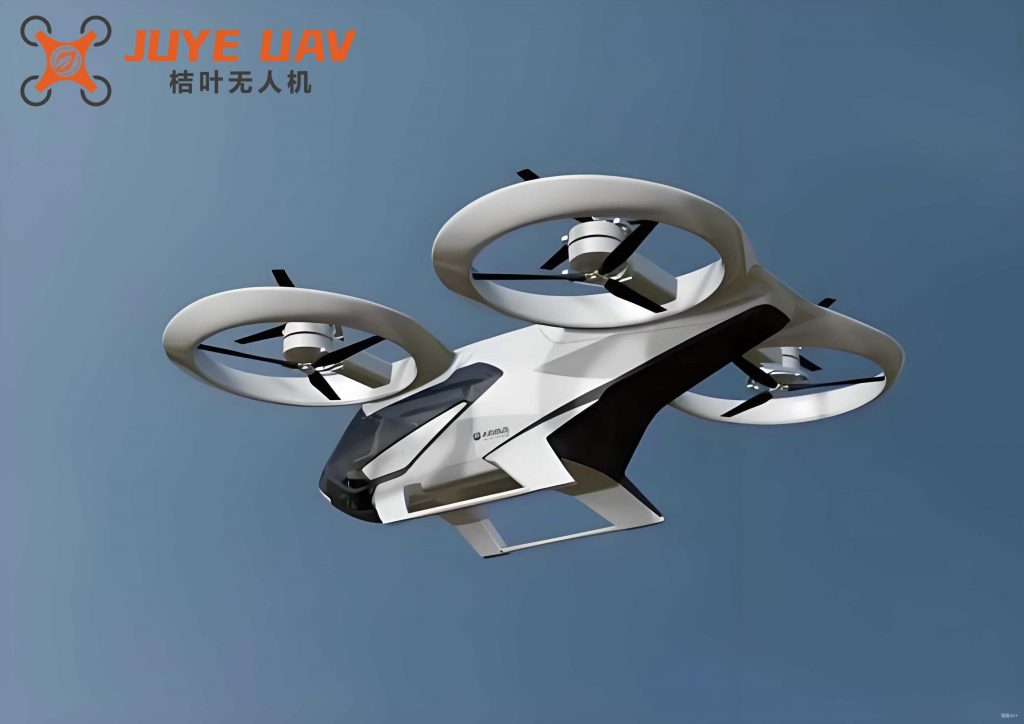
I selected a carbon fiber composite for the central plates and arms. This material offers an exceptional strength-to-weight ratio. The arms were fitted with vibration-damping foam sleeves to isolate high-frequency motor vibrations from the sensitive inertial measurement unit (IMU) on the flight controller. The main battery is securely mounted on the underside of the center plate, directly influencing the vertical CoG. All core electronics—the flight controller, power distribution board, and sensors—are stacked on top of the center plate, creating a compact and protected electronics bay.
2.3 Component Installation Details
Each component’s installation has specific critical requirements to ensure the safe operation of the quadrotor drone.
Propeller Installation: Propellers are designated as either clockwise (CW) or counter-clockwise (CCW). A quadrotor drone requires two of each type. Diagonally opposite motors spin in the same direction, while adjacent motors spin in opposite directions to cancel out the net aerodynamic torque. Installing a propeller incorrectly can lead to it loosening mid-flight or catastrophic loss of control. The correct pairing is essential: a CW motor must use a CCW-threaded nut with a CW propeller.
Battery Mounting: The battery is the single heaviest component. It must be firmly secured using high-strength hook-and-loop straps and secondary restraints like zip ties to prevent dislodgment during aggressive maneuvers. Positioning is at the geometric center underside to maintain CoG. Adequate ventilation is crucial as high-current discharge generates significant heat; the battery must not be enclosed in a sealed compartment.
Motor Mounting: The three-phase brushless motors are bolted to the ends of the carbon fiber arms. The mounting screws should be evenly and sequentially tightened to ensure a flush fit without straining the motor base. Motor direction (CW/CCW) is typically configured in software via the ESC, but physical labeling helps during assembly and troubleshooting.
Flight Controller Installation: The flight controller, housing the gyroscope and accelerometer, is highly sensitive to vibration. It is mounted centrally using a soft, vibration-damping platform (often made of silicone gel). This isolation is critical for accurate IMU readings. The board should also be protected from electrostatic discharge (ESD) by ensuring it does not contact conductive parts of the frame directly.
3. Software Architecture and Algorithm Design
The software is the intelligence of the quadrotor drone. My development utilized the KEIL MDK environment for its robust debugging tools and excellent ARM Cortex-M support. The software stack can be divided into low-level drivers, sensor fusion and state estimation, high-level control algorithms, and the application-specific autonomous mode logic.
3.1 Control Algorithm Foundation
The fundamental challenge in quadrotor drone control is stabilizing an inherently unstable system. This requires precisely calculating its orientation in space and applying corrective forces. The core control loop is typically structured as a nested cascade: an outer loop for position/velocity control generates desired attitude (pitch and roll) targets for a much faster inner attitude control loop.
The attitude control loop relies on a carefully tuned Proportional-Integral-Derivative (PID) controller for each axis (roll, pitch, yaw). The general form of the PID controller used for each axis is:
$$ u(t) = K_p e(t) + K_i \int_{0}^{t} e(\tau) d\tau + K_d \frac{de(t)}{dt} $$
where \( u(t) \) is the control output (e.g., motor thrust differential), \( e(t) \) is the error between the desired and estimated attitude angle, and \( K_p \), \( K_i \), \( K_d \) are the tuning gains. For the high-dynamics inner loop, the derivative term is crucial for damping.
3.2 State Estimation: Sensor Fusion and Attitude Representation
Accurate state estimation is non-negotiable. A typical Inertial Measurement Unit (IMU) provides triaxial gyroscope and accelerometer data. Each sensor has limitations: the gyroscope provides excellent short-term angular rate data but drifts due to integration error; the accelerometer measures proper acceleration, which includes gravity, and can thus estimate attitude relative to earth, but is corrupted by any linear motion of the quadrotor drone.
| Sensor | Data | Advantage | Disadvantage/Noise |
|---|---|---|---|
| Gyroscope | Angular rate \( [p, q, r] \) | Excellent dynamic response, no drift in frequency domain | Bias instability causes angle drift upon integration. |
| Accelerometer | Specific force \( [a_x, a_y, a_z] \) | Provides gravity vector for absolute roll/pitch reference. | Extremely sensitive to linear acceleration (vibration, movement). |
| Magnetometer | Magnetic field vector | Provides absolute yaw (heading) reference. | Susceptible to hard and soft iron distortions from vehicle and environment. |
The solution is sensor fusion. I implemented a complementary filter, a computationally efficient method suitable for the STM32F4. The core idea is to use the gyroscope’s integrated angle for high-frequency response and correct its low-frequency drift using the attitude derived from the accelerometer (and magnetometer for yaw). A simple first-order complementary filter for the roll angle \( \phi \) can be expressed as:
$$ \hat{\phi}_k = \alpha (\hat{\phi}_{k-1} + \dot{\phi}_{gyro} \cdot \Delta t) + (1 – \alpha) \phi_{accel} $$
where \( \alpha \) is a tuning parameter (0 < \( \alpha \) < 1) determining the trust balance between the gyro and accelerometer, \( \Delta t \) is the sampling period, and \( k \) denotes the time step.
For more advanced estimation, one models the system dynamics. The kinematic equation relating body angular rates \( (p, q, r) \) to the derivatives of the Euler angles \( (\dot{\phi}, \dot{\theta}, \dot{\psi}) \) is:
$$
\begin{bmatrix} \dot{\phi} \\ \dot{\theta} \\ \dot{\psi} \end{bmatrix} = \begin{bmatrix}
1 & \sin\phi \tan\theta & \cos\phi \tan\theta \\
0 & \cos\phi & -\sin\phi \\
0 & \sin\phi / \cos\theta & \cos\phi / \cos\theta
\end{bmatrix} \begin{bmatrix} p \\ q \\ r \end{bmatrix}
$$
This formulation, however, has a singularity at \( \theta = \pm 90^\circ \).
To avoid singularities and improve numerical stability, I employed quaternions for attitude representation internally. A quaternion is a four-element vector \( \mathbf{q} = [q_w, q_x, q_y, q_z]^T = [q_w, \mathbf{q}_v]^T \) that compactly represents a rotation. The differential equation for quaternion propagation using gyroscope data is:
$$ \dot{\mathbf{q}} = \frac{1}{2} \mathbf{q} \otimes \begin{bmatrix} 0 \\ p \\ q \\ r \end{bmatrix} $$
where \( \otimes \) denotes the quaternion product. This is discretized and integrated on the microcontroller. The gravity vector in the body frame, derived from the accelerometer, is used to correct the drift in the estimated quaternion.
3.3 Overall Software Workflow
The main control loop of the quadrotor drone follows a deterministic sequence executed at a high frequency (typically 500Hz to 1kHz for the inner loop).
- Initialization: Upon startup on level ground, all peripherals (IMU, ESCs, communication links) are initialized. Sensor biases are calibrated.
- Data Acquisition: Raw data from the gyroscope, accelerometer, magnetometer, ultrasonic sensor, and receiver are sampled synchronously.
- Sensor Fusion & State Estimation: The raw IMU data is filtered (e.g., low-pass filter for accelerometer). The complementary filter or a more advanced algorithm (like a Mahony filter) fuses the data to produce a drift-corrected estimate of the attitude quaternion \( \hat{\mathbf{q}} \). From this, Euler angles \( (\hat{\phi}, \hat{\theta}, \hat{\psi}) \) are calculated for human readability and outer-loop control.
- Control Law Execution:
- The desired attitude \( (\phi_{d}, \theta_{d}, \psi_{d}) \) is determined either from the pilot’s receiver input (in manual/acro mode), from the position controller (in GPS/altitude hold mode), or from the line-following algorithm.
- The attitude error for each axis is computed: \( e_\phi = \phi_d – \hat{\phi} \).
- The PID controller processes this error to produce a desired body torque for each axis \( (\tau_\phi, \tau_\theta, \tau_\psi) \).
- A thrust command \( T \) is generated from the throttle input or altitude controller.
- Motor Mixing: The desired torques and thrust are mapped to individual motor speeds. For a standard “X” configuration quadrotor drone, the mixing matrix is:
$$
\begin{bmatrix}
\omega_1^2 \\ \omega_2^2 \\ \omega_3^2 \\ \omega_4^2
\end{bmatrix}
=
\begin{bmatrix}
1 & 1 & -1 & 1 \\
1 & -1 & 1 & 1 \\
1 & -1 & -1 & -1 \\
1 & 1 & 1 & -1
\end{bmatrix}
\begin{bmatrix}
T \\ \tau_\phi \\ \tau_\theta \\ \tau_\psi
\end{bmatrix}
$$
where \( \omega_i \) represents the rotational speed of motor \( i \), and the constants account for geometry and propeller direction. The squared relationship is because thrust is approximately proportional to the square of the motor RPM. - Output: The final motor commands are sent as PWM signals to the ESCs.
The data fusion and control flowchart can be summarized as a continuous cycle of measurement, estimation, computation, and actuation, forming the core feedback loop that stabilizes the quadrotor drone.
| Algorithm Component | Selected Method | Rationale |
|---|---|---|
| Attitude Representation | Quaternions | No gimbal lock, computationally efficient for integration, easier normalization. |
| Sensor Fusion (Attitude) | Complementary / Mahony Filter | Good balance of accuracy and computational load on the STM32F4; easier to tune than a full Kalman filter for basic flight. |
| Control Law | Cascaded PID | Industry standard, intuitive to understand and tune, sufficient for stable flight and basic autonomy. |
| Motor Mixing | Linear Matrix based on “X” configuration | Directly maps desired body forces/torques to actuator commands. |
3.4 Autonomous Line-Following Algorithm
This is the defining feature of my quadrotor drone project. The algorithm involves several sub-tasks:
- Image Acquisition: A downward-facing camera captures grayscale or binary images of the ground.
- Pre-processing: Images are cropped to a region of interest (ROI) and filtered (e.g., Gaussian blur) to reduce noise.
- Line Detection: A specialized algorithm scans the processed image. One efficient method is to use a “row-wise centroid” calculation. For each row in the ROI, the algorithm identifies the contiguous black pixels (assuming a black line on a light background) and computes their central pixel index, \( x_{centroid}(row) \).
- Error Calculation: The set of centroids is analyzed. The primary error signal for the lateral controller is the difference between the image center column and the centroid of the line near the bottom of the image (representing the line’s position directly beneath the drone). A secondary error can be the slope of a line fitted to the centroids, which helps anticipate curves. The lateral error \( e_{line} \) is:
$$ e_{line} = x_{image\_center} – x_{centroid}^{bottom} $$ - Path Control: This lateral error \( e_{line} \) is fed into a dedicated PID controller. The output of this controller becomes the desired roll angle \( \phi_d \) for the inner attitude loop. A positive error (line to the right) commands a negative roll (lean left) to move the quadrotor drone towards the line, and vice versa. The forward speed can be set to a constant value or modulated based on the curvature of the detected line.
- State Machine: The autonomous mission is managed by a finite state machine (FSM):
- IDLE: Awaiting arm command.
- TAKEOFF: Engages altitude hold at a preset height (e.g., 1m using the ultrasonic sensor).
- SEARCH: Initiates a slow yaw rotation or forward movement to locate the line within the camera’s field of view.
- TRACKING: Active line-following mode, controlling roll and yaw to center over the line.
- LANDING: Triggered by a specific marker or loss of line for a duration. Descends vertically until the ultrasonic sensor detects the ground.
4. Hardware Selection and Safety Considerations
The hardware forms the physical backbone of the quadrotor drone. Each component was chosen through a trade-off analysis involving performance, weight, power consumption, and cost. Safety was a paramount concern throughout the design, given the high kinetic energy of the spinning propellers.
4.1 Critical Component Analysis
Main Controller: The STM32F405RGT6 microcontroller was selected for its high performance (168 MHz Cortex-M4F with FPU) and rich peripheral set. The floating-point unit (FPU) is invaluable for efficient quaternion and filter calculations. Its multiple timers generate precise PWM signals for ESCs and servos, while its communication interfaces (UART, SPI, I2C) connect all sensors.
Motor Selection: After evaluating brushed, coreless, and brushless motors, three-phase brushless DC (BLDC) motors were chosen. They offer high efficiency, excellent power-to-weight ratios, durability (no brushes to wear out), and minimal electromagnetic interference. Their speed can be controlled very precisely with a suitable ESC.
Propeller Selection: Propellers are specified by diameter and pitch (e.g., 5×3 means 5-inch diameter, 3-inch pitch per revolution). The choice is a compromise: larger diameter/pitch provides more thrust at lower RPM but draws more current and has slower response. I selected propellers matched to the motor’s Kv rating and the expected all-up weight (AUW) of the quadrotor drone. Propeller balancing is essential to prevent vibrations.
Battery Selection: Lithium-Polymer (LiPo) batteries are standard due to their high discharge rates. The key parameters are voltage (cell count, ‘S’), capacity (mAh), and discharge rating (‘C’). For this project, a 3S (11.1V nominal) battery with approximately 5000mAh capacity and a 25C discharge rating was chosen. This provides a balance between flight time and the ability to supply the high burst currents required by the motors during aggressive maneuvers. The maximum continuous current draw can be estimated as:
$$ I_{max\_cont} = Capacity (Ah) \times C\_rating = 5.0 Ah \times 25 = 125A $$
This headroom is necessary for safety.
Electronic Speed Controller (ESC): The ESC must be compatible with BLDC motors and capable of handling the peak current draw. I selected ESCs with a current rating significantly above the motor’s max draw. Modern ESCs use fast PWM switching (e.g., 400-500Hz) and support protocols like DShot, which offer faster response and digital communication compared to analog PWM, leading to tighter control of the quadrotor drone.
| Component | Model/Specification | Key Parameter/Rationale |
|---|---|---|
| Flight Controller MCU | STM32F405RGT6 | 168 MHz, FPU, 1 MB Flash, 192 KB RAM. Sufficient for sensor fusion, control, and vision pre-processing. |
| Motor | BLDC, e.g., 2300 Kv | Kv indicates RPM per Volt. Chosen for desired thrust with selected propellers and battery voltage. |
| Propeller | e.g., 5×3 Carbon Composite | Stiffness reduces flexing (more efficient), carbon fiber is durable. |
| Battery | LiPo 3S 5000mAh 25C | ~11.1V, ~555g. Provides target flight time of 15-20 minutes for this AUW. |
| ESC | BLHeli_S 30A | 30A continuous rating. Supports DShot for low-latency communication. |
| Ultrasonic Sensor | e.g., HC-SR04 or MB1003 | Range ~4m, accurate for low-altitude hold during takeoff/landing. |
4.2 Implemented Safety Measures
To mitigate risks associated with the quadrotor drone, several design choices were made:
- Propeller Guards: Lightweight plastic or carbon fiber guards were considered to contain broken propeller fragments and prevent contact during ground handling, though they add weight and drag.
- Robust Frame Design: The carbon fiber frame and stainless steel motor mounts are designed to withstand minor crashes.
- Fail-safe Logic: Software includes fail-safes for loss of radio signal (Return-to-Launch or automatic landing), low battery voltage (gradual descent warning followed by forced landing), and excessive attitude angles (disarm motors).
- Pre-flight Checks: The system performs IMU calibration, sensor health checks, and arm/disarm sequences to prevent accidental motor start.
- Vibration Isolation: As mentioned, the flight controller is soft-mounted to prevent “IMU clipping” and ensure reliable state estimation, which is the foundation of stable and safe flight.
5. Conclusion and Future Work
The development of this multimode quadrotor drone, centered on the STM32F405RGT6 microcontroller, successfully integrated advanced autonomous capabilities with robust manual flight modes. The autonomous line-following system, powered by a custom image processing algorithm and a carefully tuned control pipeline, proved to be reliable for defined navigation tasks. The quadrotor drone demonstrated stable performance in self-leveling, altitude hold, and GPS-assisted modes, validating the underlying sensor fusion and control architecture.
However, the project also revealed areas for future enhancement. The most significant limitation is the lack of a general-purpose obstacle avoidance system. While the line-follower operates effectively in a controlled environment, the quadrotor drone cannot yet dynamically navigate around unexpected aerial or ground-based obstacles during its autonomous mission. Future iterations could integrate a forward-facing depth sensor (e.g., a lightweight Time-of-Flight camera or stereovision system) and more powerful processors to run real-time path planning algorithms like RRT* or dynamic window approach in three dimensions.
Other potential improvements include the implementation of more advanced state estimators like an Extended Kalman Filter (EKF) or Error-State Kalman Filter (ESKF) fusing data from the IMU, ultrasonic sensor, optical flow, and GPS for higher precision navigation. Furthermore, machine learning could be applied to the vision system for more robust line detection under varying lighting conditions or for recognizing other types of visual landmarks. The journey of refining this aerial platform continues, with each iteration pushing the capabilities of this versatile quadrotor drone further.