
In recent years, the development of unmanned aerial vehicles (UAVs) has seen significant advancements, particularly in hybrid configurations that combine the benefits of different flight modes. Among these, the electric quadrotor fixed-wing hybrid UAV, often referred to as a quadrotor drone, has emerged as a practical solution for vertical take-off and landing (VTOL) capabilities coupled with efficient horizontal flight. This quadrotor drone utilizes a quadrotor system for VTOL and a fixed-wing system for cruising, enabling operations in diverse environments without the need for runways. However, the design of such quadrotor drones poses complex challenges due to the integration of multiple disciplines, including aerodynamics, propulsion, structural design, and flight performance. Traditional sequential design methods often fail to account for the intricate couplings between these disciplines, leading to suboptimal performance in areas like endurance, wind disturbance rejection in quadrotor mode, and overall efficiency. To address these issues, I propose a comprehensive multidisciplinary design optimization (MDO) framework tailored for electric quadrotor drones, leveraging advanced surrogate models and optimization algorithms to enhance design outcomes.
The core of this approach lies in the formulation of an MDO problem that considers the quadrotor drone as a system of interconnected disciplines. The optimization objectives are to maximize endurance time and improve wind rejection capability in quadrotor mode, while design variables encompass geometric parameters and propulsion system specifications. Constraints include geometric limits, propulsion requirements, flight performance criteria, stability margins, and trim conditions. By treating the quadrotor drone design as an MDO problem, we can systematically explore the design space and achieve balanced performance improvements. This method is particularly relevant for quadrotor drones, as their hybrid nature necessitates a holistic view to unlock full potential, ensuring that both VTOL and fixed-wing modes operate synergistically without compromising safety or efficiency.
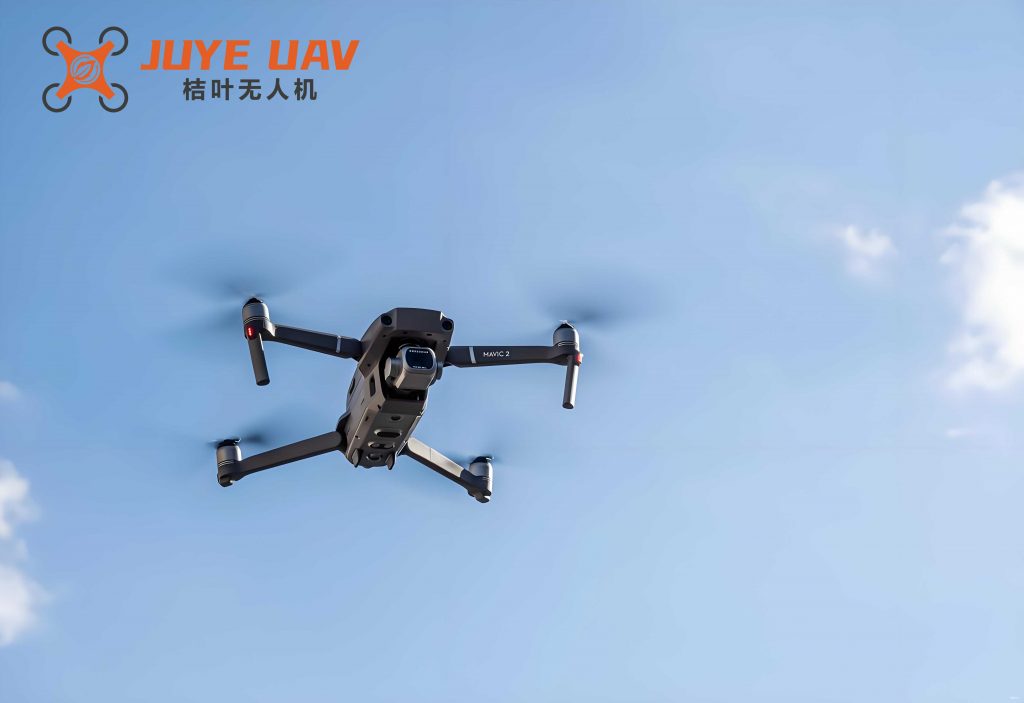
To tackle the computational complexity of MDO for quadrotor drones, I employ an improved concurrent subspace optimization (CSSO) architecture based on surrogate models. This algorithm enhances efficiency by reducing the need for expensive disciplinary analyses through approximation models. Initially, design of experiments methods generate sample points, and disciplinary analyses are performed only at these points. Surrogate models, such as response surface models, Kriging models, or neural networks, are then constructed to approximate the relationships between design variables and disciplinary outputs. These surrogates are used in system-level optimization, while faster disciplinary analyses are directly integrated. The MDO workflow involves parameterizing the geometric shape of the quadrotor drone, generating aerodynamic grids, analyzing aerodynamic performance across flight modes, evaluating wind rejection in quadrotor mode, modeling the electric propulsion system, and assessing flight performance. This integrated process ensures that all couplings are considered, leading to a robust design for the quadrotor drone.
The geometric parameterization of the quadrotor drone is foundational for MDO. Key parameters include wing span, aspect ratio, taper ratio, sweep angle, tail dimensions, rotor arm length, rotor diameter, and fuselage shapes. These are defined using a parametric model that enables automated generation of CAD geometry and aerodynamic grids. For instance, the wing geometry can be described by parameters like $b_w$ for span, $AR_w$ for aspect ratio, $\lambda_w$ for taper ratio, and $\Lambda_w$ for sweep angle. Similarly, the quadrotor system parameters include rotor diameter $d_r$ and arm length $d_a$. This parameterization allows for rapid exploration of design variations, which is crucial for optimizing the quadrotor drone’s shape to meet performance targets. The aerodynamic grid is generated using mixed structured and unstructured meshes to accurately capture the complex flow around the quadrotor drone, especially in quadrotor mode with high angles of attack and sideslip.
Aerodynamic performance analysis for the quadrotor drone is conducted using multiple methods depending on the flight mode. For quadrotor mode, where large angles of attack and sideslip occur, high-fidelity computational fluid dynamics (CFD) simulations are employed. The aerodynamic coefficients—lift ($C_L$), drag ($C_D$), side force ($C_Y$), and moments ($C_l$, $C_m$, $C_n$)—are computed across a range of angles. For example, the lift coefficient is defined as:
$$C_L = \frac{L}{\frac{1}{2} \rho V^2 S_{ref}}$$
where $L$ is lift force, $\rho$ is air density, $V$ is velocity, and $S_{ref}$ is reference area. For fixed-wing mode, a vortex lattice method (implemented in tools like Tornado) is used to estimate aerodynamic properties at pre-stall conditions, with corrections applied to drag coefficients based on validation data. This multi-fidelity approach ensures accurate predictions while managing computational costs for the quadrotor drone. Validation against wind tunnel experiments confirms the accuracy of these models, with errors within acceptable limits for MDO purposes.
Flight performance models for the quadrotor drone cover cruise, climb, and loiter phases. In cruise, the power required for level flight is derived from the drag polar, which is approximated as:
$$C_D = C_{D0} + K(C_L – C_{L,minD})^2$$
where $C_{D0}$ is zero-lift drag coefficient, $K$ is induced drag factor, and $C_{L,minD}$ is lift coefficient at minimum drag. The cruise power $P_c$ is given by:
$$P_c = D_c V_c = \sqrt{\frac{2W^3}{\rho S_{ref}}} \frac{C_{Dc}}{C_{Lc}^{1.5}}$$
where $W$ is weight, $D_c$ is drag, and $V_c$ is cruise velocity. For climb at rate $V_{roc}$, the required power $P_{cl}$ considers the climb angle $\gamma_{cl}$ and thrust $T_{cl}$:
$$P_{cl} = T_{cl} V_{cl} \cos \alpha = \left( \frac{1}{2} \rho V_{cl}^2 S_{ref} C_{Dcl} + W \sin \gamma_{cl} \right) V_{cl}$$
where $\alpha$ is angle of attack. Loiter performance involves similar calculations with load factor $n_{loi}$ accounting for bank angle. These models enable the evaluation of endurance and other key metrics for the quadrotor drone across its mission profile.
The electric propulsion system model for the quadrotor drone integrates components from propellers to batteries. For the quadrotor system, optimal rotor blade geometry is defined by twist and chord distributions. The twist angle $\theta_r(r)$ and chord $c_r(r)$ at radial station $r$ are given by:
$$\theta_r(r) = \frac{\theta_{rtip}}{\sqrt{r/R_r}}, \quad c_r(r) = \frac{c_{rtip}}{\sqrt{r/R_r}}$$
where $R_r$ is rotor radius, and $\theta_{rtip}$ and $c_{rtip}$ are tip values. The pitch $PL_r$ is computed as $PL_r = 2\pi r_{0.75} \tan \theta_{0.75}$, with $r_{0.75}$ and $\theta_{0.75}$ at 75% radius. For the fixed-wing propeller, similar scaling laws apply based on a prototype. Motor parameters like peak power $P_p$, mass $M_m$, KV rating $K_V$, internal resistance $R_0$, and no-load current $I_0$ are related through empirical equations:
$$P_p = B_{P-M} M_m, \quad K_V = \frac{B_{KV-M}}{M_m^{0.8}}, \quad R_0 = B_{R-KV} K_V^{0.2}, \quad I_0 = B_{I-R} R_0^{0.8}$$
where $B$ coefficients are derived from motor databases. The propulsion system’s thrust-to-weight ratios are determined for different modes: in cruise, $(T/W)_c = 1/(L/D)_c$; in quadrotor mode for VTOL, $(T/W)_V = \chi (1 + 0.5 \rho V_V^2 S_{tot} C_{DV} / W)$, with $\chi > 1$ as a margin for wind rejection. This integrated model ensures that both propulsion systems of the quadrotor drone are optimally sized for overall performance.
Wind disturbance rejection capability in quadrotor mode is critical for the safety and operational reliability of quadrotor drones. This is assessed by analyzing static force and moment balance under wind conditions, focusing on side wind scenarios where the quadrotor drone is most vulnerable. The maximum wind speed $V_{w,max}$ that can be resisted is solved based on rotor thrust limits and torque constraints. For a quadrotor drone in hover with side wind, the equilibrium equations involve aerodynamic forces on the fuselage and rotor thrusts. By setting rotor thrusts within their maximum capabilities, $V_{w,max}$ is derived as a measure of wind rejection performance. This analysis highlights the importance of geometric design and propulsion power in enhancing the quadrotor drone’s resilience to environmental disturbances.
To demonstrate the MDO method, I apply it to the design of a small electric quadrotor drone with mission requirements including VTOL, transition, and cruise phases. The optimization problem is formulated with 23 design variables, such as wing span, aspect ratios, rotor dimensions, and motor parameters, as summarized in Table 1. The objectives are to maximize endurance $E_t$ and maximum wind speed $V_{w,max}$, subject to constraints on weight, stability, control surface deflections, and propulsion limits. Surrogate models are constructed for expensive analyses: aerodynamic coefficients in quadrotor mode are approximated using neural networks, while fixed-wing aerodynamic and wind rejection models use response surface methods. The optimization is performed using the NSGA-II algorithm, yielding a Pareto front of optimal solutions.
| Design Variable | Lower Bound | Upper Bound |
|---|---|---|
| Wing span $b_w$ (m) | 1.5 | 2.5 |
| Wing aspect ratio $AR_w$ | 6 | 10 |
| Wing taper ratio $\lambda_w$ | 0.4 | 0.7 |
| Wing sweep $\Lambda_w$ (°) | 0 | 15 |
| Rotor diameter $d_r$ (m) | 0.28 | 0.46 |
| Rotor arm length $d_a$ (m) | 0.4 | 0.6 |
| Motor parameter $B_{KV-M}$ | 15000 | 70000 |
Table 1: Examples of design variables for the quadrotor drone optimization.
The optimization results show that the MDO method significantly improves performance for the quadrotor drone. A selected optimal design achieves an endurance of 39.1 minutes and a maximum wind speed of 9.0 m/s in quadrotor mode, meeting all constraints. Compared to a baseline quadrotor drone designed using traditional methods, this represents an endurance increase of approximately 14.1% and a wind rejection improvement of about 3.5%, while reducing takeoff weight by 2.8%. The design variables for this optimal quadrotor drone are detailed in Table 2, highlighting the balanced parameter values obtained through MDO.
| Parameter | Optimal Value |
|---|---|
| Wing span $b_w$ (m) | 2.276 |
| Wing aspect ratio $AR_w$ | 8.054 |
| Wing taper ratio $\lambda_w$ | 0.503 |
| Rotor diameter $d_r$ (m) | 0.33 |
| Rotor arm length $d_a$ (m) | 0.527 |
| Endurance $E_t$ (min) | 39.1 |
| Max wind speed $V_{w,max}$ (m/s) | 9.0 |
Table 2: Optimal design results for the quadrotor drone.
A prototype of the quadrotor drone is fabricated based on the MDO results, using foam and composite materials with selected off-the-shelf propulsion components. Flight tests validate the performance, showing that the quadrotor drone successfully completes the mission profile with vertical takeoff, transition, cruise at 15 m/s, and landing. The measured endurance is 38.7 minutes, and the maximum sideward flight speed (proxy for wind rejection) is 8.8 m/s, closely matching the MDO predictions. This confirms the feasibility and accuracy of the MDO method for quadrotor drone design. The integration of disciplines through optimization enables the quadrotor drone to achieve enhanced performance, demonstrating the value of a systematic approach.
The multidisciplinary models are further refined through sensitivity analyses to understand key drivers for quadrotor drone performance. For instance, the effect of wing aspect ratio on endurance can be expressed as:
$$E_t \propto \frac{1}{P_c} \propto \frac{C_L^{1.5}}{C_D} \approx \frac{1}{\sqrt{AR_w}} \text{ for induced drag dominance}$$
Similarly, rotor diameter impacts hover efficiency and wind rejection via thrust capacity. These insights guide designers in prioritizing parameters during the early stages of quadrotor drone development. Additionally, the surrogate models are updated with new data to improve accuracy over iterative design cycles, ensuring that the quadrotor drone evolves with changing requirements or technology.
In conclusion, the proposed MDO framework provides a robust methodology for designing electric quadrotor drones with balanced performance across multiple disciplines. By leveraging surrogate-based optimization and integrated analysis models, it addresses the couplings between geometry, aerodynamics, propulsion, and flight performance that are critical for quadrotor drones. The application to a case study quadrotor drone demonstrates significant improvements in endurance and wind rejection, validating the approach. Future work could extend this method to more complex quadrotor drone configurations, such as those with tilt-rotors or additional payloads, and incorporate dynamic stability analysis for enhanced robustness. Overall, this MDO method offers a scalable and efficient pathway for advancing quadrotor drone technology, enabling their wider adoption in applications like surveillance, delivery, and environmental monitoring where VTOL and long endurance are essential.
The success of this MDO approach for quadrotor drones hinges on the continuous refinement of disciplinary models and optimization algorithms. As computational resources grow, higher-fidelity simulations can be integrated, further improving the design accuracy of quadrotor drones. Moreover, the use of machine learning techniques for surrogate modeling can accelerate the optimization process, allowing for real-time design explorations. This aligns with the trend towards autonomous design systems for quadrotor drones, where algorithms iteratively propose and test configurations based on mission needs. By embracing these advancements, the design of quadrotor drones can become more efficient and innovative, unlocking new capabilities for hybrid UAVs.
From a practical standpoint, the MDO method for quadrotor drones also facilitates trade-off analyses between competing objectives. For example, designers can assess how increasing wind rejection capability affects endurance, or how geometric modifications influence stability. This is encapsulated in the Pareto front from optimization, which provides a set of non-dominated solutions for the quadrotor drone. Decision-makers can then select designs based on specific operational priorities, ensuring that the quadrotor drone is tailored to its intended use case. This flexibility is particularly valuable for commercial quadrotor drone products, where market demands vary widely.
In summary, the integration of multidisciplinary optimization into quadrotor drone design represents a paradigm shift from traditional siloed approaches. By considering the quadrotor drone as a holistic system, we can achieve superior performance that balances the demands of VTOL agility and fixed-wing efficiency. The methods and models described here serve as a foundation for future research and development in quadrotor drones, contributing to the evolution of more capable and reliable hybrid UAVs. As technology progresses, the principles of MDO will continue to guide the design of next-generation quadrotor drones, pushing the boundaries of what these versatile aircraft can accomplish.