
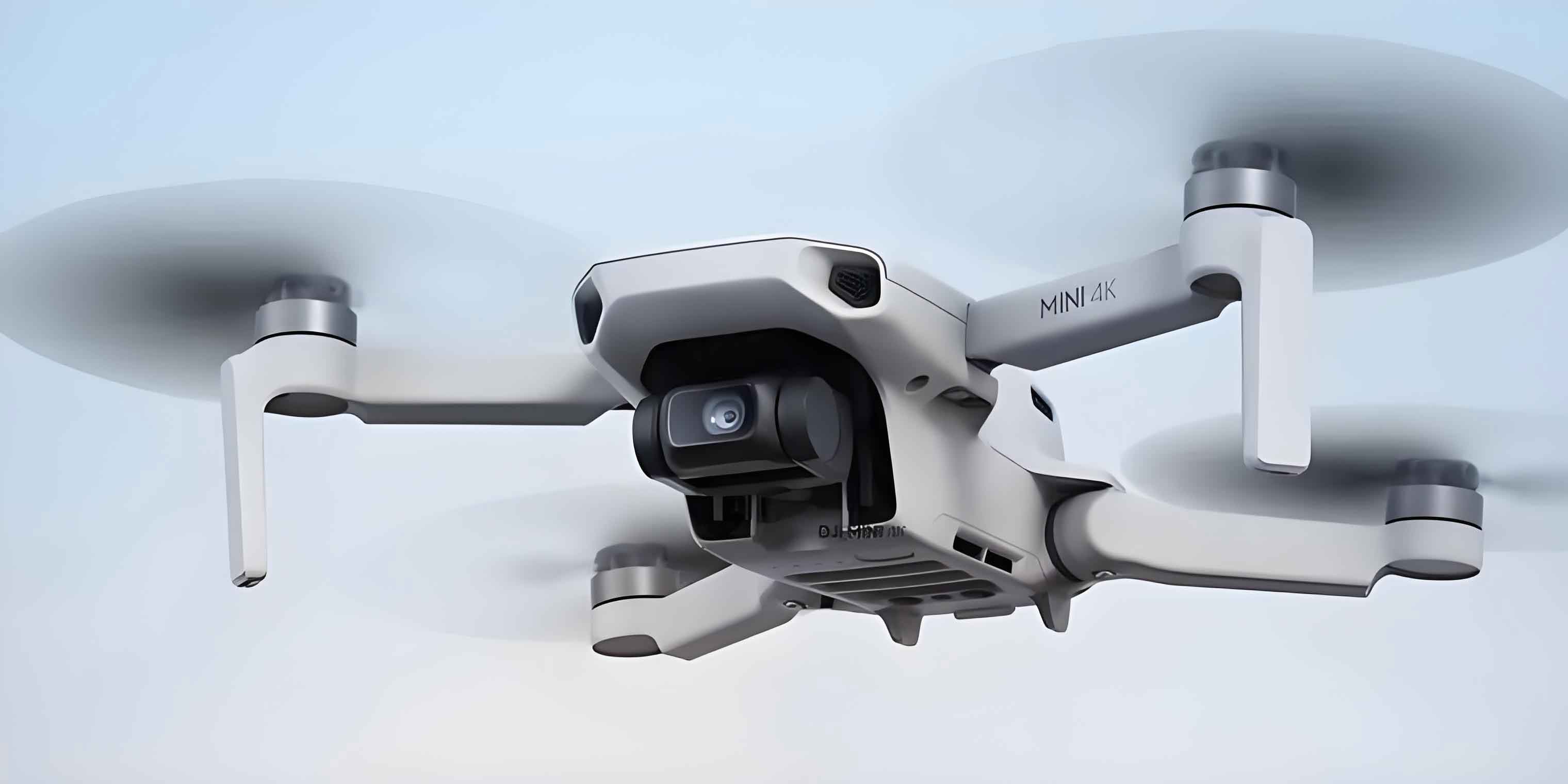
In my work, I examine how a cognitive radio network can support multiple UAV drone platforms that cooperate to deliver wireless service to ground users under severe spectrum scarcity. I treat the primary network as the licensed network and the secondary network as the cognitive network. The UAV drone fleet must reuse spectrum without degrading the primary network beyond an acceptable threshold. My central question is how to allocate channels, power, bandwidth, and spatial positions so that the secondary network remains efficient, fair, and robust when interference, user density, and channel occupancy all change over time.
I focus on three operating regimes. The first regime contains mixed interference, where co-channel interference and adjacent-channel interference appear together. The second regime contains high user density, where a single UAV drone cannot cover all users and multiple UAV drone relays must be clustered. The third regime contains time-varying primary channel states, where the available spectrum changes from slot to slot and the UAV drone fleet must learn a dynamic access policy. Across all three regimes, I use the same guiding principle: spectrum is not merely a quantity to be maximized, but a resource whose allocation must be constrained by primary-user protection, secondary-user fairness, and practical implementation limits.
My analysis begins from a simple observation: static spectrum assignment cannot match the demand of dense wireless systems. Measurements and regulatory studies repeatedly show that licensed bands are unevenly used, while unlicensed bands become congested. A UAV drone network is especially sensitive to this imbalance because each UAV drone has limited payload, limited energy, and a highly variable air-to-ground channel. Therefore, I formulate spectrum allocation as a joint optimization problem rather than a sequence of independent decisions. The decisions include UAV drone-to-user association, subchannel selection, transmit power, relay placement, bandwidth splitting, and dynamic channel access.
I use several mathematical tools in my investigation. For mixed interference, I combine K-Means clustering, genetic search, particle swarm optimization, and block coordinate descent. For high-density users, I combine K-Means clustering with a linear precision bandwidth algorithm. For time-varying channels, I use multi-agent proximal policy optimization with a temporary memory mechanism. These methods are not arbitrary. Each one targets a specific coupling in the system: discrete association, discrete channel selection, continuous power, continuous bandwidth, spatial placement, and sequential decision making under partial observability.
| Symbol | Meaning in my model |
|---|---|
| \(M\) | Number of UAV drone platforms or relay UAV drone nodes |
| \(K\) | Number of ground users in the secondary network |
| \(N\) | Number of available channels or subchannels |
| \(T\) | Number of decision slots in the time-varying scenario |
| \(w_{m,k}\) | Binary association between UAV drone \(m\) and user \(k\) |
| \(a_{k,n}\) | Binary channel assignment between user \(k\) and channel \(n\) |
| \(p_{m,n}\) | Transmit power of UAV drone \(m\) on channel \(n\) |
| \(g_{m,k}\) | Channel gain from UAV drone \(m\) to user \(k\) |
| \(\gamma_k\) | Signal-to-interference-plus-noise ratio at user \(k\) |
| \(T_k\) | Throughput of user \(k\) |
| \(W_m\) | Bandwidth assigned to UAV drone \(m\) |
| \(X_{n,t}\) | Primary channel state on channel \(n\) at slot \(t\) |
For the air-to-ground link, I adopt a probabilistic line-of-sight model. A UAV drone at height \(H\) communicates with a ground user at horizontal distance \(d\). The line-of-sight probability depends on the elevation angle. I write the elevation angle and the line-of-sight probability as
$$
\theta = \frac{180}{\pi}\arctan\left(\frac{H}{d}\right),
$$
$$
P_{\mathrm{LoS}} = \frac{1}{1 + a\exp[-b(\theta-a)]},
$$
where \(a\) and \(b\) are environment-dependent constants. The non-line-of-sight probability is \(P_{\mathrm{NLoS}} = 1 – P_{\mathrm{LoS}}\). I then express the channel gain from a UAV drone \(m\) to a user \(k\) as
$$
g_{m,k} = P_{\mathrm{LoS}} d_{m,k}^{-\alpha_u} + \eta P_{\mathrm{NLoS}} d_{m,k}^{-\alpha_u},
$$
where \(\alpha_u\) is the path-loss exponent and \(\eta\) is the additional attenuation factor for non-line-of-sight propagation. This model is important because the position of each UAV drone changes both the useful signal and the interference it creates. In my formulation, spatial placement is therefore not a separate logistical detail; it is a spectrum-management variable.
In the mixed-interference regime, I allow the secondary network to operate in an underlay mode. The primary network and the secondary network share the same spectrum. A secondary UAV drone transmission is limited by a primary interference temperature. At the same time, the secondary user receives co-channel interference from the primary transmitter and adjacent-channel interference from other secondary transmissions. The received signal-to-interference-plus-noise ratio of user \(k\) served by UAV drone \(m\) on channel \(n\) is
$$
\gamma_{m,k,n} =
\frac{w_{m,k} a_{k,n} p_{m,n} g_{m,k}}
{\sigma_n^2 + I_{\mathrm{CCI}} + I_{\mathrm{ACI}}},
$$
where \(\sigma_n^2\) is the noise power, \(I_{\mathrm{CCI}}\) is co-channel interference, and \(I_{\mathrm{ACI}}\) is adjacent-channel interference. I define the co-channel interference as
$$
I_{\mathrm{CCI}} = a_{k,n} p_{\mathrm{pu}} g_{\mathrm{pu},k},
$$
where \(p_{\mathrm{pu}}\) is the primary transmitter power and \(g_{\mathrm{pu},k}\) is the channel gain from the primary transmitter to secondary user \(k\). I define adjacent-channel interference as
$$
I_{\mathrm{ACI}} =
\sum_{z=1}^{N}\sum_{j=1}^{K}\sum_{\substack{j=1\\j\neq k}}^{K}
a_{k,n} a_{j,z} p_{m,z} g_{m,k} \mu_{k,j},
$$
where \(\mu_{k,j}\) is the adjacent-channel leakage coefficient between the channel selected by user \(k\) and the channel selected by user \(j\). This term captures the practical reality that filters are imperfect. Even when two users are not on the same channel, their spectra may overlap enough to reduce performance.
I formulate the mixed-interference problem as a max-min SINR problem. My objective is to maximize the minimum SINR among all secondary users, because fairness is essential when multiple UAV drone nodes share limited spectrum. The optimization variables are the association matrix \(\mathbf{W}\), the channel assignment matrix \(\mathbf{A}\), and the power matrix \(\mathbf{P}\). I write
$$
\max_{\mathbf{W},\mathbf{A},\mathbf{P}} \min_k \gamma_k
$$
$$
\text{s.t. } \sum_{m=1}^{M} w_{m,k} = 1,\ \forall k,
$$
$$
\sum_{n=1}^{N} a_{k,n} = 1,\ \forall k,
$$
$$
\sum_{k=1}^{K} w_{m,k} a_{k,n} \le 1,\ \forall m,n,
$$
$$
p_{m,n} \ge 0,\ \forall m,n,
$$
$$
\sum_{n=1}^{N}\sum_{k=1}^{K} w_{m,k} a_{k,n} p_{m,n} \le P_m^{\max},\ \forall m,
$$
$$
\sum_{m=1}^{M}\sum_{n=1}^{N} w_{m,k} a_{k,n} p_{m,n} g_{m,\mathrm{pu}} \le \delta,
$$
$$
w_{m,k} \in \{0,1\},\quad a_{k,n} \in \{0,1\}.
$$
The first constraint ensures that every user is served by exactly one UAV drone. The second constraint ensures that every user selects exactly one channel. The third constraint prevents two users served by the same UAV drone from sharing the same channel. The fifth constraint limits the total transmit power of each UAV drone. The sixth constraint protects the primary network by capping the aggregate interference caused by the secondary UAV drone fleet.
The resulting problem is a mixed-integer nonlinear program. I solve it by decomposing it into three subproblems. First, I optimize the UAV drone-to-user matching and spatial placement with K-Means clustering. Second, I fix power and optimize channel assignment with a genetic algorithm. Third, I fix channel assignment and optimize power with particle swarm optimization. I then iterate between channel assignment and power allocation using block coordinate descent. This decomposition is practical because each subproblem has a smaller search space, and the alternating structure allows the objective to improve monotonically under proper update rules.
| Subproblem | Decision Variable | Method I Use | Main Purpose |
|---|---|---|---|
| User association and placement | \(\mathbf{W}\), UAV drone positions | K-Means clustering | Minimize distance and path loss |
| Channel assignment | \(\mathbf{A}\) | Genetic algorithm | Reduce co-channel and adjacent-channel interference |
| Power allocation | \(\mathbf{P}\) | Particle swarm optimization | Maximize the minimum SINR |
| Joint iteration | \(\mathbf{A}, \mathbf{P}\) | Block coordinate descent | Approach a local optimum of the coupled problem |
In the K-Means stage, I treat each ground user as a point and each UAV drone as a cluster center. I initialize \(M\) centers and assign every user to the nearest center. I then update each center to the mean position of its assigned users. I repeat this process until the total center movement falls below a threshold. This gives a spatial partition that reduces average path loss and creates a natural service region for each UAV drone. Because each UAV drone serves one cluster, the association variable \(w_{m,k}\) becomes determined by the clustering result.
For channel assignment, I encode the matrix \(\mathbf{A}\) as a row vector. I create a population of candidate assignments. I apply single-point crossover with probability \(p_c\), mutation with probability \(p_m\), and correction steps that enforce the constraints. I evaluate each candidate by the achieved minimum SINR. I use roulette selection to retain stronger candidates. The genetic algorithm explores discrete channel combinations that would be difficult to handle with gradient methods. However, I do not rely on the genetic algorithm alone, because its runtime grows with population size and channel count.
For power allocation, I use particle swarm optimization. Each particle represents a power matrix. The velocity update combines inertia, individual best position, and global best position. I clamp each particle position to the feasible power range. The fitness is again the minimum SINR. The swarm quickly moves toward power distributions that strengthen weak users without violating the primary interference constraint. The combination of genetic search and particle swarm optimization is effective because channel assignment controls which interference terms exist, while power allocation controls how strong those terms become.
| Parameter | Value Used in My Mixed-Interference Study |
|---|---|
| Number of UAV drone nodes | 5 |
| Number of secondary users | 20 |
| UAV drone altitude | 100 m |
| Path-loss exponent | 3 |
| Primary base station position | (700, 700) |
| Environment constants | \(a=11.95\), \(b=0.136\) |
| Noise power | -90 dBm |
| Primary transmit power | 5 W |
| Non-line-of-sight attenuation | 0.001 |
| Maximum UAV drone power | 1 W |
| Number of channels | 20 |
My simulation results for the mixed-interference regime show several consistent trends. When the number of ground users increases while the number of UAV drone nodes is fixed, the minimum SINR decreases. This happens because more users compete for the same channels, and adjacent-channel leakage becomes more frequent. When the number of UAV drone nodes increases while the number of users is fixed, the minimum SINR improves because each UAV drone serves a smaller cluster and can allocate power more effectively. However, the improvement diminishes as the network becomes denser, because the primary interference limit and the total power limit become binding.
I also compare my joint optimization with three baselines. The first baseline randomly generates channel assignments and then iterates power allocation. The second baseline fixes the channel assignment and optimizes only power. The third baseline assumes an ideal receiver filter with no adjacent-channel interference. My joint method outperforms the first two baselines across all user counts. The gap is largest when the user count is small, because the optimizer has more freedom to shape both channel and power. As the user count grows, the gap narrows because spectrum becomes scarce and the feasible region shrinks. The ideal-filter baseline always performs best, which confirms that adjacent-channel interference is a major limiting factor in practical UAV drone networks.
The high-density user scenario introduces a different challenge. Here, buildings, terrain, and other obstacles may block direct links. A single UAV drone cannot provide reliable coverage to all users. I therefore use multiple UAV drone relays. A temporary source node sends data to the UAV drone relays, and each relay forwards the data to its assigned ground users. The primary network still shares the spectrum in underlay mode. The secondary relay network must keep its interference to the primary network below a threshold. The objective is to maximize the minimum throughput among all secondary users while respecting a backhaul bottleneck.
I model the throughput of user \(k\) served by UAV drone \(m\) as
$$
T_{m,k} = W_{m,k} \log_2\left(1 + \gamma_{m,k}\right),
$$
where \(W_{m,k}\) is the bandwidth allocated to user \(k\) by UAV drone \(m\). The SINR term is
$$
\gamma_{m,k} =
\frac{w_{m,k} p_m g_{m,k}}
{\sigma_n^2 + I_{\mathrm{CCI}}},
$$
and the co-channel interference from the primary base station is
$$
I_{\mathrm{CCI}} = p_G g_{G,k}.
$$
Here, \(p_G\) is the primary base station power, and \(g_{G,k}\) is the channel gain from the primary base station to secondary user \(k\). I assume that the primary network has priority, so the secondary network must satisfy
$$
p_m g_{m,\mathrm{pu}} \le \delta,\quad \forall m,
$$
where \(g_{m,\mathrm{pu}}\) is the channel gain from UAV drone \(m\) to the primary user. This constraint directly couples the spatial placement of the UAV drone relay to spectrum access. If a UAV drone relay moves too close to a primary user, it may violate the interference threshold even if its transmit power is low.
I formulate the high-density problem as
$$
\max_{\mathbf{W},\mathbf{W}_{\mathrm{bw}}} \min_k T_k
$$
$$
\text{s.t. } \sum_{m=1}^{M} w_{m,k} = 1,\quad \forall k,
$$
$$
W_m \ge W_{\mathrm{relay}}^{\min},\quad \forall m,
$$
$$
W_{m,k} \ge W_{\mathrm{user}}^{\min},\quad \forall m,k,
$$
$$
\sum_{m=1}^{M} W_m = W_g,
$$
$$
\sum_{k=1}^{K} w_{m,k} W_{m,k} = W_m,\quad \forall m,
$$
$$
\sum_{k=1}^{K} w_{m,k} T_{m,k} \le T_m,\quad \forall m,
$$
$$
\sum_{m=1}^{M} T_m \le \tau,
$$
$$
p_m g_{m,\mathrm{pu}} \le \delta,\quad \forall m.
$$
The first constraint ensures unique association. The second and third constraints impose minimum bandwidth for each relay and each user. The fourth constraint states that the sum of relay bandwidths equals the total bandwidth provided by the temporary source node. The fifth constraint states that the bandwidth assigned to users in a cluster equals the bandwidth of the corresponding UAV drone relay. The sixth constraint ensures that the total throughput of users in a cluster does not exceed the relay throughput. The seventh constraint represents the backhaul bottleneck. The eighth constraint protects the primary user from secondary interference.
| Constraint | Physical Meaning | Impact on My Algorithm |
|---|---|---|
| Unique association | One UAV drone relay per user | Determined by clustering |
| Minimum relay bandwidth | Each UAV drone relay needs a feasible link | Prevents trivial zero-bandwidth solutions |
| Minimum user bandwidth | Each user needs a minimum service level | Protects cell-edge users |
| Bandwidth sum for relays | Relay bandwidths cannot exceed source bandwidth | Bounds the total resource |
| Cluster bandwidth sum | User bandwidths sum to relay bandwidth | Couples intra-cluster allocation |
| Relay throughput limit | Users cannot consume more than relay capacity | Couples bandwidth and SINR |
| Backhaul bottleneck | Total relay throughput is limited | Forces fairness and prevents overuse |
| Primary interference threshold | Primary user protection | Restricts relay placement |
I solve the high-density problem in two stages. In the first stage, I use K-Means clustering to partition users into \(M\) groups and place each UAV drone relay near the centroid of its group. I also check the primary interference constraint. If a centroid would place the relay too close to a primary user, I adjust the relay position until the constraint is satisfied or I re-cluster the affected users. In the second stage, I allocate bandwidth with a linear precision algorithm. The algorithm repeatedly finds the user with the minimum throughput and the user with the second-minimum throughput. It increases the bandwidth of the minimum-throughput user by a controlled amount. It then checks whether the total relay bandwidth and backhaul throughput remain feasible. If the throughput of the network exceeds the backhaul bottleneck, the algorithm reduces the bandwidth of the highest-throughput user. This process continues until no further fair improvement is possible.
The linear precision update can be written as follows. Let \(T_{\min}\) be the minimum throughput and \(T_M\) be the second-minimum throughput. Let \(A\) be the number of users currently at the minimum. I increase the minimum-throughput group by a fraction \(\beta\) of the gap between \(T_M\) and \(T_{\min}\). The additional bandwidth required by the relay fleet is
$$
\Delta W_{\mathrm{plus}} =
\sum_{m=1}^{M} W_m^{\mathrm{plus}},
$$
and the throughput increase satisfies
$$
A(T_M – T_{\min}) \approx \sum_{m=1}^{M} W_m^{\mathrm{plus}} \log_2(1+\gamma_{g,m}),
$$
where \(\gamma_{g,m}\) is the signal-to-noise ratio between the temporary source node and UAV drone relay \(m\). I solve for the adjustment coefficient as
$$
\beta =
\min\left(1,\frac{W_g – \sum_{m=1}^{M} W_m}{A(T_M – T_{\min}) / \log_2(1+\gamma_{g,m})}\right).
$$
When \(\beta\) becomes non-positive, the available bandwidth is exhausted, and I keep the previous feasible allocation. This method is simple, interpretable, and directly aligned with max-min fairness. It also avoids the heavy computation of a full nonlinear solver for every iteration.
| Parameter | Value Used in My High-Density Study |
|---|---|
| Number of UAV drone relays | 5 |
| Number of secondary users | 100 |
| UAV drone altitude | 100 m |
| Path-loss exponent | 3 |
| Primary base station position | (700, 700) |
| Environment constants | \(a=11.95\), \(b=0.136\) |
| Noise power | -90 dBm |
| Primary transmit power | 5 W |
| Non-line-of-sight attenuation | 0.001 |
| Maximum UAV drone power | 1 W |
My high-density simulations show that the optimized placement and bandwidth allocation significantly improve the throughput of the weakest users. Before optimization, many users suffer low throughput because their relay is far away or because their bandwidth share is too small. After optimization, the minimum throughput rises, while the throughput of some previously strong users decreases. This is expected because the algorithm redistributes bandwidth from strong users to weak users. The result is a more balanced service quality. When the total available bandwidth increases, the minimum throughput increases, but the number of iterations also increases because more allocation combinations become feasible. When the primary interference threshold is relaxed, the UAV drone relays can be placed in more favorable positions, and the minimum throughput becomes higher. When the backhaul bottleneck is tightened, the throughput of all users decreases, which confirms that backhaul capacity is a critical constraint in multi-UAV drone relay networks.
I also compare my bandwidth allocation with genetic algorithms and particle swarm optimization. My method converges at a speed similar to the genetic algorithm and slower than particle swarm optimization. However, my method achieves a higher minimum throughput because it explicitly searches for the weakest user and allocates bandwidth toward that user. Genetic algorithms and particle swarm optimization explore the global space more broadly, but they do not always focus on fairness. The clustering step in my method also improves the channel condition, which gives the bandwidth allocator a better starting point.
The third regime is the time-varying channel state. In this regime, the primary network changes its channel occupancy over time. The secondary UAV drone fleet must decide which channel to access in each slot. I adopt an overlay access mode. The UAV drone fleet senses the spectrum and transmits only when it selects an idle channel. Because sensing is imperfect and the environment is partially observable, the UAV drone fleet cannot know all channel states at once. I model the problem as a partially observable Markov decision process.
At slot \(t\), the state of channel \(n\) is
$$
X_{n,t} =
\begin{cases}
+1, & \text{if channel } n \text{ is idle},\\
-1, & \text{if channel } n \text{ is occupied by the primary network}.
\end{cases}
$$
Each UAV drone \(m\) selects one channel per slot. I define the channel selection indicator as
$$
\phi_{m,n,t} =
\begin{cases}
1, & \text{if UAV drone } m \text{ selects channel } n,\\
0, & \text{otherwise}.
\end{cases}
$$
The local observation of UAV drone \(m\) is
$$
O_{m,n,t} =
\begin{cases}
X_{n,t}, & \text{if } \phi_{m,n,t}=1,\\
0, & \text{otherwise}.
\end{cases}
$$
This means that each UAV drone observes only the channel it selects. Channels that are not selected appear as unknown. This partial observability is a key difficulty. A greedy policy that always selects the channel with the strongest recent signal may collide with other UAV drone nodes. A random policy may waste idle channels. A learning policy must balance exploration and exploitation.
The received signal-to-interference-plus-noise ratio of UAV drone \(m\) on channel \(n\) at slot \(t\) is
$$
\gamma_{m,n,t} =
\frac{p_m g_{m,g}}
{\sigma^2 + \sum_{i \in \mathcal{M}, i \neq m} p_i g_{i,g} \phi_{i,n,t} + p_G g_{G,g} \chi_{n,t}},
$$
where \(p_m\) is the UAV drone transmit power, \(g_{m,g}\) is the channel gain from UAV drone \(m\) to the secondary base station, \(p_G\) is the primary base station power, \(g_{G,g}\) is the channel gain from the primary base station to the secondary base station, and \(\chi_{n,t}\) indicates whether the primary network occupies channel \(n\). The achievable rate is
$$
R_{m,n,t} = B \log_2\left(1 + \gamma_{m,n,t}\right).
$$
I define the team reward at slot \(t\) as the sum of rates of all UAV drone nodes:
$$
r_t = \sum_{m=1}^{M}\sum_{n=1}^{N} R_{m,n,t}.
$$
My objective is to maximize the discounted cumulative reward:
$$
\max_{\pi} \mathbb{E}\left[\sum_{t=1}^{T}\gamma^{t-1} r_t\right],
$$
where \(\gamma\) is the discount factor and \(\pi\) is the joint policy of the UAV drone fleet. Because the primary channel state is time-varying, the policy must adapt to changes in occupancy. Because the observations are partial, the policy must remember useful history. This motivates my use of a temporary memory mechanism.
| POMDP Element | Definition in My UAV Drone Spectrum Decision Model |
|---|---|
| State | Global primary channel occupancy and channel quality |
| Observation | Local selected-channel state and signal strength for each UAV drone |
| Action | Channel selected by each UAV drone in the current slot |
| Reward | Sum rate of all UAV drone nodes |
| Transition | Primary channel switching and wireless channel variation |
| Policy | Mapping from local observation and memory to channel selection |
I train the UAV drone fleet with multi-agent proximal policy optimization. In this framework, each UAV drone has an actor network and a critic network. The actor network maps the local observation to a probability distribution over channels. The critic network estimates the value function. During centralized training, the critic can access global information, which reduces the variance of the policy gradient. During decentralized execution, each UAV drone uses only its own actor network and local observation. This centralized-training-decentralized-execution structure is well suited to a UAV drone swarm because it avoids the need for a central controller during operation while still exploiting global information during training.
The actor loss is
$$
L_{\mathrm{actor}} =
\frac{1}{DM}\sum_{i=1}^{D}\sum_{m=1}^{M}
\min\left(
\rho_{i,m} A_{i,m},
\mathrm{clip}(\rho_{i,m},1-\epsilon,1+\epsilon) A_{i,m}
\right),
$$
where \(D\) is the batch size, \(M\) is the number of UAV drone agents, \(\rho_{i,m}\) is the probability ratio between the new policy and the old policy, \(A_{i,m}\) is the advantage, and \(\epsilon\) is the clipping parameter. The advantage is computed with generalized advantage estimation:
$$
A_{i,m} =
\sum_{l=0}^{\infty}(\gamma\lambda)^l
\left[
r_{t+l} + \gamma V_{\phi_m}(s_{t+l+1}) – V_{\phi_m}(s_{t+l})
\right],
$$
where \(\lambda\) is the GAE parameter and \(V_{\phi_m}\) is the value function of UAV drone \(m\). The critic loss is
$$
L_{\mathrm{critic}} =
\frac{1}{DM}\sum_{i=1}^{D}\sum_{m=1}^{M}
\left(V_{\phi_m}(s_i) – \hat{R}_i\right)^2,
$$
where \(\hat{R}_i\) is the discounted return. I also use a clipped value loss to stabilize training. The temporary memory mechanism stores the observations from the previous few slots. The actor network receives both the current observation and the stored observations. This allows the UAV drone to infer whether a channel is likely to remain idle, even when the current observation is ambiguous. For example, if a UAV drone observed a channel as busy for the last two slots, the memory helps it avoid selecting that channel immediately after a weak positive signal.
| Training Component | Role in My MAPPO Algorithm |
|---|---|
| Actor network | Selects a channel for each UAV drone from local observation and memory |
| Critic network | Estimates global value during centralized training |
| Generalized advantage estimation | Balances bias and variance in policy updates |
| Clipped surrogate objective | Prevents destructive policy updates |
| Temporary memory | Retains recent sensing results to improve decisions under partial observability |
| Decentralized execution | Allows each UAV drone to act without a central controller |
My time-varying simulations use a 1000 m by 1000 m task area. The secondary base station is at the origin, and the primary base station is placed at a distant location. I set the number of channels to 16, the channel bandwidth to 1 MHz, the UAV drone transmit power to 23 dBm, and the primary base station power to 60 dBm. I use 0.95 for the GAE parameter, 0.99 for the discount factor, 0.2 for the clipping factor, and 5e-4 for the learning rates. I train for up to 1000 episodes. I vary the number of channels, the number of idle channels, and the number of UAV drone agents.
| Parameter | Value Used in My Time-Varying Study |
|---|---|
| Secondary base station position | (0, 0) |
| Primary base station position | (7000, 3500) |
| Number of channels | 16 |
| Channel bandwidth | 1 MHz |
| UAV drone power | 23 dBm |
| Primary base station power | 60 dBm |
| Non-line-of-sight attenuation | 20 dB |
| Noise power spectral density | -100 dBm/MHz |
| GAE parameter | 0.95 |
| Discount factor | 0.99 |
| Clipping factor | 0.2 |
| Actor and critic learning rates | 5e-4 |
The reward curves show that when the total number of channels is larger, the UAV drone fleet achieves a higher initial reward. This is because a larger channel set gives the fleet more opportunities to find idle channels. When the total number of channels is small, the initial reward is lower because the fleet is more likely to select an occupied channel or to collide with another UAV drone. As training proceeds, all curves converge to similar values. This indicates that the MAPPO policy learns to avoid occupied channels even when the spectrum is scarce. The convergence is slower when the number of channels is small, because the agents must explore a more constrained action space and coordinate more carefully.
The spectrum collision curves show a rise and then a fall. In early training, the UAV drone agents explore randomly, so collisions increase. As the policy improves, the agents learn to select different channels and avoid the primary network. When the number of channels is small, the peak collision count is higher. When the number of channels is large, the peak collision count is lower. After about 600 episodes, the collision counts converge to similar low values. This confirms that the temporary memory mechanism helps the UAV drone fleet learn from recent observations and reduce repeated collisions.
I also study the effect of the number of idle channels. With more idle channels, the UAV drone fleet has more freedom, and the average number of collisions decreases. When the number of idle channels is small, the reward after convergence is still acceptable, but the training process produces more collisions. This is a useful insight for practical deployment: a UAV drone network can operate under tight spectrum conditions, but it requires more training and more careful coordination.
Finally, I study the effect of the number of UAV drone agents. As the number of UAV drone agents increases, the total throughput increases, because more nodes can transmit in parallel. However, when the number of UAV drone agents exceeds the number of idle channels, the total throughput may decrease. This happens because multiple UAV drone nodes share the same channel, which increases co-channel interference and reduces the signal-to-interference-plus-noise ratio. The result highlights a fundamental limit: adding more UAV drone nodes does not always improve performance if the spectrum cannot support them. In my model, the best performance occurs when the number of UAV drone agents is matched to the number of available idle channels.
| Scenario | Primary Objective | Key Constraints | Main Algorithmic Tools | Fairness Measure |
|---|---|---|---|---|
| Mixed interference | Maximize minimum SINR | Co-channel and adjacent-channel interference, power limit, primary interference cap | K-Means, genetic algorithm, particle swarm optimization, block coordinate descent | Minimum user SINR |
| High-density users | Maximize minimum throughput | Relay bandwidth, user bandwidth, backhaul bottleneck, primary interference threshold | K-Means, linear precision bandwidth allocation | Minimum user throughput |
| Time-varying channels | Maximize discounted sum rate | Partial observability, primary channel switching, one channel per UAV drone per slot | MAPPO with temporary memory | Collision count and system throughput |
Across the three regimes, I observe a common pattern. Spectrum allocation and spectrum decision making cannot be separated from the spatial deployment of UAV drone nodes. In the mixed-interference regime, placement determines both the desired channel gain and the interference leakage. In the high-density regime, placement determines the relay distance and the primary interference footprint. In the time-varying regime, placement affects the signal strength observed by each UAV drone. Therefore, my methods always couple spatial variables with spectrum variables, either directly in the optimization or indirectly through the learning environment.
I also observe that fairness and efficiency are not opposites. In the mixed-interference regime, maximizing the minimum SINR improves the worst-case user without sacrificing the whole network. In the high-density regime, moving bandwidth from strong users to weak users reduces the variance of throughput and improves the minimum throughput. In the time-varying regime, reducing collisions improves the total reward because collisions waste spectrum. Fairness constraints can therefore improve stability and make the network more predictable.
From an implementation perspective, I use iterative algorithms because the problems are non-convex and mixed-integer. I do not claim a global optimum in all cases. Instead, I seek a strong feasible solution that satisfies the primary protection constraint and improves the worst-case secondary user. The block coordinate descent framework is especially useful because it allows each subproblem to use a specialized solver. The K-Means step is fast and scalable. The genetic algorithm is flexible for discrete channel assignment. The particle swarm optimizer handles continuous power. The linear precision algorithm is lightweight for bandwidth allocation. The MAPPO learner handles sequential decisions with partial observability.
| Method | Strength | Limitation | My Mitigation |
|---|---|---|---|
| K-Means clustering | Fast spatial partitioning | Sensitive to initialization | Multiple random starts and centroid validation |
| Genetic algorithm | Handles discrete channel assignment | Population size affects runtime | Constraint correction and moderate population |
| Particle swarm optimization | Fast continuous power search | Can converge prematurely | Inertia weighting and random perturbation |
| Block coordinate descent | Decomposes coupled variables | May reach a local optimum | Alternating updates and multiple initializations |
| Linear precision bandwidth allocation | Directly targets the weakest user | Requires feasible bandwidth margins | Backhaul check and high-throughput reduction |
| MAPPO with temporary memory | Learns under partial observability | Training cost and sample complexity | Centralized critic and memory replay |
In my mixed-interference experiments, I find that adjacent-channel interference can dominate when the receiver filter is poor. The ideal-filter baseline performs much better, which shows that hardware quality is not a minor detail. If the filter roll-off is insufficient, then even well-separated channels leak energy. This is especially important for UAV drone networks because the air-to-ground channel can have strong line-of-sight components, which increases the received power difference between the desired signal and the leakage. My joint channel and power allocation reduces this effect by separating users that would otherwise create strong adjacent-channel interference.
In my high-density experiments, I find that the backhaul bottleneck can undo the benefits of good access links. If the relay-to-user links improve but the source-to-relay links cannot carry the traffic, then the system throughput saturates. The linear precision algorithm accounts for this by reducing the bandwidth of the highest-throughput users when the total throughput exceeds the backhaul limit. This creates a natural balancing effect. The network does not over-allocate bandwidth to users who cannot be supported by the backhaul. Instead, it maintains a feasible operating point that maximizes the minimum throughput.
In my time-varying experiments, I find that memory is essential. Without memory, the UAV drone agents react only to the current observation. If a channel is briefly sensed as idle, many agents may select it at the same time, causing collisions. With memory, the agents learn that a channel which was busy recently may not be reliable, and they spread their selections more evenly. The result is a lower collision rate and a higher stable reward. The centralized critic further helps because it observes the global state during training and can guide the actors toward coordinated behavior.
I now summarize my formulation in a compact way. For the mixed-interference regime, the core problem is
$$
\max_{\mathbf{W},\mathbf{A},\mathbf{P}} \min_{k} \gamma_k
\quad \text{subject to network, power, and primary protection constraints.}
$$
For the high-density regime, the core problem is
$$
\max_{\mathbf{W},\mathbf{W}_{\mathrm{bw}}} \min_{k} T_k
\quad \text{subject to bandwidth, backhaul, and primary interference constraints.}
$$
For the time-varying regime, the core problem is
$$
\max_{\pi} \mathbb{E}\left[\sum_{t=1}^{T}\gamma^{t-1} r_t\right]
\quad \text{subject to partial observability and one-channel-per-slot access.}
$$
These three formulations share a common structure: a discrete selection variable, a continuous resource variable, and a protection constraint. In the first two regimes, I solve the problem with optimization and heuristic search. In the third regime, I solve the problem with multi-agent reinforcement learning. This progression reflects the increasing uncertainty in the environment. When the channel state is known and static, optimization is effective. When the user density is high but the channel statistics are stable, clustering and bandwidth allocation are effective. When the channel state changes and observations are partial, learning is necessary.
| Regime | Discrete Variable | Continuous Variable | Protection Constraint | Solution Style |
|---|---|---|---|---|
| Mixed interference | Association and channel | Power | Primary interference cap | Heuristic plus block coordinate descent |
| High-density users | Association and clustering | Bandwidth and placement | Primary interference threshold | Clustering plus linear precision allocation |
| Time-varying channels | Channel access | Power and rate | Overlay idle-channel access | Multi-agent reinforcement learning |
I also note that my methods can be extended. One extension is to include energy consumption in the objective. A UAV drone has limited battery capacity, and hovering consumes energy. If the network maximizes throughput without considering energy, then some UAV drone nodes may be depleted too quickly. A multi-objective formulation could combine throughput, fairness, and energy consumption. Another extension is to include three-dimensional trajectory optimization. In my current time-varying model, I focus on channel selection. If the UAV drone changes its three-dimensional position, then the channel gain, interference pattern, and primary protection footprint all change. A joint trajectory and spectrum decision process would be more complex but also more realistic. A third extension is to consider malicious interference. An adversary may jam certain channels or transmit false sensing signals. A robust policy must detect and avoid such attacks. This would require adversarial training or robust optimization.
In conclusion, I have investigated multi-UAV drone spectrum allocation and decision making in cognitive radio networks under mixed interference, high user density, and time-varying channels. I formulated each scenario as a constrained optimization or decision problem. I proposed K-Means clustering, genetic algorithms, particle swarm optimization, block coordinate descent, linear precision bandwidth allocation, and MAPPO with temporary memory. I evaluated the methods with simulations that vary user count, UAV drone count, channel count, idle channel count, backhaul capacity, and interference threshold. The results show that joint optimization improves the worst-case performance, that fairness-oriented bandwidth allocation helps dense networks, and that memory-based multi-agent learning reduces collisions in time-varying spectrum environments. I believe these findings provide a practical foundation for designing cognitive UAV drone networks that are efficient, fair, and robust.