
I approach the problem of multi-UAV drone cooperative strike and damage assessment as an integrated decision loop. In my view, a UAV drone is no longer merely a remote-controlled aircraft; it is a mobile sensing, computing, communication, and acting node that can be coordinated with other UAV drones to achieve a system-level objective. The central claim of my work is that the operational value of a multi-UAV drone system depends on three connected capabilities: assigning strike tasks to the right UAV drone at the right time, planning safe and efficient paths for each UAV drone after task assignment, and assessing the resulting damage with enough rigor to decide whether a second strike is necessary. I treat these three capabilities not as isolated modules but as a closed-loop chain. Task allocation defines what each UAV drone should do. Path planning determines how each UAV drone reaches its assigned area under terrain, threat, and timing constraints. Damage assessment evaluates what was actually achieved and feeds the result back to the allocation and planning stages. This closed loop is the foundation of my research.
I begin from the observation that single UAV drone platforms have inherent limits. A single UAV drone may have limited endurance, limited payload, limited sensing coverage, and limited computational capacity. When the mission becomes wide-area, time-sensitive, or strongly contested, a single UAV drone cannot simultaneously provide persistent surveillance, electromagnetic suppression, decoy support, precision strike, and battle damage assessment. Multiple UAV drones, however, can distribute these functions. They can cooperate through role specialization, spatial separation, temporal synchronization, and information sharing. The expected gain is not merely additive. It is a system-level multiplication of effectiveness, often described as a synergy effect. My research therefore focuses on how to realize this synergy in a practical and computable way for UAV drone cooperative strike missions.
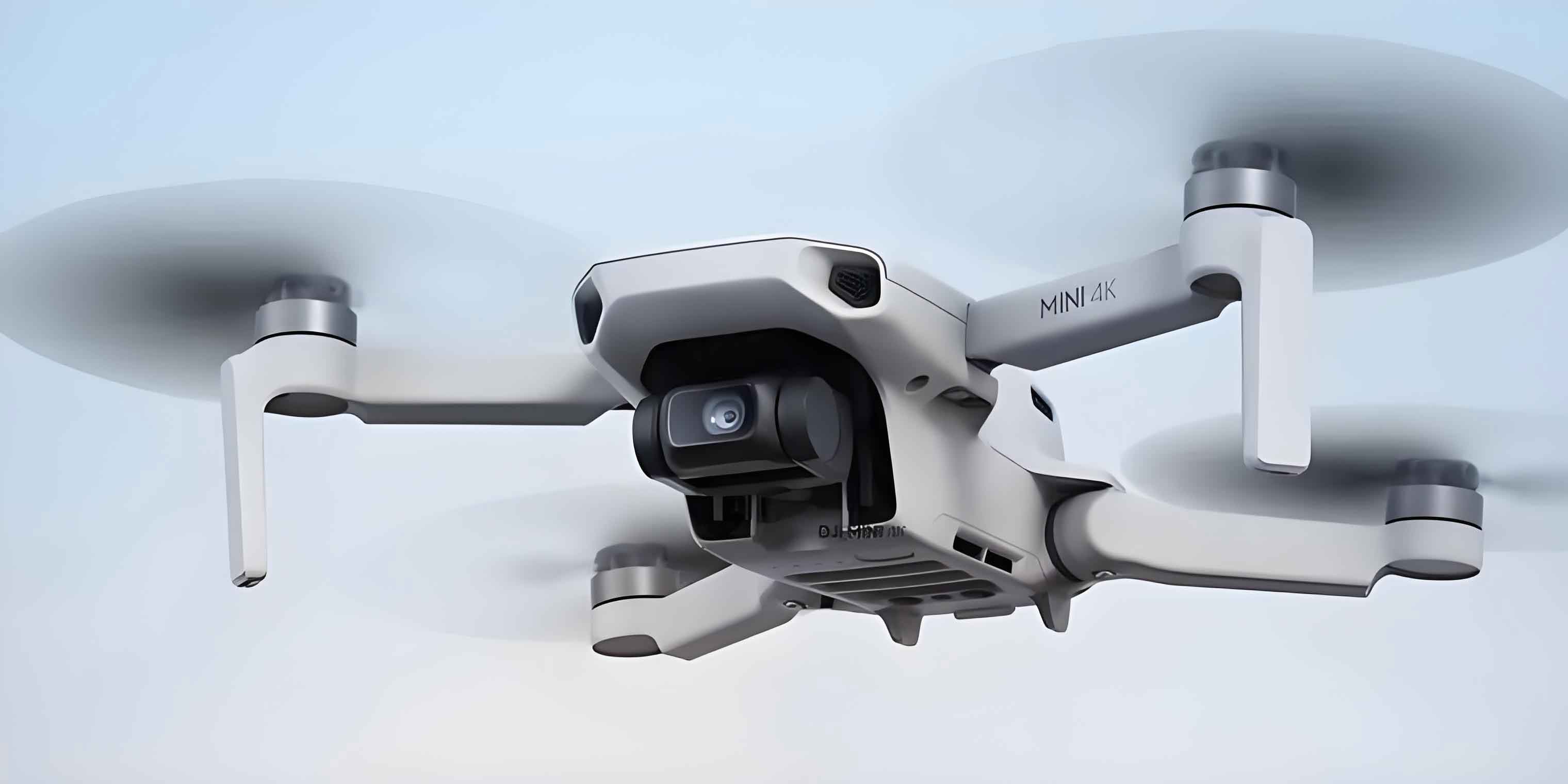
I structure my investigation around three technical bottlenecks. The first bottleneck is dynamic task allocation. In a contested environment, targets appear, disappear, move, or change priority. A UAV drone may fail, run low on energy, or lose communication. A static assignment computed before the mission is often invalid before the first strike occurs. The second bottleneck is cooperative path planning. Each UAV drone must avoid terrain, no-fly zones, radar threat volumes, and interceptor coverage while also satisfying kinematic limits and arriving within a required time window. A path that is optimal for one UAV drone may create a collision risk or a timing conflict for another UAV drone. The third bottleneck is damage assessment. After a strike, the information available to the UAV drone swarm is partial, noisy, and often contradictory. Physical damage, functional degradation, and transient battlefield effects must be fused into a judgment that is both accurate and timely. I address these bottlenecks with an improved contract net protocol for task allocation, a combined grey wolf and goose swarm optimization algorithm for path planning, and an analytic hierarchy process plus fuzzy comprehensive evaluation model for damage assessment.
Literature Context and Research Gap
I review the literature from the perspective of a system designer who needs methods that can be integrated into a UAV drone swarm. I classify existing work into centralized and distributed task allocation, static and dynamic path planning, and single-source and multi-source damage assessment. My summary is given in the table below. The table is not intended to be exhaustive; it is intended to show the methodological landscape that motivates my choices.
| Research area | Representative method family | Strengths for UAV drone systems | Limitations for cooperative strike |
|---|---|---|---|
| Task allocation | Centralized optimization, Hungarian method, mixed-integer programming | Can produce optimal or near-optimal assignments when the problem is small and fully known | Poor scalability, weak robustness to UAV drone failure, and high sensitivity to communication delays |
| Task allocation | Market-based methods, auction, contract net protocol | Distributed decision making, natural fit for autonomous UAV drone negotiation | Single-criterion bidding, task overload, and excessive communication in large UAV drone swarms |
| Task allocation | Game theory, coalition formation, potential games | Captures strategic interaction and resource competition among UAV drones | Equilibrium computation may be slow, and assumptions of rationality may not hold under jamming |
| Path planning | Graph search, A*, Dijkstra, D* Lite | Complete and optimal in discretized spaces, useful for global route generation | High computational cost in 3D dynamic environments, limited real-time re-planning |
| Path planning | Sampling-based methods, RRT, PRM | Effective in high-dimensional spaces with complex constraints | Path quality depends on sampling, narrow passages are difficult, and multi-UAV drone coordination is not inherent |
| Path planning | Swarm intelligence, grey wolf optimizer, goose swarm optimization, ant colony, particle swarm | Strong global search, simple structure, adaptable to multi-objective cost functions | Premature convergence, imbalance between exploration and exploitation, and sensitivity to parameter settings |
| Damage assessment | Physical damage models, finite element analysis, empirical formulas | High fidelity for known targets and known weapon effects | Requires detailed target models and precise impact data, often unavailable in real time |
| Damage assessment | Analytic hierarchy process, fuzzy comprehensive evaluation, Bayesian networks | Handles uncertainty, integrates expert knowledge, and supports multi-level index systems | Expert scoring can be subjective, and real-time fusion of multi-source UAV drone data remains difficult |
I conclude from this review that the main gap is not the absence of individual algorithms but the absence of an integrated method that treats task allocation, path planning, and damage assessment as a single decision process for a multi-UAV drone system. My research fills this gap by designing methods that share a common representation of targets, UAV drone states, threats, and time windows. I do not claim that any one algorithm is universally superior. Instead, I claim that the combination and the feedback between stages produce a more robust operational capability than any isolated module.
Scenario Analysis and Operational Process
I define the scenario in terms of three environmental archetypes: highly contested airspace, complex urban terrain, and wide-area open terrain. Each archetype imposes different constraints on my UAV drone system. In highly contested airspace, the dominant challenge is survivability under radar tracking, electronic jamming, and interceptor threats. In complex urban terrain, the dominant challenge is precision under dense obstacles, restricted flight corridors, and strict collateral damage constraints. In wide-area open terrain, the dominant challenge is search efficiency, long endurance, and reliable communication over extended distances. I summarize the corresponding technical requirements in the following table.
| Scenario | Core challenge for UAV drone swarm | Task allocation priority | Path planning priority | Damage assessment priority |
|---|---|---|---|---|
| Highly contested airspace | Survivability and electromagnetic resilience | Rapid reassignment after UAV drone loss | Threat avoidance with real-time re-planning | Fast judgment for second-strike decision |
| Complex urban terrain | Precision and low collateral damage | Fine-grained matching of UAV drone capability to target | High-accuracy, collision-free, low-altitude trajectory | Accurate physical and functional damage classification |
| Wide-area open terrain | Search efficiency and persistence | Load balancing across long-endurance UAV drones | Energy-optimal routing with communication relay | Confirmation of mobility loss or functional kill |
I model the operational process as a closed loop with five stages. First, a ground control center receives multi-source intelligence and generates an initial target list. Second, reconnaissance UAV drones verify target coordinates, defenses, and surrounding conditions. Third, my task allocation algorithm assigns strike tasks to attack UAV drones. Fourth, my path planning algorithm generates safe and time-coordinated routes for each UAV drone. Fifth, after the strike, reconnaissance UAV drones collect post-strike imagery and sensor data, and my damage assessment model produces a damage level and a recommendation on whether to re-strike. The result of the fifth stage is fed back to the first stage, which closes the loop.
I use the following notation throughout my research. Let the set of targets be \(T=\{t_1,t_2,\ldots,t_M\}\). Let the set of UAV drones be \(U=\{u_1,u_2,\ldots,u_N\}\). I define a binary assignment variable \(x_{ij}\in\{0,1\}\), where \(x_{ij}=1\) means that target \(t_j\) is assigned to UAV drone \(u_i\), and \(x_{ij}=0\) otherwise. I define a cost variable \(c_{ij}\) that represents the comprehensive cost for UAV drone \(u_i\) to execute task \(t_j\). This cost includes time, energy, risk, and resource consumption. My goal is to determine the matrix \(X=[x_{ij}]\) that minimizes the total cost while satisfying operational constraints and balancing the load among UAV drones.
Task Allocation for UAV Drone Cooperative Strike
I formulate task allocation as a constrained multi-objective optimization problem. The constraints are not optional; they define the feasible region in which a UAV drone swarm can operate. I list the core constraints in the following table and then express them mathematically.
| Constraint | Meaning | Mathematical form |
|---|---|---|
| Task uniqueness | Each target must be assigned to exactly one UAV drone | \(\sum_{i=1}^{N} x_{ij}=1,\ \forall j\in T\) |
| UAV drone capacity | The total task weight of a UAV drone must not exceed its maximum load | \(\sum_{j=1}^{M} x_{ij}\omega_j \le L_i^{\max},\ \forall i\in U\) |
| Timing feasibility | A task must start and finish before its deadline | \(t_j^{\text{start}}+\tau_{ij}\le t_j^{\text{dead}},\ \forall j\in T\) |
| Communication range | Two UAV drones must remain within communication distance when cooperation is required | \(\|p_i(t)-p_k(t)\|\le R_{\text{comm}},\ \forall u_i,u_k\in U\) |
I define the objective function as a weighted sum of time cost, energy cost, risk penalty, and a task balance term. The weights are not fixed; they are adjusted according to target priority and threat level. My objective function is
$$ \min \sum_{i=1}^{N}\sum_{j=1}^{M} x_{ij} \left( \alpha c_{ij}^{\text{time}} + \beta c_{ij}^{\text{energy}} + \delta \gamma_{ij} \right) – \lambda \Omega(U), $$
where \(\alpha,\beta,\delta,\lambda\) are weighting coefficients, \(\gamma_{ij}\) is the threat coefficient of target \(t_j\) with respect to UAV drone \(u_i\), and \(\Omega(U)\) is the task balance measure of the UAV drone swarm. The time cost for UAV drone \(u_i\) to execute task \(t_j\) is
$$ c_{ij}^{\text{time}} = \frac{d_{ij}}{v_i} + \tau_j^{\text{wait}}, $$
where \(d_{ij}\) is the distance from UAV drone \(u_i\) to target \(t_j\), \(v_i\) is the cruise speed of UAV drone \(u_i\), and \(\tau_j^{\text{wait}}\) is the waiting delay required for synchronization. The energy cost is
$$ c_{ij}^{\text{energy}} = p_i^{\text{hover}} \tau_{ij} + p_i^{\text{move}} \frac{d_{ij}}{v_i}, $$
where \(p_i^{\text{hover}}\) is the hover power and \(p_i^{\text{move}}\) is the motion power of UAV drone \(u_i\). I define the task balance measure as
$$ \Omega(U)=\sum_{i=1}^{N}\sqrt{\sum_{j=1}^{M}x_{ij}\left(L_i^{\max}-L_i^{\text{current}}\right)}, $$
where \(L_i^{\text{current}}\) is the current load of UAV drone \(u_i\). A larger value of \(\Omega(U)\) indicates a more even distribution of tasks among UAV drones.
The traditional contract net protocol is a natural starting point for distributed task allocation among UAV drones. In this protocol, a manager UAV drone announces a task, other UAV drones bid, the manager selects the best bid, and the winner executes the task. The protocol is simple and robust to individual UAV drone failure. However, I identify three limitations that are unacceptable for multi-UAV drone cooperative strike. First, bidding is often based on a single criterion such as distance or estimated time. This ignores target value, threat level, and UAV drone capability differences. Second, there is no explicit load balancing mechanism, so some UAV drones become overloaded while others remain idle. Third, the protocol can generate excessive communication overhead, especially when the UAV drone swarm is large and the environment is contested.
I propose an improved contract net protocol, which I call ICNP, to overcome these limitations. The core idea is to replace single-criterion bidding with a multi-factor evaluation function and to add an adaptive load balancing mechanism. For each UAV drone \(u_i\) and task \(t_j\), I compute a comprehensive bid score
$$ E_{ij} = \omega_1 C_{ij} + \omega_2 R_{ij} + \omega_3 A_{ij}, $$
where \(C_{ij}\) is the task completion capability, \(R_{ij}\) is the historical reputation, and \(A_{ij}\) is the resource adaptability. The weights \(\omega_1,\omega_2,\omega_3\) are determined by the analytic hierarchy process and adjusted according to the target position, target threat level, and mission priority. I define the task completion capability as
$$ C_{ij} = \alpha S_i^{\text{hist}} + (1-\alpha)\frac{1}{T_j^{\text{comp}}}, $$
where \(S_i^{\text{hist}}\) is the historical success rate of UAV drone \(u_i\), \(T_j^{\text{comp}}\) is the complexity of task \(t_j\), and \(\alpha\in[0,1]\) is the experience weight. The historical reputation is
$$ R_{ij} = \beta \frac{T_i^{\text{exec}}}{T_j^{\text{deadline}}} + (1-\beta)Q_i^{\text{feed}}, $$
where \(T_i^{\text{exec}}\) is the actual execution time, \(T_j^{\text{deadline}}\) is the deadline, \(Q_i^{\text{feed}}\) is the quality feedback, and \(\beta\) is the timeliness weight. The resource adaptability is
$$ A_{ij} = \gamma \frac{E_i^{\text{batt}}}{E_i^{\text{total}}} + (1-\gamma)\frac{C_i^{\text{res}}}{C_j^{\text{req}}}, $$
where \(E_i^{\text{batt}}\) is the remaining battery energy, \(E_i^{\text{total}}\) is the total energy, \(C_i^{\text{res}}\) is the available computing resource, \(C_j^{\text{req}}\) is the required computing resource, and \(\gamma\) is the energy weight. I also define an adaptive threshold for UAV drone load:
$$ L_i^{\text{threshold}} = \alpha L_i^{\max} + \beta T_j^{\text{complexity}}, $$
where \(L_i^{\max}\) is the maximum load capacity and \(T_j^{\text{complexity}}\) is the task complexity. When the current load of a UAV drone exceeds this threshold, the algorithm triggers a task redistribution mechanism. The task complexity is
$$ T_j^{\text{complexity}} = \varepsilon T_j^{\text{type}} + (1-\varepsilon)\log(D_j^{\text{size}}+1), $$
where \(T_j^{\text{type}}\) is the task type factor, \(D_j^{\text{size}}\) is the data volume, and \(\varepsilon\) is a weighting coefficient. The dynamic adjustment coefficients are
$$ \alpha = 1 + 0.2 \tanh(L – 0.7), \quad \beta = 0.5(1-\alpha), $$
where \(L\) is the average load of the UAV drone swarm. These coefficients allow the protocol to shift between exploration of new assignments and exploitation of existing assignments.
I implement ICNP as a distributed loop with five phases: initialization, announcement, bidding, award, and exception handling. In the initialization phase, each UAV drone broadcasts its state, including position, energy, available payload, and current task list. In the announcement phase, a manager UAV drone publishes a task description with target coordinates, threat level, priority, and time window. In the bidding phase, each eligible UAV drone computes \(E_{ij}\) and sends its bid. In the award phase, the manager selects the UAV drone with the highest \(E_{ij}\), verifies that the assignment satisfies all constraints, and sends an award message. In the exception handling phase, the protocol responds to new tasks and UAV drone failures. If a UAV drone fails, its unfinished tasks are returned to the announcement phase, and the remaining UAV drones bid again. If a new task appears, the protocol identifies underloaded UAV drones and creates an emergency bidding group. This design reduces the number of negotiation rounds and improves responsiveness.
| Parameter | Traditional CNP | Improved ICNP |
|---|---|---|
| Bid criterion | Distance or time only | Completion, reputation, and resource adaptability |
| Load balancing | None | Adaptive threshold and redistribution |
| Dynamic response | Re-auction from scratch | Incremental re-auction with emergency group |
| Communication overhead | High in large swarms | Reduced by eligibility filtering and fast channel |
| Suitability for multi-UAV drone strike | Limited | High |
I validate ICNP with a simulation scenario containing five attack UAV drones and ten targets. The UAV drone positions and target positions are given in the following table. The threat level of each target ranges from 2 to 5. I compare ICNP with the traditional CNP in terms of assignment rationality, completion time, and dynamic adaptability.
| UAV drone | Initial position (km) | Target | Target position (km) | Threat level |
|---|---|---|---|---|
| 1 | (16, -23) | 1 | (12, 15) | 4 |
| 2 | (26, -29) | 2 | (20, 10) | 2 |
| 3 | (33, -42) | 3 | (35, 25) | 4 |
| 4 | (42, -31) | 4 | (50, 30) | 4 |
| 5 | (21, -36) | 5 | (65, 20) | 4 |
| — | — | 6 | (80, 32) | 5 |
| — | — | 7 | (95, 10) | 5 |
| — | — | 8 | (110, 25) | 4 |
| — | — | 9 | (125, 15) | 3 |
| — | — | 10 | (135, 30) | 5 |
In my simulation, the traditional CNP assigns most targets to only two UAV drones, leaving three UAV drones idle. This creates a severe imbalance. In contrast, ICNP distributes the ten targets across all five UAV drones, with each UAV drone receiving a workload close to the swarm average. The completion time of CNP is ten iterations: five iterations for information integration and five for assignment. ICNP requires only four iterations: two for information integration and two for assignment. When I introduce a sudden new target or a UAV drone failure, CNP either ignores the change or overloads an already busy UAV drone. ICNP responds by reassigning tasks to underloaded UAV drones and rebalancing the entire swarm. These results confirm that ICNP improves allocation efficiency, resource utilization, and dynamic adaptability for multi-UAV drone cooperative strike.
Path Planning for UAV Drone Cooperative Strike
After task allocation, each UAV drone must fly to its assigned target area. I treat path planning as a constrained optimization problem in three-dimensional space. The path must avoid terrain and threats, satisfy kinematic limits, and coordinate with other UAV drones. I define the path of UAV drone \(u_i\) as a sequence of waypoints \(P_i=\{(x_{i1},y_{i1},z_{i1}),\ldots,(x_{in},y_{in},z_{in})\}\). I evaluate a path using a fitness function that combines path length, safety, and energy consumption:
$$ F = \omega_1 L + \omega_2 S + \omega_3 E, $$
where \(\omega_1,\omega_2,\omega_3\) are weights. The path length is
$$ L = \sum_{k=1}^{n-1}\sqrt{(x_{k+1}-x_k)^2+(y_{k+1}-y_k)^2+(z_{k+1}-z_k)^2}. $$
The safety term is
$$ S = \sum_{k=1}^{n} \text{Penalty}(k), $$
where \(\text{Penalty}(k)\) is a penalty for being too close to an obstacle or inside a no-fly zone. The energy term is
$$ E = \sum_{k=1}^{n-1} e \sqrt{(x_{k+1}-x_k)^2+(y_{k+1}-y_k)^2+(z_{k+1}-z_k)^2}, $$
where \(e\) is the energy consumption per unit distance. I also impose the following constraints: maximum speed \(v_{\max}\), maximum acceleration \(a_{\max}\), minimum turning radius \(R_{\min}\), maximum climb rate \(v_z^{\max}\), and maximum climb angle \(\theta_{\max}\). These constraints define the feasible flight envelope of each UAV drone.
I use the grey wolf optimizer as one of the base algorithms. The grey wolf optimizer simulates the social hierarchy and hunting behavior of grey wolves. The position update equations are
$$ \vec{D}_{\alpha}=|\vec{C}_1\cdot\vec{X}_{\alpha}-\vec{X}|, $$
$$ \vec{D}_{\beta}=|\vec{C}_2\cdot\vec{X}_{\beta}-\vec{X}|, $$
$$ \vec{D}_{\delta}=|\vec{C}_3\cdot\vec{X}_{\delta}-\vec{X}|, $$
$$ \vec{X}_1=\vec{X}_{\alpha}-\vec{A}_1\cdot\vec{D}_{\alpha}, \quad \vec{X}_2=\vec{X}_{\beta}-\vec{A}_2\cdot\vec{D}_{\beta}, \quad \vec{X}_3=\vec{X}_{\delta}-\vec{A}_3\cdot\vec{D}_{\delta}, $$
$$ \vec{X}(t+1)=\frac{\vec{X}_1+\vec{X}_2+\vec{X}_3}{3}, $$
where \(\vec{A}=2\vec{a}\cdot\vec{r}_1-\vec{a}\) and \(\vec{C}=2\vec{r}_2\). The coefficient \(\vec{a}\) decreases linearly from 2 to 0 to balance exploration and exploitation. The grey wolf optimizer has strong global search ability, but it can converge prematurely when the fitness landscape has many local optima. In a dynamic threat environment, it may also require frequent restarts, which increases computational cost.
I also use the goose swarm optimization algorithm. This algorithm is inspired by the migration and obstacle avoidance behavior of geese. It divides the swarm into guard geese and followers. The guard geese monitor threats and communicate information to the followers. The velocity and position updates are
$$ v_j(t+1)=v_j(t)+c_1 r_1(x_{\text{best}}(t)-x_j(t))+c_2 r_2(x_{\text{guard}}(t)-x_j(t)), $$
$$ x_j(t+1)=x_j(t)+v_j(t+1), $$
where \(x_{\text{best}}\) is the best position in the swarm and \(x_{\text{guard}}\) is the position of the guard goose. The algorithm also simulates sound propagation:
$$ D_{\text{sound}}=v_{\text{sound}} t_{\text{sound}}. $$
The goose swarm optimization algorithm has strong local search ability and can avoid dynamic obstacles, but its global search capability is limited. In a complex multi-modal environment, it can become trapped in a local optimum. I therefore design a combined optimization algorithm that integrates the grey wolf optimizer and the goose swarm optimization algorithm. I call this algorithm COA.
The core of COA is a dynamic weight fusion mechanism. I initialize two populations: a grey wolf population and a goose population. I evaluate the fitness of each individual using the path fitness function. During the early iterations, the grey wolf optimizer dominates, which allows the algorithm to explore the search space broadly. During the later iterations, the goose swarm optimization algorithm dominates, which allows the algorithm to refine the best region. I define the weights as
$$ w_{\text{GWO}}(t)=w_{\text{GWO,max}}-\frac{t}{T_{\max}}\left(w_{\text{GWO,max}}-w_{\text{GWO,min}}\right), $$
$$ w_{\text{GOOSE}}(t)=1-w_{\text{GWO}}(t). $$
The combined position update is
$$ X_{\text{COA},i}(t+1)=w_{\text{GWO}}(t)X_{\text{GWO},i}(t+1)+w_{\text{GOOSE}}(t)X_{\text{GOOSE},i}(t+1). $$
I also introduce a Bernoulli chaotic map to diversify the initial population and a greedy neighborhood search to improve the initial quality of each individual. The algorithm switches from global search to local optimization when the fitness improvement rate over three consecutive generations falls below a threshold. This adaptive switching mechanism prevents premature convergence and improves path quality.
| Algorithm | Global search | Local search | Dynamic adaptation | Risk of premature convergence |
|---|---|---|---|---|
| Grey wolf optimizer | Strong in early iterations | Moderate | Requires restart | High in multi-modal landscapes |
| Goose swarm optimization | Limited | Strong | Good for obstacle avoidance | Moderate |
| Combined COA | Strong and adaptive | Strong and refined | Excellent | Low |
I test COA in a three-dimensional environment with four UAV drones. The start and goal positions are given in the table below. I place five radar threat sources and five fire threat sources. The threat radii range from 20 m to 40 m. The UAV drone speed constraint is Mach 0.3 to 0.7, the yaw angle constraint is \(-60^\circ\) to \(60^\circ\), the pitch angle constraint is \(-45^\circ\) to \(45^\circ\), and the altitude constraint is 0.02 km to 20 km. The population size is 60, and the maximum number of search steps is 200.
| UAV drone | Start position (m) | Goal position (m) |
|---|---|---|
| 1 | (50, 100, 150) | (875, 875, 150) |
| 2 | (100, 55, 150) | (800, 875, 150) |
| 3 | (30, 20, 150) | (875, 800, 150) |
| 4 | (105, 120, 150) | (800, 800, 150) |
| Threat source | Position (m) | Threat radius (m) | Type |
|---|---|---|---|
| 1 | (200, 200, 150) | 20 | Radar |
| 2 | (600, 700, 150) | 20 | Radar |
| 3 | (80, 40, 150) | 40 | Fire |
| 4 | (300, 300, 150) | 40 | Fire |
| 5 | (350, 600, 150) | 40 | Fire |
| 6 | (480, 450, 150) | 20 | Radar |
| 7 | (700, 700, 150) | 40 | Fire |
| 8 | (720, 760, 150) | 20 | Radar |
| 9 | (680, 760, 150) | 20 | Radar |
I compare the grey wolf optimizer, the goose swarm optimization algorithm, and COA. The grey wolf optimizer produces paths with redundant turns and detours. The goose swarm optimization algorithm reduces some redundancy but still produces paths that are not smooth. COA produces shorter, smoother, and safer paths. In the top-down view, the grey wolf optimizer and goose swarm optimization algorithm sometimes generate nearly identical paths for two UAV drones, which increases collision risk. COA generates four distinct paths with clear separation. In the side view, the grey wolf optimizer and goose swarm optimization algorithm produce large altitude fluctuations, including near-vertical drops that are infeasible for a real UAV drone. COA produces more gradual altitude changes that respect the climb rate and pitch angle constraints. The fitness curves show that the grey wolf optimizer converges quickly in the first 100 iterations but then stagnates. The goose swarm optimization algorithm improves slowly at first and then rapidly in the last 100 iterations. COA maintains a fast downward trend throughout the optimization process.
| Algorithm | Total time (s) | Collision count | Fitness convergence value |
|---|---|---|---|
| Grey wolf optimizer | 141.87 | 3 | 240.05 |
| Goose swarm optimization | 141.15 | 2 | 181.43 |
| COA | 140.19 | 0 | 37.06 |
These results support my conclusion that COA is more suitable for multi-UAV drone path planning in complex dynamic environments. It achieves a better balance between global exploration and local refinement, reduces collision risk, and produces paths that are more consistent with the kinematic constraints of a UAV drone. I note that COA has a higher conceptual complexity than either base algorithm, but the improvement in path quality and safety justifies this complexity for cooperative strike missions.
Damage Assessment for UAV Drone Strike Effects
After the strike, I must determine whether the target has been neutralized or whether a second strike is required. I design a damage assessment method that combines the analytic hierarchy process and fuzzy comprehensive evaluation. I call this model AHP-FCE. I choose this combination because AHP provides a systematic way to determine indicator weights from expert judgments, while FCE handles the uncertainty and fuzziness inherent in post-strike observations. The input to my model is a set of expert scores and multi-source data collected by reconnaissance UAV drones. The output is a damage level and a quantitative score.
I organize the assessment indicators into three criteria: physical damage, functional damage, and battlefield transient effects. Physical damage describes observable changes to the target structure. Functional damage describes the loss of the target’s ability to perform its mission. Battlefield transient effects describe short-lived but highly indicative signals such as fire, smoke, and thermal radiation. I further decompose each criterion into specific indicators. The following table summarizes my indicator system.
| Criteria | Global weight | Indicator | Local weight |
|---|---|---|---|
| Physical damage | 0.4 | Key structural integrity | 0.75 |
| Physical damage | 0.4 | Main load-bearing deformation or displacement | 0.15 |
| Physical damage | 0.4 | Secondary structural damage area ratio | 0.10 |
| Functional damage | 0.4 | Core function output state | 0.50 |
| Functional damage | 0.4 | Associated subsystem operation signs | 0.30 |
| Functional damage | 0.4 | Battlefield regeneration and recovery potential | 0.20 |
| Battlefield transient effects | 0.2 | Energy release signature | 0.43 |
| Battlefield transient effects | 0.2 | Material ejection and smoke signature | 0.57 |
| Battlefield transient effects | 0.2 | Mobility target motion state mutation | — |
I use AHP to determine the weights. For a judgment matrix \(A\), I compute the maximum eigenvalue \(\lambda_{\max}\) and the corresponding eigenvector \(W\):
$$ AW=\lambda_{\max}W. $$
I normalize the eigenvector to obtain the weight vector:
$$ \omega_i=\frac{W_i}{\sum_{j=1}^{n}W_j}, \quad i=1,\ldots,n. $$
I check consistency using the consistency index and consistency ratio:
$$ CI=\frac{\lambda_{\max}-n}{n-1}, \quad CR=\frac{CI}{RI}, $$
where \(RI\) is the random consistency index. I accept the judgment matrix if \(CR<0.1\). I then use fuzzy comprehensive evaluation to combine the weights with expert assessments. I define the evaluation set as
$$ V=\{V_1,V_2,V_3,V_4,V_5\}=\{\text{completely destroyed},\text{severely damaged},\text{moderately damaged},\text{lightly damaged},\text{basically intact}\}. $$
For each criterion, I construct a fuzzy relation matrix \(R_k\) from expert scores. The element \(r_{kij}\) represents the membership degree of indicator \(i\) to evaluation level \(j\). I then perform first-level fuzzy evaluation for each criterion:
$$ B_k=W_{C_k}\cdot R_k=(b_{k1},b_{k2},b_{k3},b_{k4},b_{k5}). $$
I form the higher-level fuzzy relation matrix \(R\) from the criterion-level results and perform second-level fuzzy evaluation:
$$ B=W_B\cdot R=(b_1,b_2,b_3,b_4,b_5). $$
I normalize \(B\) and use the maximum membership principle to determine the final damage level. I also assign scores to the evaluation levels, \(S=(95,80,60,30,5)\), and compute a weighted score:
$$ Z=\hat{B}\cdot S^T=\sum_{j=1}^{5}\hat{b}_j s_j. $$
I test the model on a fixed air-defense radar station. I collect expert scores from ten experts. The following table shows the evaluation distribution and membership degrees for each indicator.
| Indicator | Completely destroyed (0.95) | Severely damaged (0.80) | Moderately damaged (0.60) | Lightly damaged (0.30) | Basically intact (0.05) |
|---|---|---|---|---|---|
| Key structural integrity | 7 (0.7) | 2 (0.2) | 1 (0.1) | 0 (0.0) | 0 (0.0) |
| Main load-bearing deformation or displacement | 6 (0.6) | 3 (0.3) | 1 (0.1) | 0 (0.0) | 0 (0.0) |
| Secondary structural damage area ratio | 5 (0.5) | 4 (0.4) | 1 (0.1) | 0 (0.0) | 0 (0.0) |
| Core function output state | 5 (0.5) | 4 (0.4) | 1 (0.1) | 0 (0.0) | 0 (0.0) |
| Associated subsystem operation signs | 4 (0.4) | 5 (0.5) | 1 (0.1) | 0 (0.0) | 0 (0.0) |
| Battlefield regeneration and recovery potential | 3 (0.3) | 5 (0.5) | 2 (0.2) | 0 (0.0) | 0 (0.0) |
| Energy release signature | 8 (0.8) | 2 (0.2) | 0 (0.0) | 0 (0.0) | 0 (0.0) |
| Material ejection and smoke signature | 7 (0.7) | 3 (0.3) | 0 (0.0) | 0 (0.0) | 0 (0.0) |
| Mobility target motion state mutation | — | — | — | — | — |
Using the weights and the membership degrees, I compute the initial comprehensive evaluation vector:
$$ B=(0.5606,0.3364,0.1030,0.0000,0.0000). $$
After normalization, I obtain
$$ \hat{B}=(0.560,0.336,0.103,0.000,0.000). $$
The maximum membership is 0.560, which corresponds to the completely destroyed level. The weighted score is
$$ Z=0.560\times95+0.336\times80+0.103\times60+0\times30+0\times5=82.7. $$
I summarize the final assessment in the following table.
| Evaluation level | Completely destroyed | Severely damaged | Moderately damaged | Lightly damaged | Basically intact | Final conclusion |
|---|---|---|---|---|---|---|
| Normalized membership | 0.560 | 0.336 | 0.103 | 0.000 | 0.000 | Damage level: completely destroyed |
| Score assignment | 95 | 80 | 60 | 30 | 5 | Weighted score: 82.7 |
The sum of the memberships for completely destroyed and severely damaged is 0.896, which indicates a high level of agreement among experts. The weighted score of 82.7 supports the conclusion that the air-defense radar station has been effectively neutralized. At the same time, the membership distribution provides additional information. The 0.336 membership for severely damaged reflects some expert caution regarding the target’s regeneration potential. This information is useful for the commander. If there is a risk of rapid repair, a short follow-up reconnaissance mission by a UAV drone can be ordered. If not, the strike can be considered successful and the UAV drone swarm can be reassigned to other tasks.
Integration and Operational Implications
I emphasize that the three methods I propose are not independent. They form a closed loop. ICNP produces the assignment matrix and the task list for each UAV drone. COA uses this task list to plan paths that satisfy threat, terrain, timing, and kinematic constraints. After the strike, AHP-FCE evaluates the damage and produces a recommendation. The recommendation is fed back to ICNP. If the damage is insufficient, the target remains in the task pool with an updated priority and threat estimate. If the damage is sufficient, the target is removed and the UAV drone swarm can be re-tasked. This feedback loop is what turns a collection of algorithms into a cooperative strike system.
I also note that the methods can be deployed in different ways. They can be hosted on a ground control center with high-performance computing resources. They can also be distributed across the UAV drone swarm, with each UAV drone running a lightweight version of the algorithms and sharing information through a communication network. In a contested environment, the distributed mode is more robust because it does not rely on a single point of failure. However, the distributed mode requires careful management of communication bandwidth and latency. My ICNP design reduces communication overhead by filtering eligible bidders and by using an emergency channel for high-priority tasks. My COA design can be run in a centralized manner for global path optimization or in a decentralized manner for local re-planning. My AHP-FCE model can be executed on board a reconnaissance UAV drone if the computation is light enough, or it can be executed at the ground control center if more detailed expert input is available.
| Stage | Input | Output | Key method | Feedback to next stage |
|---|---|---|---|---|
| Task allocation | Target list, UAV drone states, threat levels, priorities | Assignment matrix, task sequence per UAV drone | Improved contract net protocol | Task list and timing constraints |
| Path planning | Task list, terrain, threats, kinematic limits | Waypoint sequence for each UAV drone | Combined grey wolf and goose swarm optimization | Flight paths and arrival times |
| Damage assessment | Post-strike imagery, thermal data, expert scores | Damage level, weighted score, re-strike recommendation | AHP and fuzzy comprehensive evaluation | Updated target status and priority |
I believe that the operational value of my research is highest when the mission is time-sensitive and the environment is uncertain. In such conditions, a static plan is likely to fail. A multi-UAV drone system must be able to reallocate tasks, re-plan paths, and reassess damage in near real time. My methods provide a way to do this in a structured and computable manner. They also provide a way to incorporate human expertise without making the entire process subjective. The expert scores in AHP-FCE are used as inputs, but the final judgment is produced by a mathematical model. This makes the assessment repeatable and auditable.
Conclusion and Future Work
I have presented an integrated study of multi-UAV drone cooperative strike and damage assessment. I began with the observation that a single UAV drone cannot meet the demands of complex, contested, and time-sensitive missions. I then identified three technical bottlenecks: dynamic task allocation, cooperative path planning, and damage assessment under uncertainty. I proposed a specific method for each bottleneck and validated each method through simulation. My task allocation method, ICNP, improves the traditional contract net protocol with a multi-factor bidding mechanism and an adaptive load balancing strategy. My path planning method, COA, combines the global search strength of the grey wolf optimizer with the local refinement strength of the goose swarm optimization algorithm. My damage assessment method, AHP-FCE, combines expert knowledge with fuzzy logic to produce a quantitative damage level and a re-strike recommendation.
I see several directions for future work. First, I plan to introduce online learning into task allocation so that the UAV drone swarm can adapt its bidding strategy based on observed outcomes. Second, I plan to enhance path planning with disturbance rejection and fault-tolerant control so that UAV drones can maintain safe paths under wind, jamming, and partial actuator failures. Third, I plan to extend the damage assessment model to fuse multi-source heterogeneous data in real time, including optical imagery, infrared imagery, radar returns, and acoustic signatures. I also plan to implement the entire closed loop on a lightweight edge computing platform so that the methods can run on board a UAV drone without relying on a remote data center.
In my view, the future of multi-UAV drone operations will be defined by autonomy, adaptability, and integration. A UAV drone that can only follow a pre-programmed route is not sufficient. A UAV drone swarm that can negotiate tasks, plan safe paths, and assess its own effects is far more capable. My research contributes to this vision by providing a systematic framework and a set of algorithms that can be used as independent modules or as an integrated system. I expect that continued advances in communication, edge computing, and artificial intelligence will make this vision increasingly practical for both military and civilian applications.