
As I reflect on the evolution of aerial combat, the rise of the military UAV (Unmanned Aerial Vehicle) stands out as a transformative shift in modern warfare. From their humble beginnings as target drones to today’s sophisticated systems, military UAVs have become integral to military strategies worldwide. In this article, I will explore the classification, characteristics, and future trends of military UAVs, drawing on historical context and technological advancements. The keyword ‘military UAV’ will be central to our discussion, as these systems redefine operational capabilities. I aim to provide a comprehensive overview, using tables and formulas to summarize key points, ensuring a deep dive into this critical domain.
The military UAV, often referred to as a drone, is a powered, reusable aircraft that operates without a human pilot onboard. Initially developed in 1917, military UAVs have evolved through conflicts like the Vietnam War, Gulf War, and more recent engagements, transitioning from simple reconnaissance tools to multi-role platforms. Today, they perform tasks such as surveillance, targeting, and damage assessment, significantly enhancing military effectiveness. The deployment of military UAVs in public displays, such as national parades, underscores their growing role in defense forces. This journey from niche applications to mainstream assets highlights the adaptability and potential of military UAVs.
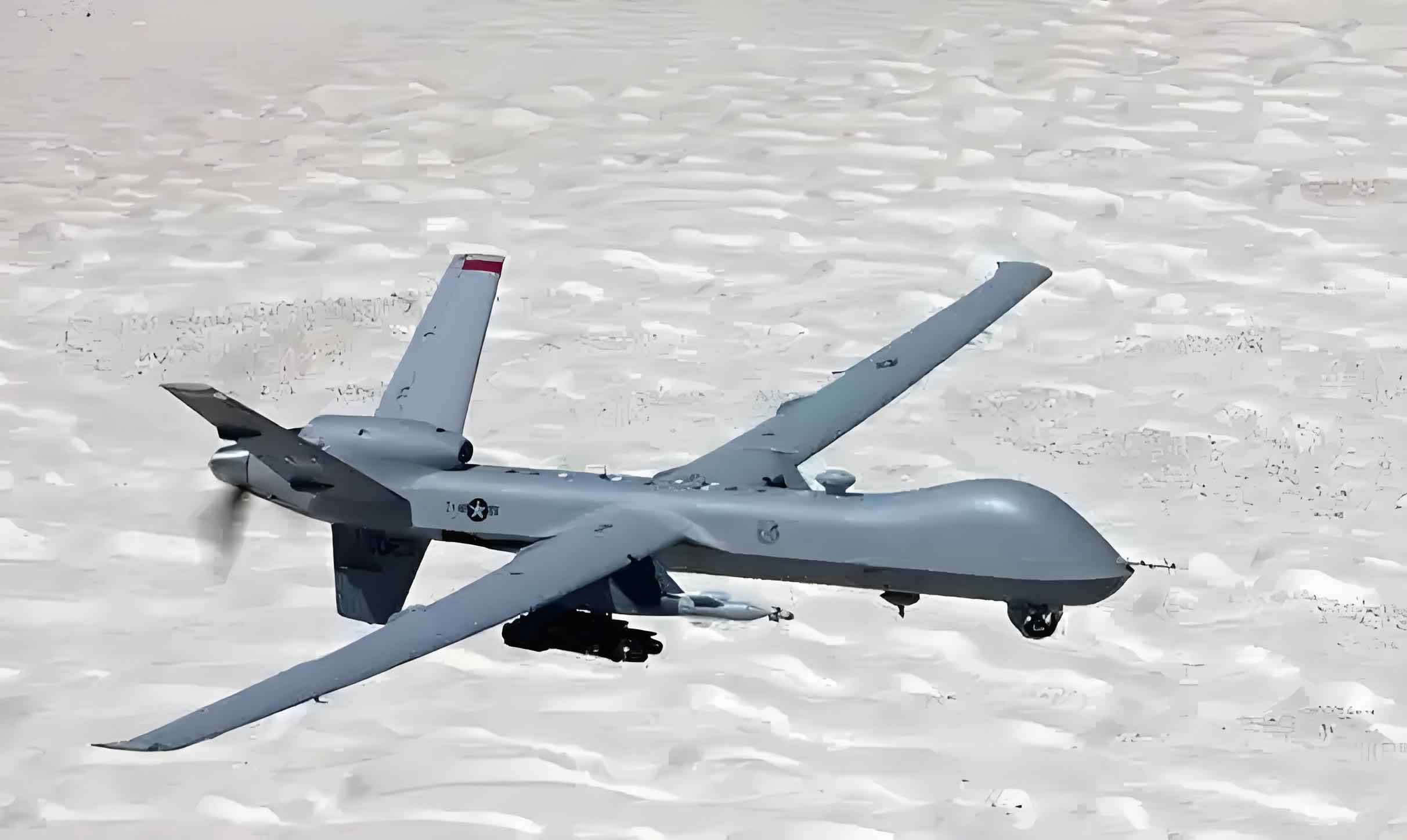
In my analysis, I categorize military UAVs based on various parameters. The classification helps in understanding their diverse applications and strategic value. Below, I present a table summarizing the primary categories of military UAVs.
| Classification Basis | Types | Description | Example Roles |
|---|---|---|---|
| Flight Range | Close-range, Medium-range, Long-range | Based on operational distance; close-range covers short distances, while long-range enables extended missions. | Close-range for tactical recon, long-range for strategic surveillance. |
| Operational Performance | Tactical, Campaign, Strategic | Tactical for local operations, campaign for theater-level, strategic for national-level objectives. | Tactical UAVs for battalion support, strategic for intelligence gathering. |
| Primary Use | Reconnaissance, Jamming, Attack | Reconnaissance for intelligence, jamming for electronic warfare, attack for direct engagement. | Reconnaissance UAVs monitor enemy movements, attack UAVs strike targets. |
The versatility of military UAVs stems from their unique characteristics. As I delve into these features, it’s clear that military UAVs offer distinct advantages over manned aircraft. Let’s examine these through a detailed table and some formulas.
| Characteristic | Explanation | Impact on Military Operations |
|---|---|---|
| Cost-Effectiveness | Low production, maintenance, and operational costs due to simple design and small size. | Enables mass deployment without significant financial burden; reduces risk to human life. |
| Stealth and Survivability | Incorporation of stealth coatings and designs to minimize radar cross-section and infrared signatures. | Enhances survivability in high-threat environments; allows penetration into denied airspace. |
| Flexibility in Deployment | Various launch methods (e.g., catapult, runway) and adaptability to different terrains. | Facilitates rapid deployment in diverse combat scenarios; reduces reliance on infrastructure. |
| Endurance and Maneuverability | Long flight times and high maneuverability, enabling sustained operations and evasive actions. |
To quantify the cost-benefit of military UAVs, I propose a simple formula. Let \( C_{\text{total}} \) represent the total cost of a military UAV program, including development, production, and maintenance. Let \( N \) be the number of units, \( C_{\text{unit}} \) the cost per unit, and \( M \) the mission success rate. The cost-effectiveness ratio \( E \) can be expressed as:
$$ E = \frac{M \times N}{C_{\text{total}}} $$
where \( C_{\text{total}} = N \times C_{\text{unit}} + C_{\text{dev}} \), with \( C_{\text{dev}} \) as development cost. This formula highlights how military UAVs, with lower \( C_{\text{unit}} \), achieve higher \( E \), justifying their proliferation. Additionally, the survivability of a military UAV can be modeled using the probability of detection \( P_d \). For a stealthy military UAV, \( P_d \) is reduced by factors such as radar cross-section \( \sigma \) and range \( R \):
$$ P_d \propto \frac{\sigma}{R^4} $$
This underscores the importance of stealth technologies in enhancing the operational lifespan of military UAVs.
Looking ahead, the trends in military UAV development are shaping the future of warfare. As I analyze these directions, it’s evident that innovation is driven by the need for enhanced capabilities and reduced vulnerabilities. I will discuss each trend in detail, supported by tables and formulas.
First, the trend toward miniaturization of military UAVs. Small military UAVs are becoming increasingly prevalent for tactical-level operations. They offer portability and low visibility, making them ideal for squad-level reconnaissance. The size reduction can be described by scaling laws. For example, the weight \( W \) of a military UAV scales with its length \( L \) as:
$$ W \propto L^3 $$
Thus, halving the length reduces weight by a factor of eight, enabling cheaper and more deployable systems. Below is a table summarizing miniaturization benefits.
| Aspect | Miniaturization Impact | Example Application |
|---|---|---|
| Cost Reduction | Lower material and production costs due to smaller size. | Swarm tactics using numerous small military UAVs. |
| Stealth Enhancement | Reduced radar cross-section and acoustic signature. | Covert surveillance in urban environments. |
| Deployment Flexibility | Easier transport and launch from confined spaces. | Hand-launched military UAVs for infantry units. |
Second, the push for high-altitude, long-endurance (HALE) military UAVs. These systems address the limitations of shorter-range drones by providing persistent coverage over large areas. The endurance \( T \) of a military UAV depends on factors like fuel capacity \( F \) and power consumption \( P \). For a propeller-driven military UAV, we can approximate:
$$ T = \frac{F \cdot \eta}{P} $$
where \( \eta \) is the propulsion efficiency. Advances in engine technology, such as turbocharged piston engines or turbofans, improve \( \eta \), enabling flights lasting over 24 hours. This is crucial for missions like border patrol or continuous intelligence gathering. The table below outlines HALE military UAV characteristics.
| Feature | HALE Military UAV Advantage | Typical Specification |
|---|---|---|
| Altitude | Operates above 15,000 meters, avoiding most threats. | Flight levels up to 20,000 meters for global reach. |
| Endurance | Sustained operations for days or weeks. | Over 30 hours of flight time with solar augmentation. |
| Sensor Coverage | Wide-area surveillance with advanced radars and optics. | Synthetic Aperture Radar (SAR) for all-weather imaging. |
Third, stealth technology is becoming paramount for military UAVs. As air defenses improve, reducing detectability is essential for survival. Stealth involves shaping, materials, and electronic countermeasures. The radar cross-section \( \sigma \) can be minimized using designs that deflect radar waves. For a given military UAV, the probability of survival \( S \) in a contested environment relates to the stealth factor \( k \):
$$ S = e^{-k \cdot \text{Threat Density}} $$
where a lower \( k \) (achieved through stealth) increases \( S \). This trend ensures that military UAVs can penetrate advanced integrated air defense systems (IADS).
Fourth, enhancing survivability while controlling costs is a balanced approach. Lessons from conflicts like Kosovo show that high loss rates can offset the benefits of military UAVs. Thus, research focuses on affordable stealth and redundant systems. A cost-survivability trade-off can be modeled as:
$$ \text{Total Effectiveness} = \alpha \cdot \text{Survivability} – \beta \cdot \text{Cost} $$
where \( \alpha \) and \( \beta \) are weighting factors. By optimizing this, military UAVs achieve higher mission success with lower expenditure.
Fifth, sensor integration and data transmission are critical for military UAVs. Modern military UAVs employ multi-sensor suites, including electro-optical, infrared, and radar systems. The data fusion from these sensors enhances situational awareness. Let \( D_i \) represent data from sensor \( i \), and the fused output \( F \) is:
$$ F = \sum_{i=1}^{n} w_i D_i $$
with \( w_i \) as weighting coefficients based on sensor reliability. This allows military UAVs to operate in all weather conditions. Additionally, diverse data links (e.g., satellite, line-of-sight) ensure real-time communication. The table below summarizes sensor advancements.
| Sensor Type | Capability | Integration Benefit |
|---|---|---|
| Electro-Optical (EO) | High-resolution daytime imagery. | Combined with IR for 24/7 surveillance in military UAVs. |
| Infrared (IR) | Thermal imaging for night operations. | Enables target identification in darkness. |
| Synthetic Aperture Radar (SAR) | All-weather, through-cloud imaging. | Provides persistent coverage regardless of conditions. |
Sixth, the offensive capabilities of military UAVs are expanding rapidly. Attack military UAVs represent a significant evolution, enabling direct engagement with targets. I classify them into three categories, as shown in the table below.
| Category | Description | Example Mission | Key Features |
|---|---|---|---|
| Airborne Weapons Platform | Carries and releases air-to-ground or air-to-air missiles. | Striking fortified positions or enemy aircraft. | Reusable; requires precise targeting and coordination. |
| Direct Attack UAV | Used as a kinetic weapon itself, often with explosive payloads. | Kamikaze-style attacks on high-value targets. | Low-cost; single-use; integrates reconnaissance and strike. |
| Air Combat UAV | Designed for aerial dogfighting and interception. | Replacing manned fighters in risky airspace. | High maneuverability; advanced AI for autonomous combat. |
The effectiveness of an attack military UAV can be quantified using the probability of kill \( P_k \). For a direct attack, \( P_k \) depends on factors like accuracy \( A \) and warhead lethality \( L \):
$$ P_k = A \cdot L \cdot (1 – P_d) $$
where \( P_d \) is the probability of being detected and intercepted. This formula highlights how stealth (reducing \( P_d \)) enhances attack success. Moreover, the concept of swarming military UAVs introduces new dynamics. If \( N \) military UAVs coordinate in a swarm, the collective effectiveness \( E_{\text{swarm}} \) might follow:
$$ E_{\text{swarm}} = N \cdot E_{\text{individual}} \cdot C_{\text{coordination}} $$
with \( C_{\text{coordination}} \) representing the synergy factor, often greater than 1 due to emergent behaviors.
As I explore further, the future of military UAVs involves integrating artificial intelligence (AI) and autonomous systems. AI enables military UAVs to make real-time decisions, reducing reliance on human operators. For instance, path planning for a military UAV in hostile terrain can be optimized using algorithms like A* search, minimizing exposure to threats. The computational cost \( C_{\text{comp}} \) of such algorithms scales with the complexity of the environment, but advancements in onboard processing are mitigating this.
Another area is the modularity of military UAVs. By designing systems with interchangeable payloads, military UAVs can switch roles rapidly—from reconnaissance to electronic warfare. This modularity enhances cost-efficiency and operational flexibility. The lifecycle cost \( LCC \) of a modular military UAV can be expressed as:
$$ LCC = C_{\text{base}} + \sum_{i=1}^{m} C_{\text{module}_i} \cdot U_i $$
where \( C_{\text{base}} \) is the base platform cost, \( C_{\text{module}_i} \) is the cost of module \( i \), and \( U_i \) is its utilization rate. This approach allows forces to adapt military UAVs to evolving threats without procuring entirely new systems.
Moreover, the proliferation of military UAVs raises ethical and strategic considerations. As an analyst, I note that the low risk to personnel makes military UAVs attractive for prolonged engagements, but this can also lower the threshold for conflict. International norms are evolving to address issues like autonomous targeting, ensuring that military UAVs are used responsibly.
In terms of numerical growth, the global fleet of military UAVs is expanding exponentially. Let \( G(t) \) represent the number of military UAVs at time \( t \). Based on current trends, a simple growth model could be:
$$ G(t) = G_0 \cdot e^{rt} $$
where \( G_0 \) is the initial number and \( r \) is the growth rate, estimated from defense budgets and technological adoption curves. This surge underscores the centrality of military UAVs in modern defense planning.
To encapsulate the multifaceted nature of military UAVs, I present a comprehensive table summarizing key performance metrics across different types. This table integrates data on range, endurance, and roles, illustrating the diversity of military UAV applications.
| Military UAV Type | Typical Range (km) | Endurance (hours) | Primary Role | Stealth Level | Approximate Cost (USD) |
|---|---|---|---|---|---|
| Close-range Tactical | 50-100 | 2-6 | Reconnaissance, Surveillance | Low to Moderate | 10,000 – 100,000 |
| Medium-range Campaign | 500-1000 | 10-24 | Targeting, Jamming | Moderate | 1M – 10M |
| Long-range Strategic | >2000 | >24 | Strategic Intel, Attack | High | 10M – 100M |
| Attack UAV (Direct) | 100-500 | 1-5 | Kinetic Strike | Moderate to High | 50,000 – 500,000 |
| HALE UAV | Global | >48 | Persistent Surveillance | High | 50M+ |
This table highlights how military UAVs span a wide spectrum, from affordable tactical tools to high-end strategic assets. The cost variations reflect the trade-offs between capability and expendability, a core consideration in military UAV procurement.
Furthermore, the integration of military UAVs with other domains, such as cyber and space, is creating a networked battlespace. For example, military UAVs can act as communication relays or cyber-attack platforms, extending their utility beyond traditional roles. The synergy between military UAVs and satellite networks enhances global reach, as described by the link budget equation for data transmission:
$$ P_r = P_t + G_t + G_r – L_{\text{path}} $$
where \( P_r \) is received power, \( P_t \) transmitted power, \( G_t \) and \( G_r \) antenna gains, and \( L_{\text{path}} \) path loss. By optimizing these parameters, military UAVs maintain robust links even in jammed environments.
As I conclude, the trajectory of military UAV development points toward an era where unmanned systems dominate aerial operations. The trends I’ve discussed—miniaturization, endurance, stealth, cost-effectiveness, sensor fusion, and attack capabilities—are converging to produce next-generation military UAVs. These systems will not only augment existing forces but also enable new tactics, such as drone swarms or autonomous squadrons.
In my view, the military UAV is more than just a tool; it represents a paradigm shift in warfare. By reducing human risk and increasing operational tempo, military UAVs empower militaries to achieve objectives with unprecedented efficiency. However, this also necessitates advances in counter-drone technologies, as adversaries adapt to the proliferation of military UAVs. The ongoing research in directed-energy weapons and electronic warfare aims to neutralize hostile military UAVs, ensuring a dynamic equilibrium.
Ultimately, the future of military UAVs is bright, with applications expanding into logistics, medical evacuation, and even civilian domains. As technology progresses, we may see military UAVs that are fully autonomous, capable of complex missions without human intervention. The ethical and legal frameworks will evolve in tandem, shaping how military UAVs are deployed globally. For now, I emphasize that the military UAV remains a cornerstone of modern defense, a true force multiplier that continues to evolve.
To reinforce the technical aspects, let’s consider a few more formulas. The endurance of a solar-powered military UAV, for instance, can be modeled by balancing energy harvested and consumed. If \( P_{\text{solar}} \) is the solar power input and \( P_{\text{consumed}} \) the power usage, then the net energy change \( \Delta E \) over time \( \Delta t \) is:
$$ \Delta E = (P_{\text{solar}} – P_{\text{consumed}}) \Delta t $$
For long-endurance military UAVs, this balance allows indefinite loitering under ideal conditions. Similarly, the maneuverability of a military UAV relates to its turn rate \( \omega \), which depends on wingspan \( b \) and velocity \( v \):
$$ \omega = \frac{v}{R_{\text{turn}}} $$
where \( R_{\text{turn}} \) is the turn radius, minimized through design for agile military UAVs. These mathematical insights help engineers optimize military UAV performance.
In summary, through this first-person exploration, I have detailed the classification, characteristics, and trends of military UAVs. By employing tables and formulas, I’ve structured the information to highlight the technological and strategic nuances. The repeated use of the term ‘military UAV’ underscores its centrality in contemporary discourse. As these systems advance, they will undoubtedly reshape the landscape of warfare, offering both opportunities and challenges. I encourage continued study and innovation in this field, as the military UAV stands as a testament to human ingenuity in the pursuit of security and efficiency.