
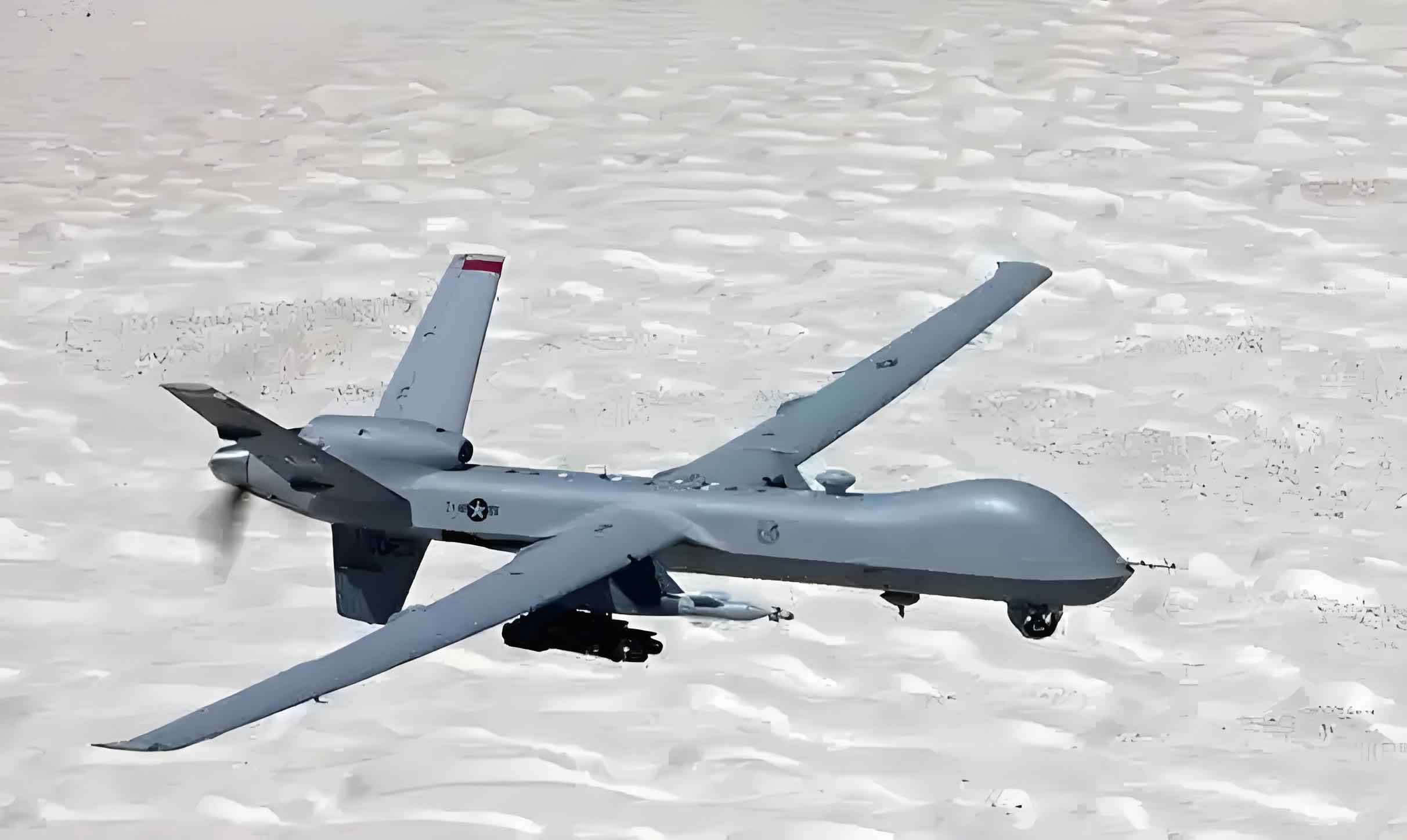
In my perspective, the evolution of military UAVs has been a transformative journey, marked by rapid technological advancements and shifting operational paradigms. From early 20th-century experiments constrained by power, control, and communication limitations, military UAVs have burgeoned into pivotal assets in modern warfare. By the 1990s, their prominent role in high-tech conflicts ignited global military interest, and since the 21st century, they have become indispensable for surveillance, reconnaissance, target tracking, battle damage assessment, and air support. With the advent of communication technologies and artificial intelligence, concepts like manned-unmanned teaming have propelled military UAVs into complex air dominance and strike missions. As an analyst, I observe that this progression underscores the need for robust, intelligent support systems to ensure these platforms’ effectiveness and longevity.
The integrated logistics informationization for military UAVs represents a paradigm shift in maintenance and support. It involves leveraging information technology to deeply develop maintenance resources, streamline processes, and integrate technology with equipment upkeep, thereby enhancing precision, scientific rigor, and overall readiness. In my view, this transformation is driven by three core factors: technological advancements that accelerate system updates, the demand for comprehensive state management, supply chain efficiency, and training support under current maintenance frameworks, and the future operational necessities focused on mission-based performance and integrated support. These drivers collectively shape the trajectory toward smarter, more responsive military UAV logistics.
Reflecting on the current state of integrated logistics informationization, I note that nations worldwide have developed distinct systems, with robust information systems forming the backbone. For instance, the U.S. military employs an Integrated Logistics System (ILS) to manage the entire lifecycle of military aircraft, overseeing technical states, modifications, and supply chains. However, challenges persist, as seen in the F-35’s Autonomous Logistics System (ALS), which faced delays, high false alarm rates, and data inaccuracies, prompting its replacement with the Operational Data Integrated Network (ODIN). Domestically, systems like Interactive Electronic Technical Manuals (IETM) and Portable Maintenance Aids (PMA) have improved efficiency, but they often operate in silos, lacking holistic planning and real-time resource visibility. This fragmentation hinders comprehensive situational awareness and intelligent decision-making, underscoring the urgency for unified solutions in military UAV support.
| Aspect | U.S. Military (F-35 ALS/ODIN) | Domestic Systems |
|---|---|---|
| System Approach | Integrated lifecycle management with automation | Modular systems (e.g., IETM, PMA) |
| Key Challenges | Delays, high false alarms, data errors | Fragmentation, lack of real-time integration |
| Recent Developments | Transition to ODIN for improved data integration | Efforts toward unified platforms |
| Impact on Readiness | Significant factors affecting availability | Reduced efficiency in agile support |
From my analysis, military UAVs, particularly medium to large variants, exhibit unique support characteristics due to their system complexity and operational modes. Unlike manned aircraft, military UAVs involve separated deployments, with ground control stations and platforms often operating in a one-station-to-multiple-aircraft configuration. This separation demands coordinated support during mission preparation, diverging from the single-aircraft unit approach. Moreover, military UAVs are complex systems with extended flight durations and diverse payloads, generating vast maintenance data that necessitates rapid processing for accurate diagnostics. Their agility in deployment and frequent redeployment also require flexible, minimalistic support resource configurations. These traits emphasize the need for cross-domain, precise, and agile support capabilities, which I believe are essential for enhancing the operational effectiveness of military UAVs.
| Characteristic | Description | Implication for Support |
|---|---|---|
| Separated Deployment | Ground stations and UAVs are geographically dispersed | Requires synchronized, multi-site coordination |
| System Complexity | High data volume from sensors and payloads | Needs advanced data analytics for quick diagnosis |
| Mobility and Redeployment | Frequent mission changes and agile movements | Demands scalable, portable support resources |
In my exploration of new information technologies, I foresee transformative applications for military UAV integrated logistics. Data links enable real-time health monitoring by transmitting system states, critical consumables data, and severe fault codes from military UAVs to ground stations, shifting support from reactive to proactive. For example, a data link can relay parameters like airspeed and engine temperature, allowing immediate anomaly detection. Furthermore, space-based internet networks, composed of low-Earth orbit satellites, facilitate cross-domain support by providing global connectivity for data sharing and resource integration among military UAV fleets. This capability is crucial for extended operations in remote theaters, ensuring that military UAVs remain mission-ready through seamless information flow.
Big data technologies address the 5V characteristics—Volume, Velocity, Variety, Value, and Veracity—of military UAV maintenance data. By employing cloud computing and distributed databases, we can perform deep data mining across the lifecycle, from design to deployment. For instance, a Prognostics and Health Management (PHM) system can leverage historical and real-time data to detect faults, predict remaining useful life, and assess health states. A mathematical representation of health assessment might involve a weighted sum of features: $$ H(t) = \sum_{i=1}^{n} w_i \cdot f_i(t) $$ where \( H(t) \) is the health index at time \( t \), \( w_i \) denotes weights for different subsystems, and \( f_i(t) \) represents normalized feature functions derived from sensor data. Such models enhance the precision of maintenance actions for military UAVs, reducing downtime and optimizing resource allocation.
| Technology | Application in Military UAV Support | Benefit |
|---|---|---|
| Data Links | Real-time transmission of health and fault data | Enables proactive maintenance and rapid response |
| Space-Based Internet | Global connectivity for cross-domain operations | Facilitates resource sharing and coordinated support |
| Big Data Analytics | Mining lifecycle data for fault prediction | Improves diagnostic accuracy and life-cycle management |
| Artificial Intelligence | Intelligent decision-making for logistics planning | Enhances agility and precision in support operations |
Artificial intelligence, in my assessment, is a game-changer for military UAV support decision-making. By mimicking human cognitive functions—such as learning, reasoning, and problem-solving—AI systems can autonomously analyze operational patterns and predict resource consumption. For example, a machine learning model might use historical mission data to forecast spare parts demand: $$ \hat{D} = \arg\min_{D} \sum_{j=1}^{m} (y_j – \hat{y}_j)^2 $$ where \( \hat{D} \) is the predicted demand, \( y_j \) represents actual past consumption, and \( \hat{y}_j \) is the model’s output based on features like mission type and intensity. This supports intelligent planning for repairs, supply chains, and training, making military UAV logistics more adaptive to dynamic combat environments. The integration of AI not only streamlines processes but also empowers support systems to learn from evolving scenarios, ensuring that military UAV fleets maintain high readiness rates.
To realize these advancements, I propose that military UAV integrated logistics informationization must cultivate several key capabilities. First, real-time situational awareness through data links allows continuous monitoring of military UAV health, providing visual dashboards for ground crews. Second, comprehensive health assessment leverages big data to analyze maintenance records, test results, and design data, enabling accurate performance evaluations and lifespan predictions. This can be expressed as a risk function: $$ R(t) = 1 – \exp\left(-\int_0^t \lambda(\tau) \, d\tau\right) $$ where \( R(t) \) denotes the cumulative failure risk, and \( \lambda(\tau) \) is the hazard rate derived from historical data. Third, maintenance decision support uses AI to match military UAV capabilities with mission requirements, generating optimized support plans. Fourth, end-to-end process control applies digital twin technology to simulate and optimize support activities, ensuring resource efficiency. These capabilities collectively foster a cross-domain, precise, and agile support ecosystem for military UAVs.
| Key Capability | Description | Enabling Technologies |
|---|---|---|
| Real-Time Situational Awareness | Continuous health monitoring via data streams | Data links, real-time processing algorithms |
| Comprehensive Health Assessment | Big data analysis for fault and life prediction | PHM systems, cloud computing, statistical models |
| Maintenance Decision Support | AI-driven planning for missions and resources | Machine learning, optimization algorithms |
| End-to-End Process Control | Digital twin simulation for support optimization | IoT sensors, simulation software, predictive analytics |
In conclusion, as military UAVs become integral to future combat networks, their support systems must evolve accordingly. From my viewpoint, embracing modern information technologies—such as data links, big data, and AI—is paramount to developing next-generation intelligent logistics systems. These innovations will enable cross-domain, precise, and agile support, ensuring that military UAVs can swiftly achieve and sustain combat effectiveness. The journey toward fully integrated logistics informationization for military UAVs is complex, but with persistent innovation and holistic planning, it promises to redefine military readiness in the digital age. As we advance, continuous refinement of these systems will be crucial to addressing emerging challenges and maximizing the potential of military UAVs in diverse operational scenarios.