
In my analysis of contemporary military operations, I observe that unmanned aerial systems, specifically military drones, have fundamentally transformed the intelligence, surveillance, and reconnaissance (ISR) landscape over the past two decades. The shift from predominantly manned platforms to these unmanned systems represents not merely a technological substitution but a strategic evolution. The core advantages that make military drones exceptionally suitable for ISR are profound: they drastically reduce operational costs associated with crewed aircraft, their endurance is bounded by engineering rather than human physiological limits, and they can be deployed into high-threat environments without risking pilot lives. This allows for persistent stare over areas of interest, a capability that is redefining the tempo and depth of battlefield awareness.
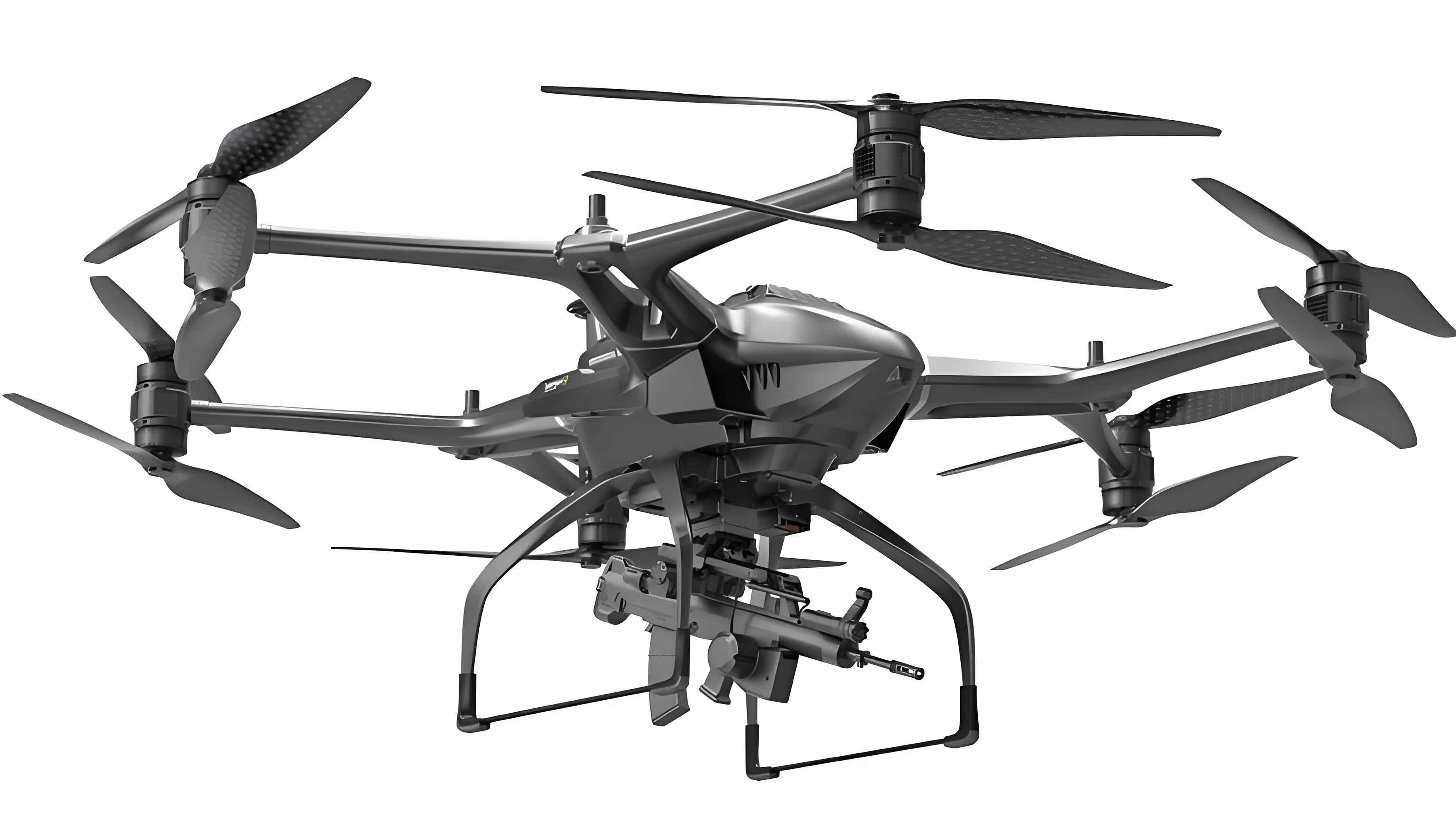
The proliferation of data from these platforms is staggering. A single long-endurance military drone can generate terabytes of imagery, signals intelligence, and full-motion video during a mission. This data deluge presents both an unprecedented opportunity and a formidable challenge. The opportunity lies in achieving a level of situational awareness and predictive intelligence previously unattainable. The challenge resides in the timely processing, exploitation, and dissemination (PED) of this information into actionable intelligence. In my assessment, the efficacy of a military drone ISR system is no longer solely determined by the quality of its sensors or the endurance of its airframe, but increasingly by the sophistication of its onboard and ground-based data fusion and artificial intelligence algorithms. The ability to “find, fix, and finish” is now deeply interwoven with the capability to “filter, analyze, and predict.”
1. The Expansive ISR Mission Set for Military Drones
Military drones are uniquely suited to a diverse and demanding portfolio of ISR tasks. Their versatility stems from scalable airframe designs, adaptable sensor suites, and the operational freedom granted by their unmanned nature. Below, I detail the primary mission areas where these systems have become indispensable.
1.1. Wide-Area Surveillance and Persistent Monitoring: This is perhaps the most iconic role for high-altitude, long-endurance (HALE) military drones. By operating at altitudes exceeding 60,000 feet, platforms like the Global Hawk can loiter for over 30 hours, providing an unblinking eye over vast geographic areas. The primary objective is pattern-of-life analysis and broad situational awareness. The mathematical coverage area can be conceptualized by the sensor’s field of regard and altitude. For a synthetic aperture radar (SAR) with a specific swath width, the ground coverage rate is critical:
$$ \text{Coverage Rate} = \text{Platform Velocity} \times \text{Swath Width} $$
This allows commanders to monitor enemy force movements, infrastructure development, and changes in territorial control over weeks or months, building a comprehensive intelligence picture.
1.2. Targeted Tracking and Close Surveillance: Smaller tactical and Group 1-3 military drones excel in tracking high-value individuals or time-sensitive targets. They provide a clandestine, persistent presence that is difficult to detect. Using electro-optical/infrared (EO/IR) gimbals, these drones can maintain laser designation or simply monitor a target’s activity, feeding real-time video to ground forces. The challenge here is navigation in complex, GPS-denied environments like urban canyons or inside buildings. Advanced algorithms for visual odometry and simultaneous localization and mapping (SLAM) are essential. The position estimation can be part of a filtering problem, often addressed by a Kalman Filter:
$$ \hat{x}_{k|k} = \hat{x}_{k|k-1} + K_k(z_k – H\hat{x}_{k|k-1}) $$
where $\hat{x}$ is the state estimate, $K$ is the Kalman gain, $z$ is the measurement, and $H$ is the observation model.
1.3. Chemical, Biological, Radiological, Nuclear, and Explosive (CBRNE) Detection: The unmanned nature of military drones makes them the perfect first responder for suspected CBRNE events. Specialized sensor payloads can detect gamma radiation, identify chemical agent aerosols via laser spectroscopy, or sample the air for biological pathogens. Deploying a military drone into a contaminated zone eliminates the risk of exposing personnel, allowing for rapid assessment and mapping of hazard zones. The data from these sensors often requires real-time spectral analysis and anomaly detection algorithms to identify threats against background noise.
1.4. Signals Intelligence (SIGINT) and Electronic Warfare (EW): Military drones are increasingly fitted with payloads designed to intercept communications (COMINT), detect radar emissions (ELINT), or perform electronic attack. Their ability to loiter close to or inside contested airspace provides a proximity advantage for capturing low-power signals. The processing of this intelligence often involves complex signal classification and geolocation techniques, such as Time Difference of Arrival (TDOA):
$$ \Delta t_{ij} = \frac{1}{c} \left( \sqrt{(x – x_i)^2 + (y – y_i)^2} – \sqrt{(x – x_j)^2 + (y – y_j)^2} \right) $$
where $c$ is the speed of light, $(x, y)$ is the unknown emitter location, and $(x_i, y_i)$, $(x_j, y_j)$ are known sensor platform positions.
1.5. Battle Damage Assessment (BDA) and Post-Strike Surveillance: Following a kinetic strike, military drones are crucial for providing immediate BDA. High-resolution imagery, both EO and SAR, is analyzed to determine target destruction level, assess collateral damage, and monitor for follow-on activity. This closes the “kill chain” loop and informs decisions for potential re-attacks.
| Mission Type | Typical Drone Class | Key Sensor Payloads | Primary Challenge |
|---|---|---|---|
| Wide-Area Surveillance | HALE (e.g., Global Hawk) | Wide-Area SAR, MX/HSI | Data Volume, Communication Bandwidth |
| Targeted Tracking | MALE/Tactical (e.g., MQ-9, Scan Eagle) | EO/IR Gimbal, Laser Designator | Visual Tracking in Clutter, Covertness |
| CBRNE Detection | Small Tactical/VTOL | Radiological Detectors, Chemical Sensors | Sensor Sensitivity, False Alarms |
| SIGINT/ELINT | MALE/Specialized | DF Antennas, Wideband Receivers | Signal Density, Geolocation Accuracy |
| BDA | All Classes | High-Res EO/IR, SAR | Rapid Analysis, Cloud Cover |
2. Mission-Oriented Sensor Payloads: The Eyes and Ears of the Military Drone
The utility of a military drone is dictated by the capabilities of its sensor payloads. Modern ISR missions demand a multi-spectral, multi-phenomenology approach to overcome environmental and adversarial countermeasures. I categorize the key sensor types and their applications below.
2.1. Electro-Optical/Infrared (EO/IR) Systems: These are the workhorses of drone-based ISR, providing high-resolution imagery and full-motion video (FMV). Modern multi-spectral targeting systems (MTS) combine visible light, near-infrared (NIR), and mid-wave/long-wave infrared (MWIR/LWIR) cameras in a single stabilized gimbal. The LWIR sensor is particularly valuable for night operations and seeing through light obscurants. The performance of an IR sensor is often defined by the Noise-Equivalent Temperature Difference (NETD), a measure of its sensitivity:
$$ \text{NETD} = \frac{\text{Noise}}{ \text{Responsivity} \times \sqrt{\text{Bandwidth}} } $$
A lower NETD indicates a better ability to distinguish small temperature differences.
2.2. Synthetic Aperture Radar (SAR): SAR provides an all-weather, day/night imaging capability that is immune to clouds and darkness. It works by synthesizing a large antenna aperture from the motion of the military drone, achieving high resolution. SAR modes include:
- Spotlight SAR: Highest resolution on a fixed area.
- Strip-Map SAR: Continuous imaging along the flight path.
- Ground Moving Target Indicator (GMTI): Detects and tracks moving vehicles by filtering out static clutter.
The resolution of a SAR system is given approximately by:
$$ \rho_{azimuth} \approx \frac{\lambda R}{2L} $$
where $\lambda$ is the wavelength, $R$ is the range to target, and $L$ is the synthetic aperture length.
2.3. Multi-Spectral and Hyper-Spectral Imagery (MSI/HSI): These sensors capture data across many narrow, contiguous spectral bands. While MSI might have 4-12 bands, HSI can have hundreds. This allows for material identification and classification beyond human vision. For example, HSI can distinguish between real vegetation and camouflage netting, or identify specific mineral compositions. Analysis involves examining spectral signatures and matching them to known libraries.
2.4. Light Detection and Ranging (LiDAR): LiDAR uses laser pulses to create precise three-dimensional point clouds of the terrain or structures. It is invaluable for mapping, creating digital elevation models (DEMs), and penetrating foliage to see objects underneath (FOPEN capability). The basic ranging equation is straightforward:
$$ R = \frac{c \cdot \Delta t}{2} $$
where $c$ is the speed of light and $\Delta t$ is the time delay between pulse transmission and reception.
2.5. Signals Intelligence (SIGINT) Payloads: These are specialized electronic systems that include Communications Intelligence (COMINT) suites to intercept radio transmissions and Electronic Intelligence (ELINT) suites to detect and characterize radar signals. They are critical for building the electronic order of battle (EOB).
| Sensor Type | Physical Principle | Key Advantage | Primary Limitation |
|---|---|---|---|
| EO/IR Camera | Photons (Visible to Thermal IR) | High Resolution, Intuitive FMV | Weather/Cloud Dependent, Night (EO only) |
| Synthetic Aperture Radar (SAR) | Microwave Reflection | All-Weather, Day/Night, GMTI | Complex Data Processing, Speckle Noise |
| Hyper-Spectral Imager (HSI) | Spectral Reflectance | Material Identification, Camouflage Detection | Large Data Volume, Requires Calibration |
| LiDAR | Laser Pulse Time-of-Flight | High-Precision 3D Mapping, FOPEN | Affected by Fog/Rain, Limited Swath |
| SIGINT Suite | RF Interception | Electronic Battlefield Awareness | Signal Density, Requires Direction Finding |
3. The Processing, Exploitation, and Dissemination (PED) Challenge
In my view, the collection of data by a military drone is only the first step. The true value is unlocked in the PED chain. The volume, velocity, and variety of data generated by modern multi-sensor military drones can overwhelm traditional, manual analysis pipelines. The evolution has been toward greater automation, edge processing, and artificial intelligence.
3.1. The Data Deluge and PED Architectures: A single MQ-9 Reaper drone on a 24-hour mission can collect over 80 terabytes of FMV and associated metadata. Transmitting this raw data via satellite links is often impractical due to bandwidth constraints. This has led to two primary architectural paradigms:
- Onboard/Real-time PED: Processing occurs on the military drone itself. This involves extracting features, detecting changes, or identifying targets, then transmitting only the metadata or “tipped” imagery. The Lynx multi-mode radar is a prime example, performing automatic moving target detection and SAR image formation in real-time.
- Ground-based Distributed PED: Data is downlinked to distributed ground stations (DGS) where analysts and server farms process it. This allows for more complex, multi-INT fusion but introduces latency.
The effective data rate requirement $R_{eff}$ for a downlink can be modeled as:
$$ R_{eff} = \frac{V_{raw} \cdot C_{ratio}}{T_{mission}} $$
where $V_{raw}$ is the raw data volume, $C_{ratio}$ is the compression or information extraction ratio, and $T_{mission}$ is the available transmission time.
3.2. The Role of Artificial Intelligence and Machine Learning: AI/ML is revolutionizing PED. Computer vision algorithms, particularly deep convolutional neural networks (CNNs), can automatically detect, classify, and track objects in FMV and wide-area imagery. This shifts the analyst’s role from “sensor operator” to “mission manager.” Key applications include:
- Automated Target Recognition (ATR): Identifying vehicles, aircraft, or installations in imagery.
- Change Detection: Highlighting new construction, moved equipment, or disturbed earth between passes.
- Activity Recognition: Classifying behaviors from video sequences (e.g., loading a truck, digging).
A simple object detector like YOLO (You Only Look Once) operates on a grid, predicting bounding boxes and class probabilities. The loss function it minimizes during training combines localization error and classification error:
$$ \mathcal{L} = \lambda_{coord} \sum_{i=0}^{S^2} \sum_{j=0}^{B} \mathbb{1}_{ij}^{obj} \left[ (x_i – \hat{x}_i)^2 + (y_i – \hat{y}_i)^2 \right] + \lambda_{coord} \sum_{i=0}^{S^2} \sum_{j=0}^{B} \mathbb{1}_{ij}^{obj} \left[ (\sqrt{w_i} – \sqrt{\hat{w}_i})^2 + (\sqrt{h_i} – \sqrt{\hat{h}_i})^2 \right] + \sum_{i=0}^{S^2} \sum_{j=0}^{B} \mathbb{1}_{ij}^{obj} (C_i – \hat{C}_i)^2 + \lambda_{noobj} \sum_{i=0}^{S^2} \sum_{j=0}^{B} \mathbb{1}_{ij}^{noobj} (C_i – \hat{C}_i)^2 + \sum_{i=0}^{S^2} \mathbb{1}_{i}^{obj} \sum_{c \in classes} (p_i(c) – \hat{p}_i(c))^2 $$
This automation is critical for managing the data flow from swarms of military drones in future conflict scenarios.
3.3. Fusion and the Common Operational Picture (COP): Data from military drones is rarely used in isolation. It is fused with intelligence from other sources—satellites, manned aircraft, ground units, cyber—to create a unified COP. This fusion occurs at multiple levels:
- Level 1 (Data): Aligning pixels and tracks from different sensors.
- Level 2 (Object): Associating detections into coherent tracks (e.g., is this radar contact the same as that SIGINT emitter?).
- Level 3 (Situation): Understanding relationships and patterns (e.g., this convoy movement correlates with intercepted enemy communications).
Probabilistic frameworks like Bayesian networks or Dempster-Shafer theory are often employed to handle the inherent uncertainty in this fusion process.
| PED Paradigm | Data Flow | Key Enablers | Primary Limitation |
|---|---|---|---|
| Traditional (Post-Mission) | Collect -> Store -> Download -> Analyze | Large Hard Drives | High Latency (hours/days), No real-time tip-off |
| Real-time Downlink | Collect -> Compress -> Downlink -> Analyze | Satcom Links, Ground Stations | Bandwidth Bottleneck, Vulnerable Link |
| Onboard/AI-Powered PED | Collect -> Process/Analyze Onboard -> Transmit Alerts/Metadata | HPEC, AI/ML Algorithms | SWaP Constraints on Drone, Algorithm Trust |
| Swarm/Networked PED | Collect -> Fuse/Share Across Drone Network -> Collaborative Analysis | M2M Links, Distributed AI | Extreme Coordination Complexity, Cyber Vulnerability |
4. Counter-ISR and Survivability: The Adversary Adapts
The widespread success of military drone ISR has inevitably spurred the development of countermeasures. A modern military drone operating in a contested environment faces a multi-layered threat spectrum. Its design must account for these adversarial actions to remain effective.
4.1. Cyber and Electronic Attack: The datalinks between the military drone and its ground control station (GCS) are prime targets. Threats include:
- Jamming: Disrupting the command & control (C2) or video downlink signals with high-power noise.
- Spoofing: Injecting false GPS signals to mislead the drone’s navigation, or mimicking C2 signals to take control.
- Network Exploitation: Hacking into the drone’s onboard systems or the ground network to corrupt data or seize control.
Defenses involve advanced encryption, frequency-hopping spread spectrum waveforms, anti-jam antennas (like phased arrays), and GPS-independent navigation (see below). The link margin, which is the difference between received signal power and the required power, must be sufficient to overcome jamming:
$$ \text{Link Margin (dB)} = P_{rx} – ( \text{Noise Floor} + J/S ) $$
where $J/S$ is the jammer-to-signal ratio.
4.2. Kinetic and Direct-Energy Threats: Military drones, especially MALE and HALE variants, are often large, slow-flying, and non-stealthy, making them vulnerable to air defenses.
- Surface-to-Air Missiles (SAMs): From man-portable (MANPADS) to high-altitude systems.
- Anti-Drone Systems:
Countermeasures include rudimentary stealth shaping, electronic warfare self-protection suites, and operational tactics like operating outside known threat rings or in swarms to saturate defenses.
4.3. Navigation in GPS-Denied Environments: Adversaries can locally deny GPS. A resilient military drone must navigate without it. This is a major research area focusing on:
- Visual-Inertial Odometry (VIO): Fusing camera images with inertial measurement unit (IMU) data.
- LiDAR or Radar SLAM: Creating and navigating by a 3D map in real-time.
- Celestial Navigation: Using star trackers as a backup.
The state estimation in VIO often relies on a non-linear optimization framework like bundle adjustment, minimizing the reprojection error:
$$ \min_{\mathbf{X}_i, \mathbf{p}_j} \sum_{i,j} \| \mathbf{z}_{ij} – \pi(\mathbf{X}_i, \mathbf{p}_j) \|^2 $$
where $\mathbf{X}_i$ are drone poses, $\mathbf{p}_j$ are 3D map points, $\mathbf{z}_{ij}$ are image measurements, and $\pi$ is the camera projection function.
4.4. Communications Denial and Distributed Operations: When datalinks are severed, the military drone must operate autonomously. This requires advanced “playbook” autonomy where the drone can execute pre-planned or adaptive missions based on higher-level commands. Research into distributed battle management allows teams of drones to collaborate, share targeting information via mesh networks, and execute complex missions like SEAD/DEAD with minimal human intervention once the mission is launched.
| Threat Category | Specific Threat | Potential Impact | Defensive Countermeasure |
|---|---|---|---|
| Electronic/Cyber | C2/GPS Jamming | Loss of Control, Navigation Error | Anti-Jam Comms, INS/GPS-Aided Navigation, Alternative PNT |
| Spoofing/Hacking | Control Theft, Data Corruption | Cryptographic Authentication, Cyber-Hardened Systems | |
| Kinetic | MANPADS / Small Arms | Shoot-Down of Low-Altitude Drones | Operational Altitude, IR Suppression, Flares |
| Medium/Long-Range SAMs | Shoot-Down of MALE/HALE Drones | Stand-off Operations, EW Escort, Stealth Features | |
| Operational | Camouflage, Deception, Decoys | Reduced ISR Effectiveness, Wasted Resources | Multi-Spectral Sensors, Change Detection AI, Human-in-the-Loop Analysis |
| Environmental | Dense Urban, Forest Canopy, Weather | Sensor Occlusion, Navigation Failure | SAR/LiDAR, VIO/SLAM Algorithms, All-Weather Sensors |
5. Future Trajectories and Concluding Analysis
Looking ahead, the trajectory of military drone ISR is clear: greater autonomy, deeper sensor fusion, and more resilient operations. The concept of the “loyal wingman,” where advanced unmanned combat aerial vehicles (UCAVs) operate in concert with manned fighters, will extend the ISR-C2 bubble of a flight. Swarms of small, inexpensive military drones, networked together and driven by collaborative AI, could perform wide-area searches, saturate defenses, and provide redundant sensing.
The PED challenge will intensify, pushing more AI to the tactical edge—onto the military drone itself. This “AI at the edge” will enable real-time decision-making, such as a drone recognizing a newly emerged high-value target and autonomously re-tasking a nearby loitering munition. However, this raises critical questions about trust, ethics, and the appropriate level of human control. The mathematical models governing these autonomous decisions will need to be transparent, robust, and secure against adversarial data poisoning.
Furthermore, counter-ISR technology will keep pace. The future battlefield will see a constant cycle of measure and countermeasure between ISR drones and integrated air defense systems that include anti-drone microwaves, lasers, and sophisticated cyber tools. Survivability will depend not just on stealth or speed, but on electronic warfare prowess, autonomous reactive maneuvers, and the ability to operate as part of a resilient, mesh-networked force.
In my final assessment, the military drone has cemented its role as the central nervous system of modern battlefield awareness. Its value proposition in the ISR domain—persistence, risk reduction, and multi-phenomenology sensing—is unmatched. The future of conflict will be shaped by which powers can most effectively develop, deploy, and protect their networks of intelligent, connected military drones, and best fuse the torrent of data they produce into decisive, timely action. The equation for success is no longer simply about platforms and sensors, but about the algorithms, bandwidth, and decision cycles that connect them: $$ \text{ISR Effectiveness} = f(\text{Sensor Quality}, \text{Persistence}, \text{Data Rate}, \text{Processing Power}, \text{AI Sophistication}, \text{Resilience}) $$. Mastering this complex function is the defining challenge for 21st-century military intelligence.