
In my research on large-scale fireworks displays, I have recognized the critical need for accurate and efficient risk assessment of surrounding buildings. The instantaneous release of immense energy during such events poses threats from shock waves, thermal radiation, and flying debris to nearby structures. Traditional manual inspection methods suffer from low efficiency, limited coverage, and difficulty in accessing high-altitude areas. Over the past few years, I have focused on leveraging China drone aerial survey technology to overcome these limitations. By integrating high-precision remote sensing, rapid data acquisition, and wide-area coverage, China drone systems enable three-dimensional scanning and comprehensive data collection of buildings around fireworks launch sites. In this article, I present my findings on how China drone aerial survey can revolutionize building risk assessment for large fireworks activities.
1. Risk Analysis of Buildings Surrounding Large Fireworks Events
1.1 Shock Wave Impact Risk
When large fireworks detonate, they release a tremendous amount of energy in an instant, generating powerful air shock waves that pose direct impact risks to surrounding buildings. Structures close to the launch point, especially weak components such as windows and glass curtain walls, are vulnerable to pressure-induced breakage, deformation, or even frame detachment and wall cracking. For old brick-concrete buildings with limited impact resistance, shock waves may cause partial wall collapse or roof component loosening, severely compromising overall structural stability. The shock wave can also shake internal fixtures, leading to property damage, and secondary hazards from falling glass shards and debris. This risk escalates sharply with larger fireworks scales and shorter building distances, particularly in dense urban clusters where wave superposition amplifies damage.
1.2 High-Temperature Radiation and Fire Risk
During fireworks display, extremely hot flames and sparks are generated, endangering nearby buildings through thermal radiation and spark projection. High-temperature radiation can directly ignite flammable external materials such as thermal insulation layers, wooden decorations, and plastic components. In summer heat or when building facades lack fireproof treatment, the fire hazard becomes more pronounced. Meanwhile, sparks and unburned residue may land on roofs, balconies, or open storage areas. If they contact combustible items like clothing, cardboard, or wood, they can easily trigger roof fires or indoor fires.
1.3 Flying Debris Impact Risk
At the moment of detonation, some incompletely burned fragments, casings, and debris scatter at high speed, causing impact damage to surrounding buildings. These projectiles can penetrate glass, damage exterior decorative panels, or strike critical roof components such as waterproof membranes and lightning protection systems, leading to leakage or system failure. From high-rise buildings, the kinetic energy of falling debris increases, potentially severely damaging lower-roof structures and balcony railings. If debris enters ventilation shafts or pipe chases, it may cause internal fires or equipment malfunctions. Additionally, broken fragments can damage nearby power lines and gas pipelines, creating indirect safety hazards.
| Risk Type | Mechanism | Vulnerable Building Components | Potential Consequences |
|---|---|---|---|
| Shock Wave | Air overpressure | Windows, glass facades, brick walls | Cracking, collapse, falling debris |
| Thermal Radiation | High heat flux | Exterior insulation, wooden elements | Ignition, fire spread |
| Flying Debris | Kinetic impact | Roofing, glazing, lighting fixtures | Penetration, structural damage, secondary fires |
2. Role of China Drone Aerial Survey in Risk Assessment
2.1 Precise Acquisition of 3D Data
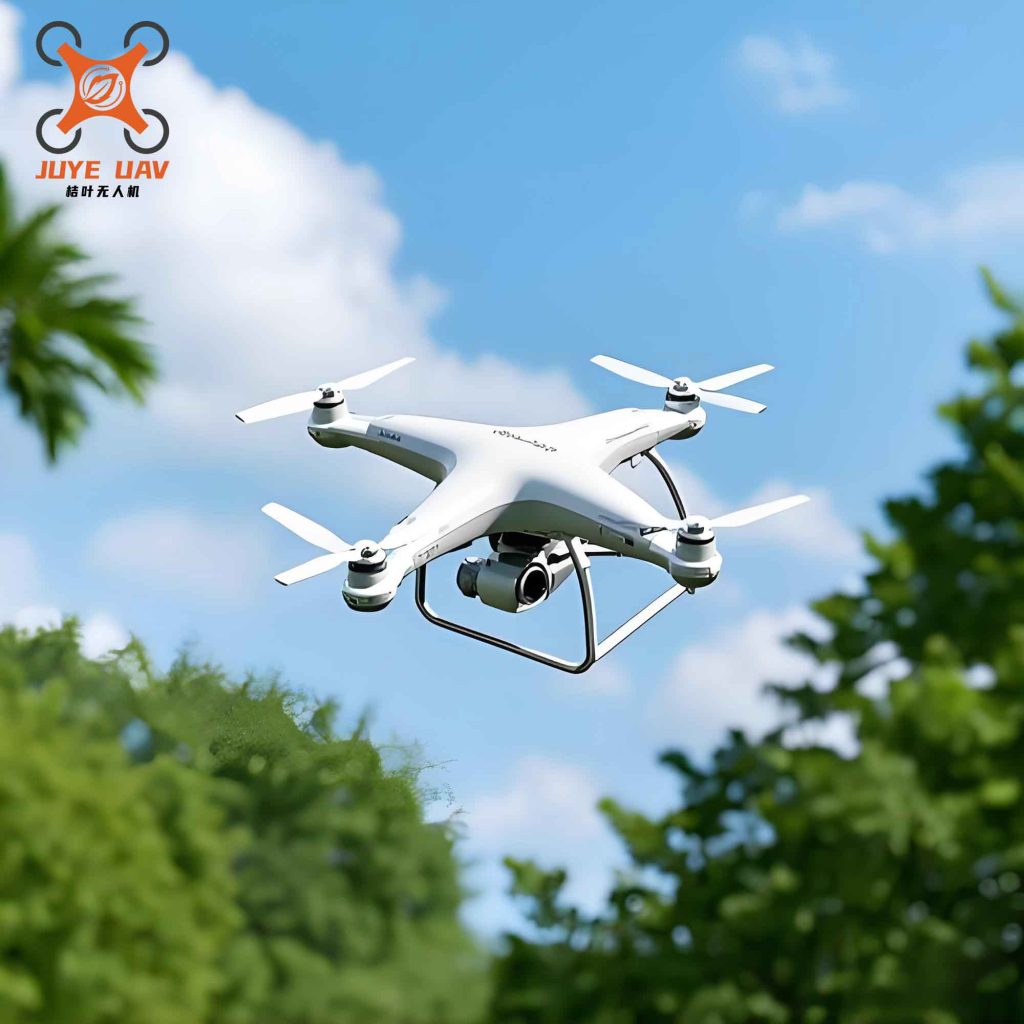
China drone aerial survey, equipped with high-definition cameras and LiDAR, enables rapid, all-around 3D data collection of buildings and surrounding environments. Traditional manual surveys are limited by terrain, building height, and time constraints, resulting in incomplete coverage and large errors. In contrast, China drone platforms can flexibly navigate between buildings, performing low-to-high altitude scanning to capture critical information such as building appearance, floor height, spacing layout, and facade materials. By processing these data into high-precision 3D models, I can accurately calculate core indices like safe distance from launch point, building density, and fire separation distance. This data foundation allows quantitative analysis of shock wave and thermal radiation impact ranges, overcoming the limitations of conventional methods and enabling risk classification and prevention planning.
2.2 Comprehensive Identification of Potential Hazards
By integrating high-definition visible imaging and infrared thermography, China drone aerial survey can thoroughly identify hidden risks around fireworks venues, significantly improving assessment accuracy and comprehensiveness. For structural hazards, the drone captures fine details such as wall cracks, loose roof components, broken glass, and fallen exterior decorations, especially on high-rise facades and roofs that are difficult to reach manually. This allows early detection of weak points in old or brick-concrete buildings. For fire hazards, the infrared thermal imaging function detects the operational status of fire protection systems, identifies flammable material accumulations on roofs and balconies, and checks whether fire access routes are blocked or water sources are adequate. By systematically cataloging these issues, I can accurately determine risk levels for each building, avoiding assessment biases due to missed hazards.
2.3 Dynamic Monitoring of Risk Evolution
China drone aerial survey offers exceptional mobility for dynamic monitoring throughout the entire fireworks event lifecycle, providing real-time tracking of risk evolution to support on-site safety warnings. Before the display, drones can verify the implementation of protective measures, such as fire isolation belts, facade fireproofing, and emergency passage clearance. During the display, drones can hover and observe, capturing the impact of shock waves on buildings, the range of spark projection, and whether adjacent structures ignite. Real-time data transmission enables the command center to grasp the dynamic situation. If abnormal events like crack propagation or facade fires are detected, immediate warnings can be issued and emergency procedures activated. After the event, drones conduct rapid post-event surveys to check for hidden structural damage or unburned debris, preventing secondary disasters and achieving closed-loop risk management.
2.4 Assistance in Emergency Response Decisions
The 3D models, hazard inventories, and dynamic monitoring data generated by China drone aerial survey effectively support emergency decision-making during safety incidents at large fireworks events, minimizing potential losses. When a building catches fire or suffers structural failure, drones can quickly fly to the scene, transmitting real-time images of fire spread, damage extent, and possible locations of trapped individuals. This helps commanders accurately assess the situation and formulate firefighting and rescue plans. Based on pre-existing 3D models, disaster evolution can be simulated to predict collapse risk zones, demarcating safe operation areas for responders. Moreover, drone aerial data serve as critical evidence for post-disaster loss assessment and liability determination, facilitating rapid damage estimation and repair planning. Compared to traditional emergency reconnaissance, China drone aerial survey greatly enhances the efficiency and scientific basis of emergency response.
3. Application Methodology of China Drone Aerial Survey
3.1 Pre-Operation Scene Adaptation and Equipment Selection
Effective aerial survey begins with thorough pre-operation scene investigation and equipment adaptation tailored to the fireworks scale and surrounding building environment. I first conduct a full-area reconnaissance to identify the launch point location, building density, building types, terrain features, and potential electromagnetic interference sources, defining an assessment radius of 3–5 km. Based on these characteristics, I select appropriate China drone platforms: for dense urban clusters, multi-rotor drones with high-definition visible cameras and LiDAR modules are preferred for low-altitude flexibility and precise 3D data acquisition; for suburban open areas, fixed-wing drones are chosen to improve large-area survey efficiency. Backup batteries, data storage cards, and emergency repair tools are prepared. Before the mission, I calibrate all sensors (camera resolution, LiDAR scan frequency, etc.) and set flight safety thresholds considering high-altitude winds and low temperatures to ensure stable operation throughout the assessment period.
3.2 Scientific Flight Route Planning and Standardized Data Collection
Route planning must balance coverage completeness with data accuracy. I adopt a “global coverage + key focus” strategy: for the whole area, a grid flight pattern with 80% forward overlap and 70% side overlap ensures no blind spots; for key zones—such as the 500 m core radius around the launch point, high-rise building clusters, and old building concentrations—additional circular flight paths and vertical top-down shots enhance local data precision. Flight altitude is dynamically adjusted to be 30–50 m above the highest building to avoid collision risks while ensuring image clarity. During data collection, I record flight logs (time, latitude, longitude, altitude, weather conditions) and capture multi-angle images of critical building components (facades, roofs) to obtain complete structural, material, and hazard detail data.
3.3 Optimized Data Processing and High-Precision Model Construction
I establish a standardized data processing workflow to convert raw data into usable assessment outputs using professional software. First, preprocessing of images and point cloud data is performed with tools like Pix4Dmapper and CloudCompare for image distortion correction, point cloud denoising, and data registration, removing blurred images and invalid points. Next, 3D models and orthophoto maps are generated. Using multi-view stereo matching, I produce a 1:500 scale high-precision 3D real-scene model that clearly displays building appearance, floor distribution, and surrounding environment. Orthophoto maps enable accurate measurement of planar indices such as building spacing and fire isolation belt widths. Simultaneously, I conduct data accuracy verification: manual measurements on selected buildings confirm that 3D model errors are within 5 cm and orthophoto accuracy meets the 1:500 scale requirement, providing reliable support for quantitative risk assessment.
| Processing Step | Software/Technique | Target Parameter | Acceptance Criterion |
|---|---|---|---|
| Image correction | Pix4Dmapper | Lens distortion removal | Residual < 0.3 pixels |
| Point cloud denoising | CloudCompare | Noise reduction ratio | Signal-to-noise ratio > 20 dB |
| 3D model generation | Multi-view stereo matching | Geometric accuracy | Error < 5 cm |
| Orthophoto mosaic | PhotoScan | Ground resolution | 5 cm/pixel at 1:500 scale |
3.4 Multi-Technology Fusion for Precision Hazard Identification
Leveraging the aerial survey outputs, I fuse multiple technical approaches to construct a hazard identification system for enhanced assessment precision. By overlaying the 3D model and orthophoto map with building structural mechanics principles, I quantitatively evaluate the safe distance between each building and the launch point, assessing the influence of shock waves and thermal radiation. Using high-resolution image detail recognition (manually or via AI algorithms), I annotate structural issues such as wall cracks, loose roof components, broken glass, and fallen exterior decorations with millimeter-level precision. For fire hazards, I deploy infrared thermal imaging data to identify flammable material accumulations on roofs and balconies, check the operational status of fire hydrants and sprinkler systems, and detect blocked fire lanes or obstructed water sources. I then establish a hazard classification standard—high, medium, low—based on severity, generating a hazard inventory containing location, type, severity, and affected area. This inventory provides precise targets for subsequent prevention measures.
3.5 Promoting Outcome Transformation and Full-Cycle Assurance
I build a mechanism for transforming China drone aerial survey results into practical safety assurance. The integrated 3D models, hazard inventories, and risk assessment reports are compiled into a visual management platform that interfaces with the fireworks event safety command center, enabling real-time sharing of risk information. Before the event, based on the assessment outputs, I formulate differentiated prevention measures: for high-risk buildings, external fireproof wrapping, protective netting, and other reinforcements are applied; issues like blocked fire lanes or insufficient fire spacing are corrected. During the event, the platform accesses the aerial data in real time, combined with dynamic drone monitoring, to accurately assess risk evolution and assist emergency command decisions. After the event, I compare the aerial data with on-site inspections to evaluate the effectiveness of the assessment, update the building hazard inventory, and provide a basis for subsequent repair and safety management. Additionally, I establish an archiving and reuse mechanism: storing aerial data from different events in a categorized regional building database to serve as reference for future large-scale activities.
4. Quantitative Models and Formulas
In my risk assessment work, I apply several physical models to quantify the hazards. The shock wave overpressure at a distance \(R\) from a fireworks explosion of equivalent TNT mass \(W\) can be approximated by the empirical formula:
$$
\Delta P = 0.084 \left(\frac{W^{1/3}}{R}\right) + 0.27 \left(\frac{W^{1/3}}{R}\right)^2 + 0.7 \left(\frac{W^{1/3}}{R}\right)^3
$$
where \(\Delta P\) is in MPa. This allows estimation of the safe standoff distance for different building types. For thermal radiation, the heat flux \(q\) received by a building surface at distance \(R\) from a fireball of diameter \(D\) and temperature \(T\) is:
$$
q = \varepsilon \sigma T^4 \left(\frac{D}{2R}\right)^2
$$
with \(\varepsilon\) the emissivity and \(\sigma\) the Stefan-Boltzmann constant. The probability of ignition of a combustible material exposed to \(q\) for time \(t\) can be modeled using a critical heat flux threshold. For flying debris, the kinetic energy \(E_k = \frac{1}{2} m v^2\) and the penetration depth into a glass panel can be estimated by a simplified formula:
$$
d = k \frac{E_k}{A \sigma_y}
$$
where \(m\) is fragment mass, \(v\) is impact velocity, \(A\) is contact area, \(\sigma_y\) is yield strength of glass, and \(k\) is an empirical constant. These formulas, combined with the high-precision 3D data from China drone aerial survey, enable me to compute risk thresholds for every building within the affected zone.
| Building Type | Critical Overpressure (MPa) | Safe Distance from Launch (m) | Ignition Threshold (kW/m²) |
|---|---|---|---|
| Reinforced concrete frame | 0.10 | 120 | 12.5 |
| Brick-concrete (old) | 0.05 | 180 | 8.0 |
| Wooden structure | 0.02 | 250 | 4.0 |
| Glass curtain wall | 0.03 | 150 | 6.0 |
5. Conclusion
In my research and practical applications, I have demonstrated that China drone aerial survey technology offers transformative advantages for building risk assessment surrounding large fireworks events. By enabling precise 3D data acquisition, comprehensive hazard identification, dynamic risk monitoring, and robust emergency decision support, China drone systems effectively overcome the efficiency, coverage, and accuracy limitations of traditional manual inspection methods. The integration of high-definition visible imaging, LiDAR, and infrared thermography, combined with advanced data processing and quantitative modeling, provides a full-cycle, all-round risk management capability. As technology continues to evolve—with improvements in flight endurance, sensor resolution, and AI-based analysis—the role of China drone aerial survey in public safety will only expand. I am confident that this approach will become a standard practice for ensuring the safety of large-scale fireworks displays and other hazardous events, contributing significantly to the protection of life and property. The systematic use of China drone aerial survey, as outlined here, not only enhances the scientific rigor of risk assessment but also paves the way for innovative safety management solutions across multiple industries.
Through continuous refinement and standardization of these methods, I aim to further improve the reliability and applicability of China drone aerial survey in complex urban environments, ultimately fostering a safer environment for communities hosting large celebrations.