
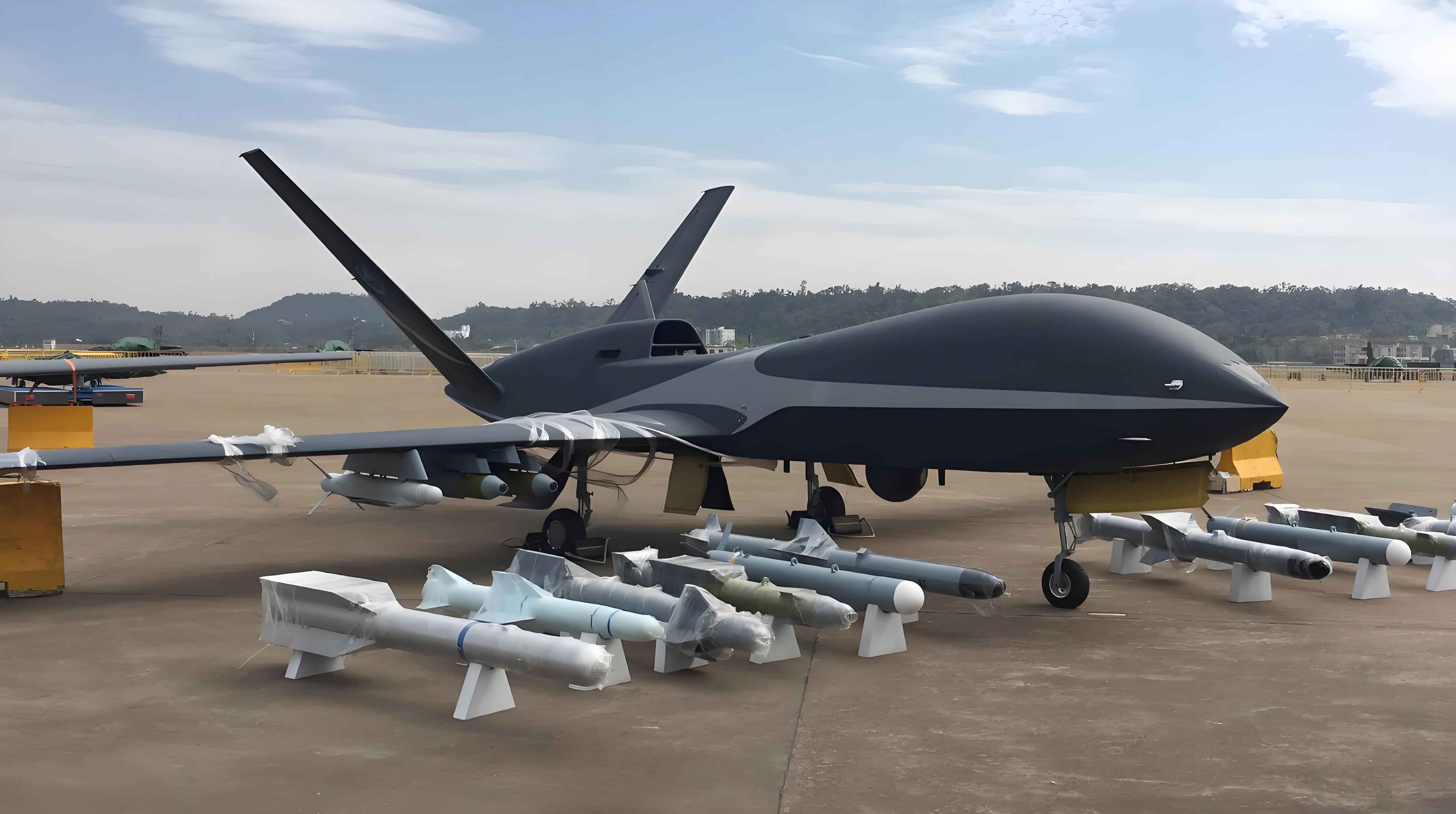
The Central Asian region, encompassing Kazakhstan, Kyrgyzstan, Tajikistan, Turkmenistan, and Uzbekistan, occupies a critical geostrategic position. As a vital nexus for the Belt and Road Initiative and a traditional focal point of international geopolitical competition, the security dynamics of this region are of paramount importance. In recent years, the rapid evolution and demonstrable effectiveness of unmanned aerial systems in conflicts worldwide have catalyzed a significant shift in military modernization priorities globally. From my analysis, Central Asia is no exception. This article examines the development, acquisition, and operational application of military drone capabilities across the five Central Asian states, highlighting regional trends, strategic drivers, and future implications.
1. The Strategic Imperative for Military Drones in Central Asia
The operational environment in Central Asia presents unique challenges that make military drones particularly attractive. The region features vast, sparsely populated steppes and deserts, formidable mountain ranges like the Tian Shan and Pamirs, and long, often porous borders. These borders, many of which are legacy demarcations from the Soviet era, are sites of occasional disputes and illicit cross-border activities. Furthermore, proximity to Afghanistan and the persistent threat of transnational terrorism, extremism, and drug trafficking compound national security concerns. Traditional ground- and air-based surveillance and rapid response mechanisms are often logistically challenging and cost-ineffective in such terrain.
The advent of capable, affordable unmanned systems offers a potential solution. A military drone provides persistent intelligence, surveillance, and reconnaissance (ISR) over wide areas, enhances border monitoring efficacy, and can deliver precision effects without risking pilot lives. The demonstrated utility of military drones in conflicts such as Nagorno-Karabakh (2020) and Ukraine has served as a powerful case study, accelerating regional interest and acquisition.
2. National Trajectories in Military Drone Development and Acquisition
The journey towards building military drone capabilities in Central Asia began in the post-Soviet period, initially with limited use of legacy target drones. The modern phase commenced in the early 2000s with introductions from Israeli manufacturers. Since then, the market has diversified significantly, with Turkey, China, Russia, Iran, the United States, and European companies all vying for influence. Importantly, several states are transitioning from pure consumers to aspiring producers or assemblers.
2.1 Uzbekistan: From Diversified Imports to Indigenous Aspirations
Uzbekistan has pursued a multi-vector approach to acquiring military drone technology. Early engagements involved testing Israeli systems like the Elbit Skylark and Hermes series. Subsequently, it acquired U.S.-made AeroVironment RQ-11B Raven systems and Chinese Wing Loong-I MALE (Medium-Altitude Long-Endurance) drones. More recently, the Turkish Bayraktar TB2 has entered its inventory, confirmed during a presidential visit in late 2023.
Not content with just procurement, Tashkent has taken steps toward indigenous capability. With Russian support, its Scientific Production Center for Unmanned Aviation Complexes began producing the multi-role “Lochin” drone system (fixed-wing and rotary variants) for reconnaissance and strike roles, a move touted domestically as a first for the region.
2.2 Kazakhstan: Strategic Partnerships for Local Production
Kazakhstan’s path mirrors a strategic intent to develop a domestic defense industrial base for unmanned systems. Initial purchases included Israeli Skylark I-LEX and Chinese Wing Loong-I drones. It has also acquired Russian Orlan-10 and Israeli Heron MK II systems.
The key differentiator is Astana’s focus on technology transfer and licensed production. A landmark agreement with Turkish Aerospace Industries (TAI) to assemble the “Anka” MALE drone within Kazakhstan positions it as the first country outside Turkey with such production rights for this platform. Domestically, the Kazakhstan Engineering group is developing and testing its own systems, like the “Shagala” and “Shagala-M” mini-UAVs.
2.3 Turkmenistan: An Early and Capable Adopter
Turkmenistan stands out as an early and relatively well-equipped adopter of diverse military drone systems. Its inventory is among the most varied in the region, including Italian Falco XN, Chinese CH-3A and WJ-600A/D, Turkish Bayraktar TB2, and Israeli Skystriker loitering munitions. It also operates smaller systems like the Insitu ScanEagle and ADS Orbiter.
While there were attempts in the mid-2010s to assemble Belarusian Busel-MB drones under license, sustained indigenous production has not been widely reported. Its strategy appears centered on purchasing capable, off-the-shelf systems to bolster its defensive posture.
2.4 Tajikistan and Kyrgyzstan: Security-Driven Acquisitions
For Tajikistan, faced with a volatile Afghan border and historical tensions with neighbors, security needs are acute. After a failed attempt to purchase Bayraktar TB2 drones (reportedly blocked by Kyrgyzstan), Dushanbe turned to Iran. In 2022, an assembly line for the Iranian “Ababil-2” reconnaissance-strike drone was established in Tajikistan, marking a significant step in Iran’s defense export strategy and Tajikistan’s quest for autonomous capability.
Kyrgyzstan, historically constrained by budget limitations, was spurred into action by the 2021 border conflict with Tajikistan. It subsequently acquired Turkish Bayraktar TB2 and Russian Orlan-10E drones for its border service, with further interest in larger Turkish systems like the Aksungur and Akinci.
The following table summarizes the key military drone types identified across the region, categorized by approximate size/class and primary role.
| Country | Mini/Micro UAVs | Small/Tactical UAVs | MALE/HALE UAVs | Loitering Munitions | Indigenous/Assembly Projects |
|---|---|---|---|---|---|
| Uzbekistan | AV Puma AE | Elbit Skylark, Lochin | Wing Loong-I, Bayraktar TB2 | – | Lochin series |
| Kazakhstan | Shagala-M | Elbit Skylark, Orlan-10 | Wing Loong-I, Heron MK II, Anka (future) | – | Shagala series, Anka assembly (planned) |
| Turkmenistan | ADS Orbiter, DJI models | ScanEagle, Busel-M (assembled) | Falco XN, Bayraktar TB2, CH-3A | Elbit Skystriker | Busel series (past licensed assembly) |
| Tajikistan | – | – | – | – | Ababil-2 (Iranian design, local assembly) |
| Kyrgyzstan | – | Orlan-10E | Bayraktar TB2 | – | – |
3. Operational Application of Military Drones in the Region
The primary applications for military drones in Central Asia align closely with the region’s security challenges:
Border Surveillance and Control: This is the most widespread use. Systems like the U.S. RQ-11 Raven and Russian Orlan-10 are extensively used by border guards to monitor vast, remote frontiers for illegal crossings, smuggling, and to de-escalate tensions in disputed areas. The efficiency of a single military drone platform in providing persistent stare over a sector is a force multiplier for under-resourced units.
Counter-Terrorism and Internal Security: The capability for discreet, long-loiter surveillance makes military drones ideal for monitoring suspected terrorist activity, critical infrastructure protection, and supporting law enforcement operations in complex terrain, such as mountainous regions.
Conflict and Deterrence: The 2022 border clashes between Kyrgyzstan and Tajikistan marked a turning point, where unmanned systems were reportedly used for reconnaissance and fire adjustment. The psychological and military impact of capable strike drones like the Bayraktar TB2, as observed in other theaters, has fundamentally altered regional calculations on deterrence and battlefield dynamics. This has triggered not only further acquisitions but also a growing interest in counter-drone technologies.
4. Mathematical Modeling of Drone Efficacy and Cost-Benefit
The strategic value of a military drone can be partially conceptualized through simplified operational research models. One can consider an “Area Coverage Efficacy” metric for ISR missions. For a drone with a sensor footprint width \(W\) (in km) flying at a constant velocity \(v\) (in km/h) over a mission duration \(T\) (in hours), the total area \(A\) surveyed (assuming parallel search tracks) can be approximated by:
$$A \approx v \cdot T \cdot W \cdot \eta$$
where \(\eta\) represents an efficiency factor (0 < \(\eta\) < 1) accounting for turn-around time, non-search segments, and overlap. Compared to a manned patrol aircraft with higher \(v\) but significantly higher operational cost \(C_{manned}\) and lower \(T\) due to crew fatigue, the drone’s cost per unit area surveyed, \(C_{drone}/A\), can be orders of magnitude lower, justifying the investment. This model, while basic, illustrates the compelling economics behind the military drone revolution for persistent wide-area surveillance.
Furthermore, the decision to “Buy vs. Co-produce” can be framed as a strategic investment. Let \(P\) be the procurement cost of an off-the-shelf system, \(M\) its lifetime maintenance cost from the OEM. Let \(I\) be the higher initial investment for a co-production/assembly line, \(L\) the lower per-unit production cost locally, and \(S\) the strategic value of gaining technology, jobs, and supply chain security. A state might opt for co-production if:
$$ I + n \cdot L + S < n \cdot (P + M) $$
for a planned fleet size \(n\) over the system’s lifecycle. For nations like Kazakhstan and Uzbekistan, the strategic premium \(S\) on achieving a degree of technological autonomy in military drone production appears to be evaluated as highly significant.
5. Conclusion and Strategic Outlook
The trajectory of military drone adoption in Central Asia is unmistakably upward. From initially being consumers of mostly Israeli and Western systems, the region has become a competitive marketplace where Turkish, Chinese, Russian, and Iranian platforms vie for influence. The dual-use nature of many of these technologies further blurs the lines between civilian and military cooperation.
Several key trends emerge from my analysis. First, there is a clear hierarchy of capability, with Turkmenistan, Uzbekistan, and Kazakhstan leading in terms of inventory diversity and technological sophistication. Second, the ambition for localized production or assembly is growing, driven by desires for technological sovereignty, cost control, and regional prestige. Kazakhstan’s deal for the Anka assembly line is a landmark in this regard. Third, the operational use of these military drones is evolving from pure surveillance towards integrated deterrence and combat support, as evidenced in recent border conflicts.
For external partners, including China, the region presents both opportunities and challenges. The demonstrated performance of Chinese military drone platforms like the Wing Loong has secured a foothold. To expand influence, partners could leverage existing cooperation frameworks (like the SCO) for joint exercises and training, promote dual-use technology transfer and localized maintenance hubs, and engage in dialogue on norms governing the use of unmanned systems. As Central Asian nations continue to weave unmanned capabilities into the fabric of their national defense, understanding their drivers, suppliers, and intended applications will be crucial for navigating the complex geopolitical landscape of this pivotal region.