
The rapid expansion of the civil UAV industry in China has unlocked transformative applications in logistics, aerial photography, agriculture, and emergency response, propelling the low-altitude economy into a new era. However, alongside these benefits, the proliferation of civilian unmanned aerial vehicles (UAVs) has given rise to a novel category of criminal behavior—China UAV-related crimes—that increasingly threatens individual privacy, public order, and national security. As a researcher investigating this emerging field, I have systematically examined judicial records and policy documents to understand the underlying mechanisms that drive these offenses. Based on an analysis of 42 valid criminal judgments extracted from China’s judicial database between 2015 and 2025, along with extensive media reports, this article identifies three primary dimensions of crime causation: the offender, the victim (or victimized target), and the crime location. Each dimension reveals distinct structural vulnerabilities that facilitate illegal UAV operations. To construct an effective preventive framework, I propose a multi-pronged governance approach that includes raising industry entry thresholds, reforming the registration system, and pursuing a progressive legislative pathway—from local experimentation to regional coordination and eventually national codification. By addressing the normative tensions within the current regulatory landscape, this study aims to provide actionable guidance for judicial practice and theoretical foundations for future policy development.
The consequences of China UAV misuse are multifaceted. First, national security risks arise when UAVs are flown without authorization—often termed “black flights” or “illegal flights”—near military installations or sensitive zones. For example, a case adjudicated in a northern Chinese court involved an operator who failed to obtain flight clearance and caused a military response that included three fighter jets, 15 radar units, and 75 vehicles, resulting in fuel costs exceeding 30,000 RMB and direct economic losses to civil aviation of nearly 23,000 RMB. Such incidents not only disrupt low-altitude airspace management but also jeopardize national defense capabilities. Second, public order disruptions are increasingly common, particularly near airports. In 2024, a major airport in eastern China experienced extensive flight delays due to a single unauthorized UAV, affecting over 3,000 passengers. These events highlight the inadequacy of current “electronic fence” technologies, which can be circumvented through software exploits. Third, personal and property risks are amplified by the stealthy nature of UAVs. Offenders use UAVs for covert surveillance, stalking, and even as tools for arson or physical harm. A notable case involved a perpetrator who located a victim’s residence via UAV and subsequently committed arson, causing severe property damage. The growing ubiquity of cheap, easy-to-operate UAVs has lowered the barrier for malicious actors.
| Risk Category | Illustrative Incident | Measured Impact |
|---|---|---|
| National Security | Unauthorized flight near military base (northern China, 2020) | 3 fighter jets scrambled; fuel cost ~3.8 tons; 1,235 personnel deployed; ~23,000 RMB direct loss |
| Public Order | Airport disruption (Tianjin, 2024) | Over 3,000 passengers stranded; multiple flight cancellations |
| Personal/Property | UAV-assisted arson (Guangxi, 2021) | Victim home destroyed; perpetrator used UAV for reconnaissance |
| Cyber/Privacy | UAV used to film classified naval vessel (2021) | Perpetrator convicted of illegally obtaining state secrets |
To understand why China UAV crimes have proliferated, I analyze the mechanisms through three criminological lenses: offender, victim, and location. From the offender perspective, the key factor is the dramatically reduced cost of acquiring and modifying UAVs. The market price of consumer UAVs has fallen to as low as a few hundred RMB, while cracking the software restrictions (e.g., disabling electronic geofences) costs only about 300 RMB per device, as evidenced by a case in Fujian where a defendant provided such services to 21 individuals for a total profit of merely 6,850 RMB. This low cost of offending aligns with rational choice theory, which posits that individuals weigh expected benefits against potential costs. When the perceived utility of illegal UAV use outweighs the risk of punishment, crime becomes more likely. Formally, the decision can be expressed as:
$$ E[U] = P_{\text{success}} \times B – P_{\text{punishment}} \times C_{\text{punishment}} – C_{\text{preparation}} $$
where \( B \) is the benefit from the illegal flight, \( C_{\text{punishment}} \) is the cost if caught (e.g., fines, imprisonment), and \( C_{\text{preparation}} \) includes the purchase and cracking expenses. With \( C_{\text{preparation}} \) as low as 300 RMB and \( P_{\text{punishment}} \) often low due to detection difficulties, the condition \( E[U] > 0 \) is easily satisfied, explaining the high incidence of these offenses.
The victim dimension, in the context of China UAV crimes, refers less to individual persons and more to abstract legal interests such as airspace order. However, the structural victim here is the registration system itself, which suffers from a “virtualization” problem. Despite mandatory registration requirements, the current system fails to verify the authenticity of submitted information. Many operators enter false names and ID numbers, and the system does not cross-check with databases. Moreover, the secondary market for used UAVs lacks effective transfer registration, allowing the true ownership to remain opaque. This enables offenders to acquire UAVs anonymously and discard them after incidents, complicating law enforcement traceability. Table 2 highlights the critical deficiencies.
| Defect | Description | Consequence |
|---|---|---|
| Weak Identity Verification | Phone, email, ID number not validated; fake entries accepted | Anonymity for offenders; “real-name system” becomes nominal |
| Lack of Transfer Tracking | No mechanism to update ownership after resale | Impossible to link used UAV to current operator |
| Incomplete Lifecycle Coverage | Registration only at first purchase; no decommissioning requirement | Gaps in oversight for stolen or refurbished units |
From the location perspective, China’s fragmented legislative landscape creates regulatory vacuums that offenders exploit. National regulation, such as the 2023 Provisional Regulations on Unmanned Aircraft Flight Management, provides a framework but lacks quantitative specificity. For instance, it designates areas around airports as “controlled airspace” but fails to define the radius (e.g., “a certain range”). This ambiguity allows illegal flights just outside undefined boundaries. Meanwhile, local regulations vary widely. For example, Hainan Province requires flight plans for micro-UAVs in controlled zones, whereas Shenzhen only mandates plans for micro-UAVs outside no-fly zones. Such inconsistencies produce “regulatory lowlands” that criminals deliberately target. The following table compares selected local approaches.
| Region | Micro-UAV in Controlled Airspace | Micro-UAV in Non-controlled Airspace | Light UAV in Controlled Airspace |
|---|---|---|---|
| Hainan | Requires flight plan | No plan required | Requires flight plan |
| Shenzhen | No plan required (only in no-fly zones) | No plan required | Requires airspace application 5 days in advance |
| Beijing (typical) | Requires approval | No plan required | Requires approval |
The heterogeneous standards not only confuse users but also hinder cross-jurisdictional enforcement. Criminals can easily register or fly in a region with lax rules and then operate in a stricter one, exploiting the lack of interoperability. This spatial disparity significantly reduces the perceived risk of detection and punishment.
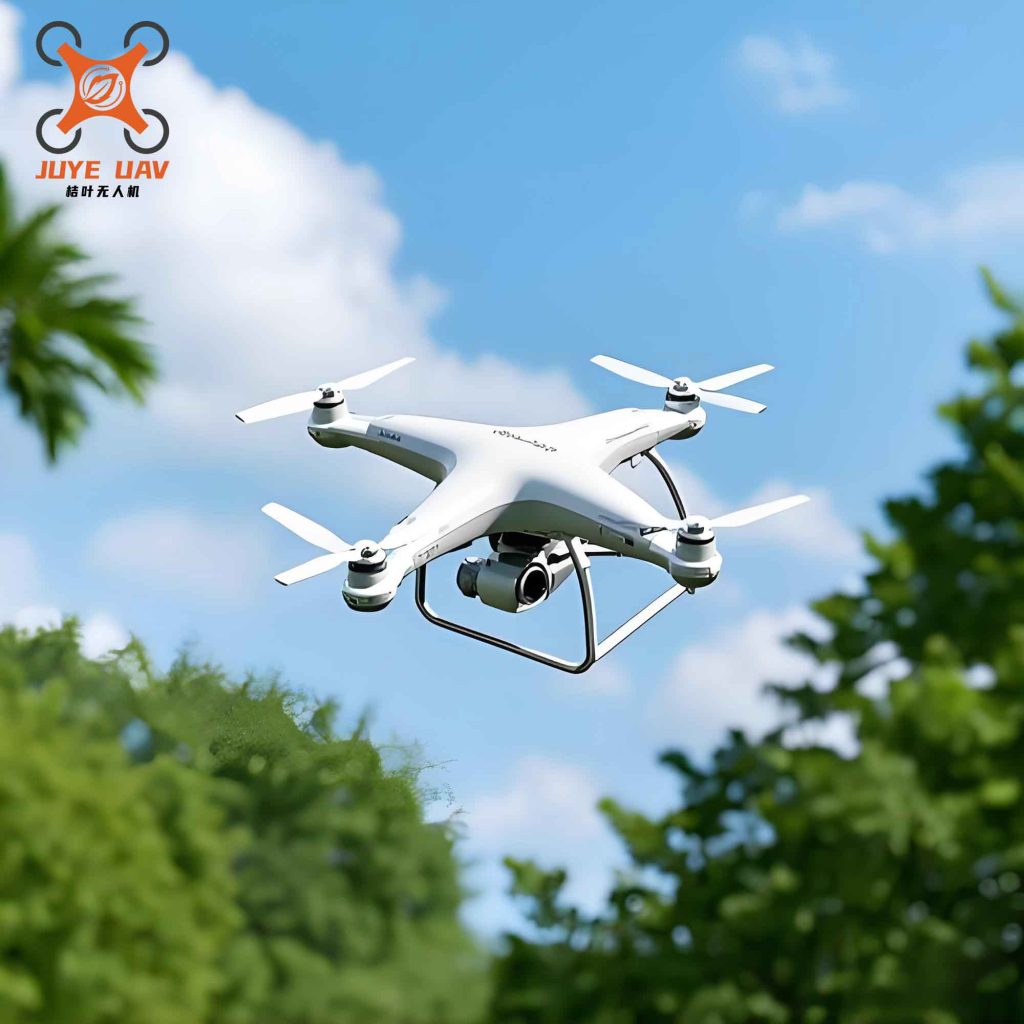
To counter these mechanisms, I propose a three-tiered governance framework corresponding to the key actors: operators (trainers), supervisors (regulators), and managers (legislators). The operator perspective focuses on raising the entry barriers for potential offenders. Currently, the threshold for owning and operating a China UAV is excessively low. Mandatory pre-operation training and certification should be established, with content standardized by civil aviation authorities and public security departments. The training must include theoretical exams on airspace regulations and practical flight tests. For commercial users or those operating large UAVs, additional high-level certifications and periodic re-evaluations are necessary. Furthermore, a credit scoring system could be introduced, where violations lead to license suspension or revocation. This approach reduces the pool of “motivated offenders” by increasing the psychological and financial costs of illegal behavior. The effectiveness can be modeled as raising \( C_{\text{preparation}} \) in the utility equation above, making \( E[U] \) negative for most potential criminals.
The supervisor perspective calls for a radical reform of the registration system to eliminate anonymity. Rather than relying solely on paper-based or online declarations, I advocate for embedding tamper-resistant microchips in every UAV at the manufacturing stage. These chips would store a unique identifier linked to the owner’s verified identity in a central database managed by the traffic management authority. Upon any transfer of ownership, the new owner must complete a mandatory online update, which triggers an automatic unlock of flight restrictions. If the transfer is not registered, the UAV’s flight controller would either refuse to arm or limit operations to non-sensitive zones. This “tech-lock to admin-registration” dual mechanism ensures continuous traceability throughout the UAV lifecycle. The table below outlines the key features of the proposed system.
| Feature | Description |
|---|---|
| Hardware Identifier | Non-removable chip storing a unique UUID; encrypted |
| Dynamic Ownership Linking | Registration database updated in real-time upon transfer; seller must deregister |
| Flight Restriction Enforcement | Unregistered UAVs cannot take off in controlled zones; geofence bypass blocked |
| Lifecycle Coverage | From factory to scrapping; chip disabled only by authorized agencies |
The manager perspective addresses the legislative fragmentation through a progressive pathway: from local to regional to national legislation. Since the low-altitude economy inherently crosses administrative boundaries, regional collaborative legislation offers a practical intermediate step. Drawing on successful precedents like the Beijing-Tianjin-Hebei integration and the Yangtze River Delta synergy, China can develop uniform rules for flight approval, geofence standardization, and data sharing among neighboring provinces. The goal is to eliminate regulatory gaps and create a seamless airspace management system. Ultimately, national legislation should consolidate these experiments into a comprehensive UAV code that balances safety with innovation. The path can be formalized as a stepwise function:
$$ \text{Legislative Maturity}(t) = \int_0^t \left[ \alpha \cdot \text{LocalExperiments}(\tau) + \beta \cdot \text{RegionalCoordination}(\tau) \right] d\tau $$
where \( \alpha \) and \( \beta \) are weighting coefficients reflecting the speed of policy diffusion. By pursuing this approach, China can avoid the pitfalls of either over-regulation that stifles industry growth or under-regulation that invites criminal exploitation.
In conclusion, the rise of China UAV-related crimes is not an inevitable byproduct of technological progress but a consequence of specific structural vulnerabilities—low offending costs, weak registration, and fragmented legislation. By targeting these mechanisms through operator training, chip-based registration, and progressive legislation, it is possible to significantly reduce the incidence of illegal UAV operations while fostering a safe and vibrant low-altitude economy. The framework presented here provides a theoretical foundation for future empirical research and policy formulation, ensuring that the benefits of drone technology are realized without compromising public safety or national security.