
Our research focuses on developing a systematic low-altitude emergency UAV drone control strategy specifically tailored for mountainous highway spiral tunnel groups. The enclosed environment and complex terrain of these tunnel groups pose significant challenges to emergency response efficiency and traffic safety. Traditional rescue methods suffer from limitations such as delayed response and low coordination efficiency. In contrast, UAV drones, with their high mobility and rapid response capabilities, offer a new approach to enhancing emergency rescue efficiency in tunnel groups. This paper focuses on this specific scenario, aiming to establish a low-altitude emergency UAV drone control strategy that aligns with driving risk levels. Real-vehicle experiments were conducted in a specific spiral tunnel group to collect multi-dimensional “driver-vehicle-road-environment” data. A driving risk quantification model was developed, categorizing risk into four levels—low, medium-low, medium-high, and high—and enabling spatial risk visualization. Based on this, the concept of risk exposure is introduced, and a differentiated UAV drone patrol frequency calculation method based on risk levels is established, forming a UAV drone patrol control strategy precisely matched to risk levels. This strategy effectively improves emergency response and UAV drone control efficiency in tunnel groups, providing theoretical support and a reference for the emergency application of low-altitude UAV drones in mountainous tunnel groups.
Introduction
Our country continues to promote the strategy of becoming a transportation powerhouse. By the end of 2024, the total mileage of highway tunnels in our country has reached 32,596,600 kilometers, with extra-long tunnels and long tunnels accounting for over 70% of this total. As the highway network continues to extend into mountainous areas, the scale and density of tunnel groups are constantly increasing. Due to factors such as complex terrain, variable weather, enclosed environments, and limited emergency access, once an accident occurs inside a tunnel, it can easily lead to congestion and secondary disasters. This places higher demands on the speed of rescue response and the precision of handling. Traditional rescue methods rely on manpower and ground equipment, suffering from bottlenecks such as information lag and low coordination efficiency. Research shows that achieving rapid perception, scientific dispatch, and efficient rescue in tunnel groups is key to ensuring the safe operation of mountainous highways. Currently, low-altitude UAV drones, with their advantages of maneuverability, quick deployment, low cost, and the ability to carry multiple types of sensors, are gradually becoming core technical equipment for emergency rescue in mountainous highway tunnel groups. UAV drones can perform functions such as accident reconnaissance, personnel positioning, environmental monitoring, material delivery, and communication relay, effectively compensating for the shortcomings of traditional rescue methods. However, the enclosed space of tunnel groups, complex airflow, GPS signal obstruction, the need for multi-drone coordination, and issues related to UAV drone flight safety and the lack of air traffic management regulations pose severe challenges to their positioning accuracy, flight stability, communication, and control capabilities.
At the same time, with the rapid development of our country’s low-altitude economy, the application of UAV drones in the field of traffic emergency is becoming increasingly widespread. However, a low-altitude UAV drone control system specifically for the special scenario of mountainous highway tunnel groups has not yet been perfected. Issues such as conflicts in UAV drone flight paths within and around tunnel groups, the coordinated dispatch of emergency and routine inspection UAV drones, and flight safety control in harsh environments are becoming increasingly prominent. Without a scientific and effective control strategy, not only would the efficiency of emergency rescue be affected, but it could also lead to safety risks such as UAV drone crashes and secondary accidents. Therefore, combining the environmental characteristics and emergency rescue needs of mountainous highway tunnel groups, conducting research on low-altitude emergency UAV drone control strategies is of great significance for improving the emergency response capability for sudden incidents in tunnel groups and ensuring traffic safety.
Currently, domestic and international scholars’ research on the operation and maintenance scenarios of UAV drones in special highway tunnel sections mainly focuses on the application technology of UAV drones in highway tunnel (mountainous area) emergencies, the development of highway UAV drone control systems and technologies, and the breakthroughs in core technologies and the construction of control systems.
In the areas of UAV drone adaptability technology for tunnel and mountainous highway emergency scenarios, extensive exploration has been carried out. To address the issue of GPS signal loss inside tunnels, some studies have proposed a dual 2D LiDAR positioning method combined with a control algorithm for flying along the tunnel’s central axis, achieving precise positioning and stable flight of UAV drones in enclosed environments. Other research integrates Beidou navigation technology to tackle the challenges of communication blind spots in mountainous areas, building a comprehensive system that integrates positioning, communication, and control functions. In terms of path planning and collaborative operations, for complex mountainous terrain, scholars have optimized the emergency rescue path planning model for UAV drones, effectively improving the safety and efficiency of the paths. Some studies have also proposed a “UAV drone + robot dog” collaborative emergency plan, clarifying that the UAV drone undertakes reconnaissance, warning, and control tasks at tunnel entrances, enhancing the multi-device collaborative rescue capability. Furthermore, some research provides theoretical support for the applicability of UAV drones in tunnel group emergency rescue from perspectives such as expanding application scenarios and equipment performance requirements.
Focusing on the safety control needs of highway UAV drone applications, research often concentrates on the design of control systems and the integration of intelligent technologies. To address the safety hazards present in the operation of UAV drones on highways, some studies have proposed a centralized control system solution that integrates functions such as airspace management, equipment status monitoring, and data transmission. By introducing artificial intelligence technology, functions such as automatic target recognition, fault warning during UAV drone inspection, and flight control have been achieved, significantly enhancing the system’s intelligent control capability. In terms of data security and multi-tunnel collaborative control, to meet the operational needs of multi-UAV drone formations, control mechanisms such as collision avoidance warnings and coordinated scheduling have been designed to ensure the safety and coordination of formation flight. Additionally, the “Overview and Recommendations for Low-Altitude UAV Drone Traffic Management” constructs a low-altitude UAV drone management framework from a macro level, providing a theoretical reference for low-altitude UAV drone control in tunnel groups.
Some research also focuses on process optimization and strategy design for UAV drone control in tunnel group emergency scenarios. Based on the current state of highway safety emergency management, by constructing a safe, reliable, efficient, and rapidly responsive road-air collaborative three-dimensional traffic safety management mechanism, effective monitoring and handling of the entire road range have been achieved. Other scholars, taking railway tunnels as the research object and based on the current status of low-altitude UAV drone inspection of railway infrastructure, have systematically elaborated on the low-altitude UAV drone inspection technical solution from multiple dimensions including UAV drone classification, key technologies, onboard equipment, inspection processes, and intelligent analysis methods. They have sorted out the existing technical bottlenecks in UAV drone inspection along railways and proposed corresponding application promotion strategies. For the special environment of enclosed tunnel spaces, research primarily focuses on key technologies such as autonomous navigation and flight stability control for UAV drones. For example, some scholars have proposed a model predictive control method based on a control barrier function to solve the collision avoidance and trajectory tracking problems for UAV drones flying in close proximity inside tunnels. To deal with the challenges of GPS signal loss and insufficient environmental features, researchers have developed an autonomous flight system for UAV drones in narrow tunnels that integrates multiple sensors, utilizing sensor fusion technology to achieve high-precision autonomous navigation. Furthermore, some research has achieved autonomous inspection and positioning control of UAV drones in cable tunnel environments based on visual SLAM technology. Research in the field of Low-Altitude UAV Drone Traffic Management (UTM) is relatively mature, and related achievements have been widely applied in traffic emergency scenarios. Some studies have proposed a traffic management framework for urban UAV drone package delivery tasks. This framework achieves path planning by clustering obstacles and constructs four traffic management models to resolve flight conflicts. Among them, the batch optimization model achieves a good balance between operational efficiency and computational cost, and the Vickrey-Clarke-Groves (VCG) mechanism is introduced to incentivize information sharing. Case studies show that this framework can effectively improve airspace management capabilities, and the fees paid by UAV drones depend on traffic density and interaction levels. To improve the coverage and efficiency of disaster monitoring on mountainous highways, other research has designed a formation control mechanism for collaborative monitoring by multiple UAV drones. Furthermore, some scholars have placed high importance on risk assessment and technical adaptability optimization in UAV drone emergency applications. For example, existing studies have systematically analyzed key issues such as flight risks and equipment failure risks for UAV drones in tunnel emergency rescue and proposed hierarchical risk control strategies.
In summary, domestic and international scholars have conducted multi-dimensional research centered on the application and control of UAV drones in tunnel and mountainous highway emergency scenarios. However, existing research still lacks control strategies specifically for the complex characteristic road sections of mountainous highway tunnel groups, such as “multi-tunnel coordination, complex terrain, and enclosed environment.” Current achievements mostly focus on single tunnels or ordinary mountainous highway scenes, making direct application difficult. Therefore, it is urgent to combine the special needs of mountainous highway tunnel groups to carry out research on low-altitude emergency UAV drone control strategies.
Real-Vehicle Driving Experiment
Experiment Conditions
Experimental Section: The experimental section of this study is located in a spiral tunnel group in a mountainous region. This spiral tunnel group is part of a new expressway, with a total tunnel and bridge engineering length of 28 kilometers. The entire route is situated in a deep mountainous area at an altitude of 500 to 1,280 meters, containing a total of 9 tunnels with a total elevation difference of 780 meters. In this paper, we selected the section composed of three consecutive spiral tunnels as the research object.
| Tunnel Name | Route Grade | Design Speed (km/h) | Clear Height (m) | Clear Width (m) | Gradient (%) | Length (m) | Maximum Radius (m) | Minimum Radius (m) |
|---|---|---|---|---|---|---|---|---|
| Tunnel A | Highway | 80 | 5 | 10.9 | 2.45 | 1330 | 2200 | 850 |
| Tunnel B | Highway | 80 | 5 | 10.9 | 2.45 | 2100 | 2500 | 850 |
| Tunnel C | Highway | 80 | 5 | 10.9 | 2.45 | 2200 | 1200 | 730 |
Experimental Personnel: This study recruited 40 subject drivers from the local area through stratified sampling based on factors including age, gender, occupation, and education level. Among them, there were 30 males and 10 females. All subjects signed an informed consent form and completed a personal information questionnaire before the experiment. The age range of the sample was 20 to 70 years old, with an average age of 41.5 years and a standard deviation of 15.6 years. To mitigate the interference of individual driver differences, in addition to stratified sampling during the recruitment phase, this study also employed data standardization during the data processing phase to eliminate the baseline differences in physiology and operation across different drivers. Furthermore, in the experimental organization, we standardized the experimental vehicle, route, equipment calibration procedures, and operational requirements. Before the formal experiment, we completed a questionnaire and status confirmation, equipment calibration, and system testing to minimize the impact of non-research factors as much as possible.
Experimental Equipment: The experimental equipment consisted of four parts: the vehicle, acquisition equipment, recording equipment, and output equipment. The experimental vehicle was an automatic transmission car. The acquisition equipment was divided into two parts: on-board vehicle equipment and driver physiological information collection equipment. The on-board vehicle equipment included an On-Board Diagnostics (OBD) system for recording vehicle driving status, a Vehicle Inertial Measurement Unit (IMU), and a lux meter and noise decibel meter for collecting tunnel data. The driver physiological information collection equipment utilized Tobii Glasses 3 eye-tracking glasses and an ErgoLAB smart wearable human factors physiological recorder. The recording equipment consisted of two front and rear cameras installed on the inside of the vehicle’s windshield to record the driver’s driving status and road conditions. The output equipment was an ErgoLAB multi-channel data synchronization recording module.
Experiment Procedure
The experiment procedure was as follows. The experiment was set with toll station A as the starting point and toll station B as the end point, with a total route length of 38.5 km. Round trips were conducted at different times of the day. The experiment included two phases: preparation and formal experiment. In the preparation phase, the driver filled out a questionnaire and was informed of the experiment requirements and precautions. We asked if they felt any discomfort, then connected the equipment normally and performed calibration and system testing. At the start of the formal experiment, all devices were required to simultaneously collect vehicle, tunnel environment, and driver data. The driver operated the vehicle according to their usual driving habits to complete the experiment.
Quantification of Driving Risk
To obtain real and valid research data, this study conducted real-vehicle driving experiments in the spiral tunnel group. We collected multiple experimental data points covering “driver-vehicle-road-environment,” including vehicle speed, longitudinal acceleration, vehicle lateral offset, steering wheel angle, driver heart rate, driver pupil area, road curvature, road gradient, and environmental illuminance. This comprehensive data covers the key influencing factors during the driving process, providing multi-dimensional and highly correlated data support for subsequent analysis.
First, we used the Pearson correlation analysis method to conduct pairwise correlation tests on the selected indicators. The results are shown in the table below.
| Indicator | HR | PA | Speed | Acc. | Lat. Off. | Steer. | Illum. | Radius | Grade |
|---|---|---|---|---|---|---|---|---|---|
| HR | 1 | 0.656*** | 0.551*** | 0.713*** | 0.535*** | 0.525*** | -0.451*** | -0.745*** | 0.203 |
| PA | 1 | 0.595*** | 0.644*** | 0.420*** | 0.476*** | -0.821*** | -0.539*** | 0.067 | |
| Speed | 1 | 0.611*** | 0.796*** | -0.638*** | 0.623*** | 0.780*** | 0.123 | ||
| Acc. | 1 | 0.682*** | -0.271*** | 0.198*** | 0.621*** | 0.127 | |||
| Lat. Off. | 1 | 0.839*** | 0.662*** | -0.642*** | 0.032 | ||||
| Steer. | 1 | 0.509*** | 0.869*** | 0.013 | |||||
| Illum. | 1 | 0.345*** | 0.028 | ||||||
| Radius | 1 | 0.001 | |||||||
| Grade | 1 |
Note: *** indicates significance at the 0.001 level.
From the table, it can be seen that except for tunnel gradient, the remaining eight indicators show significant correlations with each other, meeting the applicability requirements for factor analysis. Given that tunnel gradient does not have a significant correlation with other indicators and its influence on driving behavior and state did not form a significant association, we ultimately decided to proceed with factor analysis on the remaining eight indicators, excluding tunnel gradient.
We further conducted the Kaiser-Meyer-Olkin (KMO) test and Bartlett’s test of sphericity on the data. The KMO test value was 0.726, indicating a certain degree of information overlap among the indicators, making them suitable for factor extraction. The significance probability p for Bartlett’s test of sphericity was less than 0.001, well below the 0.01 significance level. This indicates significant correlations among the indicators, further validating the suitability of the data for factor analysis.
The following table shows the total variance explained results from the factor analysis. Three common factors with eigenvalues greater than 1 were extracted. The cumulative variance contribution rate of these three common factors reached 86.06%, meaning these three common factors can effectively replace the original indicators, laying a reliable foundation for subsequent analysis.
| Component | Total | % of Variance | Cumulative % | Total | % of Variance | Cumulative % |
|---|---|---|---|---|---|---|
| 1 | 3.872 | 48.4 | 48.4 | 3.793 | 47.41 | 47.41 |
| 2 | 2.045 | 25.56 | 73.96 | 2.011 | 25.13 | 72.54 |
| 3 | 1.028 | 12.1 | 86.06 | 1.082 | 13.52 | 86.06 |
| 4 | 0.466 | 5.82 | 91.88 | |||
| 5 | 0.350 | 4.36 | 96.24 | |||
| 6 | 0.173 | 2.16 | 98.41 | |||
| 7 | 0.098 | 1.23 | 99.64 | |||
| 8 | 0.029 | 0.36 | 100 |
Through the rotated component matrix and component score coefficient matrix, we can interpret these factors. Lateral offset, road radius, and steering wheel angle have large loadings on common factor 1, which we classify as the vehicle lateral stability factor. Heart rate, pupil area, and illuminance have large loadings on common factor 2, which we classify as the physiological load factor. Speed and acceleration have large loadings on common factor 3, which we classify as the vehicle longitudinal control factor.
| Indicator | Factor 1 | Factor 2 | Factor 3 | Score F1 | Score F2 | Score F3 |
|---|---|---|---|---|---|---|
| HR | -0.661 | 0.460 | 0.161 | -0.151 | 0.238 | 0.224 |
| PA | -0.101 | -0.951 | 0.02 | -0.077 | -0.511 | -0.140 |
| Speed | -0.005 | -0.012 | 0.893 | 0.007 | 0.040 | 0.239 |
| Acc. | 0.038 | -0.168 | 0.967 | 0.016 | 0.073 | 0.916 |
| Lat. Off. | 0.831 | -0.017 | -0.189 | 0.220 | 0.003 | -0.175 |
| Steer. | -0.959 | -0.05 | -0.095 | -0.262 | -0.093 | -0.115 |
| Illum. | -0.132 | 0.927 | -0.247 | 0.010 | 0.448 | -0.089 |
| Radius | -0.958 | 0.067 | -0.121 | -0.256 | -0.035 | -0.122 |
From the component score coefficient matrix, the scoring functions for the three common factors SF1, SF2, and SF3 are:
$$SF1 = -0.151 \cdot z_{HR} – 0.077 \cdot z_{PA} + 0.007 \cdot z_{v} + 0.016 \cdot z_{a} + 0.220 \cdot z_{d} – 0.262 \cdot z_{SW} + 0.010 \cdot z_{Lx} – 0.256 \cdot z_{R}$$
$$SF2 = 0.238 \cdot z_{HR} – 0.511 \cdot z_{PA} + 0.040 \cdot z_{v} + 0.073 \cdot z_{a} + 0.003 \cdot z_{d} – 0.093 \cdot z_{SW} + 0.448 \cdot z_{Lx} – 0.035 \cdot z_{R}$$
$$SF3 = 0.224 \cdot z_{HR} – 0.140 \cdot z_{PA} + 0.239 \cdot z_{v} + 0.916 \cdot z_{a} – 0.175 \cdot z_{d} – 0.115 \cdot z_{SW} – 0.089 \cdot z_{Lx} – 0.122 \cdot z_{R}$$
Here, \(z_{HR}, z_{PA}, z_{v}, z_{a}, z_{d}, z_{SW}, z_{Lx}, z_{R}\) are the standardized values of heart rate, pupil area, vehicle speed, vehicle acceleration, vehicle lateral offset, steering wheel angle, illuminance, and road radius, respectively. The standardized value is calculated as:
$$z = \frac{x – \bar{x}}{s}$$
where x is the original data of each indicator, \(\bar{x}\) is the mean, and s is the standard deviation.
From the total variance explained table, the variance contribution rates of the vehicle lateral stability factor, physiological load factor, and vehicle longitudinal control factor are 47.41%, 25.13%, and 13.52%, respectively. Therefore, the driving risk quantification model SF is:
$$SF = \frac{1}{0.8606} (0.4741 \cdot SF1 + 0.2513 \cdot SF2 + 0.1352 \cdot SF3)$$
After standardizing the original data of each indicator and substituting them into the driving risk quantification model, we calculated the spiral tunnel driving risk scores. Then, using the k-means++ algorithm to cluster the driving risk, the driving risk level clustering results are shown in the table below.
| Driving Risk Level | Driving Risk Value |
|---|---|
| Low | [1.25, 2.61) |
| Medium-Low | [2.61, 4.13) |
| Medium-High | [4.13, 5.50) |
| High | [5.50, 7.63] |
The classification results consolidate the risk information implicit in the driver’s psychological and physiological responses and vehicle operating behavior into a risk map that can be spatially located.
The percentage of different risk intervals for the three tunnels is shown in the table below.
| Tunnel Name | Low Risk (%) | Medium-Low Risk (%) | Medium-High Risk (%) | High Risk (%) |
|---|---|---|---|---|
| Tunnel A | 15.06 | 51.13 | 22.54 | 11.27 |
| Tunnel B | 10.11 | 46.13 | 32.51 | 11.25 |
| Tunnel C | 5.87 | 46.33 | 35.09 | 12.71 |
Formulation of UAV Drone Patrol Control Strategy
To practically apply the quantified driving risk results to UAV drone patrol operations, this section, based on the aforementioned risk analysis, formulates a differentiated low-altitude emergency UAV drone control strategy. Specifically, by introducing the concept of cumulative risk function from reliability engineering, the risk intensity within a patrol cycle is approximately represented as the product of the driving risk index and the patrol cycle. This is defined as driving risk exposure, thereby linking the risk level with patrol parameters. “Exposure” in safety and risk research is often used to characterize the cumulative degree to which a system is under risk over a certain period or under a certain workload. In the field of traffic safety, vehicle-kilometers/travel time are commonly used as exposure measures, and the relationship between risk rates and exposure is discussed based on this. Within the framework of reliability and risk management, cumulative risk can be expressed as the integral of risk intensity over time. When the risk level within a single patrol cycle is approximately stable, the product form of “risk intensity × time” can be used for a first-order approximation of the integral, resulting in the risk exposure product expression used in this paper.
Furthermore, in the field of industrial equipment inspection, a mature Risk-Based Inspection (RBI) methodology has been developed. This methodology uses acceptable risk as a constraint, formulating inspection plans and intervals through risk ranking and risk thresholds. The core objective is to prevent the cumulative risk within a single inspection cycle from exceeding an acceptable level. Previous research has further proposed dynamic risk inspection methods for updating inspection intervals as risk changes. Therefore, this paper treats the quantified driving risk results as an engineering characterization of the risk intensity of road segments. By introducing risk exposure and using it to back-calculate patrol cycles and patrol frequencies, this represents an application and adaptation of existing risk management ideas to the low-altitude patrol scenario of mountainous highway tunnel groups.
Let the risk level be g, where g ∈ {Low, Medium-Low, Medium-High, High}. The risk exposure for level g within one patrol cycle is defined as:
$$E_g^k = F_g^* \cdot T_g^k$$
Here, \(F_g^*\) is the driving risk value for risk level g, \(T_g^k\) is the corresponding UAV drone patrol cycle (in minutes) for that level, and \(E_g^k\) represents the cumulative risk exposure for that level within a single patrol cycle. To prevent the risk exposure of any single level within one cycle from being too large, we set that the risk exposure for each level within a single cycle does not exceed a risk exposure upper limit constant \(C^k\). We approximately consider:
$$E_g^k = C^k$$
That is:
$$T_g^k = \frac{C^k}{F_g^*}$$
From the equation, it can be seen that the higher the risk value, the shorter the corresponding patrol cycle.
To characterize the typical level of each risk grade, we use the median of the corresponding interval for each risk grade as the representative driving risk value. After calculation, the median values corresponding to Low, Medium-Low, Medium-High, and High risk levels are 1.93, 3.37, 4.81, and 6.56, respectively, denoted as \(F_L^*, F_{ML}^*, F_{MH}^*, F_H^*\).
Since the proportion of each risk level varies within different tunnels, we use a weighted average baseline risk value to characterize the overall risk level of a single tunnel. Let the proportions of low, medium-low, medium-high, and high-risk sections in the tunnel be \(w_L, w_{ML}, w_{MH}, w_H\), respectively. The weighted average baseline risk value for the tunnel is defined as:
$$\bar{F}_w^k = w_L^k F_L^* + w_{ML}^k F_{ML}^* + w_{MH}^k F_{MH}^* + w_H^k F_H^*$$
Using the risk proportion data from the table, the calculated weighted average baseline risk values for the three tunnels are: \(\bar{F}_w^{A} = 3.84\), \(\bar{F}_w^{B} = 4.05\), \(\bar{F}_w^{C} = 4.20\).
To calculate the risk exposure upper limit constant \(C^k\) for the tunnels, we need to calibrate it based on the mapping relationship between the weighted average baseline risk value and a baseline patrol cycle \(T_{baseline}\). The expression is:
$$C^k = \bar{F}_w^k \cdot T_{baseline}$$
The baseline patrol cycle \(T_{baseline}\) is set to 15 minutes. After calculation, the risk exposure upper limit constants for the three tunnels are \(C^A = 57.60\), \(C^B = 60.75\), \(C^C = 63.00\). Substituting these into the equation for \(T_g^k\) yields the patrol cycles for road segments with different risk levels in the three tunnels.
| Tunnel Name | Low Risk | Medium-Low Risk | Medium-High Risk | High Risk |
|---|---|---|---|---|
| Tunnel A | 29.84 | 17.09 | 11.98 | 8.78 |
| Tunnel B | 31.48 | 18.03 | 12.63 | 9.26 |
| Tunnel C | 32.64 | 18.69 | 13.10 | 9.60 |
To make the results more intuitive, we convert the patrol cycle into patrol frequency (unit: times/h). The conversion formula is:
$$f_g^k = \frac{60}{T_g^k}$$
After conversion, the patrol frequencies for road segments with different risk levels in the three tunnels are obtained.
| Tunnel Name | Low Risk | Medium-Low Risk | Medium-High Risk | High Risk |
|---|---|---|---|---|
| Tunnel A | 2.01 | 3.51 | 5.01 | 6.83 |
| Tunnel B | 1.91 | 3.33 | 4.75 | 6.48 |
| Tunnel C | 1.84 | 3.21 | 4.58 | 6.25 |
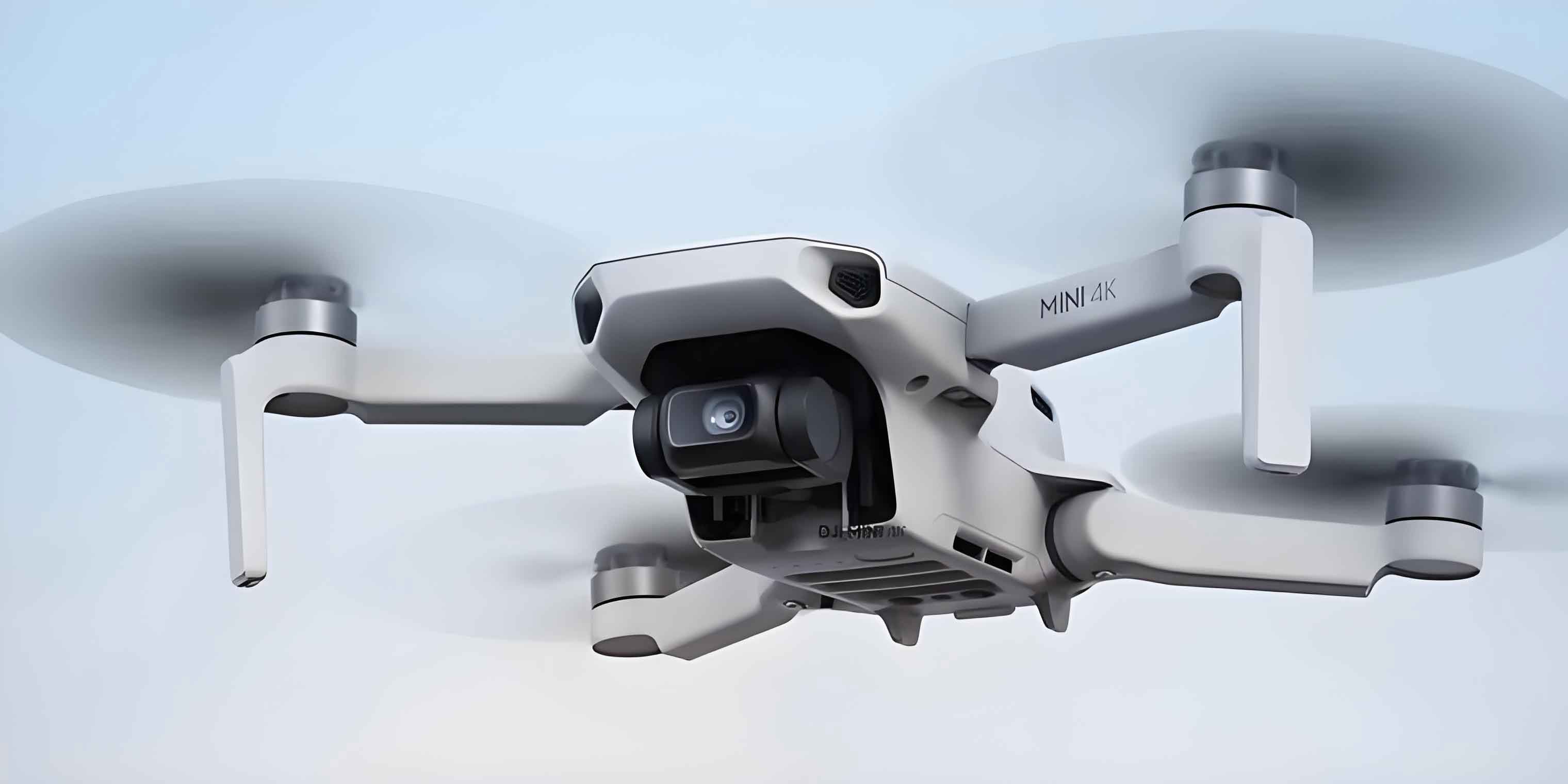
Based on the above calculation results, the following hierarchical control strategy for low-altitude emergency UAV drones is formulated: Low-risk road segments implement low-frequency patrols, with the frequency controlled at about 2 times/h. Medium-low risk road segments implement routine patrols, with a frequency of 3 to 4 times/h. Medium-high risk road segments strengthen patrols, with the frequency increased to about 5 times/h. High-risk road segments implement high-frequency patrols, with a frequency not less than 6 times/h. This strategy achieves a precise match between patrol resources and risk levels, providing a theoretical reference for emergency UAV drone control in mountainous highway tunnel groups.
Conclusion
This study systematically proposed a precise control strategy to address the difficulties in low-altitude emergency UAV drone control for mountainous highway tunnel groups. Taking a specific spiral tunnel group as the object, we collected and fused multi-source “driver-vehicle-road-environment” data to construct a driving risk quantification model that includes key factors such as vehicle lateral stability, physiological load, and longitudinal control. The tunnel driving risk was divided into four levels: low, medium-low, medium-high, and high. The risk was visualized spatially, revealing that driving risks exhibit clear clustering and spatial heterogeneity across different road segments.
On this basis, the concept of risk exposure was introduced, and a method for calculating UAV drone patrol frequency based on risk level was established, forming a quantitative correspondence between risk level and patrol intensity. The research results show that the patrol frequency for low-risk road segments should be 2 times/h. For medium-low risk road segments, it should be 3 to 4 times/h. For medium-high risk road segments, it should be 5 times/h. For high-risk road segments, the patrol frequency needs to be at least 6 times/h. Based on this, a hierarchical control system precisely adapted to risk levels was constructed, achieving an exact match between UAV drone patrol frequency and road segments of different risk levels. This has significant engineering application value for improving the perception efficiency and emergency response capability for sudden events in mountainous highway tunnel groups.
In summary, the innovation of this study is mainly reflected in three aspects. First, it integrates the driver’s psychological and physiological responses, vehicle operating behavior, and road environment characteristics into a unified factor analysis framework, constructing a driving risk quantification model specifically for the spiral tunnel group scenario and visually presenting the spatial distribution of risk in the form of a risk map, providing a new approach for risk identification in tunnel groups. Second, it introduces the concept of risk exposure from reliability engineering into low-altitude emergency UAV drone control, establishing a calculable functional relationship between risk value and patrol frequency, transforming the traditional qualitative control approach into a calibratable and deducible quantitative strategy. Third, at the engineering application level, it provides the patrol frequency ranges corresponding to different risk levels, which can be used to formulate UAV drone operation plans, team scheduling, and key duty plans for critical road segments, offering operable parameter suggestions and strategy templates for low-altitude emergency response in mountainous highway tunnel groups.
It should be noted that this study’s risk model and patrol strategy were constructed based on real-vehicle test data from a single spiral tunnel group. Although it has a certain degree of representativeness, its coverage in terms of sample road section types, traffic operating conditions, and external environmental conditions remains limited. Future research can conduct long-term data collection in more spiral tunnels and incorporate multi-dimensional variables such as different traffic states, meteorological conditions, and accident records into the analysis framework to further update and validate the risk model parameters.