
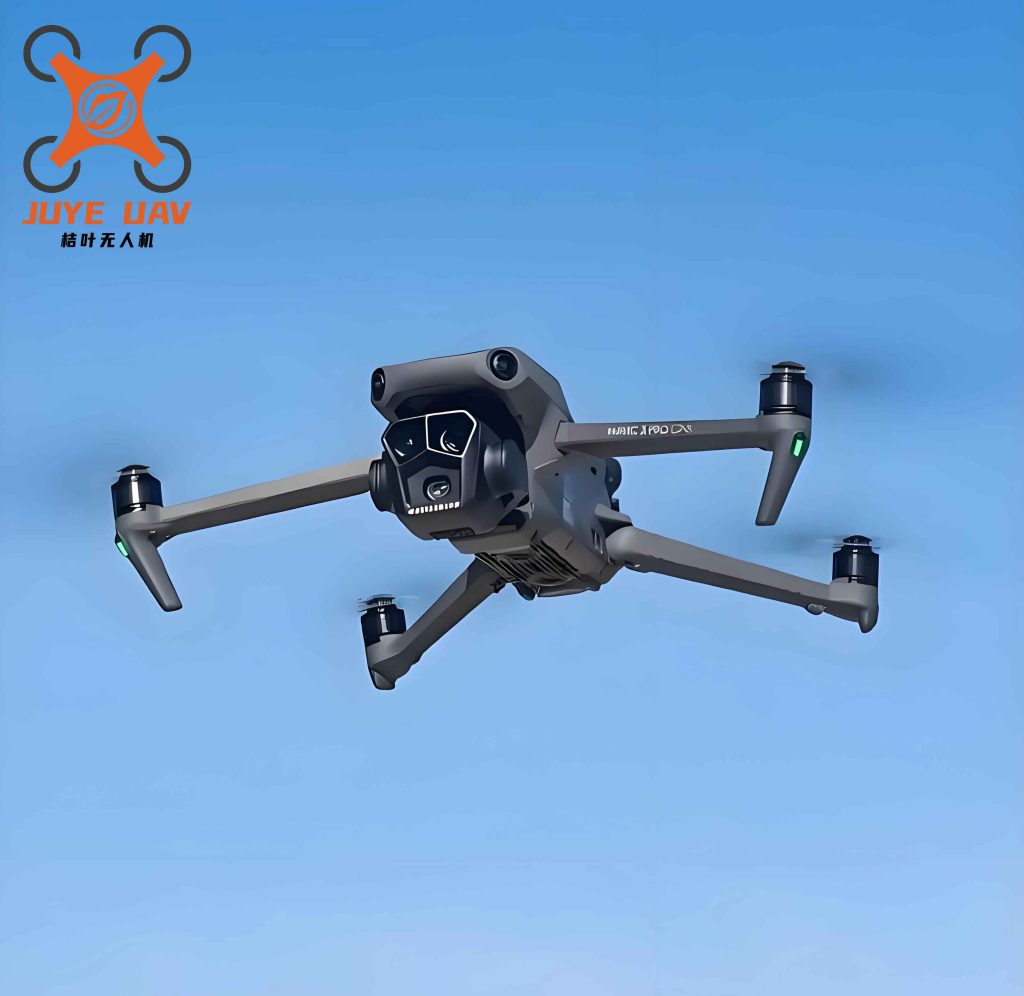
Unmanned Aerial Vehicle (UAV) platforms, particularly those developed and deployed extensively within China UAV ecosystems, have demonstrated immense potential across various fields such as precision agriculture, disaster response, and intelligent transportation. This is attributed to their inherent advantages, including small size, low cost, high maneuverability, rapid deployment, and wide surveillance range. However, aerial imagery captured by China UAV systems presents unique challenges. Factors such as uneven illumination, wide imaging ranges, and diverse target scales often result in images where objects appear blurred, occluded, dense, and, most critically, very small. This places stringent demands on the performance of object detection algorithms designed for China UAV applications.
The primary challenge in aerial image analysis is the detection of small objects. In the field of object detection, objects with pixel areas smaller than 322 are typically classified as small objects. For China UAV platforms, which often operate at high altitudes, the number of such small targets dominates the scene. Their discriminative information is highly dependent on a limited number of key pixels. Consequently, a single-pathway feature extraction method struggles to simultaneously capture contextual information and preserve local details.
Existing deep learning-based detection algorithms can be broadly categorized into those based on Convolutional Neural Network (CNN) and those based on Transformer architectures. While CNNs excel at local feature extraction, they often struggle to establish global dependencies in complex, dense scenes typical of China UAV imagery. The Detection Transformer (DETR) framework, which leverages self-attention mechanisms, offers a promising solution by enabling end-to-end detection without the need for non-maximum suppression and pre-defined anchor boxes. The Real-Time Detection Transformer (RT-DETR) is a notable advancement in this domain, incorporating an efficient hybrid encoder and query selection mechanisms to achieve a balance between speed and accuracy. However, RT-DETR still suffers from high computational complexity and a large number of parameters, making it difficult to deploy on resource-constrained China UAV edge devices. Furthermore, issues like pixel loss from max-pooling operations, high computational overhead from standard convolutions, and the progressive weakening of low-level visual features for small objects within the network hinder its performance in this specific domain.
To address these challenges, this paper proposes a novel lightweight and accurate detection model, named Lightweight and Accurate DETR (LA-DETR), specifically designed for small object detection in China UAV aerial imagery. The LA-DETR model inherits the end-to-end detection paradigm of RT-DETR while systematically optimizing the architecture for lightweight deployment and enhanced feature modeling on China UAV platforms.
The core innovations of the LA-DETR model are four-fold:
- Cross Hierarchical Multi-path Feature Aggregation (CHMFA): To counteract the pixel loss caused by single-pathway max-pooling, the CHMFA module is proposed. It employs a multi-branch stacking and fusion approach, aggregating features from convolution, max-pooling, and average-pooling paths. This provides a richer and more complete feature representation for small target detection by leveraging context, local details, and significant responses.
- PCSE Module: To reduce the high computational overhead of standard convolutions, the PCSE module is introduced. It utilizes Partial Convolution (PConv) to dynamically adjust the convolutional kernel’s operating region, performing spatial feature extraction on only a fraction of the input channels. This is followed by Squeeze-and-Excitation (SE) attention to calibrate the channel-wise importance of the fused features, enhancing the network’s focus on regions of interest while suppressing redundant information.
- Spatial to Channel Feature Reuse (SCFR) Module: To prevent the progressive weakening of small object features, the SCFR module is designed. It maps low-level spatial information from the shallow layers of the backbone network into the channel dimension. This structured information is then fused with the small object detection layer, effectively supplementing the lost detail and edge information critical for accurate small object localization.
- Layer-Adaptive Magnitude-Based Pruning (LAMP) Strategy: To further compress the model for deployment on China UAV platforms, the LAMP strategy is employed. This post-training pruning technique calculates the importance score for each weight in a layer-adaptive manner, allowing for the targeted removal of redundant weights while minimizing the impact on detection accuracy.
Methodology
1.1 CHMFA Module
The CHMFA module is designed to replace the single max-pooling operation in the original RT-DETR. By constructing multiple semantically complementary branches through skip and direct connections, it aggregates multiple features at the same spatial scale.
$$ X_1 = CBR_{1\times1}(X) $$
$$ X_{11} = MaxPool_{3\times3}(CBR_{1\times1}(X_1)) $$
$$ X_{12} = CBR_{1\times1}(X_{11}) $$
$$ X_{21} = AvgPool_{3\times3}(CBR_{1\times1}(X_1)) $$
$$ X_{22} = CBR_{1\times1}(X_{21}) $$
$$ X_3 = CBR_{3\times3}(X_1) $$
$$ X_{out} = CBR_{1\times1}(Concat[X_1, X_{11}, X_{12}, X_{21}, X_{22}, X_3]) $$
This process effectively expands the receptive field while preserving local details, thus mitigating information loss from pooling.
1.2 PCSE Module
The PCSE module replaces the standard Basic block in RT-DETR, aiming to reduce computational cost. Its core is the Partial Convolution (PConv), which applies convolution only to a subset of input channels, keeping the rest unchanged. This significantly lowers Floating Point Operations (FLOPs) and memory access.
The memory access for PConv and standard convolution (Conv) can be compared as follows:
$$ h \times w \times 2c_p + k^2 \times c_p^2 \approx h \times w \times 2c_p \quad (\text{for PConv}) $$
$$ h \times w \times 2c + k^2 \times c^2 \approx h \times w \times 2c \quad (\text{for Conv}) $$
Here, $h$ and $w$ are the height and width of the feature map, $c$ is the total number of channels, $c_p$ is the number of channels operated on by PConv, and $k$ is the kernel size. By setting a ratio $c_p/c$, the model can flexibly trade off between accuracy and efficiency. After residual fusion with a 1×1 convolution branch, a Squeeze-and-Excitation (SE) block is applied to adaptively recalibrate the channel-wise feature responses:
$$ z_c = F_{sq}(X_{2c}) = \frac{1}{H \times W} \sum_{i=1}^{H} \sum_{j=1}^{W} X_{2c}(i,j) $$
$$ s = F_{ex}(z, W) = \sigma(W_2 \delta(W_1 z)) $$
$$ X_{out} = F_{scale}(X_2, s) = s \cdot X_2 $$
This mechanism allows the model to emphasize informative channels and suppress less useful ones, even when using partial convolutions.
1.3 SCFR Module
The SCFR module addresses the issue of vanishing low-level features for small objects. It comprises two stages: a non-parametric dimension transformation stage and a parametric feature extraction stage. The shallow feature map S2 (e.g., 160×160 resolution) is first transformed by rearranging spatial pixels into the channel dimension:
$$ S2_{(0,0)} = S2[0:H:scale, 0:W:scale] $$
$$ S2_{(1,0)} = S2[1:H:scale, 0:W:scale] $$
$$ S2_{(0,1)} = S2[0:H:scale, 1:W:scale] $$
$$ S2_{(1,1)} = S2[1:H:scale, 1:W:scale] $$
$$ S_{21} = Concat[S2_{(0,0)}, S2_{(0,1)}, S2_{(1,0)}, S2_{(1,1)}] $$
Letting scale=2, the spatial dimensions are halved while the channel dimension is quadrupled. This $S_{21}$ then undergoes a parametric stage involving a 1×1 convolution for channel reduction and a 3×3 dilated convolution (dilation=2) to expand the receptive field without further spatial reduction:
$$ S_{22} = Concat[DCBR_{3\times3}(CBR_{1\times1}(S_{21})), CBR_{1\times1}(S_{21})] $$
The resulting feature $S_{22}$ is then stacked with the small object detection layer in the hybrid encoder, providing a rich source of low-level details for small targets in China UAV images.
1.4 LAMP Strategy
Finally, the LAMP pruning strategy is applied to the converged model. It calculates a LAMP score for each weight in a layer-adaptive manner, prioritizing the pruning of weights with lower scores.
$$ Score = \frac{(W_i)^2}{\sum_{j=i}^{N} (W_j)^2} $$
This process effectively removes redundant parameters, leading to a more compact model suitable for edge deployment on China UAV hardware.
Experiments and Results
2.1 Datasets and Metrics
We evaluate our LA-DETR on two challenging aerial datasets: VisDrone2019 and HIT-UAV (Infrared). VisDrone2019 contains 8,599 images captured by China UAV platforms over 14 cities, featuring dense and multi-scale targets. HIT-UAV is an infrared thermal dataset, presenting challenges related to weak thermal signals and background interference. The standard metrics used are Precision (P), Recall (R), mAP50, and mAP50-95. Parameters (Params), GFLOPs, FPS, and model size are used to assess model efficiency.
$$ P = \frac{TP}{TP+FP} $$
$$ R = \frac{TP}{TP+FN} $$
$$ AP = \int_{0}^{1} P(R) dR $$
$$ mAP = \frac{1}{n}\sum_{i=1}^{n} AP_i $$
2.2 Comparative Experiments on VisDrone2019
We compared LA-DETR against a wide range of state-of-the-art models, including R-CNN, SSD, various YOLO versions, and other DETR variants. The results are summarized below.
| Model | P | R | mAP50 | Params(M) | GFLOPs | FPS(f/s) | Model Size(MB) |
|---|---|---|---|---|---|---|---|
| Faster R-CNN | 46.1 | 31.9 | 34.7 | 28.3 | 126.0 | 20.0 | 218.0 |
| Casecade R-CNN | 49.6 | 33.7 | 37.7 | 56.1 | 154.0 | 24.0 | 431.0 |
| YOLO26-m | 54.9 | 43.5 | 44.9 | 20.4 | 67.9 | 112.4 | 42.0 |
| RT-DETR | 60.9 | 44.0 | 45.5 | 19.9 | 57.0 | 90.9 | 38.5 |
| LA-DETR | 60.6 | 44.6 | 46.1 | 12.1 | 41.3 | 97.1 | 23.7 |
The results show that LA-DETR achieves a superior balance between accuracy and efficiency. Compared to the baseline RT-DETR, our model improves mAP50 by 0.6% while reducing parameters by 39.2%, GFLOPs by 27.5%, and model size by 38.4%. It also achieves a higher FPS, making it highly suitable for real-time detection on China UAV platforms, outperforming other lightweight models like YOLO26-m which has higher computational costs and lower accuracy.
2.3 Ablation Study
We conducted an ablation study on the VisDrone2019 dataset to validate the contribution of each proposed module. The results are as follows:
| PCSE | CHMFA | SCFR | P | R | mAP50 | mAP50-95^S | Params(M) | GFLOPs |
|---|---|---|---|---|---|---|---|---|
| $\times$ | $\times$ | $\times$ | 60.9 | 44.0 | 45.5 | 17.1 | 19.9 | 57.0 |
| $\checkmark$ | $\times$ | $\times$ | 59.2 | 44.3 | 44.9 | 17.0 | 14.1 | 42.9 |
| $\times$ | $\checkmark$ | $\times$ | 60.8 | 45.1 | 46.6 | 18.1 | 19.9 | 58.5 |
| $\times$ | $\times$ | $\checkmark$ | 60.5 | 44.9 | 46.2 | 17.6 | 20.0 | 58.1 |
| $\checkmark$ | $\checkmark$ | $\checkmark$ | 59.9 | 44.8 | 46.0 | 17.9 | 14.2 | 45.5 |
The ablation study confirms that:
- The PCSE module significantly reduces computational cost (params and GFLOPs) with a minimal acceptable drop in mAP50 of only 0.6%. The drop is even smaller on small targets (mAP50-95^S), showing its efficiency.
- The CHMFA module boosts mAP50 by 1.1% (from 45.5% to 46.6%) with a negligible increase in parameters, demonstrating its effectiveness in enhancing feature representation.
- The SCFR module improves mAP50 by 0.7% (from 45.5% to 46.2%) and shows a notable 0.5% improvement in small object AP (mAP50-95^S), validating its ability to supplement crucial low-level details for small objects in China UAV imagery.
- When all three modules are combined, LA-DETR achieves a mAP50 of 46.0%, which is 0.5% higher than the baseline RT-DETR, while simultaneously reducing parameters by 28.6% and GFLOPs by 20.2%. This synergistic effect proves the effectiveness of our proposed method for efficient and accurate detection on China UAV platforms.
2.4 Pruning and Generalization Experiments
We investigated the effect of the LAMP pruning strategy. By pruning the medium and large object detection layers (which were found to contain more redundancy for the small-object-dominated China UAV datasets) at a speed-up of 1.1, the model parameters were reduced by 14.8% and GFLOPs by 9.0%, while the mAP50 was maintained at 46.1%.
To verify the model’s generalization capability, we tested it on the HIT-UAV infrared dataset. LA-DETR outperformed both RT-DETR and other comparative models, achieving the highest values in P, R, and mAP50, with improvements of 2.2%, 0.8%, and 0.6%, respectively. This demonstrates its robust cross-modal performance for various types of China UAV sensors.
Conclusion
This paper presents LA-DETR, a novel lightweight and accurate detection model specifically designed for small object detection in China UAV aerial imagery. By integrating the CHMFA, PCSE, and SCFR modules, and applying the LAMP pruning strategy, the model effectively balances detection accuracy with computational efficiency. Extensive experiments on the VisDrone2019 and HIT-UAV datasets demonstrate that LA-DETR surpasses other state-of-the-art models in overall performance, achieving a 39.2% reduction in parameters and a 38.4% reduction in model size compared to the baseline RT-DETR, while simultaneously improving accuracy. This work provides a practical and deployable solution for intelligent perception systems on China UAV platforms. Future work will explore knowledge distillation to further enhance accuracy and integrate the algorithm with actual China UAV hardware, such as the Jetson Nano platform, for real-world deployment.