
As an expert in the field of unmanned aerial systems, I have witnessed the rapid proliferation of drones across various sectors, from agriculture and engineering to surveillance and entertainment. This expansion brings immense benefits but also significant challenges, particularly in low-altitude airspace management. Ensuring safe flight operations is paramount, and in this article, I will delve into the critical technologies and methodologies that underpin drone low-altitude safety, with a strong emphasis on the role of comprehensive drone training. The integration of advanced systems and rigorous training protocols is essential to mitigate risks and foster a secure aerial environment.
The low-altitude domain, typically defined as airspace below 1,000 meters, has become a bustling corridor for drone activities. With millions of flight hours logged annually, the potential for conflicts—whether with other drones, manned aircraft, or ground obstacles—has escalated. My research focuses on the interplay between regulatory frameworks, technological innovations, and human factors, where drone training serves as a cornerstone. Without proper education and skill development, even the most sophisticated systems can fall short. In the following sections, I will explore the evolution of drone regulations, key safety management technologies, and practical strategies to enhance safety, all while highlighting how continuous drone training can bridge gaps in operational proficiency.
Globally, regulatory bodies have recognized the urgency of drone safety. The European Union, for instance, has implemented classification systems and remote identification requirements, while the United States has enacted rules under Part 107 for small unmanned aircraft. These policies often mandate certification and education, underscoring the value of standardized drone training. In my analysis, I observe that countries with robust training programs tend to report fewer incidents. However, regulations alone are insufficient; they must be complemented by technological solutions. From my perspective, the synergy between policy, technology, and training forms a triad that can effectively manage low-altitude risks. As I proceed, I will detail specific technologies such as capacity management, route planning, and collision avoidance, demonstrating how each benefits from well-trained operators.
Drones have evolved from military tools to ubiquitous devices, characterized by their lightweight design, high maneuverability, and cost-effectiveness. These traits, while advantageous, also contribute to safety concerns, especially in crowded airspace. My experience shows that operator error is a leading cause of accidents, which is why I advocate for enhanced drone training curricula. Training should not only cover basic piloting skills but also include modules on airspace awareness, emergency procedures, and ethical usage. By investing in education, we can cultivate a culture of responsibility among users. Moreover, technological advancements in sensors and artificial intelligence offer new avenues for safety, but their efficacy depends on operator competence. Thus, I believe that integrating training with technology development is crucial for sustainable growth.
To manage drone traffic in low-altitude airspace, several key technologies have emerged. I will discuss these in depth, using mathematical models and tables to summarize their principles. First, capacity management ensures that airspace does not become overcrowded. Traditional methods involve static restrictions, but dynamic approaches are more efficient. For example, I have applied optimization algorithms to balance drone densities. Consider a scenario where drones are scheduled in a region; the capacity C can be expressed as a function of time and space: $$C(t, x, y) = \max_{i} \left( \sum_{j} f_{ij}(t) \cdot g(x, y) \right)$$ where fij(t) represents the flow of drones between nodes i and j at time t, and g(x, y) is a spatial weighting factor. This model helps in pre-flight planning, but real-time adjustments are often needed. Table 1 summarizes common capacity management techniques and their reliance on operator training.
| Technique | Description | Training Requirements |
|---|---|---|
| Static Zoning | Predefined no-fly zones and altitude limits. | Basic airspace knowledge; often covered in introductory drone training. |
| Dynamic Flow Control | Real-time adjustment of drone entry based on congestion. | Advanced decision-making skills; requires simulation-based drone training. |
| Algorithmic Optimization | Use of algorithms like minimum-cost flow to allocate routes. | Understanding of algorithmic outputs; specialized drone training for dispatchers. |
Second, route planning is critical for avoiding conflicts. I distinguish between pre-flight planning and dynamic replanning during operations. Pre-flight planning involves generating optimal paths using algorithms such as A* or genetic algorithms. For instance, the cost function for a route can be minimized: $$\min \int_{0}^{T} \left( w_1 \cdot d(t) + w_2 \cdot \rho(t) \right) dt$$ where d(t) is the distance to obstacles, ρ(t) is the air traffic density, and w1, w2 are weights. Dynamic replanning, however, must respond to unforeseen events like temporary no-fly zones. Here, operator training is vital, as humans must oversee autonomous systems and intervene when necessary. In my work, I have developed training modules that simulate emergency scenarios, enhancing operators’ ability to manage route deviations. Effective drone training in this area reduces latency in decision-making and prevents accidents.
Third, collision avoidance systems rely on sensors and AI to detect and mitigate imminent threats. Technologies include trajectory projection and potential field methods. For example, the potential field approach models repulsive forces from obstacles: $$F_{rep} = \nabla \left( \frac{k}{||r – r_{obs}||^2} \right)$$ where k is a constant, r is the drone’s position, and robs is the obstacle’s position. While these systems can operate autonomously, operator awareness is crucial for monitoring and overriding decisions. I emphasize that drone training should include hands-on experience with collision avoidance tools, ensuring operators understand their limitations. Table 2 compares different collision avoidance methods and the associated training needs.
| Method | Principle | Training Focus |
|---|---|---|
| Trajectory Projection | Predicts future positions to detect conflicts. | Interpretation of predictive displays; recurrent drone training for accuracy. |
| Potential Field | Uses virtual forces to steer away from obstacles. | Understanding force parameters; practical drone training in simulated environments. |
| Optimal Control | Computes evasion maneuvers using optimization. | Familiarity with control theory; advanced drone training for engineers and pilots. |
Beyond technology, improving drone safety requires holistic strategies. From my viewpoint, strengthening regulatory oversight is fundamental. Governments should enforce licensing and registration, tying them to mandatory drone training programs. I have advocated for standardized curricula that cover legal requirements, weather assessment, and equipment checks. For instance, pre-flight inspections can be formalized through checklists, reducing human error. Additionally, penalties for violations should be stringent, but education should come first. In my consultations, I recommend that regulators collaborate with training institutions to ensure alignment with industry standards.
Investing in research and development is another key area. Manufacturers should design drones with inherent safety features, such as fail-safe mechanisms and geofencing. However, these features must be complemented by user education. For example, drone training can include modules on firmware updates and sensor calibration, which are often overlooked. I have seen cases where technical failures stemmed from poor maintenance knowledge, highlighting the need for continuous learning. Moreover, advancing algorithms for dynamic route planning and collision avoidance requires input from trained professionals who can test and refine these systems in real-world conditions. Thus, R&D efforts should integrate feedback loops from training exercises.
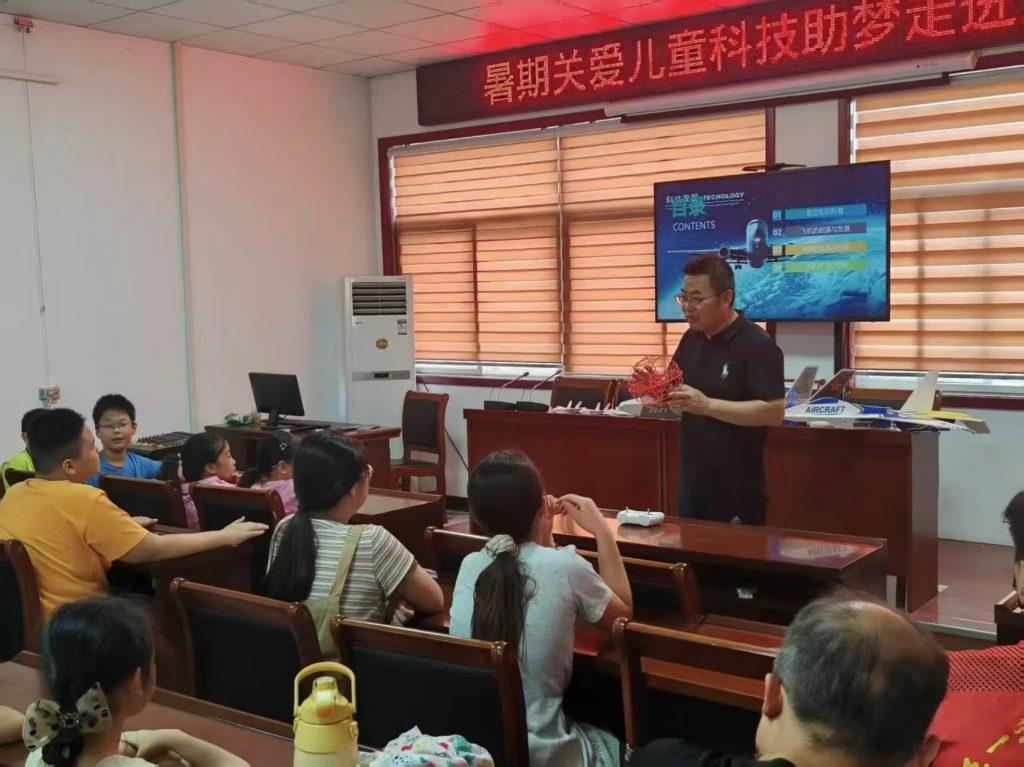
The image above depicts a typical drone training session, where operators practice flight maneuvers in a controlled environment. Such practical exercises are indispensable for building muscle memory and situational awareness. In my training programs, I incorporate similar simulations to teach emergency procedures, like handling signal loss or battery failures. This hands-on approach, combined with theoretical knowledge, ensures that operators are prepared for diverse scenarios. I believe that visual aids and immersive training enhance retention and competency, ultimately contributing to safer low-altitude operations.
Enhancing the management of drone pilot licenses is also critical. I propose a tiered licensing system based on drone type and mission complexity. For instance, operating a heavy-lift drone for cargo delivery would require more advanced drone training than flying a mini-drone for photography. Licensing should involve periodic recertification to keep skills current. In my experience, operators who undergo regular training are less likely to engage in risky behaviors. Furthermore, cross-training across different drone categories should be discouraged unless additional certification is obtained, as each platform has unique handling characteristics. By linking licenses to ongoing education, we can maintain high safety standards across the industry.
To quantify the impact of training on safety, I have developed a model that relates accident rates to training hours. Let A be the accident rate per 1,000 flight hours, and T be the cumulative training hours per operator. Empirical data suggests an exponential decay: $$A(T) = A_0 \cdot e^{-\lambda T}$$ where A0 is the baseline accident rate without training, and λ is a decay constant specific to the training quality. This model underscores the importance of investing in drone training to reduce incidents. For example, if A0 = 0.5 accidents per 1,000 hours and λ = 0.1 per hour, then after 10 hours of training, the accident rate drops to approximately 0.184. Such mathematical insights can guide policy decisions and resource allocation for training programs.
In conclusion, the safe management of drones in low-altitude airspace hinges on a multifaceted approach. Technological solutions like capacity management, route planning, and collision avoidance are essential, but their effectiveness is amplified by rigorous drone training. From my perspective, training transforms operators from mere users into responsible stewards of the airspace. It bridges the gap between regulatory intent and practical execution. As the drone industry continues to grow, I urge stakeholders—governments, manufacturers, and training institutions—to prioritize education as a core component of safety strategies. Future advancements should focus on integrating AI-driven training simulations and real-time monitoring tools, all while fostering a culture of continuous learning. By doing so, we can ensure that low-altitude skies remain safe and productive for all.
Reflecting on my journey in this field, I am optimistic about the potential for innovation. However, I caution against overlooking the human element. No algorithm can fully replace the judgment of a well-trained operator. Therefore, I advocate for a balanced ecosystem where technology and drone training evolve in tandem. As we develop new systems, let us also refine our training methodologies, making them accessible, engaging, and comprehensive. Ultimately, the goal is to create a harmonious low-altitude environment where drones can thrive without compromising safety. Through collaborative efforts and a steadfast commitment to education, this vision is within reach.