
In the rapidly evolving landscape of technology, drone applications have permeated diverse sectors such as agriculture, logistics, power inspection, and surveying, creating an escalating demand for skilled professionals. As an educator and curriculum developer, I recognize the imperative to establish drone application technology programs that are tightly aligned with industry job requirements. This article elaborates on a comprehensive framework for constructing such programs, emphasizing drone training as a core component to bridge the gap between academic preparation and real-world occupational needs. The integration of theoretical knowledge with hands-on practice, supported by strategic partnerships and robust infrastructure, is pivotal for cultivating competent engineers and technicians. Through this first-person perspective, I will delve into the industry ecosystem, identify existing shortcomings, and propose a structured approach to program development, incorporating tables and formulas to encapsulate key concepts and ensure clarity.
The drone industry encompasses a complex value chain, extending from research and development to operations and management. Understanding this chain is fundamental for designing relevant drone training curricula. The table below summarizes the primary segments of the drone industry ecosystem, highlighting the interconnected roles and technologies.
| Industry Segment | Key Components | Relevance to Drone Training |
|---|---|---|
| Hardware Manufacturing | Design, materials, assembly, testing of airframes, motors, sensors | Foundation for understanding drone construction and maintenance principles. |
| Control & Communication | Flight control systems, remote controllers, data links, telemetry | Core for teaching flight dynamics, stabilization algorithms, and real-time communication protocols. |
| Navigation & Positioning | GPS, IMUs, obstacle avoidance, path planning algorithms | Essential for instructing autonomous flight, mapping, and precision operations. |
| Payloads & Applications | Cameras, LiDAR, multispectral sensors, specialized equipment for agriculture, surveying, etc. | Directly links training to specific job functions like data acquisition in various sectors. |
| Operations & Management | Flight logistics, regulatory compliance, maintenance, data processing, pilot certification | Critical for developing operational safety awareness and project management skills. |
This ecosystem underscores the multidisciplinary nature of the field, necessitating a curriculum that integrates mechanical, electronic, software, and application-specific knowledge. Effective drone training must, therefore, traverse these segments to produce versatile graduates.
Despite the proliferation of drone-related programs, several deficiencies hinder their effectiveness in meeting job market demands. From my analysis, the primary shortcomings are as follows, often stemming from a disconnect between educational offerings and industry expectations.
| Deficiency Area | Description | Impact on Drone Training |
|---|---|---|
| Lack of Standardized Curriculum | Absence of unified national or industry-wide training standards leads to inconsistent learning outcomes and skill levels among graduates. | Graduates may lack the specific competencies required by employers, reducing employability. |
| Theory-Practice Disconnect | Overemphasis on either theoretical lectures or superficial flight practice without deep integration. Limited access to advanced labs and flight fields. | Students fail to apply concepts in real scenarios, impairing problem-solving abilities crucial for jobs. |
| Insufficient Qualified Faculty | Shortage of instructors with interdisciplinary expertise (aeronautics, robotics, data science) and practical industry experience. | Teaching quality suffers, and curriculum fails to keep pace with technological advancements. |
| Inadequate Educational Resources | Underinvestment in modern drones, simulation software, data analysis tools, and updated learning materials. | Students train on obsolete equipment, gaining skills not relevant to current industry practices. |
| Limited Practical Opportunities | Few partnerships with companies for internships, real-world projects, or access to diverse operational environments. | Graduates lack portfolio of hands-on experience, a key differentiator in job applications. |
These gaps necessitate a paradigm shift toward a job-oriented construction model, where every aspect of the program is designed with explicit career pathways in mind.
The cornerstone of a successful program is a meticulous analysis of industry demands. Based on market studies and engagement with sector leaders, I have identified key areas where drone training must focus to align with job roles. The demand can be quantified and structured to inform curriculum design.
First, consider the mathematical modeling of market growth, which influences training scale. The projected global drone market size \( M(t) \) can be expressed as a function of time \( t \) (in years), often following a growth curve:
$$ M(t) = M_0 \cdot e^{kt} $$
where \( M_0 \) is the initial market size and \( k \) is the growth rate constant. For instance, if \( M_0 \) is $40 billion and \( k \) is 0.15, the market in 2025 (\( t=5 \)) would be:
$$ M(5) = 40 \cdot e^{0.15 \cdot 5} \approx 40 \cdot e^{0.75} \approx 40 \cdot 2.117 \approx 84.68 \text{ billion USD} $$
This growth underscores the urgency for scalable drone training programs.
The specific job roles and their required competencies can be tabulated to guide specialization tracks within the program.
| Job Role | Primary Industry Sector | Core Competencies Required | Recommended Training Focus |
|---|---|---|---|
| Drone Pilot/Operator | Agriculture, Cinematography, Inspection | Flight maneuvering, regulatory compliance, mission planning, basic maintenance | Intensive flight practice, safety protocols, payload operation |
| Data Analyst/Specialist | Surveying, Environmental Monitoring, Construction | Geospatial data processing, photogrammetry, GIS software, sensor calibration | Software tools (e.g., Pix4D, ArcGIS), statistical analysis, remote sensing principles |
| UAV Systems Engineer | Manufacturing, R&D | Aerodynamics, embedded systems, control theory, mechanical design | Advanced mathematics, CAD modeling, control algorithm development |
| Operations Manager | Logistics, Security, Fleet Services | Project management, logistics optimization, risk assessment, team coordination | Business administration, regulatory frameworks, operational planning software |
This analysis confirms that a one-size-fits-all approach is inadequate; drone training must be modular and role-specific.
The construction philosophy for a job-oriented drone application technology program should aim to cultivate engineer-type talents with a balanced skill set. From my perspective, the ideal graduate must embody the following attributes, which serve as guiding principles for curriculum design:
- Mastery of drone architecture and principles, with solid foundations in aerodynamics, mechanics, and electronics. For example, understanding the forces acting on a drone involves Newton’s second law: $$ \sum \vec{F} = m \cdot \vec{a} $$ where \( \vec{F} \) represents forces (lift, thrust, drag, weight), \( m \) is mass, and \( \vec{a} \) is acceleration.
- Proficiency in operating diverse drone platforms, selecting appropriate models for specific tasks, and adhering to flight safety regulations—a core aspect of practical drone training.
- Competence in aerial photography and videography, including shooting techniques and post-processing, for applications in media and inspection.
- Familiarity with enabling technologies like big data analytics and cloud computing, enabling integration into smart agriculture and urban management systems.
- Skills in data transmission, surveying, and geospatial analysis, capable of acquiring and processing data using mathematical models such as photogrammetric triangulation: $$ \lambda_i \mathbf{x}_i = \mathbf{P}_i \mathbf{X} $$ where \( \lambda_i \) is a scale factor, \( \mathbf{x}_i \) is image coordinate, \( \mathbf{P}_i \) is projection matrix, and \( \mathbf{X} \) is world coordinate.
With these attributes in mind, the curriculum must be structured to transform novices into job-ready professionals through systematic drone training.
A meticulously designed course catalog is the backbone of effective education. The table below outlines a proposed curriculum structure, segmented into foundational, core, and elective modules, each contributing directly to job role competencies.
| Course Category | Course Title | Key Topics Covered | Learning Outcomes (Job-Ready Skills) |
|---|---|---|---|
| Foundational | Mathematics for Drones | Calculus, linear algebra, statistics | Ability to model flight dynamics and analyze sensor data |
| Physics & Aerodynamics | Fluid mechanics, Bernoulli’s principle, lift/drag forces | Understand drone flight envelopes and performance limits | |
| Electronics & Circuits | Circuit design, sensors, microcontrollers | Troubleshoot electrical issues and interface payloads | |
| Core (Drone Training) | Drone Systems & Architecture | UAV components, materials, propulsion systems | Assemble, configure, and maintain drone hardware |
| Flight Control & Navigation | PID controllers, GPS/INS integration, path planning algorithms | Program autonomous missions and stabilize flight; e.g., PID control: $$ u(t) = K_p e(t) + K_i \int_0^t e(\tau) d\tau + K_d \frac{de(t)}{dt} $$ | |
| Drone Communication & Data Link | RF theory, telemetry, encryption, anti-jamming techniques | Establish reliable command and video links in various environments | |
| Payloads & Application Modules | Cameras, LiDAR, multispectral sensors, application-specific software | Operate sensors for mapping, agriculture, inspection tasks | |
| Regulations & Safety Management | National airspace rules, risk assessment, insurance, certification processes | Legally and safely conduct commercial drone operations | |
| Electives (Specialization) | Precision Agriculture with Drones | NDVI analysis, variable rate technology, crop health monitoring | Provide agronomic solutions using drone data |
| Infrastructure Inspection | Thermal imaging, photogrammetry, defect detection algorithms | Perform inspections for energy, transport sectors | |
| Drone Data Analytics & GIS | Cloud processing, 3D modeling, spatial analysis | Generate actionable insights from aerial data |
This curriculum ensures that drone training is comprehensive, blending theory with application-specific knowledge, and allowing students to tailor their education to target jobs.
Practical instruction is where theoretical concepts materialize into tangible skills. In my approach, drone training must be immersive, involving hands-on projects from drone assembly to mission execution. A key component is the use of simulated and real-flight exercises to reinforce learning. For instance, students might calculate the required thrust for a drone design using the formula: $$ T = \frac{W}{n \cdot \eta} $$ where \( T \) is thrust per motor, \( W \) is total weight, \( n \) is number of motors, and \( \eta \) is efficiency factor. They then build a prototype and test it.
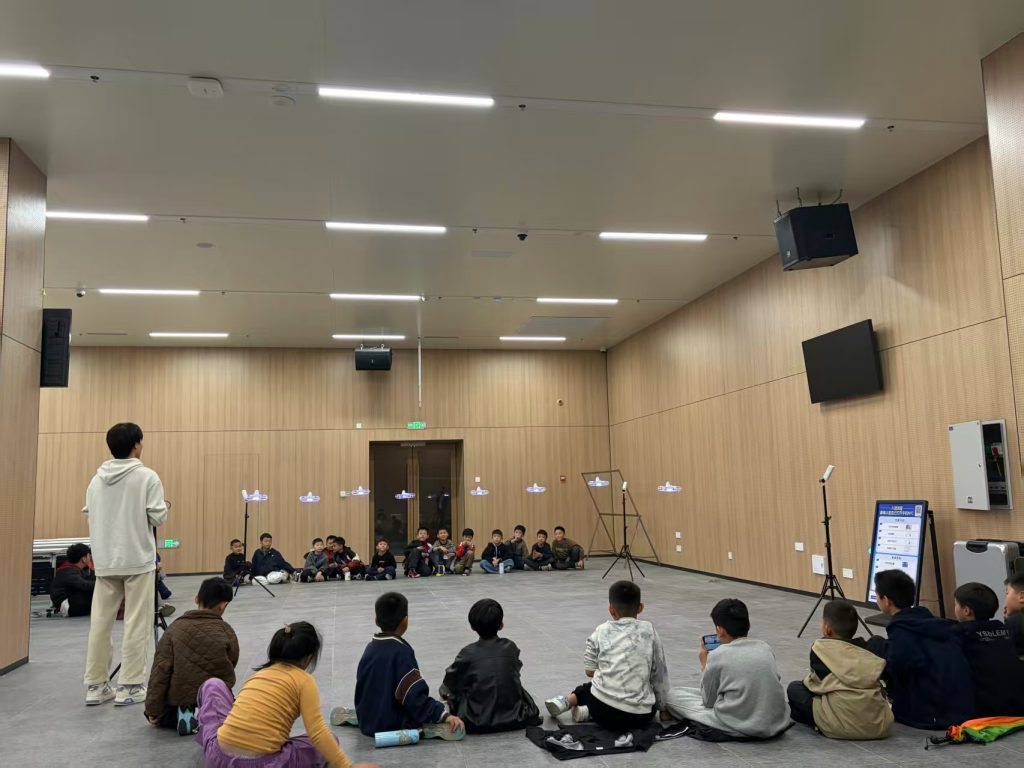
The image above encapsulates the essence of practical drone training—students engaging in field operations, which is vital for developing operational confidence. The practice curriculum should include:
- Flight Training Labs: Structured sessions on manual and autonomous flight, obstacle courses, and emergency procedures.
- Project-Based Learning: Teams complete real-world tasks, such as surveying a campus area, processing data to create orthomosaics, and presenting findings. This mimics job projects and enhances teamwork.
- Maintenance Workshops: Disassembling and repairing drones, calibrating sensors, and diagnosing faults—a critical skill for technical roles.
- Data Challenges: Using acquired imagery to solve problems, e.g., estimating crop yield via vegetation indices calculated as: $$ \text{NDVI} = \frac{\text{NIR} – \text{Red}}{\text{NIR} + \text{Red}} $$
Such immersive experiences ensure that graduates are not merely certificate holders but competent practitioners ready for workplace challenges.
To support this hands-on learning, dedicated practice bases are indispensable. I advocate for a tripartite facility design that mirrors real industry environments, each zone targeting specific job skills.
| Practice Zone | Facilities & Equipment | Training Objectives | Associated Job Tasks |
|---|---|---|---|
| Flight Operations Zone | Netted flying area, various UAV models (multi-rotor, fixed-wing), weather stations, mission control stations | Develop piloting proficiency, practice under different conditions, conduct flight tests | Commercial drone piloting, mission execution |
| Maintenance & Assembly Zone | Workbenches, toolkits, diagnostic instruments, 3D printers for parts fabrication | Learn assembly techniques, perform repairs, understand mechanical and electrical systems | UAV technician, fleet maintenance manager |
| Data Processing & Simulation Zone | High-performance computers, GIS software, flight simulators, VR setups for scenario training | Process aerial data, run simulations, develop and test algorithms in virtual environments | Data analyst, software developer, system designer |
These zones should be interconnected, allowing students to experience the full workflow—from planning a mission to analyzing results. Collaborating with local enterprises to share resources can expand access and keep facilities updated, elevating the quality of drone training.
Drone technology inherently intersects multiple disciplines. Therefore, the program must foster cross-pollination between engineering, computer science, environmental science, and business studies. I emphasize the integration of research, industry, and education (often termed industry-academia-research collaboration) to keep the curriculum dynamic and relevant. For example, joint projects with agriculture firms can involve optimizing spray patterns using swarm algorithms, modeled as:
$$ \min \sum_{i=1}^{n} (E_i + T_i) $$
where \( E_i \) is energy consumption and \( T_i \) is time for each drone in the swarm, subject to coverage constraints. Such collaborations provide students with exposure to cutting-edge challenges and networking opportunities, directly enhancing their job prospects. Regular seminars by industry experts and faculty exchanges with research institutions are also crucial to inject innovation into drone training.
Reflecting on the proposed framework, the distinguishing features of a job-oriented drone application technology program can be summarized as follows:
- High Integrative Nature: It merges knowledge from mechanical engineering, electronics, computer science, and domain-specific applications, ensuring graduates can address complex, real-world problems.
- Strong Practical Emphasis: Every theoretical module is coupled with lab sessions or field exercises, making drone training an experiential journey.
- Cutting-Edge Curriculum: Content is regularly updated to include advancements in AI, machine learning for autonomy, and new regulatory policies, preparing students for future job markets.
- International Outlook: Courses incorporate global standards, case studies from worldwide deployments, and opportunities for international certifications, broadening graduates’ employability across borders.
The overarching goals of such a program, from my viewpoint, are multidimensional and aligned with both educational excellence and industry service:
- To establish a systematic knowledge system in drone technology, enabling students to master design, operation, and application.
- To cultivate interdisciplinary problem-solving abilities through integrated courses and team projects.
- To achieve deep fusion with industry practices via internships, co-op programs, and live project engagements.
- To nurture innovation and research capabilities, encouraging student participation in competitions and publication of findings.
- To build a sustainable teaching and research ecosystem that attracts top faculty and generates impactful scholarly work.
- To instill professional ethics, social responsibility, and teamwork skills, producing well-rounded individuals ready for collaborative work environments.
These goals ensure that drone training transcends technical skill acquisition to encompass holistic professional development.
Looking ahead, the trajectory of drone applications promises expansive growth, further validating the need for robust educational programs. The future domains where drone training will be critical include environmental monitoring, where drones assess pollution levels using sensor arrays; precision agriculture, with drones enabling efficient resource management; logistics and last-mile delivery, requiring expertise in autonomous navigation and fleet coordination; energy sector inspections, utilizing drones for safe and efficient assessment of infrastructure; and public safety and defense, involving advanced surveillance and reconnaissance techniques. Each of these areas demands specialized knowledge, underscoring the importance of continuous curriculum evolution and lifelong learning in drone training. As technologies like AI integration and BVLOS (Beyond Visual Line of Sight) operations mature, the job roles will diversify, and educational programs must adapt proactively to keep graduates at the forefront of innovation.
In conclusion, constructing a drone application technology program oriented toward job alignment is a complex but rewarding endeavor. It requires a detailed understanding of industry needs, a carefully crafted curriculum rich in practical exposure, state-of-the-art facilities, and strong partnerships. By placing drone training at the heart of this construction and continuously iterating based on feedback from the employment landscape, we can empower students to thrive in the dynamic drone industry and contribute meaningfully to technological progress and societal benefit.