
From my perspective as a researcher deeply involved in the modernization of agriculture, the integration of advanced technologies into farming practices is not merely an incremental improvement but a fundamental transformation. Among these technologies, intelligent plant protection UAV drones stand out as a pivotal innovation. These systems represent the convergence of robotics, artificial intelligence, and precision agriculture, moving beyond simple remote-controlled sprayers to become autonomous, data-driven agronomic tools. The core value proposition of these UAV drones lies in their ability to execute highly precise, efficient, and environmentally conscious crop management tasks. This shift from blanket coverage to targeted, variable-rate application is revolutionizing how we protect and nourish crops, particularly in topographically complex regions where traditional machinery struggles to operate effectively.
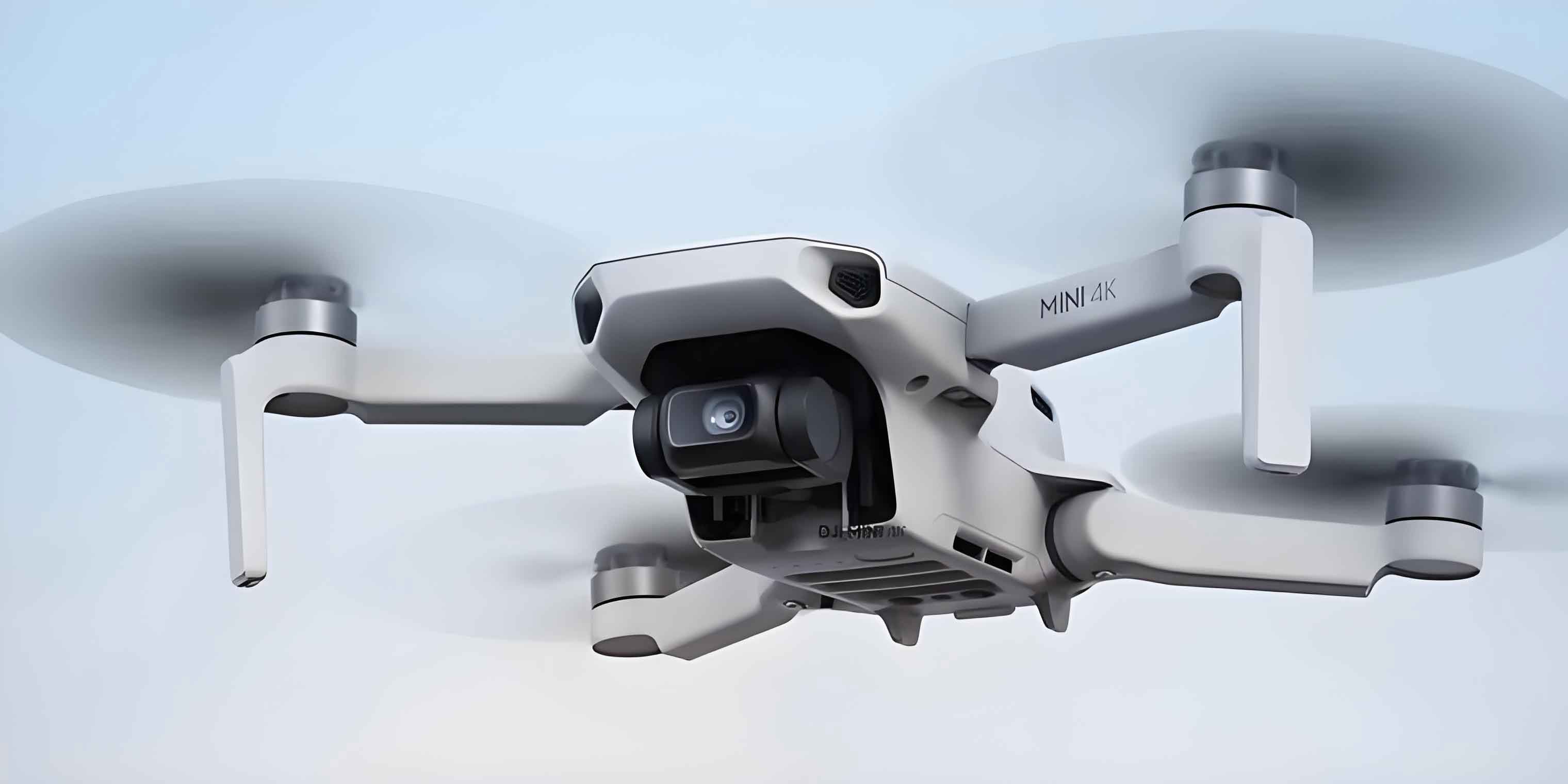
The operational excellence of modern plant protection UAV drones is underpinned by a sophisticated stack of four interdependent key technologies. First, high-precision navigation forms the backbone. Relying on satellite systems like BeiDou-3 augmented by Real-Time Kinematic (RTK) correction services, these UAV drones achieve centimeter-level positioning accuracy. This is critical for replicable flight paths, minimizing overlap and missed spots, especially in terraced or sloped fields. The positioning error can be modeled as a function of satellite visibility and correction link integrity, but in practice, it enables autonomous flight along contour lines with a deviation often kept within ±0.5 meters, a feat impossible with manual operation or standard GPS.
Second, the perceptual capability of these UAV drones is granted by a suite of advanced sensors. Multi-spectral imaging is paramount. By capturing reflectance data at specific wavelengths—such as Red (R ~650 nm), Red-Edge (RE ~735 nm), and Near-Infrared (NIR ~840 nm)—the drone can calculate vegetative indices. The most common, the Normalized Difference Vegetation Index (NDVI), is computed as:
$$NDVI = \frac{(NIR – Red)}{(NIR + Red)}$$
This index, and other derived ones like the Normalized Difference Red Edge (NDRE), serve as proxies for plant health, chlorophyll content, and biomass. A significant drop in these values within a specific zone can indicate early-stage stress from disease, pest infestation, or nutrient deficiency, often days before visible symptoms appear to the human eye. This multi-spectral data, often fused with LiDAR-derived canopy height models, creates a rich, georeferenced map of crop status, which directly informs the third key technology: intelligent decision-making.
The intelligent control system is the “brain” of the operation. It processes the perceptual data in real-time, often leveraging edge computing units to ensure low latency. Machine learning models, particularly Convolutional Neural Networks (CNNs), are trained to classify specific diseases or pests from the spectral and visual data. Based on this analysis and preset agronomic rules, the system generates a variable-rate application (VRA) prescription map. This map dictates precisely where and how much agrochemical to apply. For instance, if a zone shows an NDVI value below a disease threshold $Th_{disease}$, the prescription algorithm may trigger an increased application rate $R_{app}$ in that specific polygon. The decision logic can be represented as a function:
$$R_{app}(x,y) = f(S_{NDVI}(x,y), S_{NDRE}(x,y), C_{pest}, Th_{agronomic})$$
where $R_{app}(x,y)$ is the application rate at coordinates (x,y), $S$ are the sensor-derived indices, $C_{pest}$ is the classified pest/disease confidence, and $Th$ are various agronomic thresholds. This system enables “spot-treating” problem areas while reducing or skipping treatment in healthy areas, leading to significant chemical savings.
The fourth pillar is the advanced spraying system that physically executes the prescription. Modern systems on plant protection UAV drones utilize technologies like centrifugal atomization and electrostatic charging. Centrifugal discs allow for precise control of droplet size (Volume Median Diameter, VMD), crucial for coverage and drift management. Electrostatic charging imparts a negative charge to the spray droplets, causing them to be attracted to the typically positively charged plant surfaces, dramatically improving adhesion, especially on the undersides of leaves. This enhances the biological efficacy and reduces runoff. The system dynamically adjusts parameters like flow rate and pressure based on the drone’s real-time flight speed and altitude to maintain a consistent application rate per unit area.
| Core Technology | Key Components / Methods | Primary Function & Output | Typical Performance Metric |
|---|---|---|---|
| Navigation & Positioning | BeiDou-3/GNSS, RTK/PPK correction | Autonomous, repeatable cm-level precision flight paths | Positioning error < 0.02 m; Path deviation < 0.5 m |
| Sensing & Perception | Multi-spectral camera (Blue, Green, Red, Red-Edge, NIR), LiDAR | Crop health mapping, biomass estimation, canopy structure analysis | Early disease detection accuracy > 90%; Canopy height model resolution ~0.1 m |
| Intelligent Decision & Control | Edge AI (CNN models), VRA algorithms, Flight controller | Real-time pest/disease identification, generation of prescription maps | System response time < 100 ms; Chemical savings 20-40% |
| Precision Spraying | Centrifugal/Ultrasonic atomizer, Electrostatic module, Flow control | Variable-rate, targeted droplet deposition with high adhesion | Droplet VMD 80-150 μm; Deposition increase on leaf underside > 50%; Drift reduction > 30% |
The practical application of these intelligent UAV drones spans several critical agricultural domains, each leveraging the core technologies in specific ways. In broadacre crop protection, such as in rice or corn fields, the standard workflow involves pre-flight or in-flight scanning to create a health map. The UAV drones then execute the spraying mission, autonomously adjusting their payload release over areas flagged for treatment. This is immensely effective for combating diseases like rice blast or pests like corn borer, where timely, targeted intervention is key. The table below summarizes parameters from a typical rice protection operation.
| Application Scenario | Target Issue | Sensing Metric | Prescription Action | Reported Outcome |
|---|---|---|---|---|
| Rice Paddy | Rice Blast Disease | NDVI < 0.65 (Early indicator) | Increase fungicide rate by 25% in affected zones | Disease control rate > 95%; Chemical use reduced by ~35% |
| Corn Field | Asian Corn Borer | Spectral shift in Red-Edge, LiDAR canopy disruption | Targeted insecticide application to egg-laying hotspot areas predicted by AI model | Borer infestation rate reduced from >20% to <5% |
| Citrus Orchard | Canker Disease & Fruit Uniformity | Multi-spectral classification, Thermal imaging for fruit temp variance (>2°C) | Variable-rate bactericide; Targeted growth regulator (Gibberellin) spray | Disease incidence < 6%; Premium fruit rate increased to >90% |
| Rangeland | Locust Swarm | High-resolution visual & spectral identification of swarm clusters | Rapid-response, ultra-low volume (ULV) spraying of insecticide over swarm coordinates | Swarm density controlled from 20/m² to <1/m²; Operational efficiency 3x manual |
Another transformative application is in precision nutrient management and growth regulation. Here, UAV drones are not just for pesticides but for applying foliar fertilizers or plant growth regulators (PGRs). By using spectral data to estimate the Nitrogen Nutrition Index (NNI) of crops, the system can calculate a deficit and apply a corrective dose of urea or other foliar nutrients only where needed. The required supplemental dose $D_{supp}$ for a zone can be approximated by:
$$D_{supp} = (NNI_{target} – NNI_{measured}) \cdot K_{crop} \cdot A_{zone}$$
where $K_{crop}$ is a crop-specific coefficient and $A_{zone}$ is the area. Similarly, for orchards, thermal cameras on UAV drones can detect uneven fruit development, triggering spot-application of PGRs to harmonize maturity and fruit size, directly improving marketable yield quality.
The scope of UAV drones extends beyond cultivated fields into ecosystem management. In forestry, they are deployed for monitoring and controlling pest outbreaks like pine wilt disease. Equipped with high-resolution cameras and sometimes specialized injectors, these UAV drones can identify infected trees via spectral signatures and administer precise doses of pesticide via trunk injection or foliar spray, containing outbreaks with minimal environmental impact. In rangelands, they are instrumental in locust control, capable of covering vast, inaccessible areas quickly to suppress swarms before they cause catastrophic damage.
The aggregate economic and environmental impact of deploying intelligent plant protection UAV drones at scale is substantial. The efficiency gains are the most immediate benefit, with a single drone capable of covering areas orders of magnitude faster than manual labor. However, the more profound savings come from input optimization. The precision enabled by the sensor-AI-control loop drastically reduces the volume of pesticides and fertilizers used. This not only lowers direct costs for the farmer but also significantly reduces the chemical load on the environment, mitigating soil and water pollution and protecting non-target organisms and biodiversity. The following table contrasts the operational and economic profiles of drone-based versus traditional manual plant protection.
| Performance Indicator | Intelligent UAV Drone-based Protection | Traditional Manual/Vehicle-based Protection | Relative Advantage |
|---|---|---|---|
| Operational Efficiency | ~60-150 hectares per day per unit | ~0.3-0.5 hectares per person per day | 200x to 500x faster |
| Chemical Utilization Rate | 70-85% (High deposition on target) | 30-40% (High drift and runoff) | ~100% improvement in efficiency |
| Water Usage | Ultra-Low Volume (ULV): 10-20 L/hectare | High Volume: 300-600 L/hectare | Reduction of 95% or more |
| Labor Requirement | 1-2 operators for fleet management | Large teams for field walking | Dramatic reduction, eliminates exposure risk |
| Adaptability to Terrain | Excellent (works on slopes, wet fields, terraces) | Poor to limited | Enables protection in previously inaccessible areas |
| Data & Traceability | Full digital record of flight path, application map, and dosage | Minimal or no digital records | Enables precision agriculture analytics and compliance reporting |
Looking forward, the trajectory for intelligent plant protection UAV drones points towards even greater autonomy, connectivity, and intelligence. Swarm technology, where fleets of UAV drones collaborate seamlessly to cover large areas, is rapidly maturing. Integration with the broader Internet of Things (IoT) in agriculture—connecting with soil moisture sensors, weather stations, and farm management software—will allow these UAV drones to act as responsive nodes in a fully integrated, cyber-physical farming system. Their role will expand from primarily protection to holistic crop management, including seeding, pollination monitoring, and yield estimation. The ongoing advancement in AI, particularly in real-time multispectral video analysis and predictive modeling, will further sharpen their ability to not just react to problems, but to anticipate and prevent them. In essence, the intelligent plant protection UAV drone is evolving from a sophisticated tool into an indispensable, autonomous partner in the mission to achieve sustainable, productive, and resilient agricultural systems for the future.