
As an emerging economic form, the low altitude economy represents a transformative integration of advanced technologies, including artificial intelligence, into traditional industries. In this article, I explore how the “AI+” initiative can reshape the governance models of the low altitude economy, addressing its inherent challenges through innovative approaches. The fusion of AI with the low altitude economy is not merely a technological upgrade but a fundamental shift in how we perceive and manage aerial resources. I will delve into the core issues of safety, efficiency, and scale, proposing a new paradigm of intelligent governance that leverages AI’s capabilities to foster sustainable development.
The concept of the low altitude economy has evolved significantly since its inception, driven by the need to optimize resource allocation across primary, secondary, and tertiary sectors. Research indicates that the low altitude economy thrives on the integration of AI, which acts as a catalyst for innovation. For instance, studies highlight that AI enhances productivity by transforming cost structures and market dynamics. In the context of the low altitude economy, this translates to improved operational efficiency and reduced risks. A key formula that captures this relationship is the efficiency gain model: $$E = \alpha \cdot AI + \beta \cdot L + \epsilon$$ where \(E\) represents economic efficiency, \(AI\) denotes AI integration level, \(L\) is labor input, and \(\epsilon\) accounts for external factors. This model underscores how AI-driven solutions can mitigate inefficiencies in the low altitude economy.
The low altitude economy exhibits multiple characteristics that define its unique position in the economic landscape. Firstly, it is highly technology-integrated, combining elements from aviation, AI, and telecommunications. Secondly, it operates on a platform-based model, facilitating resource sharing and collaboration. Thirdly, its development is scenario-dependent, requiring tailored applications in areas like logistics and emergency response. However, these features also introduce challenges. Safety concerns, for example, arise from data privacy and flight incidents, while efficiency issues stem from fragmented regulations and infrastructure. The scale challenge involves achieving commercial viability through mass adoption. To illustrate, the table below summarizes these core challenges and their implications for the low altitude economy:
| Challenge | Description | Impact on Low Altitude Economy |
|---|---|---|
| Safety | Risks related to data security and flight accidents | Erodes public trust and hampers adoption |
| Efficiency | Regulatory bottlenecks and infrastructure gaps | Increases costs and reduces operational flexibility |
| Scale | Difficulty in achieving economies of scale | Limits market expansion and innovation |
The “AI+” framework serves as the backbone for addressing these challenges in the low altitude economy. At its core, AI functions as both a production factor and an institutional technology, reshaping the ecosystem through data, algorithms, and computing power. For the low altitude economy, this means that AI can optimize resource allocation, as shown in the formula for cost reduction: $$C_{total} = C_{fixed} + \gamma \cdot \frac{1}{AI_{density}}$$ where \(C_{total}\) is the total cost, \(C_{fixed}\) represents fixed costs, and \(\gamma\) is a coefficient reflecting AI’s impact. By enhancing data processing and decision-making, AI reduces transaction and regulatory costs, thereby fostering a more resilient low altitude economy. Moreover, the AI ecosystem comprises several layers: the foundational layer (data, algorithms, compute), the intermediate layer (application environments, open-source ecosystems, talent), and the top layer (policies and governance). This structure enables the low altitude economy to leverage AI for scalable solutions, such as automated traffic management and real-time monitoring.
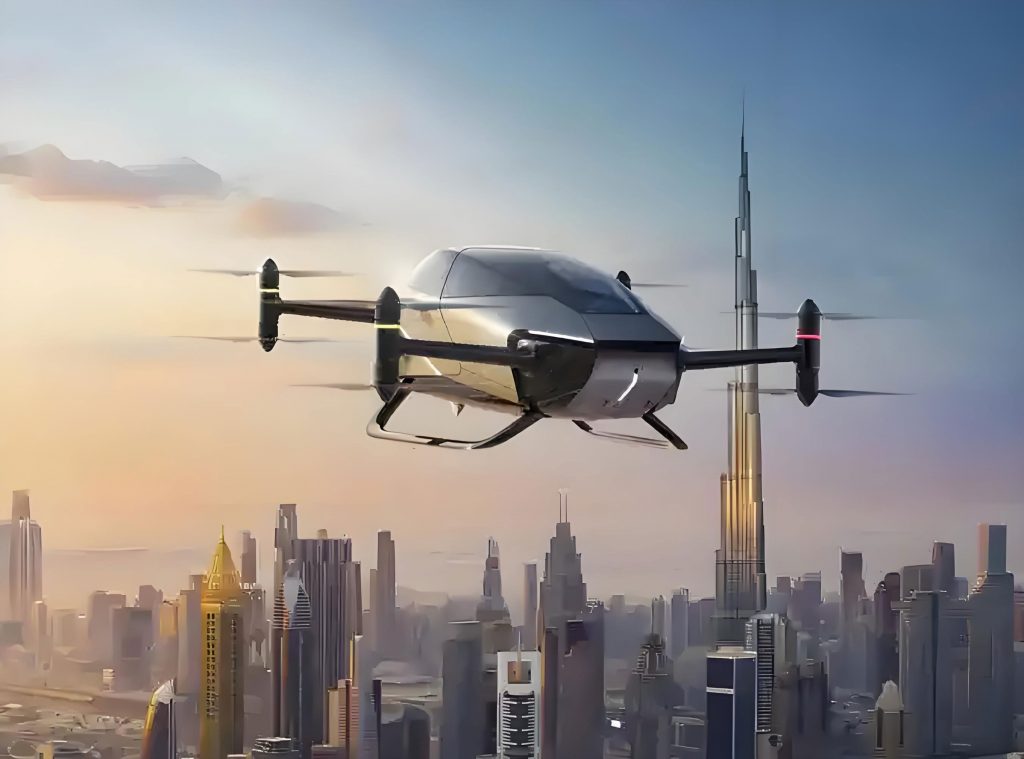
In practical terms, the integration of AI into the low altitude economy manifests through intelligent governance models. One key aspect is the codification of rules, where policies and standards are embedded into AI systems. For example, regulatory frameworks for airspace management can be translated into code, allowing for automated compliance checks. This approach not only enhances efficiency but also reduces human error. Additionally, the development of smart infrastructure, such as low-altitude intelligent networks, supports the seamless operation of the low altitude economy. These networks rely on 5G and IoT technologies to create interconnected systems that facilitate data exchange and coordination. The table below outlines the components of this AI-driven governance model for the low altitude economy:
| Governance Component | AI Application | Benefit for Low Altitude Economy |
|---|---|---|
| Rule Codification | Automated policy enforcement | Streamlines regulatory processes |
| Infrastructure Intelligence | Smart networks and sensors | Enhances real-time monitoring |
| AI-Based Supervision | Predictive analytics for safety | Reduces accident rates |
| Virtual Governance | Digital twin simulations | Lowers trial-and-error costs |
Furthermore, the concept of “AI capital” in the low altitude economy illustrates how AI alters production functions. By treating AI as a distinct capital input, we can model its impact on output using a modified Cobb-Douglas function: $$Y = A \cdot K_{AI}^\alpha \cdot L^\beta \cdot D^\gamma$$ where \(Y\) is output, \(A\) is total factor productivity, \(K_{AI}\) represents AI capital, \(L\) is labor, and \(D\) denotes data inputs. This formula highlights that increasing AI integration in the low altitude economy leads to higher productivity and innovation. For instance, in drone logistics, AI algorithms optimize route planning, reducing fuel consumption and delivery times. This not only addresses efficiency challenges but also promotes the scalability of the low altitude economy by making services more affordable and accessible.
The regulatory aspect of the low altitude economy benefits immensely from AI-driven supervision. Traditional governance models struggle with the dynamic nature of low-altitude activities, but AI enables proactive risk management. For example, machine learning algorithms can predict potential conflicts in airspace usage, allowing for preemptive adjustments. The use of digital twins—virtual replicas of physical systems—facilitates testing and validation without real-world risks. This virtual governance approach minimizes costs and accelerates innovation in the low altitude economy. In mathematical terms, the risk reduction can be expressed as: $$R_{total} = R_{inherent} – \delta \cdot AI_{surveillance}$$ where \(R_{total}\) is the overall risk, \(R_{inherent}\) is the inherent risk, and \(\delta\) represents the effectiveness of AI surveillance. By implementing such models, the low altitude economy can achieve a balance between growth and safety.
In conclusion, the synergy between AI and the low altitude economy paves the way for a new era of intelligent governance. By embracing rule codification, infrastructure intelligence, AI-based supervision, and virtual governance, we can overcome the challenges of safety, efficiency, and scale. The low altitude economy, as a pillar of future economic systems, stands to gain significantly from these innovations. As I reflect on this journey, it is clear that continuous adaptation and collaboration among stakeholders are essential. The low altitude economy will not only benefit from AI but also contribute to its evolution, creating a virtuous cycle of progress and prosperity.